
How kitchen tools for professional chefs affect kitchen speed
In fast-paced commercial kitchens, kitchen tools for professional chefs do far more than support cooking—they directly influence speed, consistency, and workflow. From prep stations to final plating, the right tools help operators reduce delays, improve efficiency, and maintain food quality under pressure. As modern kitchens move toward smarter and more integrated systems, understanding how professional tools affect performance becomes essential for daily operations.
What do kitchen tools for professional chefs actually change in daily kitchen speed?
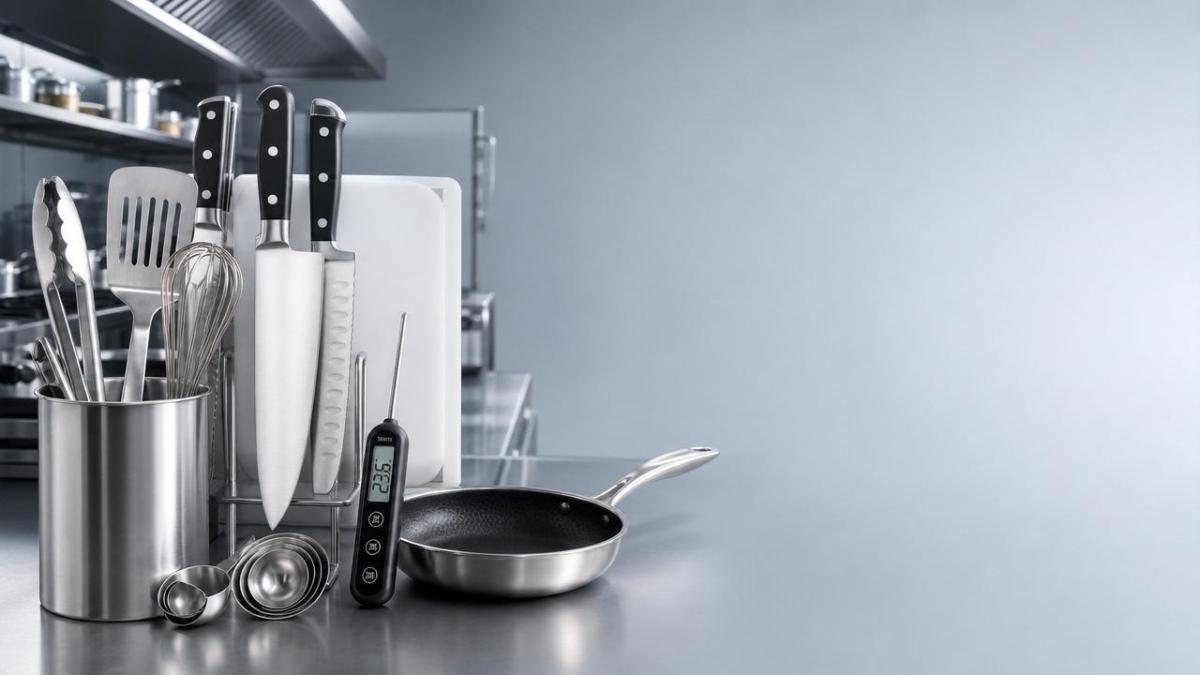
Kitchen speed depends on more than staff skill. It also depends on how smoothly each movement connects during prep, cooking, holding, and plating.
Well-designed kitchen tools for professional chefs shorten motion paths, reduce hand fatigue, and improve control. That means fewer pauses, fewer corrections, and faster output.
A sharp chef knife cuts prep time immediately. A balanced sauté pan improves heat response. A reliable thermometer prevents repeated checking and overcooking.
Speed in a professional kitchen is cumulative. Saving five seconds at each station can remove minutes from every service cycle.
Professional kitchens also rely on tool consistency. If every whisk, tong, scoop, and slicer performs predictably, teams work faster without hesitation.
This matters across the broader kitchen equipment industry. Restaurants, hotels, food processors, and central kitchens all need tools that support repeatable speed.
Where does speed gain appear first?
- Ingredient preparation and portioning
- Transfer between stations
- Cooking control and timing
- Plating consistency
- Cleaning and reset between tasks
Which kitchen tools for professional chefs have the biggest impact on workflow?
Not every tool affects speed equally. Some tools create immediate operational gains because they touch the highest-frequency tasks.
Knives remain the clearest example. Precision cutting tools reduce waste, standardize sizes, and improve cooking uniformity.
Cutting boards with stable surfaces also matter. Slippage slows prep and increases safety risk, especially during peak service periods.
Tongs, spatulas, ladles, and spoons influence line speed. Easy-grip utensils allow faster handling without dropping food or damaging presentation.
Measuring tools are often underestimated. Portion scoops, scales, and measuring containers reduce rework and help control food cost alongside speed.
Temperature tools are equally important. Instant-read thermometers support safe, accurate cooking without guesswork.
In larger operations, speed also comes from integration. Kitchen tools for professional chefs work best when paired with organized storage and logical station design.
High-impact tool categories
- Prep tools: knives, peelers, slicers, graters
- Cooking tools: pans, spatulas, tongs, thermometers
- Portion tools: scales, scoops, measuring cups
- Finishing tools: squeeze bottles, plating spoons, tweezers
- Cleaning tools: scrapers, brushes, sanitation accessories
How do kitchen tools for professional chefs improve consistency as well as speed?
Speed without consistency creates new problems. Orders may leave faster, but quality can drop if tools do not support precision.
Professional-grade tools help standardize portions, cuts, and cooking results. This reduces variation across shifts and kitchen teams.
For example, a calibrated scale keeps portion sizes stable. A quality slicer ensures even thickness, which supports predictable cook times.
Consistent tools also improve training efficiency. New team members learn faster when equipment behaves the same way every time.
This is why commercial kitchens increasingly value standardized tool systems. In hotels, chain restaurants, and central kitchens, repeatability drives performance.
The same logic extends to the wider kitchen equipment market. Intelligent and energy-efficient systems perform better when paired with dependable manual tools.
Consistency benefits linked to speed
- Fewer remakes and fewer returned dishes
- Better timing across multiple orders
- Lower ingredient waste
- Simpler staff training
- Stronger food safety control
How should kitchens choose kitchen tools for professional chefs without slowing operations later?
Choosing tools only by price often creates hidden delays later. The better approach is to judge tools by workflow value over time.
Start with task frequency. Tools used every minute deserve better materials, stronger ergonomics, and easier maintenance.
Next, assess durability. A broken handle, dull edge, or warped pan interrupts service and raises replacement costs.
Cleaning requirements also matter. If a tool is difficult to sanitize, it may slow turnover between prep tasks and create hygiene concerns.
Compatibility is another factor. Kitchen tools for professional chefs should fit existing worktables, storage systems, and cooking equipment.
In integrated kitchens, manual tools and automated equipment should support the same process logic. That reduces confusion and keeps stations efficient.
Selection checklist
What mistakes reduce the value of kitchen tools for professional chefs?
One common mistake is mixing random tool types across stations. Different sizes and performance levels force teams to adjust constantly.
Another mistake is ignoring maintenance. Even the best kitchen tools for professional chefs lose value if blades dull or surfaces degrade.
Overbuying can also hurt speed. Too many rarely used items create clutter and slow access during service.
Some kitchens focus only on large appliances. Yet workflow often breaks down because small tools are missing, damaged, or poorly placed.
Another risk is failing to align tools with menu style. Heavy-duty meat tools may not help a pastry-focused or salad-focused station.
Warning signs to watch
- Frequent pauses to search for tools
- Repeated portion errors
- Excessive hand fatigue during prep
- Higher remake rates
- Slow cleaning between tasks
How do smart kitchens and modern equipment change the role of kitchen tools for professional chefs?
Automation does not remove the need for manual tools. Instead, it raises expectations for precision, hygiene, and speed at every support point.
Smart cooking systems can track heat and timing, but preparation still depends on knives, containers, and transfer tools.
Digital kitchen management also highlights bottlenecks more clearly. When data shows delays, tool quality often becomes part of the solution.
Energy-efficient kitchen systems benefit from better supporting tools. Faster prep and accurate portioning reduce wasted cooking time and unnecessary appliance use.
Across the global kitchen equipment industry, this creates demand for tools that are durable, standardized, and compatible with integrated kitchen systems.
FAQ quick-reference table
Kitchen speed is shaped by many small decisions, and tool quality is one of the most practical. The right kitchen tools for professional chefs improve movement, consistency, safety, and station control.
For kitchens aiming to improve output, start by reviewing the most-used tools first. Measure delays, replace weak points, and standardize what works.
That step-by-step approach supports faster service today and better integration with tomorrow’s smart, efficient kitchen systems.
Popular Tags
Kitchen Industry Research Team
Dedicated to analyzing emerging trends and technological shifts in the global hospitality and foodservice infrastructure sector.
Industry Insights
Join 15,000+ industry professionals. Get the latest market trends and tech news delivered weekly.
No spam. Unsubscribe anytime.
Hot Articles
Contact With us
Contact:
Anne Yin (Ceramics Dinnerware/Glassware)
Lucky Zhai(Flatware)