
Easy to clean kitchen tools can cut maintenance time
For after-sales maintenance teams, choosing easy to clean kitchen tools is more than a convenience—it is a practical way to reduce service time, improve hygiene standards, and extend equipment life. In today’s fast-moving kitchen equipment industry, tools designed for quick cleaning and simple upkeep help maintenance staff work more efficiently while supporting safer, more reliable kitchen operations.
In commercial kitchens, central food preparation sites, hotels, and processing facilities, maintenance staff often work under strict turnaround windows. A tool that takes 3 minutes to clean instead of 12 can make a measurable difference across 20 to 30 service points in one shift.
This matters even more as kitchen equipment becomes more automated, more connected, and more hygiene-sensitive. Easy to clean kitchen tools reduce labor waste, lower contamination risk, and help after-sales teams keep service visits focused on performance, diagnosis, and preventive maintenance rather than unnecessary cleanup.
Why easy-clean tool design matters in kitchen equipment maintenance
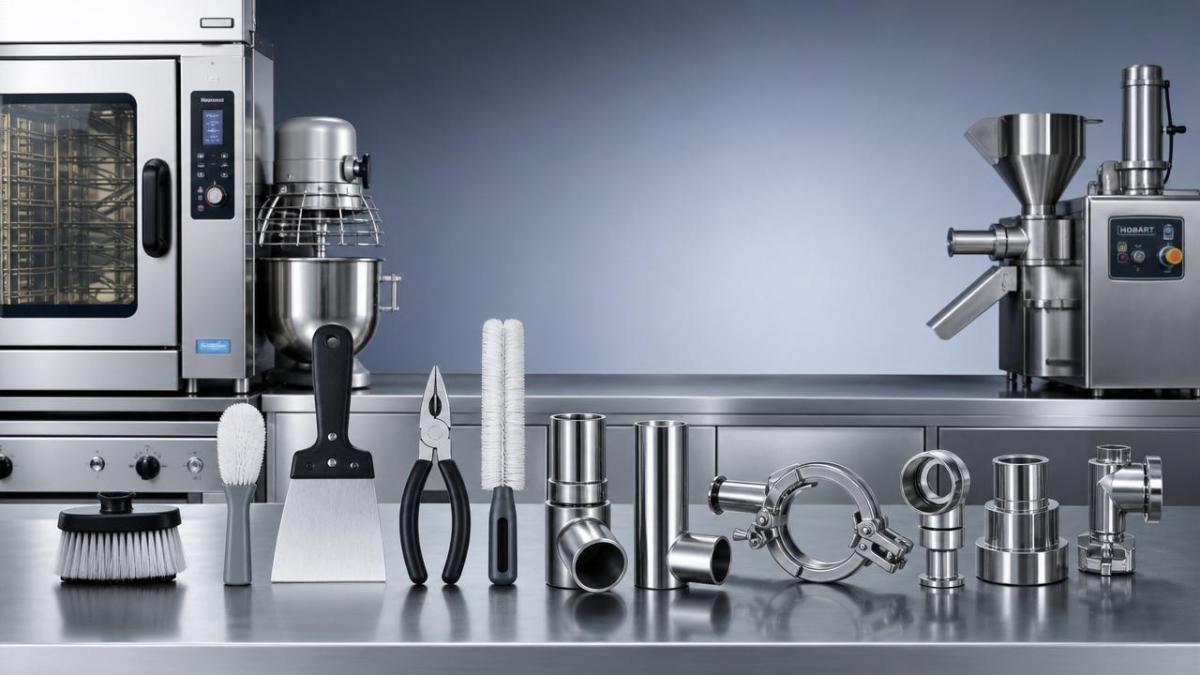
The kitchen equipment industry now supports a wide range of sites, from small restaurants to high-volume food processing lines. In each setting, after-sales maintenance personnel are expected to restore uptime quickly, document service clearly, and comply with food-contact hygiene requirements during every intervention.
When maintenance teams use tools with rough seams, absorbent handles, trapped joints, or hard-to-rinse surfaces, cleanup time increases and residue remains. Over a 5-day workweek, even an extra 10 minutes per visit can add up to 3 to 5 lost labor hours per technician.
The direct link between cleaning time and service efficiency
After-sales work usually follows a fixed sequence: inspection, diagnosis, disassembly, cleaning, parts replacement, reassembly, and validation. If the tools used for these steps are easy to wash, sanitize, dry, and store, the maintenance process becomes more predictable and easier to standardize across teams.
In many service environments, technicians have only 30 to 90 minutes on-site before the kitchen returns to production. Easy to clean kitchen tools help protect that schedule. Less time spent removing grease from grips or residue from hinges means more time available for motor checks, calibration, sealing tests, and control inspections.
Operational gains maintenance teams can expect
- Shorter cleanup cycles, often reduced by 20% to 40% in routine service work
- Lower risk of carrying food residue between separate service locations
- Improved technician readiness for 2 to 4 visits per day
- Less tool replacement caused by corrosion, odor retention, or hardened buildup
- Cleaner documentation and easier compliance with hygiene protocols
The following comparison shows why tool surface design, material choice, and component construction have a direct effect on maintenance outcomes in the kitchen equipment sector.
For after-sales maintenance teams, the most useful tools are not only durable or ergonomic. They are also designed to be cleaned thoroughly between jobs with minimal steps. That directly supports both productivity and food safety in field service operations.
Common maintenance scenarios where easy-clean tools add value
Different kitchen environments generate different kinds of contamination. Bakery equipment leaves flour dust and sticky sugar films. Frying stations create heavy oil deposits. Vegetable processing areas produce water, fibers, and organic residue. A universal maintenance toolkit must perform across all three conditions.
- Grease-heavy restaurant equipment servicing, where tools may need cleaning every 1 to 2 hours
- Hotel kitchen preventive maintenance, where quiet operation and clean presentation matter during occupied service hours
- Central kitchen equipment repair, where technicians move between separate hygiene zones in a single shift
- Food processing support visits, where residue transfer risk must be controlled carefully
In each case, easy to clean kitchen tools help service teams maintain consistency. They also simplify training for new technicians, because cleaning methods are clearer when tool design is straightforward and visual inspection is easier.
How to select easy to clean kitchen tools for after-sales service teams
Selecting the right tools requires more than checking price or general durability. Maintenance managers should evaluate cleanability as a purchasing criterion alongside corrosion resistance, grip comfort, temperature tolerance, and compatibility with common cleaning agents used in kitchen service environments.
A practical buying decision usually comes down to 4 factors: material, geometry, cleaning cycle time, and storage readiness. If a tool cannot be cleaned, dried, and returned to a sanitary kit efficiently, it may create hidden operational costs over 6 to 12 months.
Key selection criteria
1. Choose non-porous and corrosion-resistant materials
Stainless steel, food-safe sealed polymers, and closed-surface composites are generally easier to sanitize than absorbent or soft-coated alternatives. In wet kitchens, frequent exposure to detergent, degreaser, and hot water can quickly degrade low-grade materials within 3 to 6 months.
2. Minimize seams, recesses, and trapped zones
Tools with visible edges, open channels, and easy-access connection points are easier to inspect after washing. If residue cannot be seen, it usually cannot be removed reliably. This is especially important for tools used around slicers, mixers, ovens, fryers, and food-contact conveyors.
3. Standardize cleaning steps across the team
An ideal maintenance toolkit should support a repeatable 3-step or 5-step cleaning routine. If some tools require hand scrubbing for 15 minutes while others rinse clean in under 5, team consistency drops and post-service hygiene records become harder to manage.
The table below can be used as a purchasing checklist when comparing easy to clean kitchen tools for service departments, distributors, or equipment brands building after-sales kits.
This checklist helps procurement and service teams evaluate ownership cost more accurately. A slightly higher purchase price can often be justified if a tool saves 5 to 10 minutes per cleaning cycle across hundreds of maintenance tasks each year.
Mistakes buyers and service managers should avoid
- Prioritizing low unit cost while ignoring cleaning labor over a 12-month period
- Buying mixed tool sets with inconsistent materials and incompatible care requirements
- Overlooking drying time, which can cause odor, corrosion, or contamination in storage
- Assuming all stainless tools are equally easy to clean without checking joints and finish quality
For companies supplying restaurant equipment, food processing machinery, or kitchen electrical appliances, these details also affect brand reputation. Better after-sales tool selection can improve service speed, reduce callbacks, and support stronger customer retention.
Implementation, hygiene control, and long-term maintenance value
Buying easy to clean kitchen tools is only the first step. The real value appears when maintenance teams integrate them into a controlled workflow that includes cleaning instructions, tool rotation, storage rules, and inspection records. A clear process turns tool design advantages into measurable field performance.
A practical 5-step workflow for after-sales teams
- Separate tools by service zone, such as hot line, prep area, bakery section, or processing room
- Clean visible residue immediately after use, ideally within 15 minutes
- Wash with approved detergent, rinse thoroughly, and inspect all surfaces under good lighting
- Dry fully before bagging or boxing, with a target of no standing moisture after 20 minutes
- Record wear, damage, or persistent residue and remove failed items from circulation
This process is especially useful for multi-site service teams. When technicians move between 2 to 6 customer locations per day, even small hygiene failures can create larger operational and reputational problems. Standardized routines reduce that exposure.
How easy-clean tools support equipment lifespan
Residue on maintenance tools can interfere with precision work. Grease on grips affects hand control. Buildup in narrow tool edges can scratch polished machine surfaces or weaken seal fitting accuracy. Over time, that can contribute to avoidable wear during service operations.
Clean tools are also easier to inspect for damage. Cracks, burrs, bent tips, and loose joints are more visible on maintained surfaces. That allows earlier replacement and lowers the risk of accidental damage to ovens, mixers, slicers, dishwashing systems, refrigerated workstations, and automated cooking units.
Frequently asked questions from maintenance teams
How often should service tools be cleaned? In grease-heavy or food-contact-adjacent environments, cleaning after every job is the safest baseline. In high-volume service weeks, some tools may require 3 or more cleaning cycles per day.
Are modular tools always better? Not necessarily. Modular construction can help repairability, but it may also create hidden joints. For easy to clean kitchen tools, the best design balances access, durability, and low residue retention.
What should be checked during receiving inspection? Review seam quality, grip finish, rinse behavior, drying speed, and resistance to common detergents. A 10-minute wash test can reveal more than packaging claims alone.
Can these tools improve customer satisfaction? Yes. Faster, cleaner, and more professional service visits often improve customer confidence, especially in restaurants, hotels, and food production sites where hygiene visibility directly influences trust.
For after-sales maintenance personnel, easy to clean kitchen tools are a practical asset that supports shorter service windows, more reliable hygiene control, and better protection for valuable kitchen equipment. They fit the needs of modern commercial kitchens and food processing environments where downtime, contamination risk, and labor efficiency all matter.
If you are reviewing service kits, upgrading maintenance procedures, or selecting tools for new equipment support programs, now is the right time to focus on cleanability as a core requirement. Contact us to discuss your application, get a customized solution, or learn more about maintenance-friendly kitchen equipment support options.
Popular Tags
Kitchen Industry Research Team
Dedicated to analyzing emerging trends and technological shifts in the global hospitality and foodservice infrastructure sector.
Industry Insights
Join 15,000+ industry professionals. Get the latest market trends and tech news delivered weekly.
No spam. Unsubscribe anytime.
Hot Articles
 How to Size a Commercial Kitchen Hood for Cooking Equipment and Heat Loads
- How to Size a Planetary Mixer Machine for High-Viscosity Batch Production
- How to Choose Ceramic Rice Plates for Restaurants: Size, Glaze, and Chip Resistance
- Kitchen Innovation Trends in Emerging Markets: Where Growth Will Come From in 2026

Contact With us
Contact:
Anne Yin (Ceramics Dinnerware/Glassware)
Lucky Zhai(Flatware)