
How to judge high-quality kitchen tools before bulk buying
Bulk buying kitchen tools can affect performance, safety, customer satisfaction, and replacement costs for years. Before committing to volume orders, it is essential to judge high-quality kitchen tools with a practical checklist. A careful review of materials, workmanship, compliance, usability, and supplier stability helps reduce sourcing risks and improves consistency across commercial and retail markets.
Why a checklist matters before bulk buying
In the kitchen equipment industry, visual appeal alone does not prove durability. Tools used in restaurants, hotels, food processing sites, and home kitchens face repeated washing, heat exposure, impact, and frequent handling.
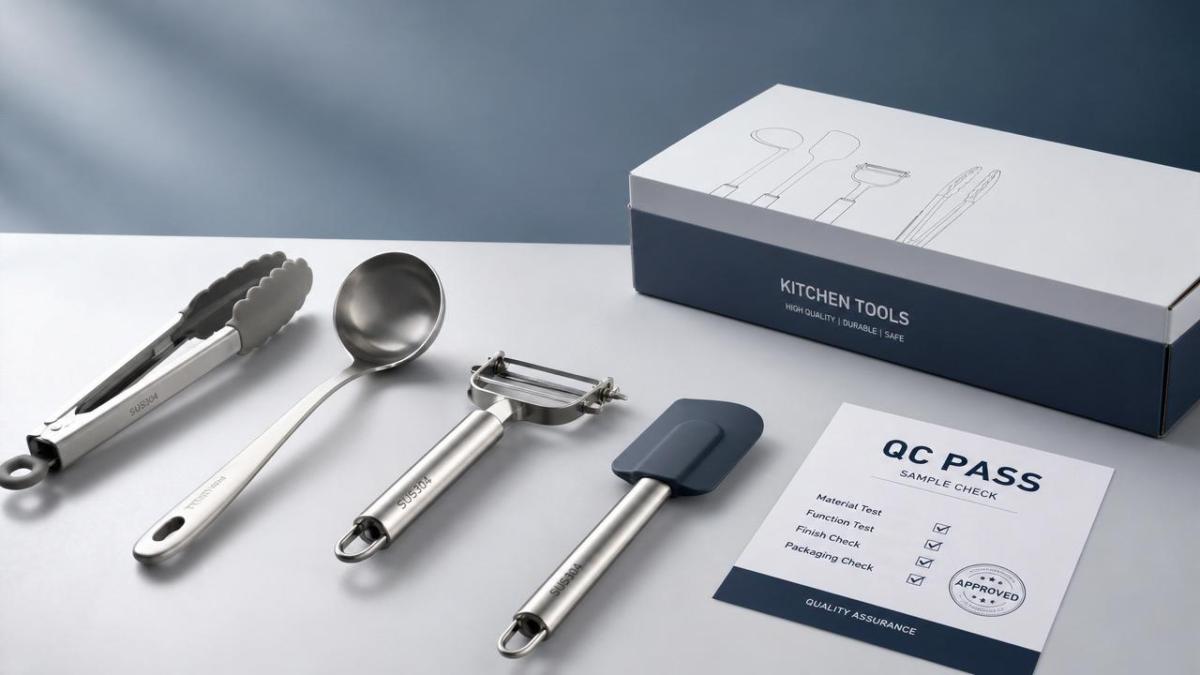
A checklist creates a repeatable method for comparing samples, verifying standards, and controlling product quality across batches. It also supports better decisions when evaluating export suppliers, OEM products, and private-label kitchenware.
When judging high-quality kitchen tools, the goal is not simply to find the lowest cost. The goal is to confirm long-term value, stable manufacturing, and fit for the intended market.
Core checklist to judge high-quality kitchen tools
- Check material grade first. Confirm stainless steel type, silicone quality, wood treatment, or plastic composition, and request clear material specifications instead of relying on generic product descriptions.
- Inspect surface finishing carefully. Look for burrs, sharp edges, uneven polishing, coating bubbles, discoloration, or welding marks that may signal poor workmanship or weak quality control.
- Test structural strength directly. Apply pressure to handles, joints, rivets, hinges, and gripping points to see whether the tool bends, loosens, cracks, or deforms under normal working force.
- Verify food-contact safety compliance. Ask for LFGB, FDA, REACH, or other relevant test reports based on the destination market and the tool’s actual contact with food.
- Measure heat and corrosion resistance. Review how the tool performs under steam, boiling water, dishwashing chemicals, acidic food, and long-term humid storage conditions.
- Evaluate ergonomic performance. Hold the sample, check grip texture, balance, handle thickness, and working comfort, especially for tools intended for repetitive commercial kitchen use.
- Confirm dimensional consistency. Compare several samples from the same batch to detect variation in weight, length, alignment, blade angle, or wall thickness.
- Review assembly details. Examine whether screws are secure, rivets sit evenly, moving parts operate smoothly, and detachable parts reconnect without wobbling or misalignment.
- Assess cleanability and hygiene design. Favor seamless construction, smooth surfaces, and fewer dirt traps because hard-to-clean tools increase sanitation risks and customer complaints.
- Request durability testing evidence. Ask for drop tests, dishwasher cycle results, salt spray reports, edge retention data, or internal inspection records for repeated-use products.
- Compare packaging protection. Strong inner packaging, barcode accuracy, carton quality, and moisture protection matter when bulk shipping kitchen tools across international routes.
- Examine supplier consistency. Review production capacity, lead-time stability, defect handling, and sample-to-mass-production alignment before placing a large order.
Quick evaluation table
How standards change by application scenario
Commercial kitchens
Commercial kitchens demand high-quality kitchen tools that survive constant use, high temperatures, and aggressive cleaning. Stainless steel utensils, tongs, ladles, peelers, and spatulas must hold shape during long shifts.
For this scenario, dishwasher resistance, handle strength, and anti-slip grip matter more than decorative design. A lower-priced tool often fails faster when exposed to heavy daily workloads.
Food processing and central kitchens
Processing environments require tools with strict hygiene performance. Smooth surfaces, easy sanitization, corrosion resistance, and documented food safety compliance become top priorities.
In this setting, judging high-quality kitchen tools also means checking traceability. Batch coding, consistent dimensions, and reliable packaging help maintain control in scaled operations.
Retail and household markets
Retail buyers often need a balance of durability, appearance, safety, and price. Consumer-facing kitchen tools should feel comfortable, look clean, and perform well without complicated maintenance.
For these markets, packaging quality, instruction clarity, color stability, and shelf appeal influence sales as much as the product itself. Good tools that arrive poorly packed may still fail commercially.
Commonly overlooked issues and sourcing risks
Ignoring sample variation: One polished sample may not represent mass production. Always inspect multiple pieces to judge high-quality kitchen tools accurately and identify consistency problems early.
Trusting claims without reports: Terms like food-grade, heavy-duty, or premium stainless steel are not enough. Supporting documents and test data are necessary for real verification.
Focusing only on unit price: A cheap utensil with poor finish or weak handles can create returns, replacement orders, and reputation damage that cost far more later.
Overlooking packaging performance: Even high-quality kitchen tools can be scratched, bent, or contaminated in transit if inner protection and export cartons are not properly designed.
Skipping market-specific compliance: Different countries apply different food-contact and labeling requirements. A tool accepted in one market may face delays or rejection in another.
Practical steps to execute before placing a large order
- Request three to five production samples, not one showroom sample, and compare finishing, weight, grip, and assembly consistency side by side.
- Create a scoring sheet covering material, safety, durability, appearance, packaging, and supplier response speed to make product comparison objective.
- Run simple in-house tests such as boiling, dishwasher cycles, load pressure, cutting performance, or vinegar exposure based on the tool category.
- Match the product to the sales channel, because restaurant supply, food processing use, and household retail each require different performance priorities.
- Confirm quality control terms in writing, including acceptable defect rate, packaging details, labeling, inspection method, and replacement responsibility.
Conclusion and next action
To judge high-quality kitchen tools before bulk buying, focus on evidence rather than appearance. Material grade, finish quality, durability, hygiene design, certification, and supplier consistency should all be checked systematically.
A strong sourcing decision starts with a clear checklist, multiple samples, and realistic testing. Use these steps to compare options, reduce risk, and build a more dependable kitchen tools supply program.
Popular Tags
Kitchen Industry Research Team
Dedicated to analyzing emerging trends and technological shifts in the global hospitality and foodservice infrastructure sector.
Industry Insights
Join 15,000+ industry professionals. Get the latest market trends and tech news delivered weekly.
No spam. Unsubscribe anytime.

Contact With us
Contact:
Anne Yin (Ceramics Dinnerware/Glassware)
Lucky Zhai(Flatware)