
Space-saving kitchen tools are changing compact kitchen design
As urban kitchens shrink and operational demands grow, space-saving kitchen tools are becoming essential in compact kitchen design. For project managers and engineering leads, these solutions do more than save room—they improve workflow, support energy efficiency, and enhance overall kitchen performance. From residential layouts to commercial installations, choosing the right tools can directly influence usability, scalability, and long-term project value.
Why are space-saving kitchen tools now a design priority?
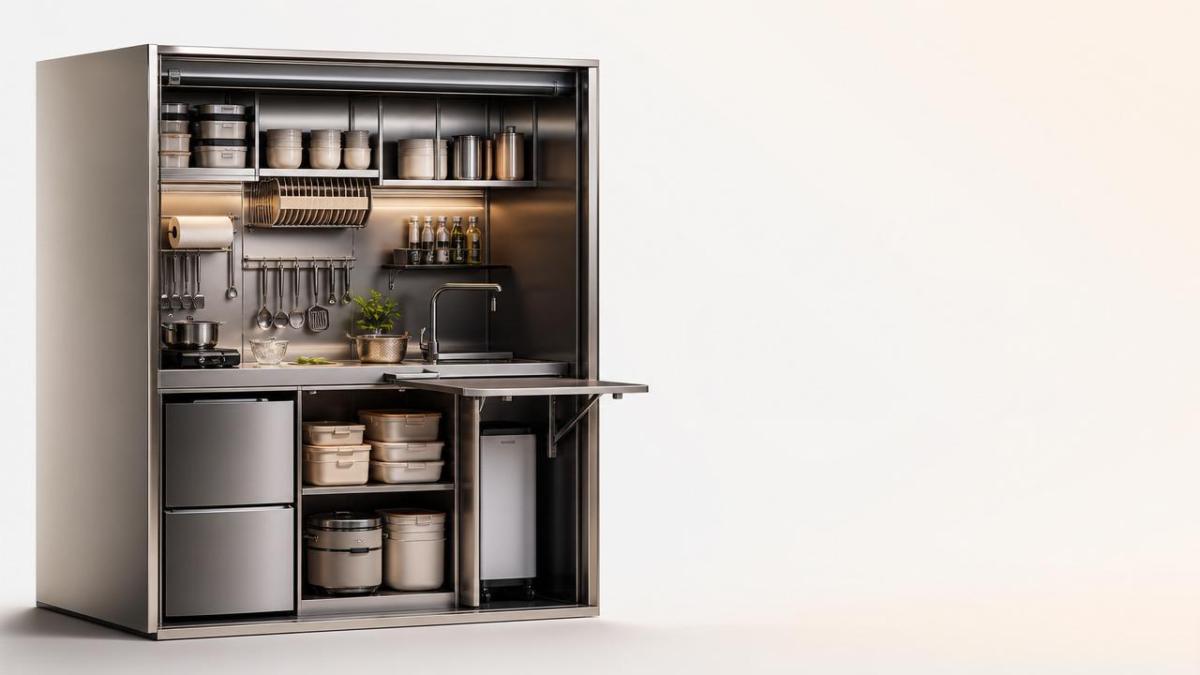
Compact kitchens are no longer limited to small apartments. They now appear in hotels, staff canteens, cloud kitchens, food trucks, modular housing, student residences, and satellite food preparation zones. In each case, every square meter affects labor flow, utility routing, safety clearance, and equipment placement.
That is why space-saving kitchen tools matter beyond convenience. They support tighter layouts without forcing teams to sacrifice storage, preparation capacity, or sanitation access. For project leaders, this means fewer design conflicts and better alignment between operational needs and physical constraints.
The kitchen equipment industry is also moving toward automation, intelligent controls, and integrated systems. In compact environments, these trends make space efficiency even more important. A poorly selected tool can block maintenance access, create bottlenecks, or reduce the value of more advanced equipment installed nearby.
- Urban projects face higher rent pressure, so kitchen footprints must deliver more output per square meter.
- Hospitality and foodservice projects need flexible tools that fit changing menus and service models.
- Engineering teams must preserve access to ventilation, drainage, power points, and cleaning zones.
- Procurement teams want equipment and tools that reduce rework, shorten installation time, and limit lifecycle cost.
What counts as a space-saving solution?
The category includes foldable work surfaces, nesting containers, stackable storage, wall-mounted racks, multi-function prep tools, under-counter systems, slim-profile appliances, modular carts, and vertical organization accessories. The best options do not just occupy less space. They also reduce unnecessary movement and simplify task transitions.
Which compact kitchen scenarios benefit most?
Not every project requires the same type of space-saving kitchen tools. Selection should reflect production volume, sanitation risk, user skill level, and maintenance conditions. The table below compares common compact kitchen scenarios and the tools that typically create the strongest design value.
The main lesson is simple: compact kitchen design works best when tools match workflow, not just dimensions. A small restaurant may benefit from vertical storage, while a hotel pantry may gain more from mobile service modules and hidden storage.
How should project managers map tools to operations?
- Define task sequence first: receiving, storage, prep, cooking, plating, washing.
- Measure peak occupancy at each station instead of average occupancy.
- List which tools can be mounted, folded, stacked, or shared across functions.
- Check whether compact tools affect cleaning access, ventilation clearance, or utility connections.
How do space-saving kitchen tools compare with standard tools?
For engineering and procurement decisions, compact tools should be assessed against standard alternatives in terms of layout efficiency, labor movement, maintenance, and lifecycle adaptability. Initial price alone rarely gives the full picture.
Compact tools are not automatically superior. In heavy-duty production areas, larger dedicated tools may still deliver better durability and throughput. The right choice depends on duty cycle, labor model, and hygiene control, not on footprint reduction alone.
What technical points should engineering leads review before selection?
When selecting space-saving kitchen tools, project teams should evaluate more than size. Material quality, surface treatment, load capacity, compatibility, and serviceability all influence the final result. This is especially important in foodservice and food processing environments where hygiene, moisture, and repeated cleaning create long-term stress.
Key technical checks
- Material suitability: stainless steel grades, food-contact plastics, and corrosion resistance should match use conditions.
- Load-bearing performance: wall-mounted shelves, folding supports, and carts need realistic safety margins.
- Dimensional compatibility: tools must fit surrounding appliances, door swing, drawer travel, and operator reach envelopes.
- Cleaning and drainage: avoid designs that trap moisture, grease, or food debris in inaccessible joints.
- Service access: compact solutions should not block panels, valves, filters, or routine maintenance points.
Where standards and compliance enter the decision
Requirements vary by market and project type, but commercial kitchen projects often review food-contact safety, electrical compliance for powered accessories, fire safety clearances, and sanitation design principles. In export-oriented supply chains, project managers should also verify documentation consistency across regions.
Where applicable, ask suppliers to clarify test basis, material declarations, installation instructions, and care guidance. A compact tool that lacks proper documentation may create delays during approval, inspection, or client handover.
How can buyers avoid costly mistakes in procurement?
Many procurement failures happen because teams choose by catalog appearance instead of operational fit. Space-saving kitchen tools often look efficient on paper, yet underperform if the real kitchen process is not studied. The table below offers a practical selection framework for compact kitchen design projects.
This framework helps project managers balance budget, schedule, and end-user acceptance. In many cases, a slightly higher upfront spend on better-designed space-saving kitchen tools reduces downstream cost from modifications, damaged walls, workflow disruption, or hygiene issues.
A practical procurement checklist
- Request dimensional drawings with open and closed positions for foldable or pull-out items.
- Confirm packaging size and site access if the project is in high-rise or restricted delivery locations.
- Check whether the tool integrates with existing kitchen equipment, shelving standards, or GN container formats.
- Ask about lead time differences between standard configuration and customized dimensions.
What about cost, alternatives, and lifecycle value?
Cost discussions should include more than unit price. In compact kitchen design, the value of space-saving kitchen tools is often linked to avoided construction changes, faster staff movement, cleaner zoning, and better use of premium floor area. For hospitality, residential development, and foodservice operations, these indirect returns can be significant.
However, not every compact feature is worth paying for. If a kitchen has stable production, enough wall length, and low pressure on floor area, standard fixed tools may offer better durability at lower cost. The best projects compare alternatives by total use case, not by trend appeal.
Common alternatives to compare
- A fold-down table versus a fixed narrow prep table with lower installation complexity.
- A mobile storage cart versus built-in cabinetry when layout flexibility matters.
- Multi-function small appliances versus single-purpose units when power load and usage frequency are moderate.
- Vertical racks versus extra base cabinets when cleaning access and visibility are priorities.
What mistakes do teams often make in compact kitchen projects?
Mistake 1: assuming smaller always means more efficient
A very compact tool can slow the process if it reduces batch size too far or forces repeated handling. Efficiency comes from balanced workflow, not from minimizing every object.
Mistake 2: ignoring operator ergonomics
Tools that save footprint but create awkward reach, low visibility, or repetitive bending can reduce productivity and increase fatigue. Ergonomic review is essential in both commercial and residential applications.
Mistake 3: overlooking cleaning paths
Tight installations sometimes leave gaps that trap grease or block cleaning tools. In food-related environments, this can become a compliance and maintenance problem quickly.
Mistake 4: treating tools and equipment as separate decisions
Compact kitchen design succeeds when tools, appliances, storage, and utilities are planned together. A smart oven, under-counter refrigerator, and wall storage system should complement each other, not compete for the same zone.
FAQ about space-saving kitchen tools
How do I know whether space-saving kitchen tools are suitable for my project?
They are most suitable when floor area is limited, labor movement must be reduced, or a kitchen needs to support multiple functions within one footprint. Review your station sequence, peak-hour congestion, and cleaning routes before deciding. If layout conflicts appear often, compact tools usually deserve close evaluation.
Which procurement factors matter most for engineering leads?
Focus on dimensional accuracy, mounting conditions, material durability, cleanability, and compatibility with nearby kitchen equipment. Lead time, spare parts access, and installation method also matter because they affect schedule reliability and post-handover maintenance.
Are space-saving kitchen tools only for residential kitchens?
No. They are increasingly used in restaurants, hotels, central kitchens, convenience food preparation zones, and other high-density foodservice spaces. Commercial adoption is growing because operators want better output from smaller sites and more flexible kitchen layouts.
Can compact tools support smart and energy-efficient kitchen strategies?
Yes, especially when they improve zoning and reduce unnecessary equipment duplication. Better space allocation can support energy-efficient appliance placement, smoother ventilation paths, and more integrated kitchen systems. In modern projects, compact design and smart kitchen planning often reinforce each other.
Why contact us for compact kitchen planning and product selection?
For project managers and engineering leads, choosing space-saving kitchen tools is rarely a standalone purchase. It is part of a broader decision involving layout efficiency, kitchen equipment integration, hygiene planning, installation sequencing, and budget control. That is where structured support creates real value.
You can contact us to discuss parameter confirmation, compact kitchen design options, product selection logic, matching with commercial kitchen equipment, expected delivery cycle, customization possibilities, certification-related documentation, sample support, and quotation planning for phased or multi-site projects.
If you are comparing alternatives for a restaurant, hotel, central kitchen, residential development, or food processing support area, we can help organize the decision around actual workflow, available space, and implementation priorities. This makes it easier to reduce rework, improve usability, and build a more scalable kitchen solution.
Popular Tags
Kitchen Industry Research Team
Dedicated to analyzing emerging trends and technological shifts in the global hospitality and foodservice infrastructure sector.
Industry Insights
Join 15,000+ industry professionals. Get the latest market trends and tech news delivered weekly.
No spam. Unsubscribe anytime.
Hot Articles
 How to Size a Commercial Kitchen Hood for Cooking Equipment and Heat Loads
- How to Size a Planetary Mixer Machine for High-Viscosity Batch Production
- How to Choose Ceramic Rice Plates for Restaurants: Size, Glaze, and Chip Resistance
- Kitchen Innovation Trends in Emerging Markets: Where Growth Will Come From in 2026

Contact With us
Contact:
Anne Yin (Ceramics Dinnerware/Glassware)
Lucky Zhai(Flatware)