
Restaurant Kitchen Equipment Design Choices That Reduce Waste
Choosing the right restaurant kitchen equipment design can do more than improve workflow—it can significantly reduce food, energy, and labor waste. For business decision-makers, smarter design choices support lower operating costs, better compliance, and more sustainable kitchen performance. This article explores how efficient equipment layouts, automated systems, and energy-saving solutions help modern foodservice operations minimize waste while improving productivity.
Why waste reduction depends on the operating scenario
In practice, restaurant kitchen equipment design is never one-size-fits-all. A quick-service brand serving high volumes all day faces very different waste risks than a boutique hotel kitchen, a delivery-only ghost kitchen, or a central production facility. The wrong design can create excess prep, overproduction, temperature loss, poor storage rotation, equipment idle time, and avoidable maintenance costs. For business leaders, that means capital investment may look reasonable on paper but fail to deliver return once daily operations begin.
That is why scenario-based planning matters. Waste is not limited to food left on trays or utility bills that seem too high. It also includes staff steps between stations, production delays caused by poor line layout, inconsistent cooking from outdated controls, and refrigeration losses from badly matched storage zones. Good restaurant kitchen equipment design aligns equipment capacity, automation level, and workflow with the real service model. The more closely the design matches the scenario, the lower the total waste burden.
Common operating scenarios and where waste usually starts
Decision-makers often see similar equipment categories across foodservice operations, but the main waste points change by business model. Understanding those differences helps narrow design priorities before procurement begins.
A scenario-led approach allows companies to compare expected throughput, menu variation, labor availability, and utility constraints before specifying equipment. That is the foundation of a restaurant kitchen equipment design strategy focused on measurable waste reduction rather than simple replacement purchasing.
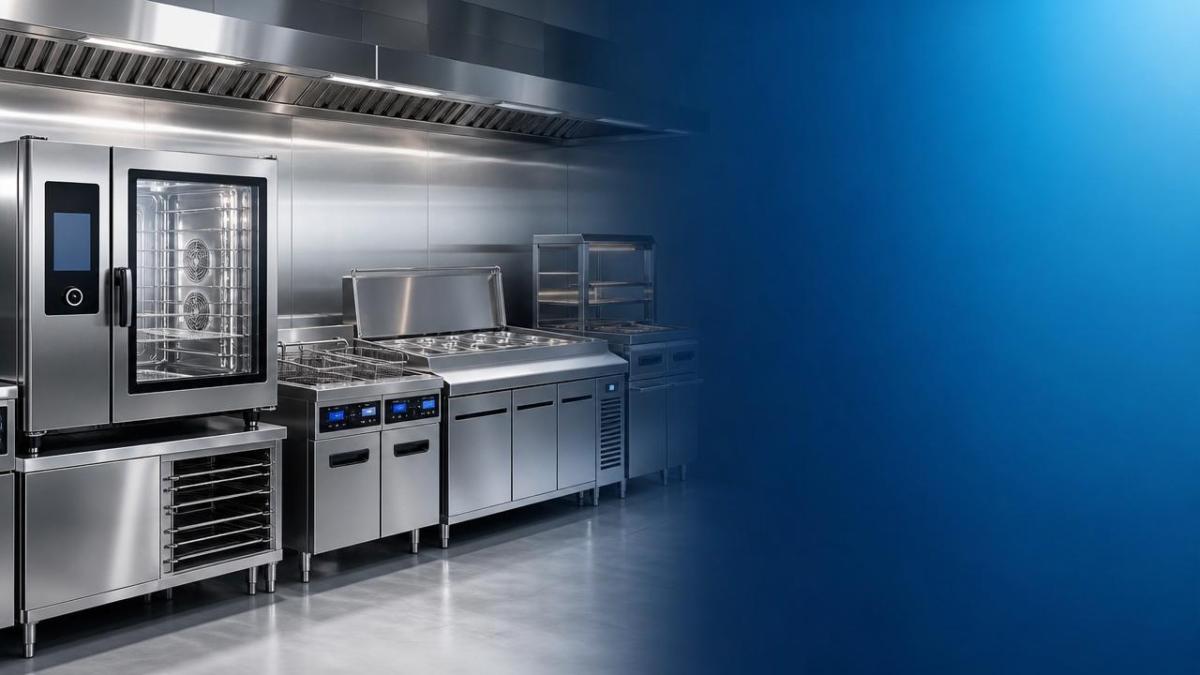
Scenario 1: Quick-service kitchens need speed without overproduction
In quick-service operations, waste often comes from forecasting errors and peak-hour pressure. Staff compensate by cooking too much in advance, holding products too long, or repeating small tasks at multiple stations. Here, restaurant kitchen equipment design should support controlled speed rather than maximum output alone.
The most effective layouts reduce handoffs between prep, cooking, assembly, and pickup. High-speed ovens, programmable fryers, heated holding cabinets with time tracking, and refrigeration placed directly at point of use all help control both food waste and labor waste. If a line can respond quickly to real demand, operators do not need to overproduce for safety.
For chain operators, standardized controls are especially valuable. Equipment with preset recipes, oil-life monitoring, and portion guidance reduces inconsistency between shifts and locations. In this scenario, the right design decision is not simply buying faster machines, but building a system that keeps production accurate during rush periods.
Scenario 2: Full-service restaurants need flexibility and station balance
Full-service kitchens usually deal with broader menus, more variable firing patterns, and greater plating complexity. Waste appears when prep areas are disconnected from service stations, when equipment cannot handle menu crossover efficiently, or when chefs rely on manual adjustments that vary by operator.
In this setting, restaurant kitchen equipment design should prioritize flexible station planning. Multi-function cooking equipment, refrigerated chef bases, vacuum packing systems, and precision holding tools can support menu variety while limiting spoilage and rework. A layout that separates cold prep, hot line production, finishing, and dish return also reduces contamination risk and unnecessary movement.
Decision-makers should pay close attention to station adjacency. If proteins, sauces, garnish items, and plating tools are stored too far apart, staff lose time and consistency. Small layout inefficiencies become recurring labor waste every service period. Over a year, this may cost more than the equipment itself.
Scenario 3: Hotel, banquet, and institutional kitchens need batch control
Hotels, banquet facilities, hospitals, and large cafeterias face a different challenge: volume swings and batch production. Waste often results from preparing too much too early, failing to cool and store surplus safely, or using equipment sized only for peak events. In these environments, restaurant kitchen equipment design must support both scale and recovery.
Combi ovens, blast chillers, roll-in racks, and modular storage systems are highly relevant because they allow controlled batch cooking and safer preservation of unused product. Instead of discarding excess items after a service window, operators can chill, track, and redeploy inventory more effectively. Energy-efficient warewashing and hot water systems also matter, since utility waste can be substantial in large-format kitchens.
Business leaders in these scenarios should evaluate average load versus peak load, not just banquet maximums. Oversized equipment may look future-ready, but if it runs underloaded most days, the operation absorbs unnecessary energy, cleaning, and maintenance costs.
Scenario 4: Ghost kitchens need compact, multi-use, data-aware systems
Delivery-first operations depend on throughput in limited footprints. Their waste profile includes duplicated equipment for multiple brands, cramped workflows, delayed packaging, and quality loss during handoff. A successful restaurant kitchen equipment design for this scenario emphasizes compactness, versatility, and digital visibility.
Stackable ovens, induction systems, ventless equipment where appropriate, undercounter refrigeration, and order-linked production displays help maximize output per square meter. Multi-brand ghost kitchens should also consider standardized prep equipment and clearly separated finishing zones so products do not queue in the same hot line. If packaging and dispatch are not integrated into the equipment plan, food waste rises through remakes and temperature failure.
For investors and operators, the key question is whether the design reduces idle assets. Buying duplicate equipment for each virtual brand may increase complexity without increasing revenue. Shared-function systems often lower both capital expense and ongoing waste.
Scenario 5: Central kitchens benefit most from automation and cold-chain design
Central kitchens and food production hubs process high volumes for multiple outlets, so waste multiplies quickly if equipment choices are wrong. Trimming loss, inconsistent cut size, delayed chilling, and fragmented packing processes can affect product quality across an entire network. In this scenario, restaurant kitchen equipment design becomes a strategic supply-chain issue, not only a kitchen issue.
Automated cutters, mixers, portioning systems, vacuum tumblers, cook-chill lines, and digital temperature monitoring deliver major benefits here. The design should support linear flow from receiving to prep, cooking, chilling, packing, storage, and dispatch. Every backtrack or temperature break increases waste exposure. Companies serving chains, schools, or institutional clients should also assess traceability functions when selecting equipment, since data gaps create both compliance risk and inventory loss.
How design choices reduce food, energy, and labor waste across scenarios
Although scenarios differ, several design principles apply broadly. First, equipment capacity should match realistic production patterns. Second, layout should shorten motion between dependent tasks. Third, controls should help standardize outcomes. Fourth, energy performance should be measured over actual use cycles, not brochure claims alone.
For food waste, the strongest design levers are precise temperature control, portion consistency, better storage access, and reduced holding time. For energy waste, high-efficiency burners, insulated chambers, smart idle modes, heat recovery features, and efficient refrigeration systems provide practical gains. For labor waste, ergonomic placement, fewer manual transfers, automation in repetitive tasks, and simplified cleaning procedures make the biggest difference.
High-value equipment features to compare
- Programmable cooking profiles to reduce operator error
- Integrated sensors for temperature, oil quality, and maintenance alerts
- Modular construction for future menu or volume changes
- Easy-clean surfaces and access points that reduce downtime
- Energy-saving standby modes and load-responsive performance
- Storage systems that support first-in, first-out inventory rotation
Common misjudgments when selecting restaurant kitchen equipment design
Many projects miss their waste-reduction targets because the buying decision focuses too heavily on unit price or headline capacity. One common error is choosing oversized equipment “for flexibility” without modeling everyday utilization. Another is copying a competitor’s setup without considering menu, staffing, or service differences. A third is treating storage, cooking, and cleaning as separate procurement decisions instead of one operating system.
There is also a tendency to underestimate utility and maintenance realities. Energy-efficient restaurant kitchen equipment design should be evaluated with local power, gas, ventilation, water, and service conditions in mind. Equipment that performs well in a showroom may create hidden waste if site infrastructure is weak or staff training is limited.
A practical decision framework for business leaders
Before approving a new kitchen build or retrofit, executives should ask five practical questions. What are the main sources of waste in the current operation? Which scenario best reflects the real business model? Where do bottlenecks occur during peak and off-peak periods? Which equipment choices will still make sense if menu mix changes? And how will performance be measured after installation?
The best restaurant kitchen equipment design process combines operations input, procurement discipline, and measurable business goals. That means reviewing menu engineering, volume forecasts, labor availability, maintenance support, energy cost, and food safety requirements together. When decision-makers treat kitchen design as an operational investment rather than a simple equipment purchase, waste reduction becomes much more achievable.
FAQ: scenario-based questions buyers often ask
Which scenario gains the fastest return from better design?
Quick-service and ghost kitchen models often see the fastest return because small improvements in line speed, holding accuracy, and energy use affect large daily volumes.
Is smart equipment always necessary?
Not always. Smart controls are most valuable when consistency, monitoring, and labor simplification are key waste drivers. In smaller operations, a simpler but well-matched design may outperform complex systems that staff do not fully use.
What should be prioritized in a renovation with limited budget?
Start with the highest recurring waste points: refrigeration performance, cooking accuracy, line flow, and storage access. A phased restaurant kitchen equipment design upgrade can still deliver strong results if it targets the real operational bottlenecks first.
Final takeaway: match the design to the scenario, then optimize for waste
The most effective restaurant kitchen equipment design is not defined by how advanced the equipment looks, but by how well it fits the operating scenario. A quick-service chain, a hotel banquet team, a delivery kitchen, and a central production unit all reduce waste in different ways. The winning approach is to identify the dominant waste pattern in your own business, compare it against the right scenario, and build the equipment plan around actual workflow, capacity, and control needs.
If your organization is reviewing a new project, expansion, or retrofit, the next step is to map your current process from receiving to service, quantify where waste occurs, and evaluate which restaurant kitchen equipment design choices can solve those losses with the strongest long-term return. That scenario-based method leads to smarter investment, stronger productivity, and more sustainable kitchen performance.
Popular Tags
Kitchen Industry Research Team
Dedicated to analyzing emerging trends and technological shifts in the global hospitality and foodservice infrastructure sector.
Industry Insights
Join 15,000+ industry professionals. Get the latest market trends and tech news delivered weekly.
No spam. Unsubscribe anytime.

Contact With us
Contact:
Anne Yin (Ceramics Dinnerware/Glassware)
Lucky Zhai(Flatware)