
Restaurant Kitchen Equipment Suppliers and the Lead Time Problem
For business evaluators, choosing reliable restaurant kitchen equipment suppliers is no longer just about product range or price—it is also about managing lead time risks that can delay openings, disrupt operations, and increase costs. As global demand rises and supply chains become more complex, understanding why lead times fluctuate is essential for making smarter sourcing decisions and securing long-term competitive value.
Understanding the Lead Time Problem in Restaurant Equipment Supply
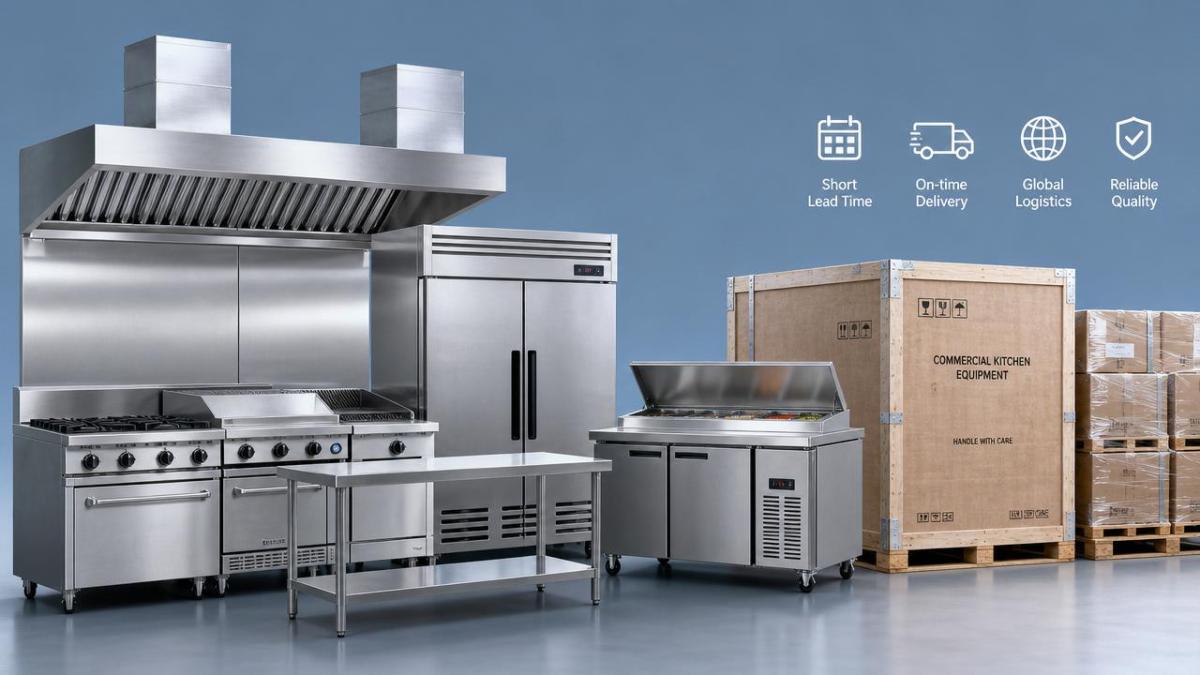
In practical terms, lead time is the period between placing an order and receiving equipment that is ready for installation or use. For restaurant kitchen equipment suppliers, lead time is influenced by far more than factory output. It can include engineering confirmation, raw material availability, production scheduling, quality inspection, export documentation, shipping, customs clearance, and final delivery coordination.
This issue matters because commercial kitchens operate on strict timelines. A delayed combi oven, refrigeration unit, stainless preparation table, or ventilation component can affect the opening of an entire restaurant. In hotel kitchens, central kitchens, and food processing support facilities, one missing item may interrupt downstream installation and compliance checks. That is why business evaluators increasingly examine restaurant kitchen equipment suppliers not only as product vendors, but as operational partners within a larger supply chain.
The problem has become more visible as the kitchen equipment industry moves toward automation, digital control, and energy-efficient systems. Smart cooking equipment and integrated kitchen systems often require more components, tighter testing standards, and higher coordination between manufacturers and logistics providers. As a result, the lead time risk profile is more complex than it was for conventional standalone appliances.
Why the Industry Is Paying Closer Attention
The global foodservice sector is expanding, and so is demand for reliable kitchen infrastructure. Restaurants, hotel groups, catering chains, and food processing businesses are all under pressure to launch faster, meet food safety requirements, and control operating costs. In that environment, restaurant kitchen equipment suppliers are expected to provide both product quality and schedule reliability.
Several industry shifts explain why lead time has become a strategic concern. First, sourcing is now more international. Major manufacturing centers such as China, Germany, Italy, and Japan serve buyers across multiple continents. While this broadens choice, it also adds variables such as port congestion, customs delays, documentation errors, and changing freight capacity. Second, many buyers now prefer specialized or customized equipment, including energy-saving cooking systems, modular kitchen lines, and digital management interfaces. Customization usually extends production time and raises dependency on component suppliers.
Third, buyers are no longer evaluating equipment in isolation. They are assessing total project readiness. For a new restaurant or central kitchen, equipment lead time affects contractors, utilities, ventilation work, software integration, staff training, and launch marketing. A supplier that appears cost-effective on paper may create a much higher real-world cost if delivery is unpredictable.
Industry Overview: Main Drivers Behind Lead Time Variability
For business evaluators, it helps to break the lead time problem into its major sources. The table below summarizes the most common drivers affecting restaurant kitchen equipment suppliers and the business impact of each factor.
This overview shows that lead time is rarely caused by a single failure. More often, it is the result of connected dependencies across manufacturing, logistics, and project management. Strong restaurant kitchen equipment suppliers recognize this and actively communicate the status of each stage rather than giving buyers a simple estimated shipping date.
Where Lead Time Risk Creates the Most Business Pressure
Lead time problems do not affect every buyer in the same way. Their impact depends on the application scenario, the complexity of the kitchen, and the cost of delay. In the kitchen equipment industry, several use cases deserve particular attention.
For evaluators, this means supplier assessment should be tied to the real use environment. A supplier that is acceptable for non-urgent replenishment may not be suitable for a launch-critical project. Likewise, a manufacturer with longer standard lead times may still be a strong option if it offers stable scheduling, transparent milestones, and accurate forecasting.
What Strong Restaurant Kitchen Equipment Suppliers Do Differently
Not all delays can be eliminated, but capable restaurant kitchen equipment suppliers reduce uncertainty through systems and discipline. One important capability is production visibility. Instead of giving broad promises, experienced suppliers break timelines into measurable stages: design confirmation, procurement, fabrication, assembly, inspection, packing, shipping, and arrival. This helps buyers identify risk earlier and adjust installation plans before the problem becomes expensive.
Another differentiator is supply chain resilience. Suppliers with diversified component sourcing, long-term factory partnerships, and inventory planning for critical parts are typically better positioned to handle volatility. This matters especially in categories such as refrigeration, smart controls, or energy-efficient cooking systems, where a single missing component can hold up an entire order.
Strong suppliers also understand regional compliance and market adaptation. Equipment for different countries may require different voltage, plug types, certifications, ventilation standards, or hygiene specifications. When documentation and technical requirements are managed correctly at the beginning, there is less risk of rework, shipment refusal, or installation delay.
Finally, the best restaurant kitchen equipment suppliers communicate in a way that supports decision-making. Business evaluators need realistic dates, not optimistic estimates. Consistent updates, exception reporting, and willingness to discuss alternative models or phased delivery options are all signs of a mature supplier relationship.
How Business Evaluators Should Assess Lead Time Risk
A useful evaluation framework goes beyond price lists and product catalogs. It starts with understanding whether the supplier’s lead time is stable, explainable, and aligned with project needs. Evaluators should ask how standard products differ from custom products in production cycle, which components have the longest procurement window, and what percentage of orders are delivered on schedule.
It is also important to distinguish between quoted lead time and actual landed lead time. Some restaurant kitchen equipment suppliers present ex-factory readiness as if it were final delivery timing. However, for international orders, true lead time should include inland transport, export clearance, shipping mode, customs handling, and local delivery coordination. A supplier with a slightly longer factory cycle but better logistics execution may provide a lower total risk outcome.
Evaluators should review operational evidence where possible. This may include sample project timelines, shipment records, customer references, packaging standards, and after-sales responsiveness. In the kitchen equipment sector, delivery reliability often correlates with process maturity. Suppliers that document well usually manage exceptions better.
Another practical point is segmentation. It can be risky to source every item from one supplier if product categories have very different lead time patterns. For example, stainless fabrication may be fast while imported refrigeration controls may not be. Segmenting critical-path items from non-critical accessories allows buyers to build a more realistic procurement schedule.
Practical Strategies to Reduce Delays and Improve Project Outcomes
The most effective response to lead time uncertainty is not simply ordering earlier, although early planning certainly helps. A better approach combines forecast discipline, supplier alignment, and risk prioritization. For business evaluators working with restaurant kitchen equipment suppliers, several practices stand out.
- Define the critical path equipment first, including items that affect utilities, ventilation, and final inspections.
- Confirm whether equipment is standard, semi-custom, or fully customized before finalizing launch dates.
- Request milestone-based lead time plans instead of a single promised delivery date.
- Build contingency options for high-risk categories, such as approved substitutes or phased installation plans.
- Coordinate procurement timing with contractors, logistics teams, and installation partners to reduce idle time and rework.
These strategies are especially relevant as the industry moves toward smart kitchen systems and energy-efficient upgrades. Integrated equipment can improve operations significantly, but only if the project team accounts for longer engineering and coordination cycles. In that sense, lead time management is part of digital transformation discipline, not just a procurement detail.
A Balanced View for Long-Term Supplier Evaluation
It would be a mistake to judge restaurant kitchen equipment suppliers solely by the shortest quoted lead time. Extremely fast promises can hide quality risk, incomplete compliance planning, or fragile sourcing arrangements. On the other hand, long but stable lead times may be commercially manageable when the supplier is transparent and dependable. The goal is not simply speed; it is predictability matched with acceptable quality, cost, and technical fit.
In a global kitchen equipment market shaped by automation, sustainability, and rising foodservice demand, lead time has become a core evaluation metric. It affects capital deployment, opening schedules, operational readiness, and competitive positioning. Business evaluators who understand this relationship can make better sourcing decisions and reduce hidden project risk.
When reviewing restaurant kitchen equipment suppliers, focus on how they manage complexity, not just how they market availability. Suppliers that combine manufacturing capability, clear communication, compliance readiness, and logistical coordination are better equipped to support modern restaurants, hotels, central kitchens, and food processing operations. That is where long-term value is created.
Popular Tags
Kitchen Industry Research Team
Dedicated to analyzing emerging trends and technological shifts in the global hospitality and foodservice infrastructure sector.
Industry Insights
Join 15,000+ industry professionals. Get the latest market trends and tech news delivered weekly.
No spam. Unsubscribe anytime.

Contact With us
Contact:
Anne Yin (Ceramics Dinnerware/Glassware)
Lucky Zhai(Flatware)