
Restaurant Kitchen Layout Mistakes That Slow Down Service
A poorly planned restaurant kitchen equipment layout can turn even a skilled team into a slow, stressed, and error-prone operation. From cramped prep zones to inefficient equipment placement, small layout mistakes often lead to longer ticket times, safety risks, and wasted energy. In this article, we’ll look at the most common design errors that slow down service and how operators can build a smoother, smarter, and more productive kitchen workflow.
For operators, a checklist approach works better than abstract design theory. A restaurant kitchen equipment layout is not judged by how modern it looks, but by whether cooks can move fast, reach tools safely, communicate clearly, and keep food flowing without bottlenecks. When service slows down, the problem is often not staff effort. It is usually a mismatch between equipment position, workflow sequence, storage access, and station balance. Reviewing the layout as a practical checklist helps teams spot delays early and prioritize fixes that improve ticket speed, consistency, and safety.
Start Here: The First Things Operators Should Check
Before changing equipment or rebuilding a line, operators should first confirm where time is being lost. The most useful starting point is to observe one busy shift and map the route of ingredients, staff, plated food, dirty wares, and delivery items. If these paths cross too often, the restaurant kitchen equipment layout is likely creating avoidable friction.
- Are prep, cooking, plating, and pickup arranged in the real order of work?
- Do cooks take extra steps to fetch pans, utensils, refrigeration items, or cleaning supplies?
- Do multiple staff members compete for the same narrow aisle or workstation?
- Is hot equipment too close to cold storage, washing zones, or traffic paths?
- Are the busiest menu items produced in the most accessible part of the line?
- Do deliveries, dish return, and waste removal interrupt active food production?
If the answer to several of these questions is yes, the issue is not only staffing or training. It is a layout problem affecting output every hour of the day.
Core Layout Mistakes That Slow Down Service
1. Putting equipment in the wrong workflow order
One of the most common restaurant kitchen equipment layout mistakes is placing equipment by available space instead of production sequence. For example, if refrigerated prep ingredients are stored far from prep tables, or if the pass is too far from the finishing station, staff lose seconds on every order. Those seconds quickly become long ticket times during peak service.
A better standard is simple: receiving should connect logically to storage, storage to prep, prep to cooking, cooking to finishing, and finishing to service. The fewer reverse movements the team makes, the smoother the kitchen runs.
2. Creating bottlenecks at high-volume stations
The grill, fryer, range, or assembly counter often becomes the heart of production. When too many menu items depend on one narrow area, the entire service pace drops. Operators should check whether the busiest station has enough landing space, holding space, refrigeration support, and tool access. Even a high-performance appliance cannot compensate for poor station spacing.
A useful rule is to design around volume, not around equipment catalog size. If the fryer station handles half the menu, it needs more support than a lightly used specialty appliance. This is where many layouts fail.
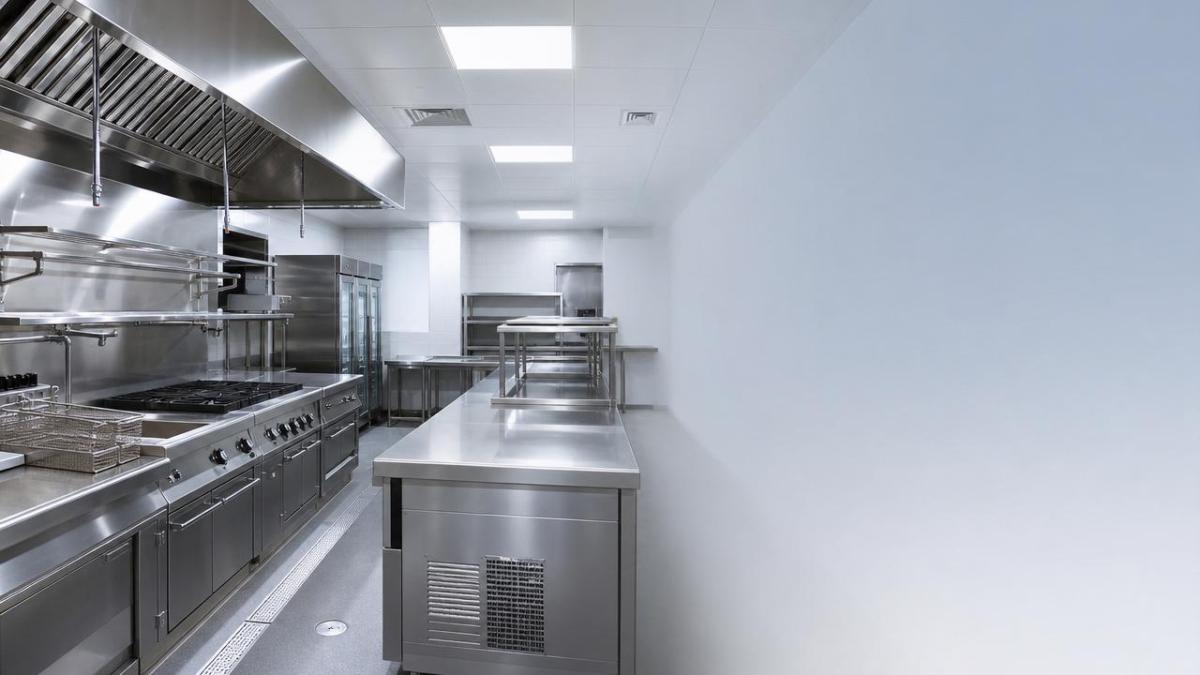
3. Ignoring aisle clearance and staff movement patterns
A compact kitchen is not automatically an efficient kitchen. When staff carrying hot pans, knives, or trays constantly cross paths, service slows and accident risk rises. A restaurant kitchen equipment layout should allow normal movement without frequent sidestepping, waiting, or body turning under pressure.
Operators should pay close attention to these warning signs: line cooks backing into each other, dish carts blocking exits, servers reaching into production space, or doors from refrigeration units interfering with active work zones. These are not minor annoyances. They are measurable sources of lost time.
4. Separating tools, ingredients, and equipment that should work together
A station becomes slow when workers must leave it repeatedly. Common examples include slicing tools stored away from the prep bench, seasonings kept across the line, or undercounter refrigeration missing from salad and sandwich stations. The right restaurant kitchen equipment layout keeps frequently used items within easy reach at the point of use.
This principle also supports consistency. When every station has the right nearby support equipment, portions, timing, and plating standards become easier to maintain.
5. Mixing clean and dirty flows
Another major mistake is letting dishwashing, waste handling, and food production overlap. Dirty wares should not pass through active prep zones. Waste bins should not block ingredient movement. Handwashing access should not require crossing through contaminated traffic paths. A weak separation between clean and dirty flows reduces hygiene control and can also create delays when staff pause to avoid collisions or contamination.
6. Oversizing or undersizing equipment for the menu
Large equipment that does not match menu demand often steals space from more useful functions such as prep, holding, or landing. On the other hand, undersized cooklines force batching, waiting, and repeated handling. The best restaurant kitchen equipment layout matches appliance capacity to peak-hour demand, not just total kitchen area. Operators should review actual production data, top-selling items, cooking methods, and daypart variation before changing line equipment.
A Practical Checklist for Faster Kitchen Flow
Use the following checklist to assess whether your restaurant kitchen equipment layout supports fast service or slows it down.
What to Check in Different Kitchen Scenarios
Quick-service and fast casual kitchens
These operations depend on repetition, speed, and compact movement. The restaurant kitchen equipment layout should minimize steps between cold prep, hot line, and pickup. Make sure high-frequency ingredients are stored at arm’s reach, assembly space is not blocked by packaging supplies, and order screens are visible without forcing staff to turn away from the line.
Full-service restaurants
Full-service kitchens often manage broader menus and more complex timing. Here, the layout must support coordination across sauté, grill, garde manger, dessert, and pass. The main risk is uneven pacing between stations. If one section finishes early but waits on another, the issue may be station distance, limited landing space, or overloaded shared equipment.
Hotels, central kitchens, and high-output operations
Larger facilities need stronger zoning and clearer separation of batch prep, cooking, cold storage, warewashing, and dispatch. In these environments, a restaurant kitchen equipment layout must support both volume and control. Smart kitchen technologies, automated holding, and digital production tracking can help, but only if the physical layout already supports efficient movement and safe handoff points.
Often Overlooked Problems That Hurt Performance
- Door swing conflicts: Refrigerator, freezer, and oven doors may block aisles or prep access when opened.
- Insufficient landing zones: Staff need short-term space beside ovens, fryers, and combi units for pans and trays.
- Poor ventilation alignment: Equipment placed outside effective hood coverage can create heat stress and discomfort.
- Weak storage logic: Frequently used dry goods placed far from prep stations add unnecessary movement every shift.
- No room for maintenance access: If equipment cannot be cleaned or serviced easily, downtime and sanitation risks increase.
- Utility mismatch: Gas, electric, water, and drainage positions may force poor equipment placement if not planned early.
These issues may seem small during installation, but they have a direct effect on labor efficiency and equipment reliability over time.
Execution Tips: How Operators Can Improve Layout Without Full Renovation
Not every team can rebuild the kitchen immediately. The good news is that many restaurant kitchen equipment layout problems can be reduced through phased adjustments. Start with the highest-friction areas first.
- Reposition mobile prep tables, racks, or small equipment to shorten the most repeated movements.
- Move the fastest-selling ingredients closer to the busiest stations.
- Add undercounter refrigeration or shelving where station exits are frequent.
- Separate dish return and food dispatch paths as much as possible.
- Mark temporary zones on the floor to test improved movement patterns before buying new equipment.
- Collect feedback from line cooks, prep staff, dish teams, and shift leaders, not only from management.
If a larger redesign is planned, document current pain points with timing data: average ticket time, peak queue length, number of cross-traffic interruptions, and top stations causing delay. This turns layout discussions into operational decisions rather than personal opinions.
Final Action Guide for a Better Restaurant Kitchen Equipment Layout
A strong restaurant kitchen equipment layout should reduce steps, protect food safety, support communication, and match the real pace of service. Operators should focus first on workflow order, bottleneck stations, aisle conflicts, point-of-use storage, and clean-versus-dirty separation. These are the issues most likely to slow production and increase stress during peak hours.
If you need to move forward with layout improvement, prepare a few essentials before discussing solutions: your menu mix, peak-hour covers, top-selling items, utility conditions, staff count per shift, current pain points, and any space restrictions. With that information, suppliers and planners can evaluate equipment fit, workflow compatibility, energy efficiency, maintenance access, installation timing, and budget priorities more accurately.
In the end, faster service is rarely the result of one appliance alone. It comes from a restaurant kitchen equipment layout that lets people, equipment, and product flow work together with less interruption and more control.
Popular Tags
Kitchen Industry Research Team
Dedicated to analyzing emerging trends and technological shifts in the global hospitality and foodservice infrastructure sector.
Industry Insights
Join 15,000+ industry professionals. Get the latest market trends and tech news delivered weekly.
No spam. Unsubscribe anytime.

Contact With us
Contact:
Anne Yin (Ceramics Dinnerware/Glassware)
Lucky Zhai(Flatware)