
Porcelain Tableware Suppliers and the Quality Gaps to Watch
For procurement professionals sourcing porcelain tableware, supplier selection goes far beyond price and appearance. Quality gaps in materials, glazing, firing consistency, and compliance standards can directly affect durability, food safety, and brand reputation. This article explores the key issues buyers should watch when evaluating porcelain tableware suppliers in a competitive global market.
Why scenario-based sourcing matters in porcelain tableware procurement
Not all porcelain tableware is purchased for the same purpose, and that is exactly why quality evaluation cannot rely on a generic checklist alone. A hotel breakfast buffet, a fine-dining restaurant, a central kitchen, an airline caterer, and a retail houseware brand may all buy porcelain tableware, yet they face very different performance expectations. Procurement teams that ignore these scenario differences often end up selecting suppliers that look competitive on paper but fail in real use.
In the broader kitchen equipment industry, buyers are under pressure to balance cost, durability, food safety, aesthetics, and supply stability. Porcelain tableware sits at the intersection of those priorities. It is both a functional food-contact product and a visible brand asset. For that reason, supplier quality gaps can create operational losses through chipping, inconsistent sizing, glazing defects, delayed replenishment, or failed compliance checks.
A practical sourcing process starts by defining the use case first, then matching technical and commercial requirements to the right supplier profile. This scenario-based method helps procurement professionals avoid overbuying for low-risk environments and underbuying for demanding service conditions.
Typical business scenarios where porcelain tableware quality gaps show up
The same porcelain plate can perform very differently depending on handling frequency, washing systems, menu style, and storage pressure. Before comparing quotations, buyers should classify their demand into a realistic operating scenario.
This comparison shows why one supplier may be suitable for boutique presentation ware but weak in long-cycle operational durability. Procurement decisions should therefore be tied to service environment, replacement rhythm, and brand standards rather than sample-room appearance alone.
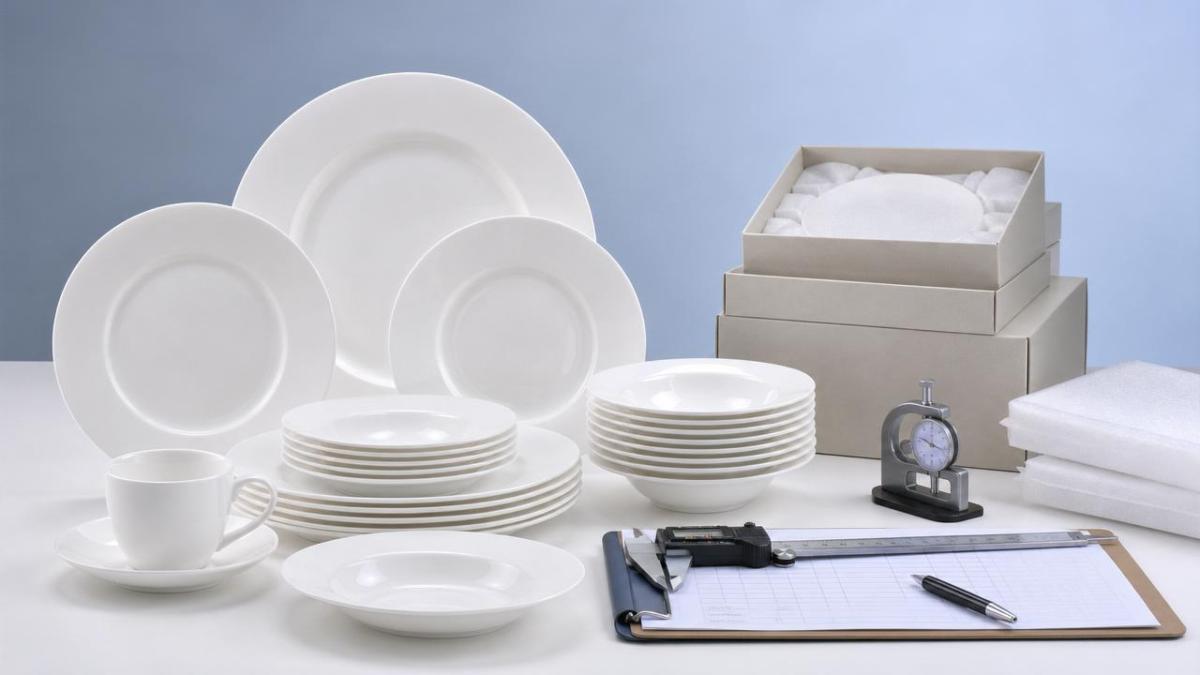
Scenario 1: Fine dining and premium hospitality need visual consistency first
In upscale restaurants and luxury hotels, porcelain tableware is part of the guest experience. Buyers in this segment typically prioritize whiteness, translucency, glaze clarity, rim symmetry, and precise form. Small differences that may be acceptable in institutional catering can look unacceptable under strong dining-room lighting or in plated presentation photography.
The quality gap to watch here is batch inconsistency. Some porcelain tableware suppliers provide excellent showroom samples but struggle to maintain body color, profile accuracy, or decoration alignment at production scale. Uneven glaze thickness can also reduce the premium feel and lead to visual defects such as pinholes, waviness, or cloudiness.
For this scenario, procurement teams should request batch photos, tolerance standards, approved master samples, and clear replenishment commitments. If a collection will be reordered over time, mold stability and color continuity matter as much as first-order aesthetics.
Scenario 2: Hotels, buffets, and banquet operations need durability under repeated handling
Buffet lines, banquet halls, and all-day dining venues create a harsher environment for porcelain tableware than many buyers initially assume. Staff move large volumes quickly, plates are stacked frequently, dishwashers run continuously, and breakage can spread through daily operations if edge strength is weak.
In this setting, the most costly quality gap is poor chip resistance. Lightweight products may seem attractive for handling, but if the rim design or body formulation is too fragile, replacement costs increase rapidly. Stackability is another issue. Slight dimensional variation can make stacks unstable, create storage inefficiency, and increase damage during transport or back-of-house use.
Buyers should ask suppliers for data on mechanical strength, dishwasher durability, and thermal shock performance. It is also wise to test the product in actual hotel operations before committing to volume contracts. A plate that survives a showroom inspection may still fail in banquet circulation.
Scenario 3: Canteens, schools, hospitals, and central kitchens focus on lifecycle cost
Institutional foodservice often makes procurement decisions based on total cost of ownership rather than luxury presentation. For schools, hospitals, staff canteens, and central kitchens, porcelain tableware must withstand high-frequency washing, rough handling, and long service periods while remaining safe and hygienic.
The main supplier gap in this scenario is overpromising durability without process evidence. Lower-grade porcelain can absorb more moisture, show faster surface wear, or become more vulnerable to cracking over time. If glaze quality is inconsistent, utensils may leave visible marks quickly, making the tableware look worn even before structural failure occurs.
Procurement teams should compare products not only by unit price but by expected use cycles, breakage rate, and ease of replacement. A slightly more expensive porcelain tableware line can be more economical if it lasts longer, performs better in industrial dishwashing, and remains available for future replenishment.
Scenario 4: Retail, e-commerce, and private label buyers need consistency beyond the product itself
When porcelain tableware is sold under a retail brand, the supplier is judged not just on ceramic quality but on packaging execution, barcode accuracy, drop-test protection, label compliance, and repeatable design delivery. In these channels, a good plate with poor carton design still becomes a bad product once it reaches the end customer damaged.
A common quality gap is weak quality control between decoration, packing, and export handling. Decals may shift, color tones may vary across sets, or assortment configurations may be packed incorrectly. Compliance documentation can also become a hidden risk, especially when importing into markets with strict food-contact rules.
For this scenario, buyers should assess the supplier’s packaging engineering, inspection checkpoints, and ability to maintain product identity across multiple SKUs. Sampling should include not only the item itself but also outer carton performance and retail presentation quality.
The core quality gaps buyers should verify regardless of scenario
Although application priorities differ, several quality risks apply across nearly all porcelain tableware sourcing projects. These factors should be verified systematically during supplier qualification.
Body material and porcelain density
The composition of the ceramic body affects strength, water absorption, whiteness, and long-term durability. Buyers should understand whether the supplier is producing true porcelain suitable for the intended use or offering a lower-grade alternative that only looks similar in samples.
Glaze performance and food safety
Glaze must be smooth, stable, and resistant to staining, utensil marking, and repeated washing. Food-contact safety is non-negotiable, so migration testing and relevant certifications should be aligned with destination market requirements.
Firing consistency
Uneven firing can lead to warped shapes, color variation, weak structural zones, or glaze defects. Consistent kiln control is often a dividing line between reliable porcelain tableware suppliers and those that struggle with repeat orders.
Dimensional tolerances
Diameter, height, flatness, and stacking precision directly affect service, storage, and presentation. Small deviations become major problems in chain operations and banquet environments.
Supply continuity
A supplier may pass the initial quality review but still fail your business if molds change, colors drift, or replenishment lead times are unstable. This is especially important for hospitality groups and brand owners that need long-term consistency.
How to match supplier type to your business need
Different procurement goals often require different supplier strengths. Choosing the right partner depends on whether your priority is design, scale, stability, customization, or compliance support.
Common sourcing mistakes when evaluating porcelain tableware suppliers
One frequent mistake is approving a supplier based only on a handpicked sample. Samples do not always represent batch reality. Another mistake is treating all porcelain tableware as a commodity, which leads to underestimating performance differences in clay body, glaze formula, and firing control.
Buyers also sometimes focus too heavily on initial cost while ignoring replacement risk, complaint handling, and long-term style continuity. In foodservice and hospitality, an interrupted series can create operational and visual inconsistency across service points. Finally, some teams fail to align quality standards with actual usage. A product suitable for low-frequency household use may not survive commercial dishwashing and stacking.
FAQ for procurement teams sourcing porcelain tableware
How can buyers compare porcelain tableware suppliers fairly?
Use the same specification sheet, test criteria, packaging requirement, and replenishment expectation for all shortlisted suppliers. Evaluate total delivered performance, not just quoted price.
What is the first warning sign of a quality gap?
Inconsistent samples, vague tolerance control, or incomplete compliance documentation are early signs that larger batch problems may appear later.
Is heavier porcelain tableware always better?
Not necessarily. Weight should match the usage scenario. Excessive weight may reduce handling efficiency, while overly light items may compromise durability if the structure is weak.
A practical next step for smarter supplier selection
The best porcelain tableware sourcing decisions come from matching product quality to real operating conditions. Start by defining your application scenario, service intensity, replacement expectations, and compliance market. Then evaluate suppliers against those specific demands, using both technical checks and commercial continuity criteria.
For procurement professionals in the kitchen equipment sector, this approach reduces risk and improves long-term value. Instead of asking which porcelain tableware supplier is cheapest, ask which supplier is best aligned with your actual business scenario. That shift leads to better durability, safer food-contact performance, more consistent brand presentation, and fewer costly surprises after purchase.
Popular Tags
Kitchen Industry Research Team
Dedicated to analyzing emerging trends and technological shifts in the global hospitality and foodservice infrastructure sector.
Industry Insights
Join 15,000+ industry professionals. Get the latest market trends and tech news delivered weekly.
No spam. Unsubscribe anytime.
Contact With us
Contact:
Anne Yin (Ceramics Dinnerware/Glassware)
Lucky Zhai(Flatware)