
A Restaurant Kitchen Equipment Guide for First-Time Projects
Starting a foodservice project for the first time can be overwhelming, especially when choosing the right tools, systems, and appliances. This restaurant kitchen equipment guide helps information-driven buyers understand the essentials, from workflow planning and food safety needs to energy-efficient and smart equipment options, so they can make informed decisions for a practical, scalable, and future-ready kitchen.
Why scenario differences matter in a first-time restaurant project
A first-time buyer often searches for one universal equipment checklist, but the real answer depends on the operating scenario. A quick-service restaurant, a café, a hotel breakfast kitchen, a cloud kitchen, and a full-service dining concept may all need refrigeration, cooking equipment, food preparation tools, and sanitation systems, yet their priorities differ sharply. That is why a practical restaurant kitchen equipment guide should begin with use case analysis rather than with brand names or isolated product lists.
In the kitchen equipment industry, success is increasingly tied to matching equipment with workflow, menu complexity, labor structure, cleaning standards, and expected growth. Choosing the wrong capacity, layout, or technology can lead to bottlenecks, wasted energy, poor food safety control, and expensive replacements. For first-time projects, the key is not buying the most equipment, but buying the right system for the right setting.
Start with the operating scenario, not the catalog
Before comparing ovens, fryers, prep tables, or smart kitchen systems, define how the kitchen will actually work. A strong restaurant kitchen equipment guide should help buyers ask a few practical questions: What food will be produced? How many covers or orders are expected per hour? Is the kitchen serving dine-in, takeaway, delivery, or batch production? How much skilled labor is available? Is future menu expansion likely?
These questions matter because modern kitchen equipment is no longer only about basic function. Commercial kitchen equipment now includes automated cooking systems, programmable appliances, digital monitoring, and energy-saving designs. These options are valuable, but only when they fit the business model. For example, an intelligent combi oven may transform consistency in a high-volume operation, while a smaller operation may gain more value from flexible prep equipment and reliable cold storage.
Common first-project scenarios and what each one really needs
The best way to use a restaurant kitchen equipment guide is to map equipment needs to real operating environments. The table below outlines common scenarios and the equipment priorities behind them.
This comparison shows why scenario planning should come before procurement. Even within the same industry, kitchen design and equipment selection should reflect order rhythm, service format, menu architecture, and storage strategy.
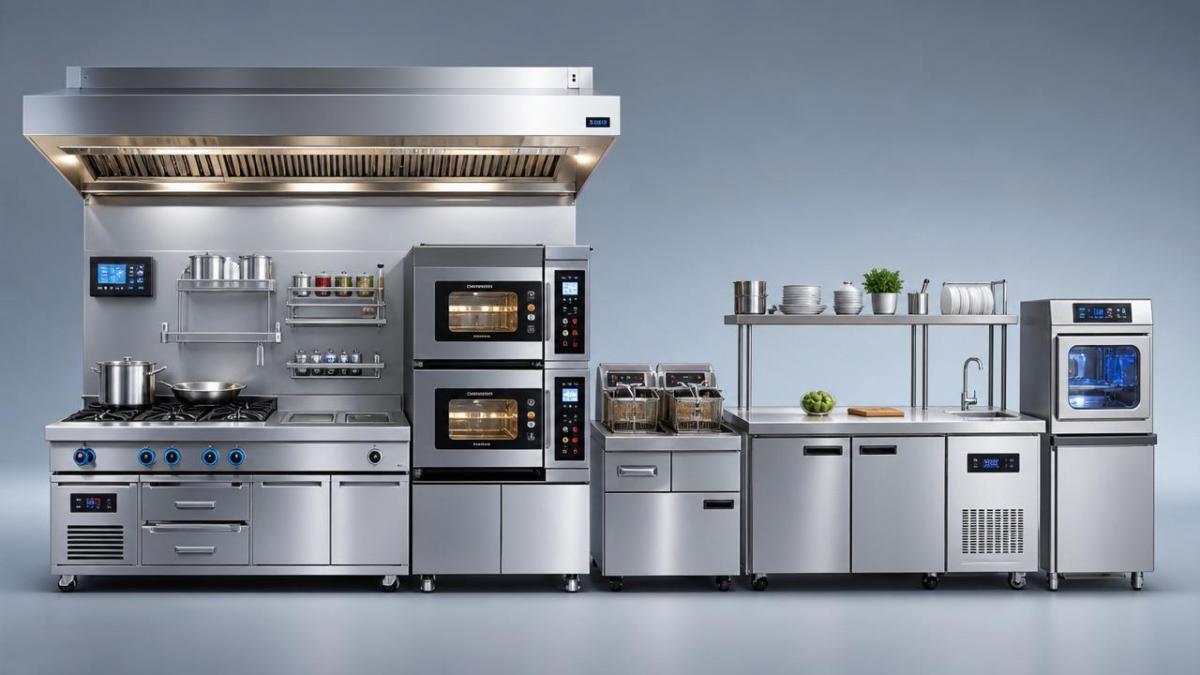
Scenario-based equipment priorities for first-time buyers
High-volume fast service: choose throughput over complexity
If the concept relies on rapid order turnover, this restaurant kitchen equipment guide recommends focusing on speed, ergonomic movement, and standardized cooking. High-recovery fryers, fast-heating griddles, heat lamps, holding cabinets, and efficient assembly counters are usually more important than broad-menu cooking tools. In this scenario, a compact and repeatable line can outperform a larger but less organized kitchen.
Energy-efficient kitchen equipment also matters here because long daily operating hours increase utility costs. Programmable controls, insulation quality, and easy-clean surfaces can improve both operating cost and labor efficiency.
Menu-driven dining: choose flexibility and station balance
For a full-service restaurant with varied dishes, buyers need equipment that supports multiple cooking methods and smooth handoff between prep, hot line, plating, and dish return. Ovens, ranges, salamanders, refrigerated prep units, and separate raw-to-ready work zones become critical. Here, the restaurant kitchen equipment guide should emphasize balanced station design rather than isolated machine performance.
A common mistake in this scenario is underestimating prep space. First-time operators often invest heavily in primary cooking appliances but overlook tables, sinks, ingredient access, and cold storage near the line. As a result, service slows even when the core equipment is technically adequate.
Small footprint concepts: choose multi-function equipment
Cafés, kiosks, and compact urban restaurants need every square meter to work harder. In these cases, multi-use ovens, undercounter refrigeration, stackable storage, and smaller food processing tools often deliver better value than separate specialized units. This is where intelligent or programmable equipment can help reduce training needs and maintain consistency with a lean team.
However, compact does not mean minimal. Food safety still requires proper refrigeration, handwashing access, ventilation planning, and cleaning flow. A small operation that skips these basics may face compliance issues and operational friction very quickly.
Delivery-focused kitchens: choose packaging flow and recovery planning
Cloud kitchens and delivery brands operate under a different pressure pattern. Demand often arrives in sharp peaks, and food quality must survive transport. In this scenario, a restaurant kitchen equipment guide should prioritize line duplication for best-selling items, rapid reheat capability, ingredient replenishment, and dedicated packaging stations. Shelving, labeling, sealing, and dispatch staging are as important as cooking hardware.
This environment also benefits from digital kitchen management solutions, such as production tracking screens, temperature logging, and order routing. Smart kitchen technologies are especially useful when one site supports multiple virtual brands.
How business size changes equipment decisions
Another reason a restaurant kitchen equipment guide must be scenario-based is that scale changes the right answer. A single-unit startup and a multi-outlet foodservice business may operate similar menus, but their equipment logic is different. Startups often need flexibility, lower risk, and phased investment. Growing groups usually need consistency, training simplicity, and replicable kitchen systems.
What first-time projects should confirm before buying
A reliable restaurant kitchen equipment guide should not end at a shopping list. It should help the buyer confirm operating conditions that directly affect suitability. Before placing orders, verify these points:
- Daily and peak production volume, not just average demand
- Menu processes that require grilling, frying, steaming, baking, chilling, or holding
- Available utilities, including gas, electric load, water, drainage, and ventilation
- Cleaning frequency, sanitation needs, and food safety workflow separation
- Staff skill level and whether automation can reduce errors
- Maintenance access, spare parts support, and long-term service reliability
- Expansion plans that may require modular or scalable kitchen systems
These checks are especially important in an industry moving toward automation, intelligence, and energy efficiency. A machine that looks advanced on paper may not be the right fit if the kitchen lacks the workflow, staff training, or service model to use it effectively.
Frequent scenario misjudgments in restaurant equipment planning
Many first-time projects run into the same avoidable problems. One is buying for ideal future volume instead of realistic opening volume. Another is copying another restaurant’s setup without considering differences in menu, labor, or service pattern. A third is focusing only on cooking equipment while underestimating refrigeration, warewashing, storage, and prep circulation.
There is also a growing tendency to buy smart kitchen equipment because it sounds future-ready. In reality, intelligent systems create the most value when the operation needs monitoring, consistency, and data visibility across shifts or sites. For very simple operations, robust basics may be more important than advanced features.
Finally, some buyers ignore energy efficiency because upfront price feels more urgent. Yet utility consumption, cleaning labor, downtime risk, and replacement cycles can make low-cost equipment more expensive over time. In a modern restaurant kitchen equipment guide, total operating value matters more than initial purchase price alone.
FAQ about choosing equipment for a first restaurant project
Should I buy all equipment at once?
Not always. If the concept is new, a phased approach can reduce risk. Secure the core cooking, refrigeration, prep, and sanitation equipment first, then add specialized items once demand patterns are clearer.
Is smart equipment necessary for a first-time operator?
It depends on the scenario. Smart equipment is valuable for consistency, energy monitoring, and labor support, especially in high-volume or multi-brand environments. For small simple kitchens, easy-to-maintain standard equipment may be the better starting point.
What is the most overlooked part of a restaurant kitchen equipment guide?
Workflow. Buyers often compare products without mapping how ingredients enter, get stored, move through prep, cooking, plating, washing, and waste handling. Good flow improves speed, hygiene, and labor efficiency more than any single appliance choice.
Choose equipment by fit, not by hype
The most useful restaurant kitchen equipment guide for first-time projects is one that translates equipment choices into business fit. Different restaurant scenarios need different answers: speed-focused kitchens need throughput, menu-driven kitchens need flexibility, compact sites need multifunction efficiency, and delivery kitchens need flow control beyond the hot line. When these differences are understood early, buyers make better decisions on capacity, layout, automation, and investment timing.
If you are evaluating a first project, start by defining your service model, menu process, peak demand, utility conditions, and expansion plan. Then compare equipment options against those realities. That approach will help you build a safer, more efficient, and more scalable kitchen that supports both current operations and future growth.
Popular Tags
Kitchen Industry Research Team
Dedicated to analyzing emerging trends and technological shifts in the global hospitality and foodservice infrastructure sector.
Industry Insights
Join 15,000+ industry professionals. Get the latest market trends and tech news delivered weekly.
No spam. Unsubscribe anytime.


Contact With us
Contact:
Anne Yin (Ceramics Dinnerware/Glassware)
Lucky Zhai(Flatware)