
Is a Commercial Microwave Oven Worth Adding to the Line
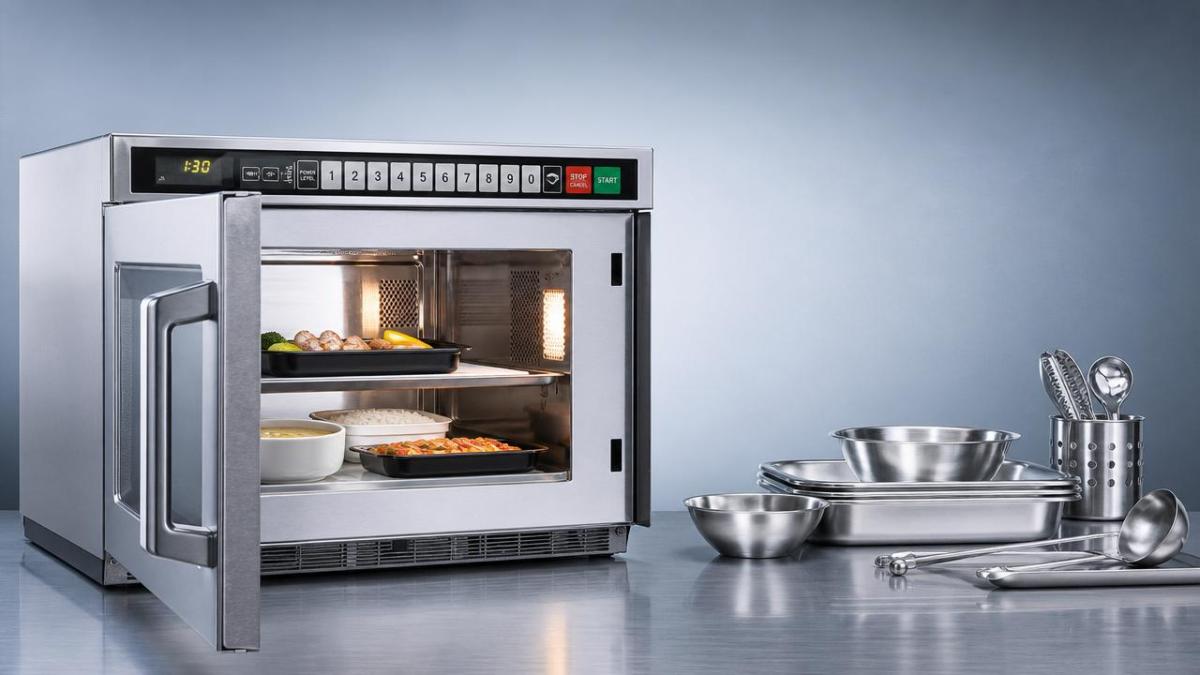
For business decision-makers evaluating kitchen upgrades, a commercial microwave oven can be more than a convenience—it can improve speed, consistency, and workflow across busy foodservice operations. As labor costs rise and efficiency becomes a competitive advantage, understanding whether this equipment delivers real value is essential before making a purchasing decision.
Why the question matters more now than it did a few years ago
The decision to add a commercial microwave oven is no longer a small operational choice. Across restaurants, hotels, catering kitchens, convenience food providers, and institutional dining, the kitchen equipment industry is moving toward faster turnaround, better labor utilization, and smarter equipment planning. In that environment, even a familiar appliance deserves a strategic review.
Several shifts are driving this reassessment. Menus are becoming more diverse, off-premise orders are increasing, and customers expect speed without accepting lower quality. At the same time, operators face tighter staffing, more pressure on food safety, and closer scrutiny of energy costs. A commercial microwave oven sits at the intersection of these issues because it influences reheating, holding, prep speed, consistency, and service recovery.
For enterprise buyers, the real question is not simply whether the unit can heat food quickly. It is whether the equipment supports current production trends, fits the operation’s workflow, and creates measurable value across labor, capacity, waste reduction, and customer experience.
The strongest market signals behind rising interest in the commercial microwave oven
Demand patterns in foodservice and food production are changing in ways that make the commercial microwave oven more relevant. Businesses are handling more mixed-volume service, more short-notice peaks, and more menu items that require precise reheating rather than full scratch cooking. This is especially visible in quick-service brands, coffee chains, hotel breakfast operations, convenience retail, and central kitchen distribution models.
Another signal is the broader shift toward equipment portfolios rather than single-machine thinking. Modern kitchens increasingly combine combi ovens, induction systems, automated holding solutions, blast chillers, and high-speed heating equipment. In that ecosystem, a commercial microwave oven is often evaluated not as a replacement for other cooking equipment but as a support tool that removes bottlenecks.
The kitchen equipment industry is also being shaped by digital control, programmable settings, and energy-aware purchasing. Buyers now expect equipment to be easier to train on, simpler to clean, and more predictable during busy shifts. These factors have raised the value of microwave models with programmable cycles, durable interiors, stackable footprints, and service-friendly construction.
What is changing in how businesses value this equipment
In the past, some operators saw a commercial microwave oven mainly as a low-cost convenience item. That view is changing. Today, decision-makers are more likely to evaluate it through a productivity lens. They want to know whether it shortens ticket times, improves throughput, reduces remakes, and helps less experienced staff execute standard tasks consistently.
This shift is important because value is no longer measured only by purchase price. The total equation now includes uptime, ease of use, repair frequency, cleaning effort, and fit within broader kitchen systems. A low-cost unit that cannot handle daily commercial volume may create more disruption than savings. By contrast, a properly selected commercial microwave oven can protect service speed in high-pressure periods and reduce dependence on limited skilled labor.
There is also a stronger distinction between residential-style expectations and true commercial requirements. Enterprise buyers are increasingly aware that duty cycle, power output, chamber size, programmability, and construction quality determine whether the unit supports business growth or becomes a weak point in operations.
Which operations benefit most from adding a commercial microwave oven
Not every operation receives the same return. The impact depends on menu format, service speed, kitchen layout, and production model. The best outcomes often appear where fast regeneration, portion consistency, and service flexibility matter more than theatrical cooking or long-batch production.
For many organizations, the best use of a commercial microwave oven is not replacing core cooking methods. Instead, it strengthens weak points in the workflow: reheating prepared components, reducing queue pressure on ovens or stovetops, supporting satellite service points, and helping teams recover when demand becomes unpredictable.
The main drivers behind adoption: labor, consistency, safety, and space
Labor remains one of the strongest drivers. In many markets, kitchens must do more with fewer experienced employees. Equipment that shortens task time and reduces variation becomes more attractive. A commercial microwave oven can help standardize basic heating procedures, especially where the menu includes soups, sauces, pre-cooked proteins, bakery items, or plated components that need fast regeneration.
Consistency is another major factor. When staff capability varies across shifts or locations, programmable settings support more repeatable outcomes. This matters for multi-unit operators and branded foodservice concepts where customers expect the same experience every time.
Food safety also plays a role. Reliable reheating procedures can support temperature control when integrated into standard operating processes. While the equipment itself does not replace proper HACCP discipline or training, it can make compliant reheating easier to execute when volume is high.
Finally, space efficiency matters. In compact kitchens, a commercial microwave oven can provide meaningful support without requiring the floor area or ventilation demands associated with larger cooking systems. That makes it particularly relevant in urban formats, kiosks, transport hubs, and hotel service areas.
Where decision-makers should be cautious
Despite the positive trend signals, adding a commercial microwave oven is not automatically the right decision. The most common mistake is treating it as a universal fix rather than a workflow-specific tool. If the menu depends on crisp texture, visual presentation, or artisan preparation, microwave heating may offer limited strategic value except for back-end support tasks.
Buyers should also avoid under-specifying the equipment. A unit selected only on price may struggle with power demands, chamber capacity, or continuous-use durability. That can lead to slower service, inconsistent results, and premature replacement. In enterprise procurement, the risk is less about overbuying and more about buying something that fails under real operating conditions.
Another caution is process mismatch. If there is no clear place for the commercial microwave oven within prep, service, or finishing steps, it may become underused. Successful adoption usually requires clear product applications, simple operating rules, and staff training aligned with the broader kitchen system.
How technology upgrades are changing buyer expectations
The kitchen equipment industry is increasingly shaped by smart controls, better materials, and more serviceable designs. As a result, the commercial microwave oven is evolving from a basic heater into a more controlled production asset. Features such as multi-stage cooking, programmable menus, clearer displays, improved insulation, and easier-clean interiors are becoming more valuable in commercial selection.
Decision-makers are also paying more attention to lifecycle factors. Can the unit withstand repetitive door use? Are spare parts accessible? Does it fit the electrical setup without costly changes? Can staff clean it quickly between shifts? In a market moving toward intelligent and energy-efficient kitchen solutions, these practical questions matter as much as rated wattage.
This reflects a broader industry trend: kitchen equipment purchases are becoming more operationally data-driven. Buyers want fewer surprises after installation. They increasingly prioritize predictable performance, compatibility with standardized procedures, and long-term service support.
A practical decision framework for enterprise buyers
If the goal is to determine whether a commercial microwave oven is worth adding to the line, the strongest approach is to test the decision against operational realities rather than assumptions. The following framework can help.
So, is a commercial microwave oven worth adding to the line?
In today’s market, the answer is increasingly yes for businesses facing speed pressure, labor constraints, or distributed service models—but only when the equipment is selected for a defined operational role. The strongest business case appears when the commercial microwave oven supports workflow resilience, not when it is added as an afterthought.
For the kitchen equipment industry as a whole, this reflects a larger shift toward practical automation, compact efficiency, and integrated kitchen systems. Buyers are no longer asking only what equipment does. They are asking how it changes output, labor dependency, consistency, and service reliability. That is exactly why the commercial microwave oven has become a more strategic evaluation point.
If your business wants to judge the opportunity more accurately, focus on a few key questions: which service delays are hurting performance, which menu items need faster regeneration, what training burden can be reduced, and what level of durability is required for your peak periods? By answering those questions first, decision-makers can determine whether a commercial microwave oven is simply useful—or truly worth adding to the line.
Popular Tags
Kitchen Industry Research Team
Dedicated to analyzing emerging trends and technological shifts in the global hospitality and foodservice infrastructure sector.
Industry Insights
Join 15,000+ industry professionals. Get the latest market trends and tech news delivered weekly.
No spam. Unsubscribe anytime.

Contact With us
Contact:
Anne Yin (Ceramics Dinnerware/Glassware)
Lucky Zhai(Flatware)