
How to Compare a Kitchen Tools Distributor Across Regions
Choosing the right kitchen tools distributor across regions is about more than price alone. Distributors, wholesalers, and agents need to compare product quality, supply stability, compliance standards, logistics efficiency, and local market support to reduce risk and improve long-term profitability. This guide outlines the key factors to evaluate when selecting regional distribution partners in the evolving global kitchen equipment market.
What Buyers Really Need to Compare Across Regions
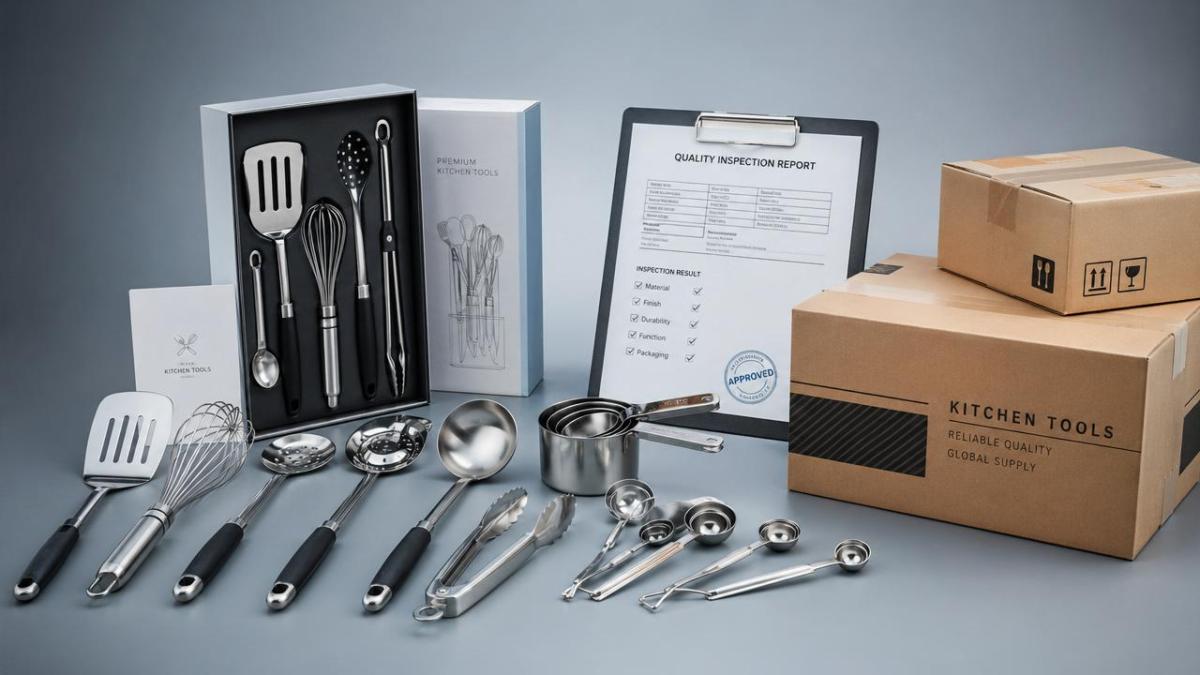
When distributors and agents search for ways to compare a kitchen tools distributor across regions, they are usually not looking for a generic supplier checklist. Their real question is more practical: which regional partner can help them sell reliably, protect margins, and reduce operational risk over time?
That means the best comparison method should go beyond catalog size or initial quotation. A distributor that looks competitive in one market may become costly in another because of inconsistent quality, slow replenishment, weak compliance documentation, limited packaging flexibility, or poor after-sales communication.
For target readers such as wholesalers, importers, regional distributors, and brand agents, the key concern is not simply finding a low-cost source. It is finding a regional supply partner that fits local customer expectations, market regulations, channel structure, and inventory strategy.
In practice, comparing regional distributors works best when you score them on business-critical areas: product consistency, manufacturing depth, certification readiness, lead time reliability, market support, and total landed cost. These factors usually reveal more than headline pricing ever will.
Start With Regional Demand, Not Supplier Claims
Before comparing any kitchen tools distributor, define what your region actually demands. Kitchen tools sold into North America, Europe, the Middle East, Southeast Asia, or Latin America often differ in material preferences, compliance needs, packaging expectations, and preferred price bands.
For example, buyers serving restaurant chains may prioritize durability, standardized specifications, and replenishment speed. Buyers supplying retail or e-commerce channels may care more about branding, packaging presentation, barcode readiness, and product assortment depth. Household-focused markets may value style and gifting appeal, while foodservice buyers care more about performance and replacement cycles.
This is why the first comparison point should be market fit. Ask whether the distributor understands your target segment, not just whether it can ship products. A supplier with strong experience in hospitality, central kitchens, or food processing channels will usually be more useful than one offering a broad but unfocused product range.
A good way to assess this is by requesting examples of regional customers, bestselling categories, repeat order patterns, and adaptation for local channels. If the answers are vague, the distributor may be acting as a trader with limited real control over supply and market alignment.
Compare Product Quality at the SKU Level
One of the biggest mistakes in cross-regional sourcing is evaluating quality too generally. “Good quality” is not a useful standard unless it is tied to specific kitchen tools, materials, finishes, and expected usage environments. A distributor may be strong in knives, stainless steel utensils, or food prep tools, but inconsistent in other categories.
Instead of reviewing samples randomly, compare by SKU family. Assess stainless steel grade, handle construction, weight consistency, finish quality, edge retention where applicable, heat resistance, food-contact safety, and packaging durability. Small variations become major issues when products move across borders and returns are expensive.
It is also important to compare quality stability over time. Some regional suppliers deliver strong first samples but fail to maintain the same standard in bulk production. Ask about quality control procedures, batch traceability, inspection points, defect thresholds, and whether third-party inspections are supported.
For distributors and agents, product quality is directly linked to brand reputation and channel trust. If your local buyers encounter rusting, breakage, inconsistent sizing, or weak finishing, your margin loss will often be far greater than any savings achieved through a lower sourcing price.
Assess Supply Stability and Production Control
In regional distribution, supply reliability often matters more than a lower unit cost. A kitchen tools distributor that cannot maintain consistent lead times, raw material sourcing, or seasonal production capacity will create downstream problems for your warehouse planning, sales commitments, and customer retention.
Ask whether the supplier is a manufacturer, a manufacturer-backed exporter, or a pure trading company. None of these models is automatically bad, but each has different implications. Manufacturers may offer better control and cost visibility. Strong exporters may provide better coordination across product categories. Traders can be useful for assortment aggregation, but they may have weaker control over production schedules and quality consistency.
Capacity is another regional comparison point that should not be overlooked. A supplier that performs well at trial order stage may struggle when volumes scale or when demand spikes before holiday seasons, restaurant expansion cycles, or promotional campaigns. You should ask about monthly output, backup factories, raw material sourcing stability, and contingency planning.
Reliable kitchen tools distribution depends on more than having inventory today. It depends on whether the partner can support your business six months and twelve months from now without major disruptions.
Review Compliance and Certification by Destination Market
Regional comparison becomes especially important when products enter markets with different regulatory expectations. Food-contact standards, labeling rules, packaging compliance, and documentation requirements vary significantly across countries and regions.
For example, buyers shipping into the EU may prioritize REACH-related considerations, food-contact declarations, and more formal documentation processes. North American buyers may focus on food safety materials, labeling conformity, and retailer-specific standards. Middle Eastern and Asian markets may have their own import documentation, language labeling, or certification expectations.
When evaluating a kitchen tools distributor, do not just ask, “Are your products certified?” Ask for the exact documents relevant to your target market, product category, and material composition. A serious supplier should be able to provide test reports, declarations, material specifications, and export paperwork in an organized way.
This area is especially important for agents and importers who carry legal and reputational risk in their local market. A supplier with weak compliance support can delay customs clearance, increase inspection risk, or expose your business to returns and penalties.
Look Beyond Unit Price to Total Landed Cost
Price comparisons across regions can be misleading if you focus only on ex-factory quotations. The real business question is total landed cost: product price plus packaging, inspection, inland transport, freight, duty exposure, storage impact, and defect-related costs.
A lower-priced kitchen tools distributor may require larger minimum order quantities, mixed packaging that slows warehouse handling, or inconsistent carton dimensions that increase freight inefficiency. Another supplier may quote slightly higher prices but save money through faster turnover, lower defect rates, and smoother customs documentation.
You should also compare payment terms, currency exposure, and reorder flexibility. In some regions, a distributor willing to support smaller repeat orders can improve cash flow and reduce stock risk, even if the unit price is not the lowest. This can be especially valuable for agents testing new categories or entering a new city or country.
Smart comparison means building a cost model that includes operational realities, not just procurement math. The best regional partner is often the one that helps you protect inventory health and customer service while keeping margins predictable.
Measure Logistics Performance and Delivery Risk
Regional distribution success depends heavily on logistics performance. A supplier that offers strong products but weak export coordination can still become a poor long-term partner. This is why logistics should be evaluated as a commercial capability, not as an afterthought.
Ask how the distributor handles export packing, container loading, shipping document accuracy, lead time communication, and delivery exception management. If you serve multiple markets, check whether the supplier can support split shipments, mixed containers, or consolidated product categories.
Lead time reliability is often more important than headline speed. A supplier that consistently delivers in 35 days is usually more useful than one promising 25 days but regularly slipping to 45. For distributors and wholesalers, predictability improves planning, customer commitments, and inventory turnover.
Also assess how the supplier responds when disruptions happen. Port congestion, raw material shortages, and regulatory checks are not always avoidable. What matters is whether the distributor communicates early, offers alternatives, and manages documentation professionally.
Evaluate Regional Support, Communication, and Commercial Flexibility
A kitchen tools distributor may look strong on paper but still fail in day-to-day cooperation if communication is slow, unclear, or too rigid. For cross-regional business, response quality matters because time zone gaps, language differences, and market-specific adjustments are common.
Pay attention to how quickly the supplier answers technical questions, confirms sample changes, updates production schedules, and handles claims. These behaviors often predict the quality of the long-term relationship more accurately than presentation materials do.
Commercial flexibility is also a major comparison point. Can the distributor support private label programs, customized packaging, regional compliance labeling, mixed-category orders, or exclusive arrangements for a territory? These capabilities are often important for agents and wholesalers trying to differentiate themselves locally.
Some suppliers are optimized for large standard orders and offer little adaptation. Others are better partners for channel development because they support product testing, lower-risk launches, and branding support. The better choice depends on your business model, not on a generic ranking.
Use a Weighted Scorecard Instead of a Simple Shortlist
The most practical way to compare distributors across regions is to use a weighted scorecard. This helps decision-makers avoid being overly influenced by one strong factor, such as low price or fast sample delivery, while ignoring broader operational risk.
Your scorecard can include categories such as product quality, range depth, market fit, certifications, lead time stability, MOQ flexibility, logistics performance, responsiveness, packaging options, and total landed cost. Assign weights based on your actual strategy. For example, a foodservice wholesaler may give more weight to durability and replenishment speed, while a retail-focused importer may prioritize packaging and product presentation.
It is also useful to run the comparison in phases. First, screen suppliers by basic qualification. Second, compare samples and documents. Third, test with a pilot order. Fourth, evaluate post-shipment performance such as packaging accuracy, delivery timing, and claim handling. This approach reduces the risk of choosing a distributor based only on pre-sales impressions.
A structured comparison method creates better internal alignment as well. It helps procurement teams, sales managers, and business owners make decisions using shared standards rather than personal preference.
Red Flags That Should Lower a Distributor’s Ranking
Some warning signs appear consistently when regional distributor relationships fail. One major red flag is inconsistent documentation. If test reports, quotations, specifications, and lead time commitments do not match, you may face larger problems after payment.
Another common issue is overly broad product claims without category depth. If a supplier says it can provide every kind of kitchen tool but offers weak technical details and inconsistent samples, it may be relying on fragmented sourcing rather than controlled supply.
Poor transparency around factories, vague answers about production capacity, and resistance to third-party inspection are also concerns. For importers and agents, these signals often indicate hidden quality or delivery risk.
Finally, be careful with unusually aggressive pricing. In many cases, the lowest quote comes with lower material grades, unstable finishing standards, limited packaging protection, or weak after-sales accountability. If pricing seems far below the market, ask what has been removed from the value chain.
How to Make the Final Regional Decision
The best kitchen tools distributor is not the same in every region. The right choice depends on your customer segment, target margin, compliance environment, sales cycle, and replenishment needs. A partner that works well for retail distribution in one country may not be suitable for hospitality or food processing channels in another.
In most cases, the strongest final decision comes from balancing four priorities: product-market fit, stable execution, acceptable total cost, and workable communication. If one of these pillars is weak, the relationship may become expensive later even if the initial offer looks attractive.
It is often wise to start with a controlled pilot order before making a broader commitment. A pilot reveals how the distributor performs under real conditions, including production follow-up, packaging accuracy, shipping reliability, and claim resolution. This is far more valuable than relying only on samples or presentations.
For growing distributors, wholesalers, and agents, regional supplier selection should be treated as a strategic business decision rather than a transactional purchase. The right partner can improve customer retention, reduce operational friction, and support long-term expansion across multiple channels.
Conclusion
To compare a kitchen tools distributor across regions effectively, focus on the factors that truly shape long-term business performance: demand fit, product consistency, supply stability, compliance readiness, logistics execution, communication quality, and total landed cost. These elements matter far more than a low headline price alone.
For distributors, agents, and wholesalers, the goal is to choose a partner that not only supplies products, but also supports reliable market growth. A disciplined comparison process helps you reduce sourcing risk, protect your reputation, and build a more profitable regional distribution business in the global kitchen equipment market.
Popular Tags
Kitchen Industry Research Team
Dedicated to analyzing emerging trends and technological shifts in the global hospitality and foodservice infrastructure sector.
Industry Insights
Join 15,000+ industry professionals. Get the latest market trends and tech news delivered weekly.
No spam. Unsubscribe anytime.


Contact With us
Contact:
Anne Yin (Ceramics Dinnerware/Glassware)
Lucky Zhai(Flatware)