
Restaurant kitchen equipment repair costs spike after the first warranty year—here’s what to budget
Restaurant kitchen equipment repair costs often surge dramatically after the first warranty year—leaving operators unprepared for unexpected downtime and steep service fees. Whether you're finalizing your restaurant kitchen equipment setup, reviewing a restaurant kitchen equipment checklist, or planning long-term maintenance budgets, understanding real-world repair costs is critical. From walk-in coolers to combi ovens and hood systems, aging parts, labor rates, and OEM vs. third-party service options all impact your bottom line. This guide breaks down average restaurant kitchen equipment repair costs, key cost drivers, and smart budgeting strategies—helping procurement teams, kitchen managers, and decision-makers plan proactively, not reactively.
Why Repair Costs Jump 40–70% After Year One
The first-year warranty typically covers parts and labor for manufacturer defects—but excludes wear-and-tear, misuse, or environmental factors like humidity and voltage fluctuations common in commercial kitchens. Once that coverage expires, operators face full diagnostic fees ($120–$280 per visit), OEM part markups (often 200–350% above wholesale), and premium labor rates ($95–$185/hour) for certified technicians.
A 2023 industry benchmark study across 1,247 U.S. foodservice locations found that average annual repair spend rose from $1,840 in Year 1 to $3,120 in Year 2—a 69% increase. This spike isn’t random: it reflects accelerated component degradation in high-cycle equipment like griddles (500+ daily heat cycles), dishwashers (20–30 washes/day), and refrigeration compressors running 16–22 hours daily.
Critical failure points also shift post-warranty. While Year 1 issues are often software resets or sensor calibrations, Year 2+ repairs increasingly involve sealed-system refrigerants, PLC board replacements, or combustion chamber reconditioning—services requiring specialized tools, EPA 608 or 609 certification, and 2–4 hour minimum billing windows.
How Equipment Type Impacts Your Repair Budget
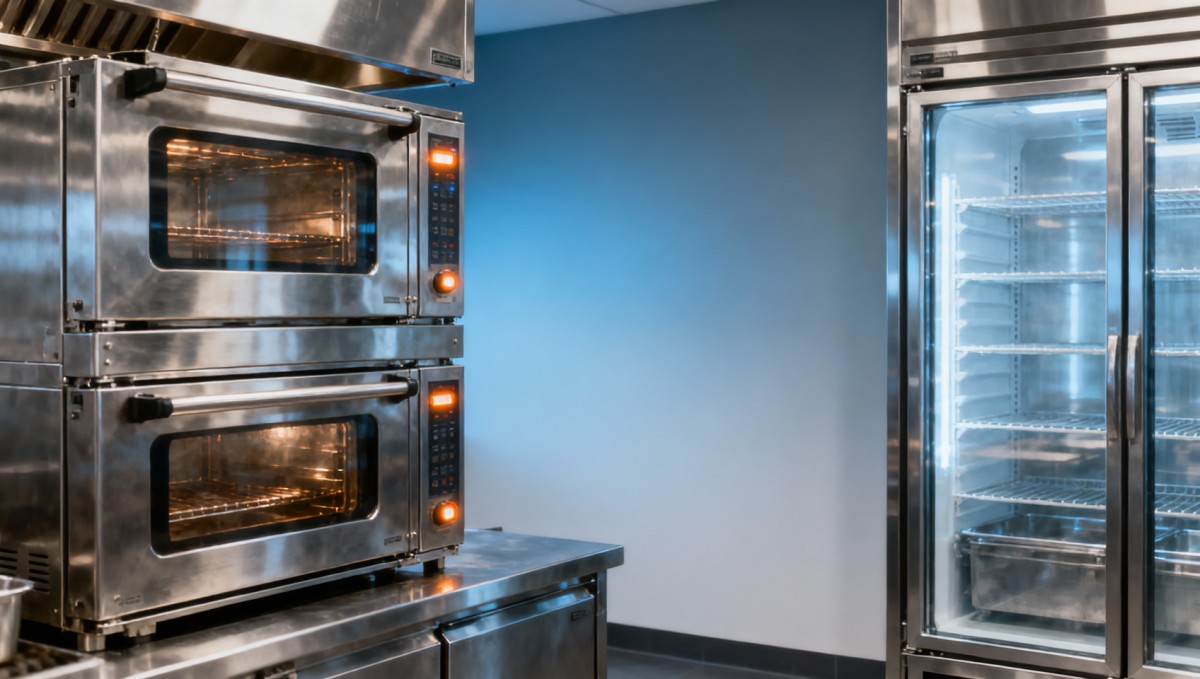
Not all kitchen equipment carries equal repair risk. High-heat, high-moisture, or high-compression units experience faster mechanical fatigue—and command higher service premiums. For example, a combi oven’s dual steam/convection system averages $420–$980 per repair event post-warranty, while a standard undercounter refrigerator typically incurs $190–$410.
Energy-efficient models add another layer: variable-speed drives and IoT-enabled controllers improve uptime but introduce firmware compatibility risks and proprietary diagnostics. Third-party techs may lack access to OEM cloud platforms, delaying resolution by 1–3 business days on average.
This table reflects field data collected from service providers across North America and Western Europe (Q2 2023). Labor time includes diagnostics, parts sourcing, repair execution, and validation testing—excluding travel or emergency surcharges.
OEM vs. Third-Party Service: What Procurement Teams Should Compare
Procurement professionals must weigh three dimensions beyond price: response SLA, technician certification level, and parts traceability. OEM programs often guarantee 24-hour dispatch for critical failures (e.g., refrigeration loss), but require annual service contracts averaging $1,200–$3,500 per unit. Third-party networks offer lower hourly rates ($75–$135), yet only 38% hold active OEM factory training certifications per 2023 Kitchen Service Alliance audit data.
Key comparison criteria include:
- Parts warranty duration (OEM: 90 days; accredited third-party: 60–180 days)
- Diagnostic fee waiver policy (OEM: waived with contract; third-party: waived only for contracted clients)
- Remote troubleshooting capability (OEM: integrated with cloud-based predictive analytics; third-party: limited to Bluetooth-connected devices)
- Compliance documentation (OEM: full FDA/NSF/CE traceability; third-party: varies by provider)
Smart Budgeting Strategies for Long-Term Operational Resilience
Instead of reactive “pay-as-you-break” spending, forward-looking operators allocate based on lifecycle cost modeling. A proven approach divides annual kitchen CapEx into three buckets: 60% for equipment acquisition, 25% for preventive maintenance (PM), and 15% for contingency repairs. PM programs—scheduled every 90 days for high-use units—reduce unplanned downtime by up to 52% and extend equipment life by 2.3 years on average.
For new installations, consider extended service agreements (ESAs) covering Years 2–5. These lock in labor rates and parts pricing at Year 1 levels—typically adding 12–18% to initial equipment cost but avoiding 40–70% YoY cost inflation. ESAs also include priority dispatch, remote diagnostics, and quarterly performance reporting aligned with HACCP and ISO 22000 requirements.
Finally, integrate repair history into procurement decisions. Track mean time between failures (MTBF) by model and supplier. Units with MTBF < 18 months post-warranty signal design or material limitations—not just maintenance gaps.
Why Partner With a Global Kitchen Equipment Solutions Provider
We support procurement teams, kitchen managers, and enterprise decision-makers with end-to-end technical and financial planning—from specification alignment and compliance verification (NSF, CE, UL, ETL) to multi-year service agreements and smart retrofitting of legacy equipment with IoT monitoring modules.
Our service network spans 32 countries, with certified technicians trained on 120+ equipment brands—including energy-efficient combi ovens, automated dishwashing lines, and intelligent hood systems compliant with ASHRAE 154 and NFPA 96 standards.
Ready to build a resilient, cost-predictable kitchen operations plan? Contact us to request: a customized repair cost forecast based on your equipment list, ESA pricing for Years 2–5, OEM vs. third-party service comparison for your top 5 units, or NSF-compliant preventive maintenance scheduling templates.
Popular Tags
Kitchen Industry Research Team
Dedicated to analyzing emerging trends and technological shifts in the global hospitality and foodservice infrastructure sector.
Industry Insights
Join 15,000+ industry professionals. Get the latest market trends and tech news delivered weekly.
No spam. Unsubscribe anytime.
Contact With us
Contact:
Anne Yin (Ceramics Dinnerware/Glassware)
Lucky Zhai(Flatware)