
How much does a full restaurant kitchen equipment setup really cost in 2026?
Planning a restaurant kitchen equipment setup in 2026? Costs vary widely—from $50,000 for a compact café to over $300,000 for a full-service commercial kitchen—depending on scale, equipment quality, and compliance with restaurant kitchen equipment standards. Whether you're drafting a restaurant kitchen equipment checklist, exploring restaurant kitchen equipment ideas, or evaluating restaurant kitchen equipment prices from top manufacturers and suppliers, smart planning starts with layout, dimensions, hood system specs, and energy-efficient design. This guide breaks down real 2026 costs, key requirements, accessories, repair considerations, and how to align your restaurant kitchen equipment planning with safety, workflow, and long-term ROI.
What’s Driving 2026 Kitchen Equipment Costs?
Global supply chain stabilization has reduced lead times for core components—average delivery now ranges from 8–12 weeks versus 20+ weeks in 2022—but material inflation persists. Stainless steel (304 grade) remains 12–18% above 2021 baseline pricing, while energy-efficient motors and IoT-enabled controllers add 7–15% premium over standard models.
Regulatory alignment is another cost driver: UL 197 (U.S.), EN 15453 (EU), and GB 4706.1-2023 (China) now mandate integrated thermal cutoffs, remote diagnostics ports, and real-time energy logging in >90% of new commercial cooking units. These features are no longer optional upgrades—they’re baseline compliance requirements across North America, Europe, and ASEAN markets.
Labor integration also impacts total investment. Automated dishwashing systems with AI-driven load recognition, smart combi-ovens with cloud-based recipe libraries, and modular ventilation hoods with dynamic airflow modulation require certified technicians for commissioning—adding $3,500–$8,200 in setup labor per major subsystem.
How Much Does a Full Setup Cost—By Restaurant Type?
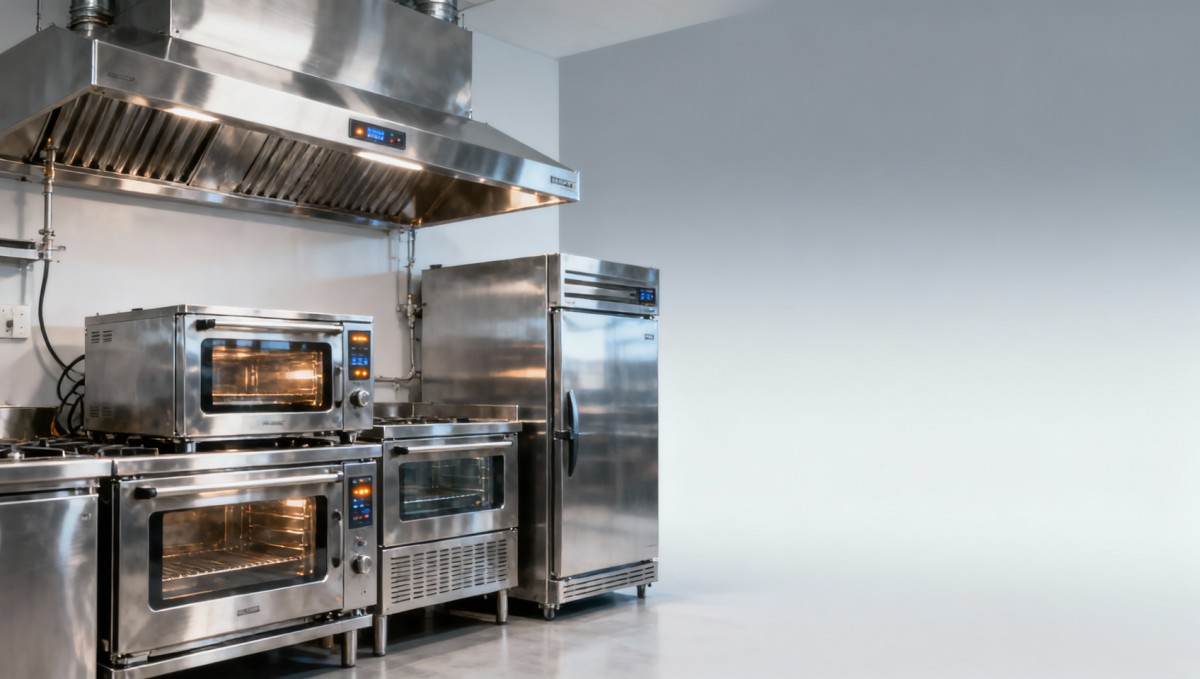
Costs aren’t linear—they scale by operational complexity, not just square footage. A 2,000 sq ft fast-casual concept may spend $125,000, while a 1,800 sq ft fine-dining kitchen demands $240,000 due to precision equipment, redundant safety systems, and custom fabrication.
Note: These figures exclude site-specific utility upgrades (e.g., 3-phase electrical panels, gas line rerouting, grease trap installation), which average $18,000–$42,000 depending on municipal code enforcement and existing infrastructure condition.
Critical Cost-Saving Decisions You Can’t Afford to Skip
Smart procurement isn’t about choosing the lowest sticker price—it’s about optimizing total cost of ownership (TCO) over 7–10 years. Energy consumption alone accounts for 35–48% of lifetime operating cost for high-use equipment like dishwashers and refrigeration units.
Three non-negotiable evaluation criteria:
- Energy Certification Tier: Prioritize ENERGY STAR® Commercial Kitchen Equipment (v4.0, effective Jan 2025) or EU Ecodesign Lot 12-compliant units—these deliver 22–37% lower kWh/serving vs. non-certified equivalents.
- Modular Service Architecture: Units with field-replaceable control boards, plug-and-play sensor arrays, and standardized mounting interfaces reduce downtime by up to 65% during repairs (per 2025 NAFEM Field Service Benchmark Report).
- Local Support Network: Verify manufacturer-certified technicians are available within 75 miles—or confirm remote diagnostics + same-day parts dispatch (standard SLA: ≤48 hr response time).
Why Choose Our Integrated Kitchen Solutions?
We specialize in end-to-end commercial kitchen equipment planning—not just product supply, but workflow-integrated deployment. With engineering teams certified in NFPA 96, ASHRAE 154, and ISO 22000-aligned food safety protocols, we embed compliance into every specification.
Our clients receive:
- A validated 3D kitchen layout with CFD-verified hood capture velocity maps (≥125 FPM at face)
- Equipment sequencing aligned to HACCP critical control points—no cross-contamination zones
- Pre-vetted supplier list with regional warranty coverage (minimum 3-year parts, 2-year labor)
- Post-installation performance validation: 72-hour load testing with energy & temperature log reports
Ready to get precise, actionable numbers for your specific concept? Share your floor plan, menu mix, seating capacity, and local utility rates—we’ll deliver a compliant, optimized equipment budget with itemized 2026 pricing, lead time confirmation, and certification documentation roadmap within 3 business days.
Popular Tags
Kitchen Industry Research Team
Dedicated to analyzing emerging trends and technological shifts in the global hospitality and foodservice infrastructure sector.
Industry Insights
Join 15,000+ industry professionals. Get the latest market trends and tech news delivered weekly.
No spam. Unsubscribe anytime.
Contact With us
Contact:
Anne Yin (Ceramics Dinnerware/Glassware)
Lucky Zhai(Flatware)