
How kitchen tools for food processing impact output and downtime
For technical evaluators, understanding how kitchen tools for food processing affect output and downtime is essential when comparing equipment performance, workflow stability, and long-term operating costs. From automated cutting systems to smart preparation tools, the right solutions can improve efficiency, reduce interruptions, and support consistent food quality—making equipment selection a critical factor in modern foodservice and processing environments.
In commercial kitchens, central production units, and food processing lines, equipment choice directly shapes throughput, labor demand, sanitation control, and maintenance planning. A slicer that holds a ±1 mm cutting tolerance, a mixer designed for 30 to 60 minute continuous duty, or a vegetable washer with fast tool-free cleaning can influence not only hourly output, but also the number of stoppages per shift.
For buyers and technical reviewers, the evaluation should go beyond headline motor power or nominal capacity. The more useful question is how kitchen tools for food processing perform under real operating conditions: variable ingredient loads, repeated washdown cycles, multi-shift usage, operator turnover, and strict food safety targets. This article examines the relationship between tool design, output stability, and downtime risk, with practical selection criteria for B2B purchasing decisions.
Why output and downtime matter in food processing environments
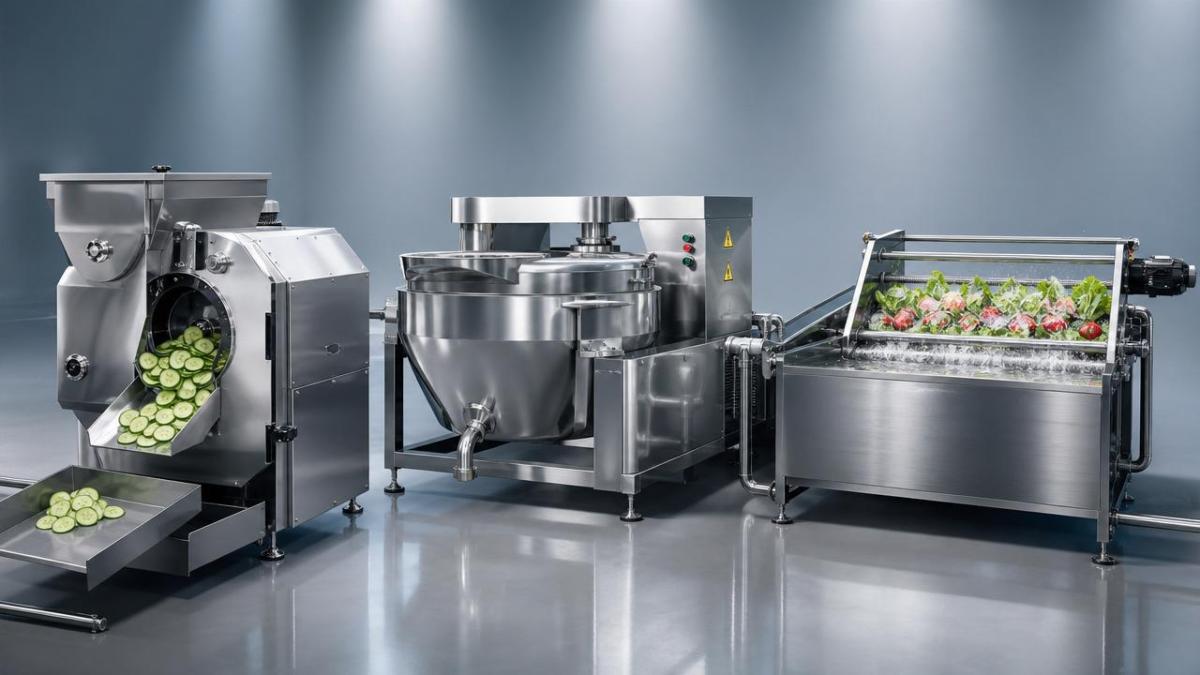
Output is not just a maximum capacity figure on a specification sheet. In real operations, it refers to the amount of usable product a tool can process per hour, per shift, or per batch while meeting quality targets. Downtime includes both planned stoppages, such as cleaning and blade changes, and unplanned interruptions, such as jams, overheating, sensor faults, or operator errors.
In many kitchens and processing facilities, a difference of 10 to 15 minutes of interruption per 4-hour production block can affect labor scheduling, order fulfillment, and cold-chain timing. This is especially important in high-volume applications such as vegetable preparation, meat portioning, dough mixing, and sauce blending, where one upstream delay can slow 2 or 3 downstream stations.
The operational link between tool design and throughput
Kitchen tools for food processing influence throughput through 4 core mechanisms: cycle speed, load consistency, changeover time, and cleaning efficiency. For example, a dicing unit with a 300 to 800 kg/hour operating range may still underperform if product feed is unstable or blade replacement takes 20 minutes between recipes.
Likewise, a compact cutter may advertise high rotational speed, but if it requires frequent manual intervention to clear soft produce buildup, actual output can fall by 8% to 20% over a full shift. Technical evaluators should therefore focus on sustained output rather than peak output.
Common causes of downtime
- Blade wear or misalignment after repeated processing cycles
- Motor overload caused by inconsistent ingredient density or oversized batches
- Long sanitation procedures due to difficult-to-access contact surfaces
- Sensor contamination in semi-automated or smart preparation tools
- Operator mistakes during setup, tool changes, or reassembly
These issues are common across restaurants, hotels, commissary kitchens, and food factories. The impact becomes more severe when production runs exceed 6 to 8 hours per day or when the same equipment supports multiple menu categories.
How different tool categories affect performance
Not all kitchen tools for food processing create the same operational value. Cutting tools, grinding systems, peeling machines, mixers, and portioning devices each affect output and downtime differently. The table below compares the typical performance variables technical teams should review.
The key takeaway is that the best-performing tool is rarely the one with the highest nominal speed alone. It is the one that maintains stable output over repeated cycles, supports fast cleaning, and reduces operator intervention across changing production demands.
Key technical factors to evaluate before purchase
When reviewing kitchen tools for food processing, technical evaluators should use a multi-factor assessment model. Capacity matters, but so do tolerance, cleanability, ergonomics, control logic, spare part availability, and service response. In many B2B settings, a 5% gain in usable uptime is more valuable than a 15% increase in theoretical top speed.
1. Real working capacity and duty cycle
Always compare rated capacity with sustained capacity. A machine listed at 500 kg/hour may achieve that level only with a narrow product type, limited moisture variation, and short operating windows. Ask for batch duration, recommended rest periods, and duty cycle guidance such as 30/10 minutes or 60/15 minutes.
For continuous-prep environments, tools that maintain 80% to 90% of rated output over a full shift are usually more practical than tools that peak high but require frequent pauses. This is especially relevant for central kitchens serving 200 to 2,000 meals per day.
2. Product consistency and quality tolerance
Output only creates value when it meets quality specifications. In cutting operations, review slice thickness range, particle size consistency, and deviation tolerance. For sauces, fillings, or batters, check mixing uniformity and the ability to control temperature rise during processing.
A tool that produces uneven portions can create hidden downtime later through rework, sorting, and corrective handling. In many kitchens, reprocessing 5% of a batch can erase much of the time saved at the preparation stage.
3. Sanitation design and changeover speed
Cleaning time is one of the most underestimated contributors to downtime. Smooth surfaces, removable food-contact components, minimal dead zones, and tool-free disassembly can reduce washdown time by 10 to 30 minutes per cleaning event. If sanitation occurs 2 to 4 times daily, the annual labor impact is significant.
Technical teams should verify whether key parts can be removed by one operator, whether seals and blades are accessible, and whether reassembly errors trigger safety interlocks or production delays.
4. Serviceability and spare parts planning
Downtime risk increases when spare parts are difficult to source or when preventive maintenance is too specialized for the site team. For imported equipment, check lead times for blades, belts, seals, motors, and controller modules. A 2-day shipping delay may be manageable, while a 3 to 6 week wait for a critical component can disrupt production planning.
The matrix below can help evaluators compare options using practical decision criteria rather than marketing claims alone.
Using a matrix like this creates a more balanced procurement process. It also helps technical evaluators translate equipment differences into measurable production outcomes, which is critical when comparing suppliers from different manufacturing regions or technology levels.
How kitchen tools for food processing affect different operating scenarios
The effect of kitchen tools for food processing depends heavily on the application. A hotel banquet kitchen, a quick-service chain commissary, and a vegetable processing room may all use preparation equipment, but their output patterns and downtime tolerance are not the same. Good evaluation requires scenario-based review.
High-mix, medium-volume kitchens
Hotels, catering centers, and premium restaurants often process many SKUs in smaller batches. In these environments, changeover speed may be more important than maximum hourly volume. If a cutter can switch from root vegetables to leafy produce in under 8 minutes, it may outperform a larger unit that needs 20 minutes of cleaning and setup.
Here, the best kitchen tools for food processing are usually compact, easy to sanitize, and intuitive for multi-role staff. Reduced operator training time can lower setup errors, especially in sites with seasonal labor fluctuations.
High-volume central kitchens
Central kitchens focus on repetition, standardization, and stable throughput. For these users, throughput per hour, preventive maintenance intervals, and spare part standardization become priority metrics. A 1-hour stoppage on a line producing 600 to 1,200 portions per hour can disrupt dispatch schedules and refrigerated holding plans.
In this setting, technical evaluators should examine load endurance, motor temperature control, and cleaning schedules that align with HACCP-based routines. Semi-automated feeding and digital status alerts can also reduce interruptions caused by overloading or misoperation.
Food processing facilities with strict consistency requirements
Facilities producing sauces, fillings, marinated ingredients, or semi-prepared meals often prioritize consistency and traceability over pure speed. Here, downtime can include product rejection, not just machine stoppage. A mixer that runs continuously for 45 minutes but creates uneven texture adds hidden cost through waste and quality holds.
For these operations, smart kitchen tools for food processing with programmable settings, repeatable cycle controls, and maintenance alerts can improve both output confidence and audit readiness.
Reducing downtime through selection, maintenance, and implementation
Even well-designed equipment underperforms without the right deployment plan. To reduce downtime, technical evaluators should connect purchasing criteria with training, maintenance routines, and site layout. A tool is not fully evaluated until its installation and daily use conditions are considered.
A practical 5-step evaluation process
- Define target output by product type, batch size, and shift length.
- Map likely downtime sources, including sanitation, blade changes, and loading interruptions.
- Request trial data or demonstrations using real ingredients with realistic moisture and density variation.
- Review maintenance access, spare part availability, and operator training needs.
- Calculate total operating impact over 12 to 36 months, not purchase price alone.
This process helps organizations avoid a common mistake: selecting tools based on output claims without considering cleaning frequency, wear rates, and staffing reality. In many cases, a slightly higher upfront cost leads to lower unplanned downtime and better labor efficiency over the equipment life cycle.
Maintenance practices that protect output
Preventive maintenance should match the production profile. High-use cutting tools may require blade inspection every 40 to 80 operating hours, while mixers may need seal and bearing checks every 3 to 6 months depending on viscosity and cleaning intensity. A simple maintenance calendar can prevent performance drift before a failure occurs.
Operators also need clear visual guides for assembly, hygiene verification, and pre-start checks. A 3-minute pre-use inspection can catch loose fittings, worn contact parts, or control issues before they lead to 30 minutes of corrective downtime.
Common implementation mistakes
- Oversizing equipment for occasional peak demand while ignoring daily cleaning burden
- Underestimating water, drainage, ventilation, or power conditions at the installation site
- Choosing advanced controls without matching operator skill level
- Failing to stock critical wear parts for high-frequency applications
Avoiding these mistakes improves both uptime and return on investment. It also supports more consistent food safety performance, which is increasingly important as kitchen equipment moves toward automation, digital monitoring, and integrated production systems.
What technical evaluators should ask suppliers
Supplier discussions should be structured around evidence, not broad claims. When reviewing kitchen tools for food processing, ask for sustained output conditions, cleaning time benchmarks, recommended maintenance intervals, and the list of routine wear parts. This information reveals whether a supplier understands real production use.
Essential questions during evaluation
- What is the difference between rated and sustained output for our target products?
- How long does full cleaning and reassembly take for one trained operator?
- Which parts typically require replacement within the first 12 months?
- What is the normal lead time for blades, seals, sensors, or control components?
- Can the tool handle ingredient variability in moisture, size, or texture without frequent stoppages?
These questions help buyers compare vendors across domestic and international sourcing channels. They are also useful when reviewing equipment from established export centers such as China, Germany, Italy, and Japan, where design philosophies, automation levels, and service structures may differ.
Kitchen tools for food processing have a direct and measurable effect on throughput, labor efficiency, food consistency, and both planned and unplanned downtime. For technical evaluators, the most reliable selection method is to assess sustained capacity, sanitation design, product consistency, serviceability, and fit with the actual operating scenario. A tool that is easier to clean, faster to reset, and simpler to maintain often delivers stronger long-term value than one that only promises higher peak speed.
If you are comparing equipment for a restaurant group, central kitchen, hotel operation, or food processing facility, a structured technical review can reduce risk and improve procurement accuracy. Contact us to discuss your application, request a tailored equipment assessment, or explore more solutions for efficient, low-downtime food processing operations.
Popular Tags
Kitchen Industry Research Team
Dedicated to analyzing emerging trends and technological shifts in the global hospitality and foodservice infrastructure sector.
Industry Insights
Join 15,000+ industry professionals. Get the latest market trends and tech news delivered weekly.
No spam. Unsubscribe anytime.
Hot Articles
 How to Size a Commercial Kitchen Hood for Cooking Equipment and Heat Loads
- How to Size a Planetary Mixer Machine for High-Viscosity Batch Production
- How to Choose Ceramic Rice Plates for Restaurants: Size, Glaze, and Chip Resistance
- Kitchen Innovation Trends in Emerging Markets: Where Growth Will Come From in 2026
Contact With us
Contact:
Anne Yin (Ceramics Dinnerware/Glassware)
Lucky Zhai(Flatware)