
Kitchen manufacturing costs are shifting in 2026
Kitchen manufacturing is entering a new cost cycle in 2026, shaped by automation spending, stricter energy rules, labor realignment, and supply chain pressure. These shifts are changing how factories price equipment and plan capacity.
Across the kitchen equipment industry, cost movement now affects margins, sourcing plans, product design, and replacement timing. Better visibility into kitchen manufacturing costs supports stronger budgeting and more reliable long-term return calculations.
From commercial ovens to food processing lines, the same pattern is visible. Upfront costs are rising in some categories, while digital efficiency creates savings later. The result is a more strategic cost environment.
What kitchen manufacturing costs mean in 2026
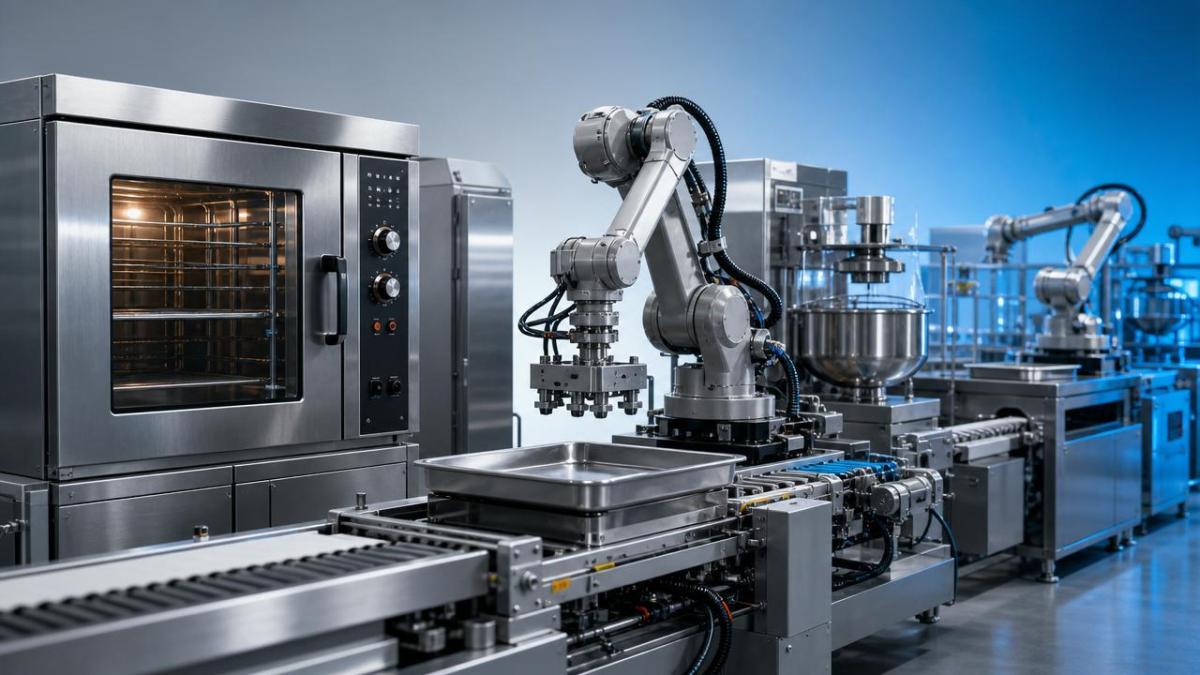
Kitchen manufacturing refers to the production of equipment, systems, and tools used in food preparation, storage, cooking, sanitation, and processing. It includes commercial kitchen equipment and selected household product lines.
In 2026, kitchen manufacturing costs are no longer driven only by steel, freight, and wages. Software integration, smart controls, testing requirements, and energy performance now influence unit economics as well.
This change matters because many products now combine hardware with sensors, control boards, firmware, and connected service features. That expands the cost base beyond traditional fabrication and assembly.
The cost shift is not uniform. High-volume standardized products may see stable production efficiency. Customized, energy-efficient, or automated systems often face higher development and compliance costs.
Market signals shaping kitchen manufacturing
Several industry signals explain why kitchen manufacturing is changing in 2026. Together, they show a sector moving toward smarter, cleaner, and more controlled production models.
- Automation spending continues to increase in equipment assembly and metal processing.
- Energy efficiency regulations are tightening across commercial and residential categories.
- Electronic components remain vulnerable to regional supply fluctuations.
- Labor costs are rising in major kitchen manufacturing hubs.
- Demand is growing in emerging foodservice markets and central kitchen operations.
China, Germany, Italy, and Japan remain important kitchen manufacturing centers. Each offers different strengths in scale, engineering, precision, design, and export capability.
At the same time, foodservice growth is creating broader demand for efficient cooking systems, refrigeration, dishwashing, and food processing equipment. This supports volume, but also adds pressure on delivery speed and customization.
Key cost drivers by category
Why these shifts matter for business planning
The biggest implication is that kitchen manufacturing costs now need a lifecycle view. A lower purchase price may no longer represent the lowest total cost over five to ten years.
Energy-efficient equipment often costs more to produce because of better insulation, upgraded motors, optimized burners, or advanced control systems. However, operating savings can offset that premium.
Automation inside factories also changes pricing logic. Initial capital expenditure is high, but repeatability improves, scrap falls, and output stability may increase over time.
For global sourcing decisions, kitchen manufacturing now involves balancing cost, reliability, compliance readiness, and technical support. The cheapest region may not offer the strongest long-term value.
Business effects to monitor
- Budget forecasts may need wider cost tolerance bands.
- Replacement cycles may shift toward efficiency-led upgrades.
- Procurement comparisons should include maintenance and energy use.
- Product portfolios may favor modular and upgradeable designs.
- Supplier evaluations should include digital and compliance capability.
Typical cost patterns across kitchen equipment segments
Not every product group experiences cost change in the same way. Kitchen manufacturing costs vary by design complexity, regulatory burden, and service expectations.
In practical terms, smart and connected products usually carry the greatest kitchen manufacturing complexity. Simpler tools remain more exposed to commodity materials and freight.
Where kitchen manufacturing creates long-term value
Although cost pressure is real, better kitchen manufacturing can create measurable value. The strongest benefits usually appear in efficiency, consistency, safety, and asset life.
Improved production quality lowers field failure risk. Better electronics integration supports diagnostics. Energy-focused design reduces utility expense. Modular construction can simplify service and spare parts planning.
These gains matter across restaurants, hotels, central kitchens, food factories, and residential premium segments. In each case, total operating performance becomes more important than unit price alone.
Value areas linked to stronger kitchen manufacturing
- Lower energy consumption over product life.
- More predictable maintenance scheduling.
- Improved temperature, sanitation, and process control.
- Better consistency in food preparation environments.
- Longer usable service life for critical equipment.
Practical planning considerations for 2026
A useful response starts with better cost segmentation. Separate direct material increases from automation premiums, compliance expenses, and digital feature costs. That creates clearer benchmarking and avoids misleading averages.
Next, compare products using total cost of ownership. Include acquisition cost, installation, energy use, expected maintenance, spare parts, downtime risk, and upgrade potential.
It is also important to check how suppliers manage kitchen manufacturing resilience. A stable source for controllers, compressors, or stainless components can matter more than a narrow price difference.
For projects involving large kitchens or processing lines, phased procurement can reduce timing risk. It also allows technical validation before full rollout.
Useful review points
- Track energy standards affecting target markets.
- Request visibility on electronics sourcing and substitutions.
- Review warranty terms against expected usage intensity.
- Favor serviceable, modular, and software-updatable equipment.
- Use scenario planning for freight and input cost swings.
A grounded next step for cost-aware decisions
Kitchen manufacturing in 2026 is defined by transition rather than simple inflation. Cost is moving from a raw-material story to a broader equation involving automation, efficiency, compliance, and digital capability.
The most effective next step is to reassess equipment plans through a lifecycle lens. Focus on categories with the highest energy use, strongest compliance exposure, or greatest service sensitivity.
That approach makes kitchen manufacturing trends easier to translate into practical decisions. It also supports more resilient budgeting, better asset performance, and smarter investment timing in a changing market.
Popular Tags
Kitchen Industry Research Team
Dedicated to analyzing emerging trends and technological shifts in the global hospitality and foodservice infrastructure sector.
Industry Insights
Join 15,000+ industry professionals. Get the latest market trends and tech news delivered weekly.
No spam. Unsubscribe anytime.
Hot Articles
Contact With us
Contact:
Anne Yin (Ceramics Dinnerware/Glassware)
Lucky Zhai(Flatware)