
Pizza Oven heat recovery matters more than max temperature
When evaluating a Pizza Oven, max temperature often gets the spotlight, but heat recovery has a far greater impact on throughput, bake consistency, and energy efficiency. For technical comparisons, recovery speed shows how well a Pizza Oven performs during real production, not just during an empty preheat test. In commercial kitchens, steady output matters more than a headline number. Understanding heat recovery helps identify equipment that supports service quality, lowers operating waste, and maintains reliable baking results under pressure.
Why does heat recovery matter more than maximum temperature in a Pizza Oven?
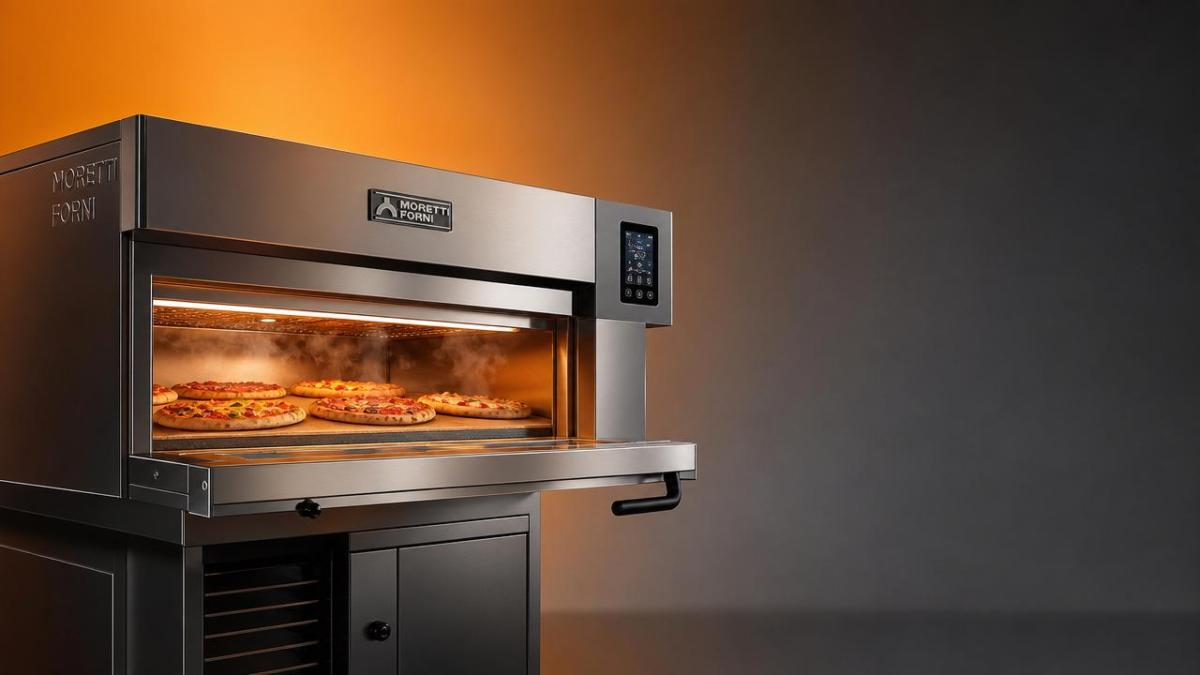
Maximum temperature tells only part of the story. A Pizza Oven may reach 450°C, yet still struggle after repeated loading.
Heat recovery describes how quickly the chamber, deck, and airflow return to target conditions after the door opens or cold dough enters.
That recovery speed affects every important commercial outcome. It influences bake time, crust structure, cheese melt, browning, and queue capacity.
In practice, most operations do not bake one pizza at a time with long pauses. They run batches during lunch and dinner peaks.
A Pizza Oven with excellent heat recovery keeps floor temperature and chamber balance stable between loads. That stability improves repeatability.
An oven focused only on peak heat may deliver a strong first bake, then weaker second and third bakes. That inconsistency hurts service.
The kitchen equipment industry increasingly values measurable efficiency. Heat recovery is more aligned with that goal than maximum temperature alone.
- Faster recovery supports higher hourly output.
- Stable recovery improves product consistency.
- Efficient recovery reduces wasted energy.
- Balanced recovery lowers operator corrections.
How does heat recovery affect throughput and consistency during busy service?
Throughput is not simply chamber size multiplied by theoretical bake count. Real throughput depends on how fast a Pizza Oven rebounds between cycles.
Each door opening releases stored heat. Each dough load absorbs thermal energy from the deck, walls, and circulating air.
If recovery is slow, bake times stretch. Operators may rotate pizzas more often or leave them inside longer to chase color.
This creates uneven bottoms, pale rims, or overcooked toppings. The Pizza Oven still feels hot, but usable heat at product level has dropped.
Fast recovery allows a more predictable rhythm. Pizzas enter, bake, unload, and the next cycle begins with less thermal deviation.
Consistency matters across restaurant chains, hotels, food courts, and delivery-focused kitchens. Standardized output protects brand expectations.
This is also relevant for central kitchens testing menu prototypes. An inconsistent Pizza Oven produces misleading trial results.
In broader kitchen equipment evaluation, sustained performance usually predicts better operational value than a single top-end specification.
Typical signs of weak heat recovery
- The first pizza bakes well, later ones lose color.
- Bake time increases during peak periods.
- Operators keep raising setpoints to compensate.
- Deck temperature varies across different loading zones.
What technical factors determine Pizza Oven heat recovery?
Heat recovery is not controlled by one component. It comes from the interaction of heating power, insulation, thermal mass, and system design.
Burner or element output matters, but raw power alone is not enough. Delivery efficiency is equally important.
A Pizza Oven with poor insulation loses energy too quickly. More input power then becomes a costly attempt to offset structural losses.
Thermal mass also plays a major role. Stones, decks, and chamber materials store heat and release it back after loading events.
Too little stored heat can cause sudden temperature drops. Too much mass may slow warm-up, but often improves loaded stability.
Airflow design affects top heat balance. In conveyor or convection-assisted Pizza Oven systems, circulation must recover heat evenly without drying toppings.
Control systems matter as well. Smart sensors and responsive thermostatic logic can restore target conditions faster and more accurately.
The kitchen equipment sector is moving toward intelligent control. In a Pizza Oven, that trend supports repeatable heat management and lower waste.
Core recovery drivers to compare
- Heating capacity under load
- Insulation quality and door sealing
- Deck or chamber thermal mass
- Airflow path and heat distribution
- Sensor accuracy and control response
How can you compare a Pizza Oven beyond brochure temperature claims?
Brochures often highlight maximum temperature because it is easy to market. Yet this number says little about loaded operating performance.
A better comparison uses a repeated-load test. Measure how the Pizza Oven behaves across several consecutive bakes.
Start with a stabilized chamber. Then load pizzas of similar weight, moisture, and dough temperature at timed intervals.
Track chamber recovery, deck rebound, bake time drift, and color consistency. These indicators reveal practical capability.
If data access is available, compare overshoot and undershoot patterns. A Pizza Oven with tighter control usually delivers stronger repeatability.
Also consider door opening frequency. High-turn kitchens expose thermal weaknesses more clearly than low-volume demonstration conditions.
Energy behavior should be reviewed alongside output. Faster heat recovery achieved with extreme waste may reduce long-term value.
The best Pizza Oven balances recovery, efficiency, product quality, and maintenance practicality within the intended service pattern.
Which applications benefit most from strong heat recovery in a Pizza Oven?
Any setting with repeated loading benefits, but some environments depend on it much more than others.
Quick-service pizza outlets need a Pizza Oven that holds performance during rush windows. Delays quickly affect customer experience.
Hotels and buffet operations also benefit. Service periods are concentrated, and menu consistency must be maintained across many orders.
Ghost kitchens and delivery brands need stable bake profiles because transport already challenges final texture quality.
Foodservice groups using standardized recipes require predictable output across locations. A reliable Pizza Oven reduces variation between sites.
Even food processing environments testing par-bake or specialty flatbread lines can benefit from heat recovery analysis.
For low-volume artisan use, extreme recovery may be less critical than stone characteristics or flame profile. Still, it remains valuable.
High-recovery priority scenarios
- Continuous lunch and dinner peaks
- Frequent door opening
- Multi-pizza batch loading
- Standardized chain operations
- Energy-sensitive kitchen planning
What common mistakes lead to poor Pizza Oven selection?
One common mistake is choosing a Pizza Oven only by advertised maximum temperature. This ignores actual loaded performance.
Another mistake is testing with too much time between pizzas. Large gaps hide recovery weaknesses and create unrealistic impressions.
Some evaluations overlook recipe variables. Hydration, topping moisture, and dough temperature all affect thermal demand.
Energy cost is also underestimated. A Pizza Oven that constantly fights heat loss may increase utility expense over time.
Maintenance access matters too. Burners, elements, seals, sensors, and fans influence heat recovery and should be serviceable.
Finally, do not ignore installation context. Ventilation, ambient temperature, and production layout can change real Pizza Oven behavior.
For any Pizza Oven review, focus on sustained baking ability rather than isolated heat peaks. Heat recovery is the more practical performance benchmark.
A strong Pizza Oven should recover quickly, bake consistently, manage energy wisely, and support real production conditions. The next step is simple.
Compare equipment using repeated-load tests, recovery measurements, and product results. That approach leads to better kitchen equipment decisions and stronger long-term value.
Popular Tags
Kitchen Industry Research Team
Dedicated to analyzing emerging trends and technological shifts in the global hospitality and foodservice infrastructure sector.
Industry Insights
Join 15,000+ industry professionals. Get the latest market trends and tech news delivered weekly.
No spam. Unsubscribe anytime.
Hot Articles
Contact With us
Contact:
Anne Yin (Ceramics Dinnerware/Glassware)
Lucky Zhai(Flatware)