
Restaurant kitchen equipment ideas that waste space in practice
Many restaurant kitchen equipment ideas look impressive on paper but create workflow bottlenecks, wasted floor area, and higher operating costs in real kitchens. This article explores which restaurant kitchen equipment ideas often fail in practice, why they reduce efficiency, and how smarter, space-conscious alternatives can better support productivity, food safety, and long-term kitchen performance.
The core search intent behind this topic is practical evaluation. Readers are not looking for trend lists or product hype. They want to know which equipment concepts sound smart during planning but become costly mistakes after installation.
For information researchers, the biggest concern is usually not a single machine. It is whether a kitchen layout and equipment mix will support workflow, labor efficiency, cleaning, food safety, and future menu changes without wasting valuable space.
The most useful content, therefore, is specific and judgment-oriented. Readers need examples of space-wasting equipment ideas, reasons those ideas fail, warning signs during planning, and better alternatives that match real production needs rather than showroom appeal.
This article focuses on those high-value questions. It gives more attention to workflow logic, equipment sizing, flexibility, and return on floor space, while avoiding generic descriptions of commercial kitchen technology that do not help decision-making.
Why some restaurant kitchen equipment ideas fail once the kitchen starts operating
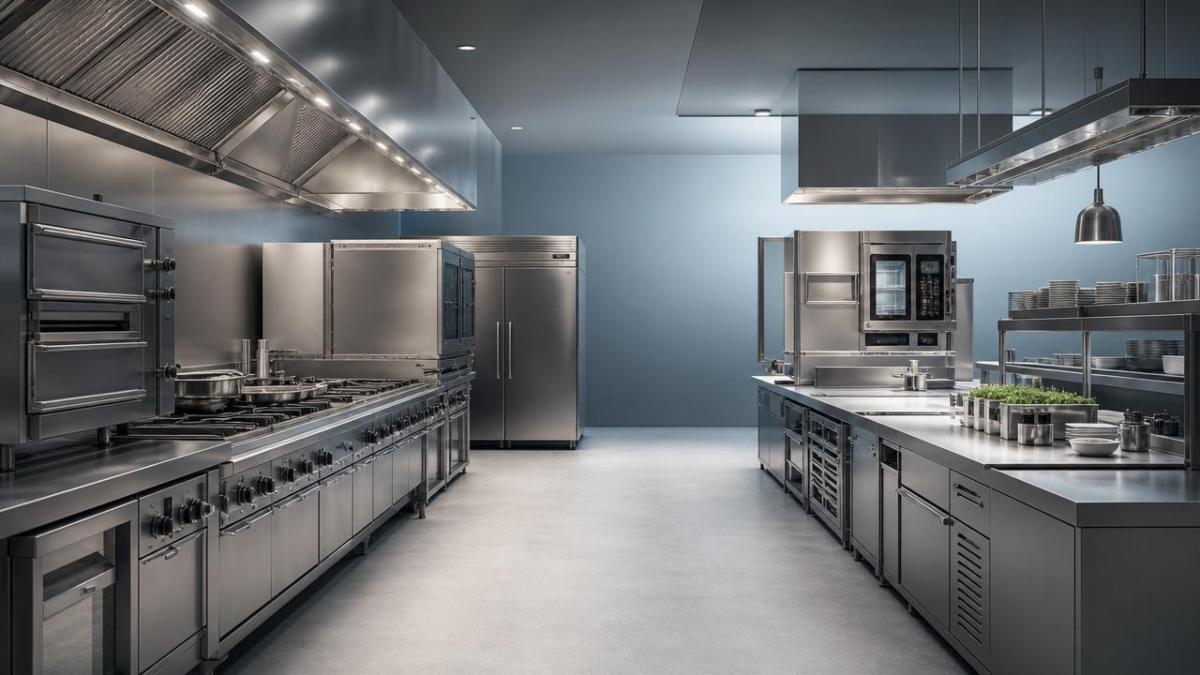
In planning meetings, many equipment choices seem rational because they promise capacity, speed, or a modern image. In practice, however, kitchens succeed through movement efficiency, station coordination, and ease of cleaning more than raw equipment presence.
A piece of equipment can be technically advanced and still be a poor fit. If it interrupts prep flow, blocks access, duplicates another function, or creates idle zones, it reduces the performance of the whole kitchen.
Space waste is not only about square footage. It also includes inaccessible corners, oversized footprints, clearance areas no one uses productively, and equipment that forces staff to walk extra steps during peak service.
The best restaurant kitchen equipment ideas are therefore not the most impressive ones. They are the ones that support the menu, daily volume, staffing level, and service model with the least friction.
Oversized cooking lines that look professional but reduce flexibility
One of the most common planning mistakes is installing a larger cookline than actual production requires. Owners often assume more burners, more griddles, and more hot equipment will prepare them for growth.
In reality, oversized lines consume premium space near ventilation, utilities, and pass areas. They also create long lateral movement for cooks, increase heat load, and leave underused sections that still require cleaning and maintenance.
For many operations, a compact, high-output line works better than a broad traditional setup. Modern combi ovens, multifunction pans, or carefully selected modular units often deliver similar output with much less spatial burden.
This matters especially for restaurants with changing menus. A rigid oversized line locks the kitchen into one production pattern, while smaller modular equipment can be reconfigured as sales data and labor needs change.
Buying single-purpose machines for occasional menu items
Specialty machines can be attractive because they promise consistency and speed for one signature item. The problem begins when that item represents only a small portion of total sales or appears only at limited times.
Single-purpose units often occupy valuable floor or counter space every day while delivering value only occasionally. In smaller kitchens, this is one of the fastest ways to create crowding without increasing core productivity.
These machines also complicate training, maintenance, spare parts inventory, and cleaning routines. A crowded kitchen with too many niche appliances usually performs worse than a simpler kitchen built around versatile production tools.
Before committing to specialized equipment, planners should ask whether the same menu output can be achieved with multipurpose alternatives, batch preparation changes, or shared stations that do not permanently consume high-value space.
Large refrigeration footprints without inventory discipline
More cold storage is often treated as a safety measure, but excessive refrigeration can encourage poor purchasing habits, overstocking, and unnecessary floor consumption. Bigger refrigeration does not automatically improve kitchen efficiency.
Walk-ins, reach-ins, and undercounter units should be selected based on delivery rhythm, prep schedule, and menu turnover. When refrigeration volume exceeds realistic operational needs, products sit longer and staff spend more time searching and rotating stock.
Large units also affect circulation. A bulky refrigerator placed near prep or cooking zones can create bottlenecks during service, especially when doors swing into traffic paths or force workers to queue around one access point.
A smarter approach is to align storage with actual inventory flow. Efficient shelving, better labeling, and strategic use of undercounter refrigeration often outperform simply adding larger boxes that consume expensive space.
Island equipment layouts that disrupt real movement patterns
Island suites can look efficient in design renderings because they centralize cooking activity. In real kitchens, however, they sometimes create unnecessary walking loops, limit line-of-sight, and complicate coordination between prep, cooking, and plating.
The issue is not that island layouts are always wrong. The issue is that they are often copied from larger operations without confirming whether the kitchen has enough room, staffing density, or production complexity to justify them.
In narrower kitchens, island equipment can create dead circulation around corners and reduce wall space for storage, utilities, and support functions. That can leave workers moving around the island more than actually using it productively.
If the menu and service style do not require central multi-side access, a wall-based or hybrid line may create cleaner flow. The goal is shorter movement paths, not visually dramatic layout choices.
Too much front-of-house visual equipment in back-of-house-sized spaces
Open kitchens and display cooking have influenced many equipment decisions. Restaurants may add finishing stations, showcase ovens, or decorative appliances because they improve branding and customer perception.
The risk appears when back-of-house space is already limited. Equipment chosen partly for appearance can take priority over storage, landing zones, dish return flow, or core prep support, causing operational strain behind the visual concept.
When presentation-driven units are added, operators should calculate their true revenue role. If they strengthen guest experience and support a high-margin menu category, they may be justified. If not, they may simply crowd essential operations.
For many concepts, the better solution is selective visibility rather than full visual duplication. Highlight one purposeful cooking feature and protect the remaining space for high-frequency production tasks.
Stacking too many countertop appliances onto prep areas
Countertops are some of the most valuable working surfaces in a commercial kitchen. Filling them with mixers, warmers, slicers, blenders, and compact cookers may seem efficient, but it often destroys usable prep capacity.
When prep surfaces disappear, staff begin working in fragmented zones. This causes constant setup changes, more lifting and repositioning, and greater risk of cross-contamination because raw and ready-to-eat tasks lose clearly defined space.
Countertop crowding also leads to hidden cleaning problems. Grease, crumbs, and moisture build up between appliances and against walls, while cables and feet make sanitation slower and less consistent.
Wall-mounted shelving, mobile carts, equipment garages, and scheduled shared-use storage can often free prep surfaces without reducing functionality. In many kitchens, preserving clear worktops improves output more than adding another small appliance.
Choosing equipment based on maximum capacity instead of peak-hour reality
Another flawed idea is buying for the largest imaginable future volume. Operators may select heavier, wider, or more numerous units to avoid outgrowing the kitchen, but many restaurants never operate near those forecast levels.
The result is a kitchen optimized for theoretical growth rather than daily service. Oversized equipment consumes floor area, utility capacity, ventilation load, and cleaning time whether it is used at full output or not.
A better planning method is to model production around actual peak-hour throughput, menu mix, and ticket timing. This reveals whether the constraint is truly cooking capacity or something else such as plating, holding, or dishwashing.
In many cases, productivity improves more through layout refinement and station balancing than through adding larger machines. Space should be assigned to the real bottleneck, not the imagined one.
Ignoring service access, maintenance clearance, and cleaning zones
Some equipment ideas waste space because planners count only the machine footprint and ignore the access area needed around it. Once installed, the kitchen discovers that doors, panels, or cleaning paths require more room than expected.
That hidden space is especially costly in high-rent urban kitchens. A machine that fits tightly on paper can become a daily frustration when technicians cannot access service points or staff cannot clean behind and beneath it properly.
Poor clearance planning also affects safety and compliance. Heat-producing equipment packed too closely can increase discomfort and risk, while difficult-to-clean areas may compromise sanitation performance over time.
Any serious equipment decision should include total operational footprint, not only catalog dimensions. The true space cost includes opening radius, operator stance, cleaning reach, and maintenance accessibility.
What to evaluate before approving any new restaurant kitchen equipment ideas
To avoid space-wasting decisions, operators should test every equipment proposal against a simple set of practical questions. The first is whether the equipment supports a high-frequency task tied directly to revenue or food safety.
The second is whether it replaces something less efficient or merely adds another layer to an already crowded workflow. New equipment should simplify movement, labor, or quality control, not just expand the equipment list.
The third question is how often the unit will be used during a normal week. Frequency matters more than novelty. Equipment that sits idle most of the time is a weak use of premium kitchen real estate.
Fourth, planners should examine whether a multipurpose alternative exists. Many modern restaurant kitchen equipment ideas are valuable precisely because they combine functions and reduce the need for separate dedicated machines.
Finally, kitchens should review the total system impact. A good equipment choice should improve surrounding stations, not create hidden pressure on storage, ventilation, utility loads, or staff movement.
Smarter alternatives that save space without sacrificing performance
The most effective kitchens usually favor compact, flexible, and integrated solutions. Undercounter refrigeration near the point of use, modular cooklines, mobile prep tables, and stackable equipment often deliver stronger operational value than bulky standalone units.
Multifunction equipment is especially useful when menus evolve often or labor is limited. Combi ovens, programmable cooking systems, and adaptable holding solutions can reduce the number of separate appliances needed across the kitchen.
Another strong approach is zoning by process rather than by equipment category. Instead of grouping all cold storage or all cooking together, planners can place equipment according to prep sequence and service frequency.
Digital management also plays a role. Better production planning, inventory visibility, and maintenance scheduling can reduce the pressure to overbuy physical equipment as a substitute for operational discipline.
Conclusion: the best kitchen equipment idea is the one that earns its space
Many restaurant kitchen equipment ideas fail not because the machines are bad, but because the kitchen gives too much value to features and too little value to flow. Space is one of the most expensive assets in foodservice.
Equipment should therefore be judged by what it improves per square foot. If it shortens movement, supports sanitation, increases useful output, and adapts to real service patterns, it likely deserves a place.
If it mainly looks advanced, prepares for unlikely scenarios, or serves only occasional tasks, it may be wasting more than space. It may be increasing labor friction, operating cost, and layout complexity at the same time.
For information-stage readers evaluating restaurant kitchen equipment ideas, the clearest rule is simple: choose equipment for daily workflow reality, not planning-room imagination. That is where long-term kitchen efficiency is actually built.
Popular Tags
Kitchen Industry Research Team
Dedicated to analyzing emerging trends and technological shifts in the global hospitality and foodservice infrastructure sector.
Industry Insights
Join 15,000+ industry professionals. Get the latest market trends and tech news delivered weekly.
No spam. Unsubscribe anytime.

Contact With us
Contact:
Anne Yin (Ceramics Dinnerware/Glassware)
Lucky Zhai(Flatware)