
What Shortens the Life of a Commercial Microwave Oven?
A commercial microwave oven is built for speed and heavy use, but its lifespan can drop quickly when daily maintenance is ignored. For after-sales maintenance staff, understanding what causes early wear—from grease buildup and poor ventilation to door switch failure and power instability—is essential for reducing downtime, improving safety, and extending equipment performance in demanding foodservice environments.
In restaurants, hotels, central kitchens, and food processing support areas, a commercial microwave oven may run dozens or even hundreds of heating cycles per day. That operating intensity makes small maintenance failures accumulate faster than they would in household equipment.
For service teams, the real issue is not only replacing failed parts. It is identifying the conditions that shorten service life, setting inspection intervals, and helping operators avoid habits that overload key components such as the magnetron, door switches, cooling fan, and control board.
Main Factors That Shorten the Life of a Commercial Microwave Oven
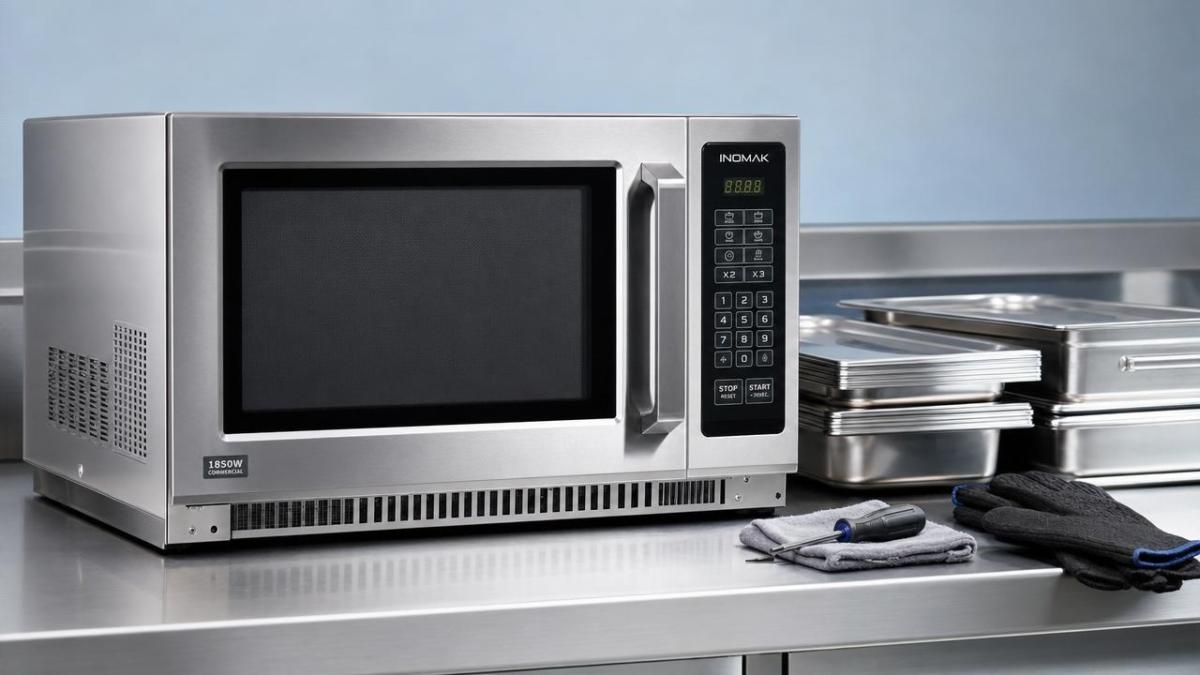
A commercial microwave oven typically works under higher thermal stress, longer duty cycles, and stricter hygiene requirements than residential units. In many foodservice sites, failure patterns become visible within 12 to 36 months if maintenance routines are weak or if installation conditions are poor.
1. Grease, Carbon, and Food Debris Buildup
Grease accumulation is one of the most common life-shortening issues. When waveguide covers, cavity walls, ceiling panels, and air inlets collect oil and carbonized food particles, heat dissipation declines and the risk of arcing rises. Even a thin layer of residue can trap heat during repeated 2 to 5 minute heating cycles.
In high-turnover kitchens, interior wipe-down should happen at least once per shift, with a more detailed cleaning every 7 days. If the oven is used for sauces, cheese, or high-fat items, some sites need twice-daily cleaning to prevent residue from hardening around the cavity and door seal area.
Why this matters for service life
- Restricted airflow raises internal operating temperature.
- Grease near the waveguide area can trigger sparks and surface damage.
- Hardened debris increases cleaning time and encourages abrasive scrubbing that damages coatings.
2. Poor Ventilation and High Ambient Heat
Many failures blamed on the commercial microwave oven itself actually begin with installation errors. Units placed with less than the manufacturer’s recommended rear or side clearance often recirculate hot exhaust air. In a line kitchen where ambient temperature already reaches 30°C to 40°C, that extra heat load is significant.
When the cooling path is compromised, the magnetron, high-voltage components, and control electronics work above their preferred temperature range. Over time, insulation ages faster, fan motors run longer, and internal connectors become more vulnerable to heat-related degradation.
3. Door Abuse and Interlock Switch Wear
Door systems are frequent failure points in a commercial microwave oven because they are mechanical, repetitive, and operator-dependent. In busy service windows, users may slam the door, pull it open before the cycle finishes, or use the handle with wet, greasy hands that reduce control.
A door assembly can go through several thousand open-close cycles per month. Misalignment, latch wear, or switch fatigue may first appear as intermittent starting problems. If ignored, the issue can escalate to safety lock failure, false error codes, or complete downtime during peak service hours.
4. Power Supply Instability
Voltage fluctuation is another major factor that shortens the life of a commercial microwave oven, especially in older buildings, mobile catering setups, and sites where several high-load appliances share one circuit. Repeated low voltage can lengthen cooking time, while spikes can stress control boards and transformers.
Maintenance staff should verify not only rated voltage and frequency, but also circuit loading, grounding quality, and plug or terminal condition. A unit that appears to have heating weakness may actually be operating on an unstable line rather than suffering immediate magnetron failure.
The table below summarizes common causes, their field symptoms, and the maintenance action that usually prevents premature failure.
For after-sales teams, the key takeaway is that most early failures are cumulative, not sudden. A commercial microwave oven often gives several warning signs before a major part fails, which means preventive action can reduce emergency calls and avoid avoidable component replacement.
High-Wear Components Maintenance Staff Should Watch Closely
Not every part in a commercial microwave oven ages at the same rate. Some assemblies are especially sensitive to heat, moisture, operator abuse, or electrical inconsistency. Knowing which parts fail first helps maintenance teams inspect more efficiently and stock the right service items.
Magnetron and High-Voltage Section
The magnetron is the core heating component, but its life is heavily influenced by cooling efficiency and operating load. If the oven is run empty, overheated, or used continuously without adequate cooling intervals, the magnetron may degrade earlier than expected.
In practical service conditions, repeated short-cycle use with no airflow issues is usually safer than repeated overheating. Maintenance staff should also inspect nearby components in the high-voltage section because a failed capacitor, diode, or loose terminal can create symptoms that look like magnetron loss.
Cooling Fan and Air Path
A blocked or weakened fan system quietly reduces oven life. Dust, grease film, and paper debris can collect on intake louvers and fan blades over 30 to 90 days in busy kitchens. Once airflow drops, internal temperature rises across the entire electronics compartment.
Technicians should treat airflow inspection as a scheduled task rather than a failure response. Listening for fan noise changes, checking for vibration, and confirming unblocked exhaust direction can prevent larger repair costs later.
Door Switches, Hinges, and Latch Brackets
Door interlock systems are exposed to repetitive mechanical stress. In high-volume convenience food operations, one unit may exceed 200 door cycles per day. Misalignment as small as a few millimeters can affect switch engagement and cause start failures or safety lockout events.
A good maintenance routine includes checking hinge looseness, latch wear, switch continuity, and door closing consistency. Replacing one visibly damaged switch without checking bracket position often results in repeat service calls within weeks.
Control Panel and Membrane Keys
The control panel is vulnerable to steam, chemical residue, and aggressive cleaning. Harsh liquid sprays can migrate into key membranes and connectors. Over time, the user may report unresponsive buttons, ghost inputs, or display inconsistency, especially after 18 to 24 months of heavy use.
Using the correct cleaning method matters. Staff should never saturate the control surface, and maintenance personnel should inspect for edge lifting, cracked overlays, and moisture traces behind the panel during routine service visits.
Fast inspection checklist
- Check cavity cleanliness and waveguide cover condition.
- Confirm intake and exhaust ventilation are clear.
- Test door alignment and interlock response in multiple cycles.
- Verify heating performance with a controlled load, not an empty cavity.
- Measure power supply stability under operating load.
Operational Mistakes That Reduce Equipment Life Faster Than Expected
A commercial microwave oven can be well designed and still fail early if daily operating habits are poor. After-sales maintenance teams often see the same avoidable mistakes across chain restaurants, staff canteens, bakeries, and quick-service counters.
Running the Oven Empty
Running an empty cavity, even briefly, creates unnecessary stress because microwave energy is not absorbed by food. Repeated dry runs raise the risk of internal reflection, overheating, and component strain. This is especially harmful in high-power units designed for fast commercial throughput.
Using Incompatible Containers or Sealed Products
Metal trim, foil misuse, and tightly sealed containers can create arcing or pressure hazards. While operators often understand the basic rule, mistakes still occur during rush periods. Service teams should include container-use guidance in handover training and post-service recommendations.
Ignoring Duty Cycle Limits
Not every commercial microwave oven is intended for the same output pattern. A compact unit used continuously for back-to-back reheating over a 6 to 8 hour peak period may wear far faster than a higher-capacity model designed for sustained throughput. Matching the unit to the site’s actual demand is a service-life issue, not only a purchasing issue.
Improper Cleaning Chemicals and Tools
Abrasive pads, corrosive cleaners, and direct liquid spraying can damage cavity coatings, panel surfaces, and electrical seals. Once protective finishes are compromised, rust, staining, and electrical contamination become more likely, especially in humid kitchens.
The following table helps maintenance staff connect operator behavior with likely component impact and the training message that should accompany service work.
These patterns show why maintenance is partly technical and partly educational. A commercial microwave oven lasts longer when service staff do not stop at repair, but also leave behind clear operating instructions tailored to the kitchen’s pace and workflow.
How After-Sales Teams Can Extend the Life of a Commercial Microwave Oven
The most effective maintenance approach combines inspection, cleaning discipline, user training, and site-condition control. In B2B foodservice environments, that approach is more practical than waiting for parts to fail one by one.
Set a Tiered Maintenance Schedule
A simple 3-level plan works well in many kitchens. Level 1 covers daily cleaning and visual checks by operators. Level 2 covers weekly or biweekly checks by a supervisor. Level 3 covers monthly or quarterly technical inspection by after-sales maintenance staff, depending on usage intensity.
Suggested intervals
- Daily: cavity cleaning, door surface wipe, visible vent check.
- Every 7 to 14 days: inspect residue hotspots, fan openings, and door closure feel.
- Every 30 to 90 days: electrical check, heating performance check, switch and latch inspection.
Train Operators in 5 Critical Habits
Short training often prevents recurring faults better than repeated reactive repairs. Operators should learn five habits: never run empty, never slam the door, clean at the end of each shift, keep vents open, and report changes in noise or heating speed immediately.
Record Repeat Fault Patterns
If the same commercial microwave oven needs repeated service within 30 to 60 days, the problem may be environmental or behavioral rather than component quality alone. Logging repeat issues by site, shift, and menu use can reveal whether the root cause is overload, steam exposure, poor placement, or inconsistent power supply.
Evaluate Replacement Versus Repair
In some cases, extending equipment life means recommending replacement at the right time. If a unit has repeated heating loss, door system wear, and control issues together, repair cost and downtime may exceed the value of keeping that oven in operation. This is especially relevant for kitchens that require predictable output during peak periods.
Practical Service Takeaways for Foodservice and Kitchen Equipment Operations
For the kitchen equipment industry, reliability is closely linked to maintenance quality. A commercial microwave oven rarely fails early for only one reason. In most foodservice environments, shortened life comes from a mix of grease buildup, blocked airflow, repeated door stress, unstable power, and poor operating habits over time.
After-sales maintenance staff add the most value when they combine technical inspection with preventive guidance. By setting cleaning frequency, checking installation clearance, testing interlocks, and monitoring power conditions, service teams can reduce downtime, improve kitchen safety, and help operators get more consistent performance from each unit.
If you need support evaluating service risks, planning maintenance intervals, or choosing a better-fit commercial microwave oven for a high-volume foodservice site, contact us today to get a tailored solution, discuss product details, and explore more professional kitchen equipment support options.
Popular Tags
Kitchen Industry Research Team
Dedicated to analyzing emerging trends and technological shifts in the global hospitality and foodservice infrastructure sector.
Industry Insights
Join 15,000+ industry professionals. Get the latest market trends and tech news delivered weekly.
No spam. Unsubscribe anytime.
Hot Articles
 How to Choose a Leak-Proof Glass Storage Container for Meal Prep and Transport
- How to Size a Commercial Charbroiler for Peak-Hour Restaurant Output
- How to Specify Stainless Steel Kitchen Equipment for High-Volume Commercial Kitchens
- How to Choose Food Containers for Hot, Cold, and Leak-Prone Takeout Meals



Contact With us
Contact:
Anne Yin (Ceramics Dinnerware/Glassware)
Lucky Zhai(Flatware)