
How do schools choose safer kitchen equipment?
Choosing safer kitchen solutions for schools requires more than basic compliance. For quality control and safety managers, selecting restaurant kitchen equipment for schools means balancing food safety, durability, energy efficiency, and operational reliability. From material standards to smart monitoring features, the right equipment can reduce risks, improve workflow, and support a healthier dining environment for students and staff.
In school foodservice, equipment decisions affect far more than daily output. They influence allergen control, burn prevention, cleaning consistency, temperature stability, and the long-term cost of operating kitchens that may serve 200 to 5,000 meals per day.
For safety managers and quality teams, the challenge is practical: how to choose systems that withstand intensive use, fit staff skill levels, support inspections, and reduce avoidable incidents. A safer purchasing strategy starts with risk-based evaluation rather than price alone.
What makes school kitchen equipment safer than standard commercial options?
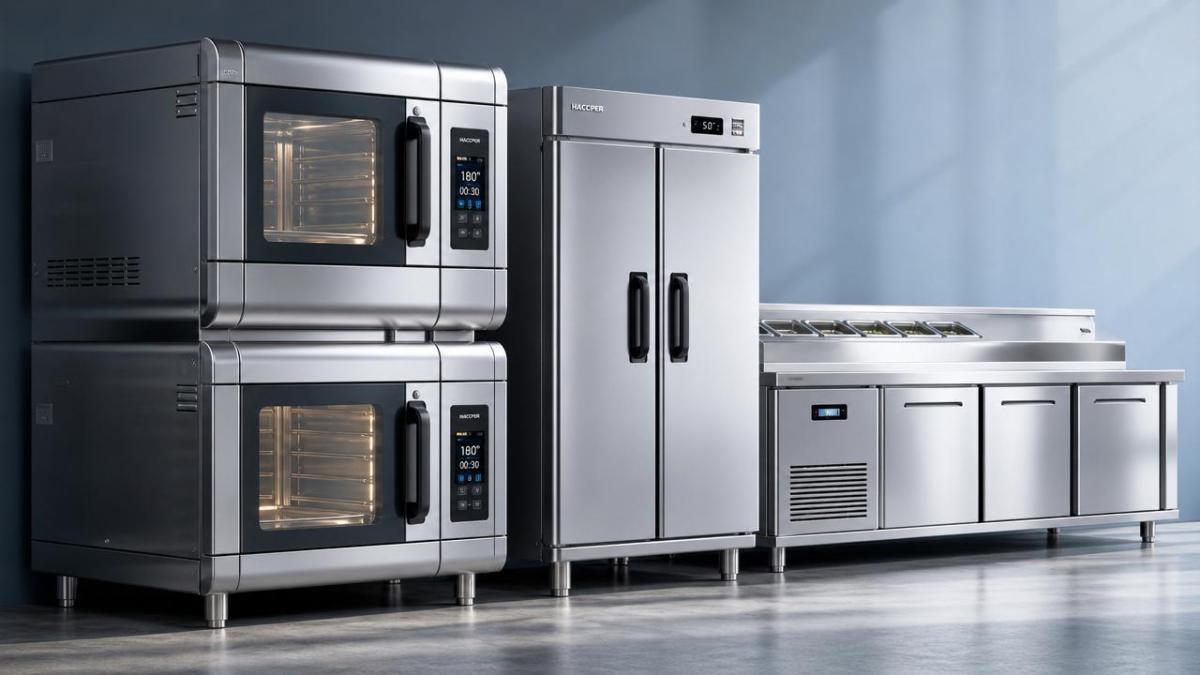
Not all commercial appliances are equally suitable for education settings. Restaurant kitchen equipment for schools should be selected around three operating realities: high meal volume, mixed staff experience, and stricter vulnerability concerns because the end users are children and teenagers.
A safer setup usually combines 6 core elements: food-contact hygiene, thermal safety, anti-slip workflow design, easy sanitation, dependable temperature control, and predictable maintenance intervals. If one of these areas is weak, the entire kitchen risk profile increases.
Risk categories that matter most in schools
School kitchens face recurring hazards such as cross-contamination, hot surface contact, steam exposure, sharp-edge injuries, electrical faults, and cleaning chemical misuse. In many facilities, risk rises during peak service windows of 60 to 120 minutes.
- Biological risk: poor raw-to-cooked separation, weak cold holding, or hard-to-clean surfaces
- Physical risk: unstable shelving, slippery flooring zones, protruding handles, and sharp corners
- Thermal risk: ovens, kettles, fryers, and steam equipment without guarding or clear alerts
- Operational risk: controls that are too complex for temporary or rotating staff
Why school use cases need a different standard
Unlike many independent restaurants, schools often operate on fixed serving times, public budgets, and documented nutrition programs. Equipment must deliver repeatable results across 5 days per week, often 40 to 50 weeks per year, with limited downtime tolerance.
Safer equipment also needs to support supervision. Clear displays, automatic shutoff, door interlocks, and temperature alarms help reduce dependence on memory-based operation. These features are especially useful when teams include new staff or substitute workers.
Examples of protective design features
Look for rounded corners, cool-touch handles, splash guards, sealed control panels, removable parts for cleaning, and non-porous stainless surfaces. In high-risk hot zones, even a 2 to 3 second reduction in contact exposure can lower injury severity.
The table below helps quality and safety managers compare common equipment risk points with practical selection criteria for restaurant kitchen equipment for schools.
The key lesson is that safer equipment is not defined by size or brand category alone. It is defined by how well the design prevents common school kitchen failures before they become injuries, food safety incidents, or service interruptions.
How should quality and safety managers evaluate equipment before purchase?
A structured evaluation process reduces purchasing mistakes. For most institutions, a 4-step review is more effective than relying on brochures or one-time sales demonstrations. The process should include specification review, risk mapping, site fit analysis, and acceptance planning.
Step 1: Confirm food safety and material suitability
Food-contact areas should be smooth, corrosion-resistant, and easy to sanitize. Stainless steel is widely preferred for many school applications because it tolerates frequent cleaning and humid kitchen conditions better than many painted or porous surfaces.
Inspect weld quality, joints, drainage design, and removable components. If staff need more than 10 to 15 minutes to fully access critical cleaning zones, sanitation compliance may drop during busy days.
Material checkpoints
- Food-contact surfaces should resist staining, pitting, and moisture retention
- Handles and knobs should remain stable after repeated daily use
- Seals, gaskets, and hinges should be replaceable without major disassembly
- Open seams and hidden cavities should be minimized
Step 2: Match capacity to real meal volume
Overloaded equipment creates safety pressure. Undersized refrigeration, ovens, or dishwashing systems often force rushed handling, overcrowding, and shortened holding times. Capacity planning should be based on peak service, not average output.
For example, a school serving 800 lunches in a 90-minute window needs different workflow spacing than a campus serving 250 meals over 2 hours. Consider batch size, recovery time, loading pattern, and operator movement around each station.
Step 3: Review control systems and fail-safe features
User interface design matters. Equipment with simple digital controls, visual alerts, and lockable programs can lower operator error. Smart monitoring is especially useful for refrigeration and holding systems where unnoticed temperature drift can create hidden risk.
Useful features include overheat protection, auto shutoff, cycle completion alarms, fault codes, and remote monitoring options. Even basic alert systems can improve response time from hours to minutes in some kitchen environments.
The following checklist can be used during supplier comparison and pre-purchase review. It helps standardize decision-making when selecting restaurant kitchen equipment for schools.
This checklist shifts procurement from subjective preference to measurable fit. It also makes supplier discussions more productive because expectations are documented in operational terms, not just sales language.
Which equipment categories deserve the closest scrutiny in school kitchens?
Every piece of equipment matters, but 5 categories usually deserve priority review: refrigeration, cooking equipment, hot holding, warewashing, and preparation stations. These areas directly affect food safety, service continuity, and staff injury exposure.
Refrigeration and cold storage
Cold chain reliability is a baseline requirement. Units should maintain stable storage conditions during repeated door openings, especially before lunch service. Schools with multiple meal periods should verify recovery performance, seal durability, and internal airflow design.
For quality control teams, useful questions include how temperatures are recorded, whether alerts are visible after-hours, and how easily staff can separate dairy, produce, raw proteins, and allergen-sensitive ingredients.
Cooking and hot production equipment
Ovens, kettles, steamers, and tilting pans should be evaluated for guarding, loading ergonomics, and programming simplicity. Complex systems may offer strong output, but if the interface is hard to learn, misuse can rise within the first 30 to 60 days.
Schools should also assess whether output matches menu style. Baking, steaming, reheating, and batch cooking each require different thermal patterns. Safer procurement means choosing the right process fit, not just higher power or larger chambers.
Preparation and allergen management stations
Preparation surfaces should support zoning. Many schools now separate at least 3 workflow areas: raw preparation, ready-to-eat assembly, and allergen-sensitive tasks. Color-coded tools and distinct storage points can reinforce this system.
Safer restaurant kitchen equipment for schools should also reduce clutter. When prep tables, shelving, and refrigerated rails are laid out poorly, staff travel distance increases, hand contact points multiply, and contamination opportunities grow.
Dishwashing and sanitation systems
Warewashing affects both hygiene and slips. Review loading height, drainage direction, chemical dosing clarity, and whether clean and dirty flows are physically separated. If dish return and clean storage cross paths, the sanitation chain becomes harder to control.
How can schools implement safer equipment with fewer disruptions?
Implementation is where many good purchasing decisions lose value. A safe rollout normally includes 3 phases: pre-install review, commissioning, and staff verification. For schools, timing often needs to align with holidays, semester breaks, or low-volume service periods.
Pre-install review
Before delivery, confirm utility loads, ventilation compatibility, drainage, doorway clearance, and traffic flow. A mismatch in electrical supply or floor layout can delay startup by 7 to 14 days and create costly workarounds.
Commissioning and acceptance checks
Acceptance should include temperature verification, alarm testing, cleaning access confirmation, and operating procedure review. Quality teams should avoid signing off based only on power-on status. Functional acceptance is more meaningful than visual acceptance.
- Verify installation against the agreed specification
- Test key operating cycles under near-real load
- Confirm cleaning, shutdown, and restart procedures with staff
- Document serial details, service contacts, and routine maintenance tasks
Training and ongoing control
Even the safest equipment underperforms without training. A practical training plan should cover operation, sanitation, emergency response, and daily inspection points. Refresher training every 6 to 12 months is often useful in schools with staff turnover.
Safety managers should also define simple records: temperature log review, alarm response, cleaning verification, and preventive maintenance dates. These records help demonstrate control during audits and support faster root-cause analysis if issues arise.
Common procurement mistakes to avoid
- Choosing the lowest upfront price without calculating cleaning labor or repair downtime
- Buying oversized units that do not match meal patterns or available ventilation
- Ignoring spare parts access and local service response time
- Accepting advanced controls without confirming staff training capacity
What should buyers ask suppliers before final approval?
Final supplier evaluation should focus on support quality as much as hardware quality. For school buyers, a reliable answer to 8 operational questions is often more valuable than a long list of optional features.
Key supplier questions
- What are the recommended preventive maintenance intervals?
- Which components are most likely to wear in the first 12 to 24 months?
- How long does routine cleaning take under normal school use?
- What training is included for operators and supervisors?
- Can the equipment support HACCP-style monitoring routines?
- What are the expected lead times for common replacement parts?
- Is there a clear escalation process for equipment failure during service hours?
- Which installation conditions are mandatory for safe operation?
The best supplier relationship is transparent, technically responsive, and realistic about operating limits. That matters when evaluating restaurant kitchen equipment for schools, where continuity, compliance, and child-focused safety expectations are especially high.
Safer school kitchens depend on more than compliance labels. They require equipment that is hygienic, durable, easy to monitor, straightforward to clean, and matched to actual service volume. For quality control and safety managers, the strongest purchasing decisions come from structured evaluation, risk-based comparison, and disciplined implementation.
If you are reviewing restaurant kitchen equipment for schools, now is the right time to assess layout risks, control features, cleaning access, and supplier support before the next procurement cycle. Contact us to get a tailored solution, discuss product details, or explore safer kitchen equipment options for your school foodservice program.
Popular Tags
Kitchen Industry Research Team
Dedicated to analyzing emerging trends and technological shifts in the global hospitality and foodservice infrastructure sector.
Industry Insights
Join 15,000+ industry professionals. Get the latest market trends and tech news delivered weekly.
No spam. Unsubscribe anytime.
Hot Articles

Contact With us
Contact:
Anne Yin (Ceramics Dinnerware/Glassware)
Lucky Zhai(Flatware)