
When is a kitchen tools distributor worth working with?
Choosing the right kitchen tools distributor can shape pricing power, stock reliability, and brand credibility across the kitchen equipment trade. In a market driven by speed, food safety, and product consistency, the best partner is not simply the lowest-cost source.
A capable kitchen tools distributor adds value through stable supply, dependable specifications, responsive service, and market insight. That matters across retail, foodservice, hospitality, and processing channels where delays or uneven quality quickly affect sales and trust.
This article explains when working with a kitchen tools distributor becomes commercially worthwhile, what signals to evaluate, and how to decide whether the relationship supports long-term growth in the broader kitchen equipment industry.
Understanding the role of a kitchen tools distributor
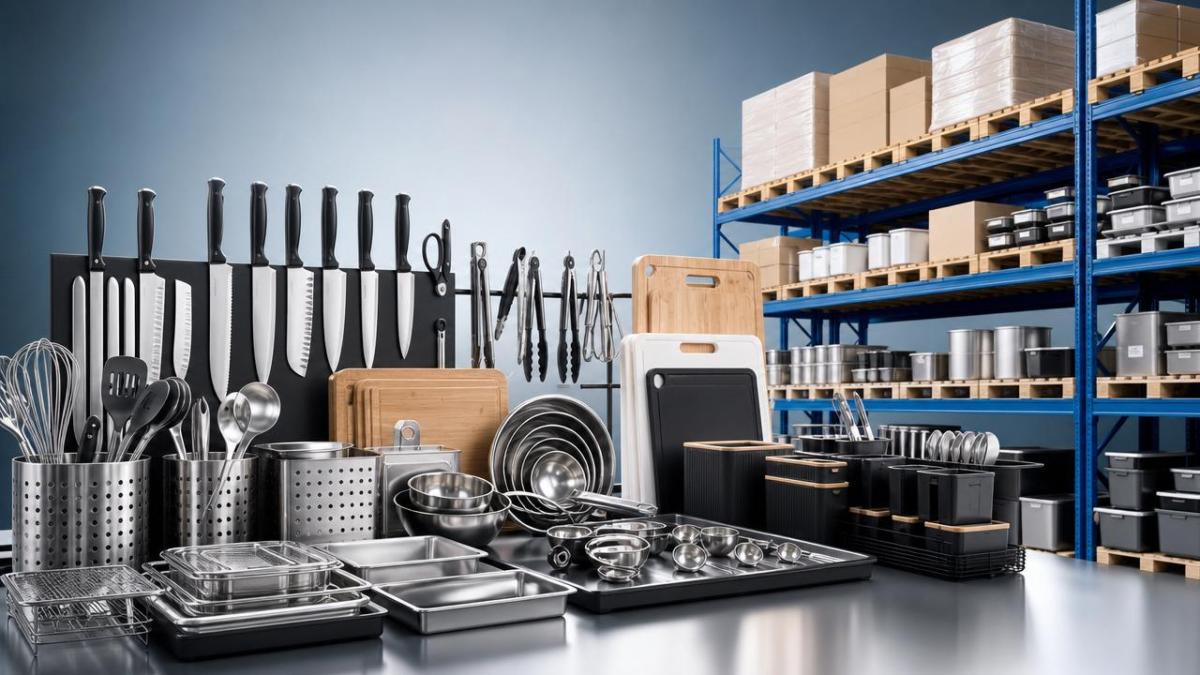
A kitchen tools distributor connects production capacity with local or regional demand. The role often includes sourcing, warehousing, product consolidation, quality checks, shipping coordination, and after-sales communication.
In practice, distribution reduces friction between factories and end markets. It can simplify ordering for items such as knives, utensils, cutting boards, storage tools, cookware accessories, and food preparation tools.
The distributor model becomes more relevant as product lines expand. Many buyers need mixed orders, flexible packaging, and faster replenishment rather than container-level factory purchases.
This is especially true in the modern kitchen equipment sector. Commercial kitchens, hotels, food processors, and household channels expect consistency, compliance, and delivery discipline across many SKUs.
Why the kitchen equipment industry makes distribution more important
The global kitchen equipment industry is expanding alongside foodservice, hospitality, and food processing. Growth is not only about volume. It also reflects rising expectations for safety, efficiency, and smarter operations.
That shift affects kitchen tools as well. Even simple utensils now face stronger requirements for materials, durability, hygiene, packaging quality, and traceable sourcing.
A strong kitchen tools distributor can help navigate these changes by aligning products with market standards, replenishment patterns, and end-user applications.
Key market signals increasing distributor value
- Broader product ranges across commercial and household channels
- Shorter lead time expectations from buyers
- Rising focus on food-safe materials and product compliance
- Demand for mixed shipments and lower inventory pressure
- More cross-border sourcing from China, Germany, Italy, and Japan
- Need for stable supply during seasonal demand spikes
As automation and smart kitchen systems develop, buyers often review entire kitchen solutions together. Even small tools must fit broader operating standards and brand expectations.
When a kitchen tools distributor is worth working with
A kitchen tools distributor becomes worth working with when the total business impact is stronger than direct sourcing alone. The right timing usually appears under several practical conditions.
1. When order volume is growing but still fragmented
If demand is spread across many product types, direct factory purchasing may be inefficient. Minimum order quantities can force excess stock and tie up cash.
A distributor can combine multiple kitchen tool categories into one order flow. That improves flexibility while reducing inventory risk.
2. When supply continuity matters more than one-time low pricing
A low unit price loses value if replenishment fails. Delayed shipments, changing materials, or inconsistent finishes can create returns, complaints, and lost accounts.
An established kitchen tools distributor often maintains buffer stock, repeat quality control routines, and shipping alternatives that reduce disruption.
3. When product consistency affects brand reputation
In kitchen equipment, appearance and performance must match prior orders. Handle feel, stainless grade, packaging finish, and labeling accuracy all influence perceived quality.
A reliable distribution partner helps standardize recurring orders. That is crucial for private label programs and repeat channel sales.
4. When market expansion requires local support
Entering new regions often means new packaging rules, buyer expectations, and shipment patterns. A local or regionally experienced kitchen tools distributor can shorten the learning curve.
This support may include assortment advice, regional best-sellers, documentation handling, and quicker issue resolution.
5. When operational complexity is increasing
As channel breadth increases, managing vendors becomes harder. One distributor with broad kitchen tools coverage may replace multiple small suppliers and simplify coordination.
What business value a kitchen tools distributor should deliver
The right kitchen tools distributor should create measurable business advantages, not only product access. Evaluation should focus on margin quality, service reliability, and long-term scalability.
If those benefits are absent, the distributor may only be adding cost. True value appears when service quality protects revenue and supports growth.
Typical scenarios where a kitchen tools distributor fits best
Different market situations require different sourcing structures. A kitchen tools distributor is especially useful in the following common scenarios.
These scenarios are common across the wider kitchen equipment business, where speed, variety, and standardization now influence competitive performance.
How to evaluate a kitchen tools distributor before committing
Selection should be evidence-based. A good kitchen tools distributor must prove capability across products, systems, and communication, not only provide a catalog.
Practical evaluation points
- Check product range depth within key kitchen tool categories.
- Review material specifications and quality control procedures.
- Compare lead times for repeat orders, not just first orders.
- Confirm packaging options, labeling accuracy, and carton standards.
- Ask about stockholding strategy and contingency planning.
- Assess responsiveness when handling claims or replacements.
- Review shipping support for mixed loads and cross-border documentation.
It is also wise to test small repeat orders first. Consistency over time is more revealing than a polished initial sample.
Common warning signs that reduce distributor value
Not every kitchen tools distributor improves performance. Some relationships add complexity, raise hidden costs, or expose supply chain weaknesses.
- Frequent price changes without clear material or freight reasons
- Inconsistent product finish between production batches
- Limited visibility on origin, specifications, or compliance details
- Weak communication during delivery delays or claims
- No clear support for market expansion or assortment planning
If several of these signs appear, direct sourcing or an alternative channel may be more effective than continuing with a weak intermediary.
Practical next steps for building a useful distribution relationship
A kitchen tools distributor is worth working with when the partnership improves reliability, reduces sourcing friction, and supports profitable expansion across kitchen equipment channels.
Start with a focused scorecard covering quality, lead time, SKU breadth, communication speed, and repeat-order consistency. Then test performance with a controlled assortment and measurable delivery targets.
If results show stronger inventory stability, fewer service issues, and better assortment flexibility, the distributor is likely contributing real strategic value rather than simple transactional supply.
In today’s global market, the best kitchen tools distributor is not just a middle link. It is a supply partner that helps align product quality, operational efficiency, and scalable market growth.
Popular Tags
Kitchen Industry Research Team
Dedicated to analyzing emerging trends and technological shifts in the global hospitality and foodservice infrastructure sector.
Industry Insights
Join 15,000+ industry professionals. Get the latest market trends and tech news delivered weekly.
No spam. Unsubscribe anytime.

Contact With us
Contact:
Anne Yin (Ceramics Dinnerware/Glassware)
Lucky Zhai(Flatware)