
What hotels now expect from restaurant kitchen equipment
Hotels today expect restaurant kitchen equipment for hotels to do far more than cook, chill, or wash. For project managers and engineering leads, the decision is now about operational resilience, compliance, lifecycle cost, and the ability to support changing service models without expensive redesign later.
In practical terms, the market has moved beyond simple specification matching. Hotel operators want equipment that fits the property concept, reduces utility consumption, improves food safety control, and integrates smoothly into a coordinated back-of-house system.
If you are planning, upgrading, or tendering a hotel kitchen, the key question is no longer “Which unit has the right capacity?” It is “Which equipment package will support performance, reliability, and return on investment over the next five to ten years?”
What hotels now expect from restaurant kitchen equipment for hotels
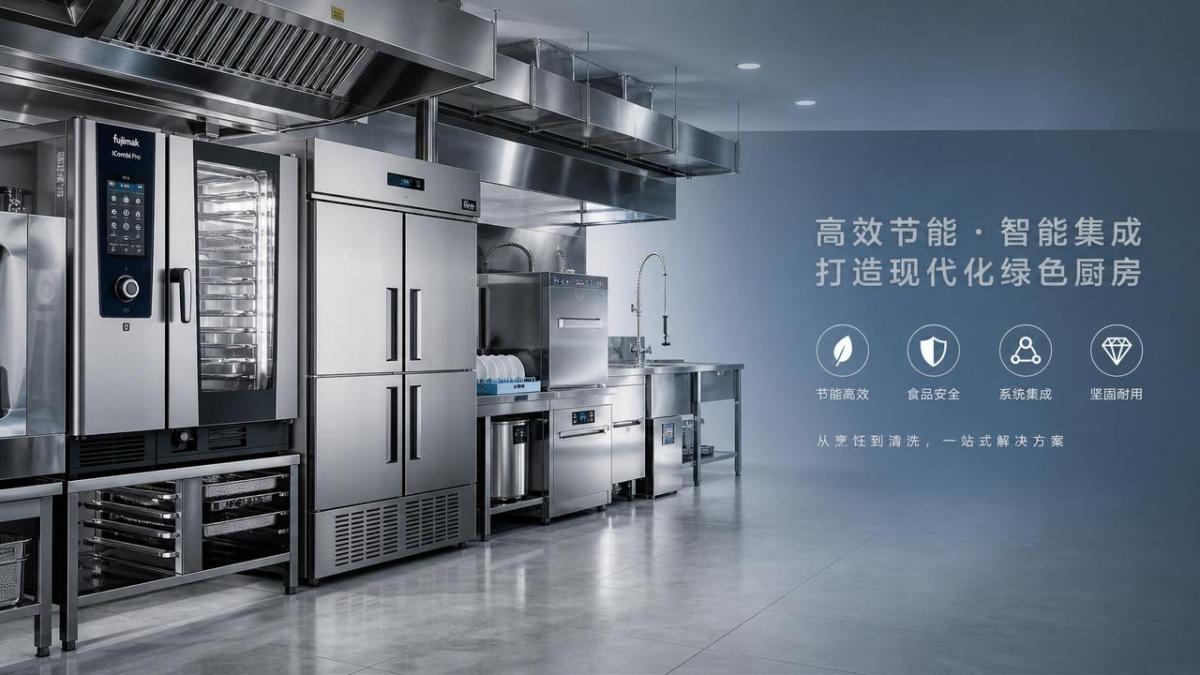
The core search intent behind this topic is commercial and evaluative. Readers want to understand what hotel buyers now prioritize, how procurement standards are changing, and which equipment features matter most in real projects.
For project managers, the issue is not only product selection. It is also risk control. The wrong kitchen equipment can create installation delays, utility conflicts, workflow inefficiency, maintenance headaches, and compliance failures that affect the entire hospitality operation.
That is why hotel expectations have become more demanding. Equipment must perform consistently during peak service, support multiple menu formats, align with brand standards, and remain serviceable without causing long operational interruptions.
Why “basic functionality” is no longer enough in hotel kitchens
Hotels operate differently from many standalone restaurants. They may run breakfast buffets, all-day dining, banquet production, room service, bars, staff meals, and event catering from connected kitchen zones. Equipment therefore needs to support variety, speed, and flexibility.
At the same time, hotel ownership teams are watching total cost more closely. Energy, labor, downtime, cleaning time, spare parts, and replacement cycles all matter. A machine that is cheaper to buy but harder to maintain often becomes more expensive over its actual life.
Guest expectations also influence the back of house. Faster service, menu consistency, dietary control, and hygiene assurance all depend on equipment performance. In this sense, kitchen equipment is no longer only an operational asset; it is part of the guest experience chain.
Energy efficiency is now a board-level requirement, not a nice extra
One of the strongest expectations in restaurant kitchen equipment for hotels is energy performance. Hotel groups increasingly evaluate equipment through lifecycle cost models rather than upfront price alone, especially in large renovation and new-build projects.
Cooking suites, combi ovens, refrigeration systems, warewashing equipment, and ventilation all affect utility consumption. High-efficiency models can significantly reduce electricity, gas, and water use, which directly improves the property’s long-term operating margin.
For engineering teams, this means specification should include measurable performance indicators. Instead of accepting general “energy-saving” claims, ask for tested consumption data, operating assumptions, and expected annual savings under realistic service loads.
It is also important to evaluate the system effect. Efficient appliances can still underperform if they are paired with oversized extraction, poor heat recovery, or weak kitchen zoning. Hotels increasingly expect integrated energy logic, not isolated product claims.
Smart controls are expected when they improve management, not when they add complexity
Hotels are showing greater interest in intelligent kitchen systems, but they are not looking for technology for technology’s sake. They want controls that reduce human error, improve visibility, and support easier management across multiple departments.
Examples include programmable cooking profiles, HACCP data logging, fault alerts, remote diagnostics, temperature tracking, and preventive maintenance reminders. These features help culinary and facility teams standardize output while reducing avoidable operational risk.
For project managers, the value of smart equipment depends on usability and support. A control platform that is difficult to train, incompatible with site systems, or dependent on weak local service can become a burden rather than an advantage.
The practical test is simple: does the technology make the kitchen easier to run, easier to audit, and easier to maintain? If the answer is unclear, the feature set may be impressive on paper but weak in project value.
Food safety compliance must be built into the equipment decision
Hotels now expect kitchen equipment to actively support food safety systems. This includes stable temperature control, easy-to-clean construction, hygienic material selection, proper drainage, minimal contamination points, and clear operational monitoring.
In many hotel environments, kitchens handle large volumes, multiple cuisines, and time-sensitive service. Any weakness in refrigeration reliability, cooking consistency, or cleaning access can create quality risk and compliance exposure very quickly.
Equipment buyers should therefore assess hygienic design carefully. Rounded corners, removable components, accessible filters, smooth welds, sealed control areas, and effective condensate management all have practical importance in daily operation.
Documentation also matters. Hotels often prefer equipment from suppliers who can provide certification support, cleaning protocols, technical manuals, and traceable performance data that help with inspections, internal audits, and brand-level governance.
Space optimization has become critical as hotel back-of-house areas get tighter
In many hotel projects, kitchen space is under pressure. Designers must support more functions within tighter footprints, especially in urban properties, mixed-use developments, airport hotels, and renovation projects with fixed structural constraints.
This is why modularity and compact integration matter more than before. Equipment must fit circulation paths, service access, storage logic, and production flow without creating bottlenecks between receiving, prep, cooking, plating, washing, and waste handling.
Project leaders should evaluate not only equipment dimensions but also clearance needs, door swing, maintenance zones, ventilation requirements, and service replacement access. A technically suitable unit can still become a poor choice if installation and servicing are difficult.
Hotels increasingly value equipment that supports multi-function use. A combi oven, for example, can reduce the need for separate units while improving menu flexibility. This can be especially useful where banquet, restaurant, and room service demands overlap.
Reliability and service support often outweigh small differences in purchase price
Downtime in a hotel kitchen affects more than one outlet. A failed refrigeration bank, warewasher, or primary cooking line can disrupt breakfast, events, in-room dining, and restaurant operations at the same time. That makes reliability a purchasing priority.
As a result, many hotels expect restaurant kitchen equipment for hotels to come with strong local service coverage, spare parts availability, clear maintenance schedules, and realistic lead times for technical response. These factors are now part of value assessment.
Project managers should ask suppliers direct questions: What is the average service response time? Which parts are stocked locally? How long is the expected repair window? What preventive maintenance support is available after commissioning?
These points are especially important in resort locations, remote areas, and international hotel rollouts. Even high-quality equipment can become a project risk if technical support is inconsistent or dependent on imported components with long replenishment cycles.
Flexibility matters because hotel foodservice models keep changing
Hotels have had to adapt quickly in recent years. Buffet formats, grab-and-go service, delivery integration, live cooking, healthier menus, and labor-saving production methods have all influenced kitchen planning and equipment selection.
Because of this, buyers increasingly prefer systems that can support menu evolution and service changes without major reconstruction. Flexible capacity, programmable settings, mobile workstations, and modular lineups create resilience for future operational shifts.
This is particularly relevant for properties that host events or face seasonal variation. Equipment should be able to perform efficiently at both standard and peak demand, without forcing the operation into a rigid production model that limits commercial opportunities.
How project managers should evaluate equipment beyond the brochure
For engineering and project teams, better decisions usually come from scenario-based evaluation. Instead of comparing units only by specification sheets, assess them against actual hotel use cases such as breakfast rush, banquet prep, late-night room service, and deep cleaning cycles.
Create a checklist that covers capacity, utility demand, ventilation impact, workflow fit, cleaning time, training needs, digital functions, service support, and expected lifecycle cost. This helps avoid overvaluing headline features while missing operational realities.
It is also wise to involve more than one stakeholder. Executive chefs, facilities managers, hygiene leads, procurement teams, and owners may prioritize different factors. Early alignment reduces change orders, tender confusion, and post-installation dissatisfaction.
Where possible, request demonstrations, reference projects, or performance validation in similar hotel environments. Evidence from comparable sites is often more useful than generic marketing claims, especially when selecting premium or integrated systems.
Common mistakes hotels make when selecting kitchen equipment
One common mistake is focusing too heavily on initial purchase cost. This can lead to under-specification, poor durability, and higher maintenance expense later. In hotel operations, low upfront cost rarely compensates for recurring operational disruption.
Another mistake is buying equipment in isolation. Kitchen performance depends on how refrigeration, cooking, extraction, dishwashing, storage, and preparation areas work together. A disconnected procurement approach often creates inefficiency across the whole layout.
Some teams also underestimate training and commissioning. Even advanced equipment delivers weak results if users do not understand programming, cleaning routines, or daily checks. Hotels now expect suppliers to support startup properly, not simply deliver units.
Finally, many projects fail to plan for future service needs. Access panels, replacement pathways, drainage provisions, and digital connectivity are sometimes overlooked during design. These omissions can become expensive after opening.
What suppliers must demonstrate to win hotel projects today
Hotels are not only buying machinery; they are buying confidence. Suppliers need to show that their equipment can support compliance, efficiency, durability, and operational continuity in a demanding hospitality environment.
That means providing clear technical data, installation coordination, BIM or layout support where needed, commissioning guidance, staff training, maintenance plans, and credible after-sales service. The equipment itself is only one part of the procurement decision.
For larger or branded hotel projects, consistency across properties is also valuable. Operators often prefer vendors that can support standardization, documentation, and repeatable performance across multiple locations or phased developments.
Conclusion: the new expectation is strategic performance
So, what hotels now expect from restaurant kitchen equipment for hotels is not difficult to summarize: they want systems that reduce risk, improve efficiency, support food safety, fit limited space, and remain dependable over time.
For project managers and engineering leaders, the best equipment choice is rarely the one with the lowest price or the longest feature list. It is the one that performs reliably within the hotel’s real operating model and delivers measurable long-term value.
When specification is guided by lifecycle thinking, workflow logic, service support, and operational flexibility, kitchen equipment becomes more than a capital purchase. It becomes a foundation for better hospitality performance, smoother operations, and stronger investment outcomes.
Popular Tags
Kitchen Industry Research Team
Dedicated to analyzing emerging trends and technological shifts in the global hospitality and foodservice infrastructure sector.
Industry Insights
Join 15,000+ industry professionals. Get the latest market trends and tech news delivered weekly.
No spam. Unsubscribe anytime.
Hot Articles
Contact With us
Contact:
Anne Yin (Ceramics Dinnerware/Glassware)
Lucky Zhai(Flatware)