
Commercial Steamer sizing mistakes that raise energy bills
Choosing the wrong Commercial Steamer size can quietly raise energy bills, disrupt production flow, and reduce kitchen efficiency over time.
In commercial kitchens, sizing is not only about fitting equipment into available space. It shapes steam generation, idle energy use, recovery speed, labor rhythm, and maintenance frequency.
For integrated kitchen projects, a correctly sized Commercial Steamer supports food quality, stable throughput, and lower lifecycle costs.
A poorly sized unit often appears acceptable during procurement, yet becomes expensive during daily operation. That is why capacity planning deserves technical attention early in design.
Commercial Steamer sizing in practical terms
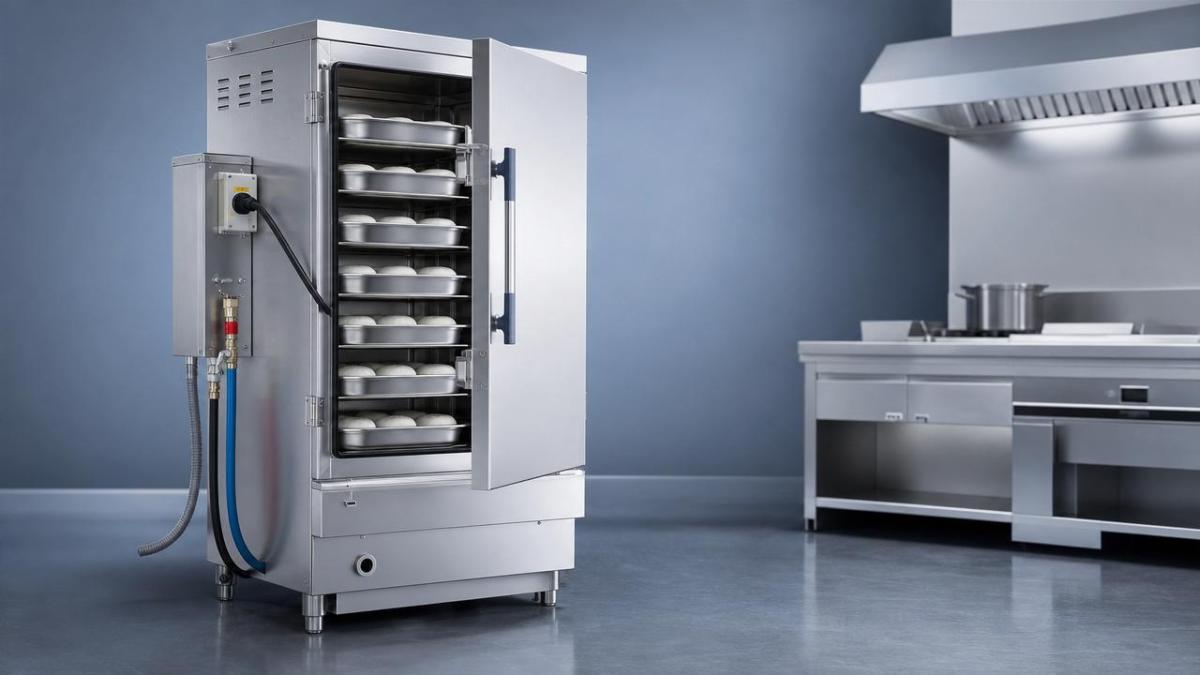
A Commercial Steamer is typically sized by pan capacity, production volume, service period demand, and utility configuration.
However, nominal capacity alone does not show real performance. Steam recovery, door opening frequency, food load density, and batch timing all affect usable output.
Two units with similar dimensions may deliver very different results. Boiler type, insulation quality, control logic, and standby losses can change energy consumption significantly.
In the kitchen equipment industry, the trend toward energy-efficient systems has made right-sizing more important than simply choosing larger equipment for safety.
Core sizing factors
- Peak meals or batches per hour
- Menu mix and cook time variation
- Pan size, depth, and loading pattern
- Available gas, electric, water, and drainage conditions
- Holding strategy between cooking cycles
- Future expansion requirements
Why the industry now pays closer attention
Foodservice operations are under pressure to reduce utility costs while maintaining speed, hygiene, and consistent output.
At the same time, smart kitchen systems make energy data more visible. That visibility often reveals that oversized steam equipment wastes more than expected.
Modern kitchen projects also prioritize integrated equipment planning. Ventilation, electrical loading, water treatment, and digital monitoring all depend on accurate sizing assumptions.
Sizing mistakes that increase operating costs
The most expensive errors are usually simple. They happen when planned capacity does not match real kitchen behavior.
1. Buying too large for occasional peaks
Many projects size a Commercial Steamer for rare peak periods instead of daily average peak windows.
That decision leads to long idle periods, unnecessary heat loss, and repeated energy waste during warm-up and standby.
2. Ignoring batch rhythm
A kitchen may not need a larger steamer if production can be split into efficient batches with short recovery times.
Without reviewing the cooking schedule, teams often overestimate required chamber size.
3. Assuming all pans perform equally
Deep pans, dense loading, and covered products change steam penetration. The theoretical pan count may not equal practical throughput.
When this detail is missed, operators compensate by extending cooking time, which raises energy use and slows service.
4. Overlooking utility compatibility
A Commercial Steamer may be correctly sized in volume but poorly matched to site power, gas pressure, water quality, or drainage.
These mismatches reduce efficiency and can trigger scale buildup, slow startup, and avoidable service calls.
5. Forgetting menu changes over time
Menus evolve toward healthier, steamed, reheated, or centralized production items. A sizing plan based only on current dishes may age poorly.
The result is either chronic overload or excess installed capacity.
Business value of correct Commercial Steamer sizing
A well-sized Commercial Steamer supports much more than lower utility bills. It improves workflow stability across the kitchen system.
- Lower standby and preheat energy consumption
- Better recovery between consecutive loads
- More predictable cooking times
- Reduced water waste and drainage stress
- Improved coordination with holding and plating areas
- Stronger long-term return on equipment investment
In integrated kitchen environments, right-sizing also protects upstream and downstream systems, including combi ovens, prep zones, dishwashing, and ventilation.
Typical sizing needs by application scenario
Different operations use a Commercial Steamer in different ways. Capacity should reflect production behavior, not only kitchen size.
Practical methods to avoid sizing errors
A reliable sizing process combines operational data, utility review, and realistic production assumptions.
Build the estimate from real output
- Measure peak servings or batch volume by hour, not by day.
- Group menu items by steam time and load density.
- Account for door opening frequency and reload intervals.
- Compare required output with tested recovery performance.
Review system-level conditions
- Confirm available electrical or gas capacity
- Check water hardness and treatment strategy
- Verify drainage design and condensate handling
- Coordinate with hood, room heat load, and ventilation
Plan for efficient flexibility
Instead of one oversized Commercial Steamer, some projects benefit from modular capacity or complementary equipment.
That approach can reduce idle consumption while supporting future growth and menu diversification.
Implementation checkpoints before final selection
Before approving a Commercial Steamer, confirm that the sizing decision has been tested against operational reality.
- Is the selected capacity based on peak-hour demand?
- Have mixed menu loads been included?
- Does the utility infrastructure support rated performance?
- Are standby losses acceptable for daily usage patterns?
- Can future volume changes be handled without major inefficiency?
The best results come from balancing capacity, recovery, workflow, and energy efficiency rather than choosing the largest chamber available.
Using this approach, a Commercial Steamer becomes a productive asset instead of a hidden source of avoidable operating cost.
Review actual cooking patterns, utility conditions, and growth plans before final specification. Better sizing decisions today can protect kitchen performance and energy budgets for years.
Popular Tags
Kitchen Industry Research Team
Dedicated to analyzing emerging trends and technological shifts in the global hospitality and foodservice infrastructure sector.
Industry Insights
Join 15,000+ industry professionals. Get the latest market trends and tech news delivered weekly.
No spam. Unsubscribe anytime.
Hot Articles
Contact With us
Contact:
Anne Yin (Ceramics Dinnerware/Glassware)
Lucky Zhai(Flatware)