
A restaurant kitchen equipment checklist for opening week
Opening week can expose every weak point in a foodservice buildout, which is why a practical restaurant kitchen equipment checklist matters long before the first order is fired. In restaurants, hotels, central kitchens, and mixed-use dining spaces, equipment decisions affect food safety, labor flow, service speed, energy use, and maintenance risk. A complete checklist is not just about buying ovens and coolers; it is about matching kitchen equipment to menu volume, storage patterns, compliance requirements, and peak-hour pressure. This guide breaks the process into real operating scenarios so the restaurant kitchen equipment checklist becomes a launch tool rather than a last-minute purchasing list.
Why opening week changes how a restaurant kitchen equipment checklist should be built
A standard equipment list often looks complete on paper but fails under live conditions. Opening week introduces compressed prep windows, untrained movement patterns, higher sanitation stress, urgent cold storage needs, and unexpected demand spikes. That means a restaurant kitchen equipment checklist must be built around operating scenarios instead of equipment categories alone.
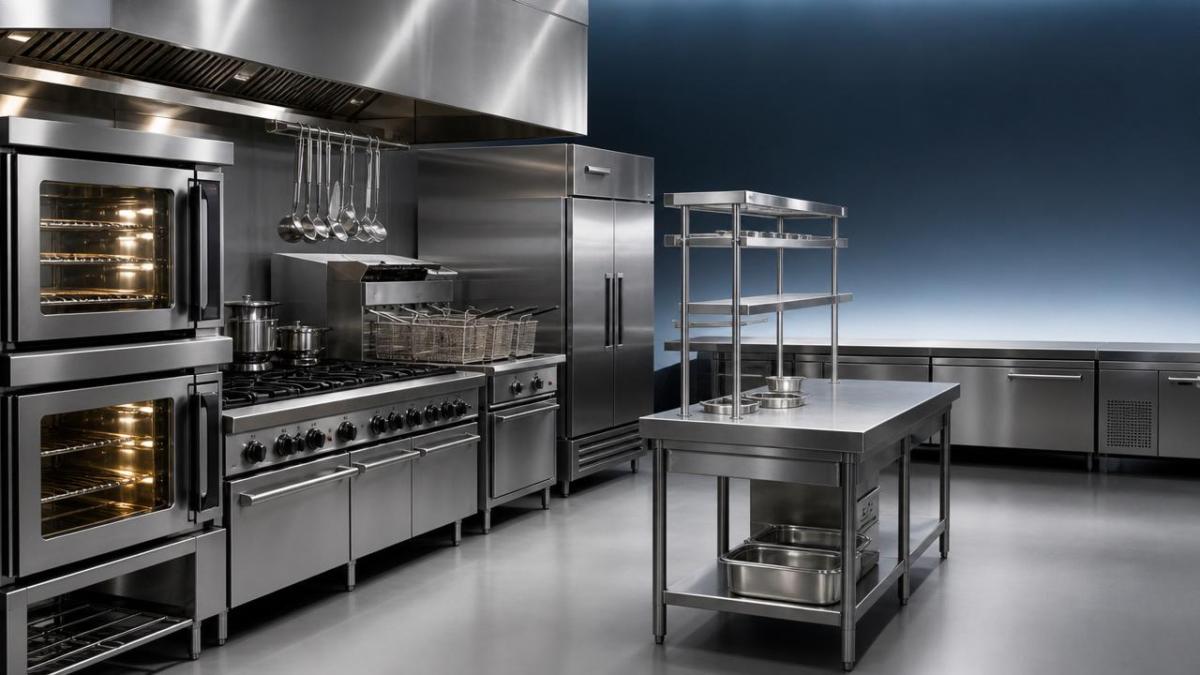
For example, a casual dining restaurant may need extra refrigerated prep space near the line, while a bakery café may need more holding, proofing, and smallwares support than heavy sauté capacity. In the wider kitchen equipment industry, the move toward automation, energy efficiency, and integrated systems makes this planning even more important. Smart controls, efficient refrigeration, and workflow-friendly prep equipment can reduce opening week disruption when selected according to actual use.
Scenario 1: Full-service restaurants need line balance, holding power, and backup capacity
In a full-service setting, the best restaurant kitchen equipment checklist focuses on synchronized production. The core question is whether hot line, cold line, expo, and dish return can move at the same pace. If one station slows down, the entire service chain suffers. Opening week often reveals missing hot holding units, underpowered ventilation support, or too little refrigerated reach-in capacity near the cook line.
Essential equipment usually includes ranges, griddles, fryers, combi ovens or convection ovens, salamanders, refrigerated chef bases, prep tables, hot holding cabinets, and food thermometers. A good restaurant kitchen equipment checklist for this scenario also includes backup parts such as fryer baskets, extra cutting boards, sheet pans, and storage racks. These low-cost items often prevent expensive slowdowns during opening service.
Scenario 2: Quick-service formats require speed, repetition, and easy cleaning
Quick-service and takeaway concepts operate on narrow ticket times, repeatable output, and fast reset between rushes. Here, a restaurant kitchen equipment checklist should prioritize compact cooking equipment, ergonomic assembly stations, undercounter refrigeration, heat lamps, beverage systems, and high-speed sanitation tools. The key judgment point is whether the equipment layout supports one-touch movement with minimal crossing paths.
In this scenario, durability and cleanability can be more important than maximum cooking flexibility. Smooth stainless worktables, grease management systems, splash control, and easy-access refrigeration doors reduce cleaning time and improve consistency. If the concept depends on delivery, the restaurant kitchen equipment checklist should also include order staging shelves, packaging storage, and pass-through warming support.
Scenario 3: Prep-heavy kitchens depend on storage, processing, and food safety zones
Restaurants with extensive scratch cooking, batch sauces, butchery, or fresh produce prep need a different planning approach. In these kitchens, the restaurant kitchen equipment checklist must cover food processors, mixers, slicers, immersion blenders, vegetable prep machines, blast chillers where needed, and enough dedicated sinks for produce, handwashing, and warewashing separation.
The critical judgment point is zoning. Raw storage, washing, cutting, cooking, cooling, and finished-product holding should not compete for the same narrow workspace. A strong restaurant kitchen equipment checklist includes mobile prep tables, labeled containers, shelving, ingredient bins, HACCP-friendly temperature monitoring, and reliable refrigeration that supports frequent opening and closing during prep hours.
Scenario 4: Multi-site, hotel, or central kitchen operations need scale and system integration
Larger operations often manage banquet service, room service, café demand, or satellite distribution from one kitchen. In this case, a restaurant kitchen equipment checklist should include higher-capacity refrigeration, bulk storage racking, roll-in hot boxes, combi ovens, vacuum packaging equipment, ice machines sized for service overlap, and digital monitoring tools for temperature and maintenance alerts.
This scenario benefits most from the industry trend toward intelligent and energy-efficient kitchen systems. Connected equipment can support preventive maintenance, while automated cooking and programmable controls improve consistency across shifts. A modern restaurant kitchen equipment checklist should therefore consider not only equipment count, but also utility load, data visibility, and workflow integration.
How equipment needs differ across opening scenarios
The same checklist structure does not fit every concept. Comparing core needs side by side makes the restaurant kitchen equipment checklist more accurate and easier to use during final review.
A practical restaurant kitchen equipment checklist for launch readiness
Use the following restaurant kitchen equipment checklist to confirm launch readiness across the most critical operating areas:
- Cooking: ranges, ovens, fryers, grills, griddles, steamers, microwaves, holding cabinets, temperature probes.
- Refrigeration: walk-in cooler, walk-in freezer, reach-in refrigerator, undercounter units, prep tables, chef bases, thermometers.
- Food prep: worktables, sinks, processors, mixers, slicers, cutting boards, storage bins, ingredient shelving.
- Sanitation: dishwashers, compartment sinks, hand sinks, sanitizer stations, floor drains, drying racks, waste containers.
- Service support: heat lamps, pass shelves, tray slides, packaging storage, ticket rails, mobile carts.
- Utilities and safety: ventilation, grease control, fire suppression, water filtration, gas and power checks, backup lighting.
- Efficiency tools: programmable controls, monitoring systems, energy-efficient equipment, maintenance log access.
What to adjust when the kitchen layout, menu, or utilities create conflicts
Not every opening issue comes from missing equipment. Sometimes the problem is poor fit between equipment and site conditions. A restaurant kitchen equipment checklist should therefore include layout and infrastructure review. If electrical capacity is limited, high-load appliances may need to be sequenced differently. If ventilation coverage is narrow, heavy grease-producing equipment may need relocation. If the menu includes cold desserts, raw seafood, and hot entrées, separate storage and prep access become essential.
Energy-efficient equipment deserves special attention here. Modern refrigeration, induction solutions, and smart cooking systems can reduce utility stress while improving consistency. In many commercial settings, selecting integrated kitchen equipment during planning avoids expensive retrofits after opening week.
Common opening-week mistakes that a restaurant kitchen equipment checklist should catch
Several mistakes appear repeatedly across restaurant launches. One is focusing on primary cooking equipment while ignoring support items such as shelving, mobile racks, ingredient containers, or backup smallwares. Another is undersizing ice production, handwashing access, or refuse handling. A third is failing to test whether refrigerators recover temperature fast enough during repeated service access.
A useful restaurant kitchen equipment checklist also catches workflow blind spots: prep tables placed too far from sinks, dish return crossing plated food paths, or sanitation stations blocked by carts during rush periods. These are not minor details. They directly affect speed, safety, labor efficiency, and guest experience.
Next steps to finalize the restaurant kitchen equipment checklist before day one
Before opening, walk the kitchen in service order rather than room order. Start at receiving, move through storage, prep, cooking, holding, plating, warewashing, and waste removal. At each point, confirm the restaurant kitchen equipment checklist against three questions: Is capacity enough for peak demand, is food safety protected, and can the team move without interference?
Then run a live simulation with equipment powered on, cold storage loaded, and sanitation points stocked. Record gaps immediately and resolve them before opening week begins. A strong restaurant kitchen equipment checklist is not only a procurement document; it is an operational readiness framework that supports compliance, consistency, and long-term efficiency. When the checklist reflects real kitchen scenarios, launch becomes far more controlled, scalable, and sustainable.
Popular Tags
Kitchen Industry Research Team
Dedicated to analyzing emerging trends and technological shifts in the global hospitality and foodservice infrastructure sector.
Industry Insights
Join 15,000+ industry professionals. Get the latest market trends and tech news delivered weekly.
No spam. Unsubscribe anytime.
Hot Articles
 Kitchenware Quality Control Checklist: Key Inspection Points for Materials, Finish, and Safety
- Restaurant Kitchen Layout Basics: How to Improve Food Prep Flow and Reduce Cross-Traffic
- Glass Bottle Types Explained: Which Shapes, Closures, and Volumes Suit Different Products?
- Preparation Table Buying Guide: Material, Load Capacity, and Workflow Fit for Commercial Kitchens

Contact With us
Contact:
Anne Yin (Ceramics Dinnerware/Glassware)
Lucky Zhai(Flatware)