
Kitchen Manufacturing Shifts That Are Reshaping Supply Plans
Kitchen manufacturing is entering a new phase shaped by automation, smart systems, energy efficiency, and shifting global supply dynamics. For business decision-makers, these changes are not just production trends—they directly influence sourcing strategy, cost control, delivery reliability, and long-term competitiveness. Understanding how manufacturing shifts are reshaping supply plans is essential for companies aiming to build more resilient and future-ready kitchen equipment operations.
Why kitchen manufacturing is changing faster than many supply teams expected
The current wave of change in kitchen manufacturing is not the result of a single innovation or market event. It is the outcome of several pressures arriving at the same time: rising labor costs, stricter food safety expectations, energy efficiency regulations, digital procurement practices, and a stronger demand for product customization across commercial and residential kitchen markets. Together, these shifts are redefining how kitchen equipment is designed, produced, sourced, and delivered.
For restaurants, hotels, food processors, distributors, and private-label buyers, kitchen manufacturing now involves more than evaluating unit price and lead time. Supply plans increasingly depend on factory automation levels, software integration capability, component traceability, export flexibility, and the manufacturer’s ability to adjust to sudden swings in demand. As a result, procurement decisions are moving closer to strategic planning, not just operational purchasing.
Another signal worth noting is that kitchen manufacturing is becoming more segmented. A supplier focused on stainless steel preparation tables may face very different pressures than one producing smart combi ovens or automated food processing systems. Yet across these segments, the same business reality is emerging: supply chain resilience now depends on manufacturing adaptability.
The main forces reshaping kitchen manufacturing supply plans
Decision-makers should avoid viewing today’s market as a simple cost cycle. The deeper shift in kitchen manufacturing is structural. Factories are upgrading processes, buyers are raising technical requirements, and cross-border trade conditions are becoming more complex. These changes influence supplier selection, inventory policy, contract terms, and market entry decisions.
Among these forces, automation is especially important because it directly changes the economics of kitchen manufacturing. A factory with automated cutting, polishing, and welding can often maintain more predictable output under labor shortages, while also improving repeatability for commercial kitchen projects. This matters to supply teams that need stable quality across multiple sites or expansion programs.
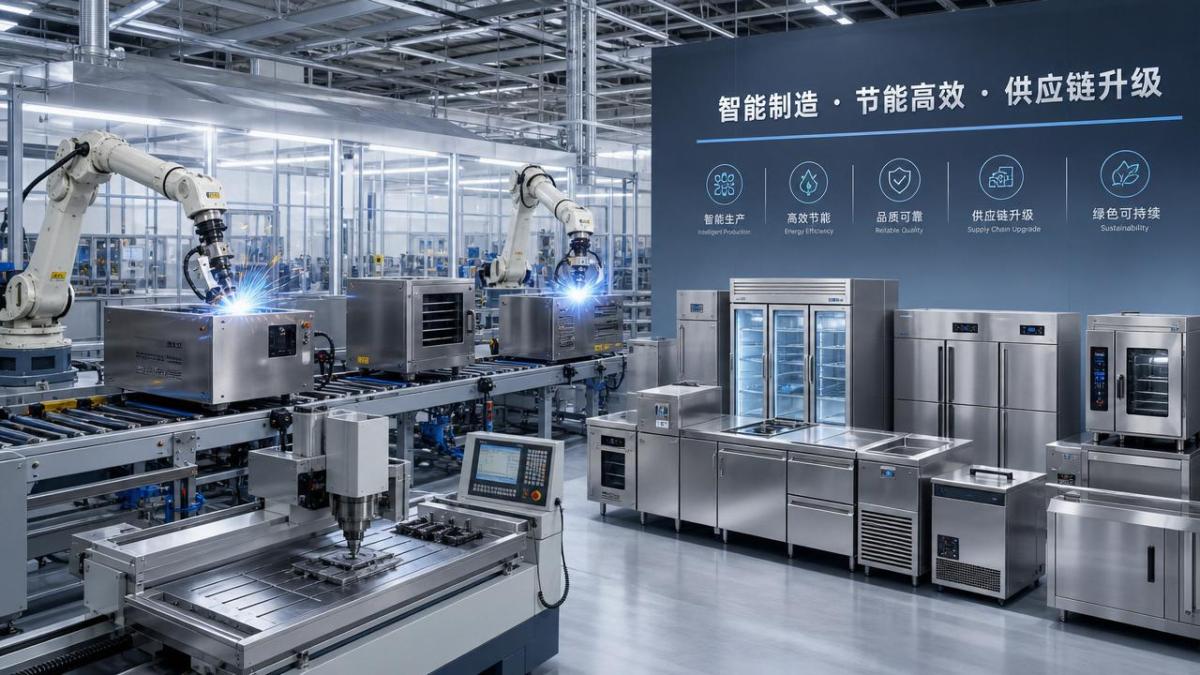
Automation is no longer optional in high-volume kitchen manufacturing
In the past, many buyers associated kitchen manufacturing with labor-intensive metal fabrication and appliance assembly. That is still true in some product categories, but the leading edge of the industry is changing. Automated fabrication lines, digital production monitoring, and semi-robotic assembly are now helping manufacturers reduce rework, increase throughput, and shorten response times for urgent orders.
For business buyers, this creates a useful distinction between suppliers that can scale and suppliers that may struggle during demand spikes. A highly automated kitchen manufacturing partner is often better positioned to manage large hospitality rollouts, chain restaurant programs, or export orders with tight delivery windows. In contrast, manufacturers that rely heavily on manual scheduling may face bottlenecks when material costs rise or labor availability tightens.
Automation also changes supplier risk evaluation. Instead of asking only whether a producer has enough capacity, procurement leaders should ask how that capacity is created. Is output tied to key technicians? Can the factory maintain quality during overtime periods? Are production data recorded and traceable? These are practical questions that directly affect supply continuity.
Smart systems are pushing kitchen manufacturing beyond hardware alone
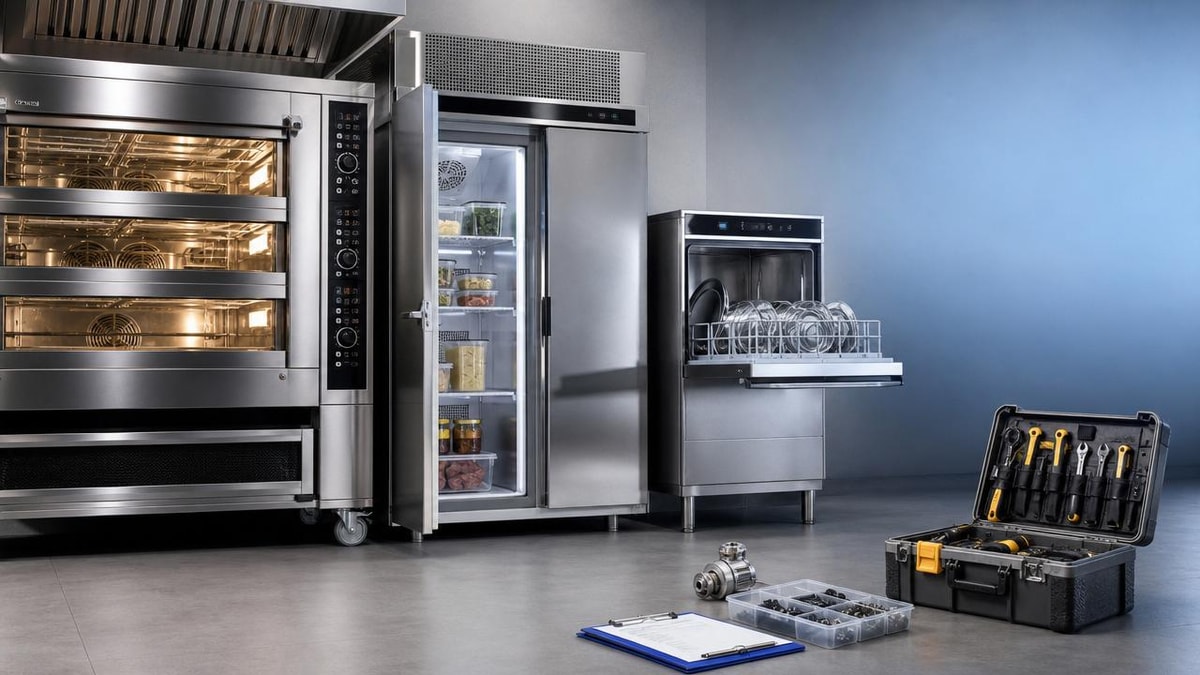
One of the most significant shifts in kitchen manufacturing is the move from standalone equipment to connected systems. Commercial ovens, refrigeration units, dishwashing systems, and food processing machines increasingly include intelligent controls, remote diagnostics, usage monitoring, and integration with broader kitchen management platforms. This means manufacturers are no longer judged only by metalwork or mechanical durability.
As more products include electronics and digital features, supply plans must account for component complexity. Microcontrollers, sensors, display modules, and communication interfaces introduce new supply dependencies that were less important in traditional equipment categories. A kitchen manufacturing partner may be strong in fabrication but weak in embedded systems support, firmware updates, or digital troubleshooting. That gap can become a service problem after delivery.
For decision-makers, the implication is clear: technical capability is becoming part of supply reliability. Buyers should evaluate whether suppliers can support product lifecycle needs, not just production volume. In categories where uptime matters, such as hotels, central kitchens, and food processing facilities, post-sale technical coordination is now part of the sourcing equation.
Energy efficiency is becoming a commercial advantage, not just a compliance issue
Energy-efficient design is one of the strongest long-term drivers in kitchen manufacturing. Rising electricity and gas costs, sustainability targets, and operational efficiency goals are pushing buyers to prioritize equipment that delivers lower lifetime cost rather than only lower purchase cost. This affects cooking systems, refrigeration, ventilation, water use, and heat recovery solutions.
The shift matters because it changes demand patterns upstream. Manufacturers are redesigning insulation structures, heating systems, compressor configurations, and control logic to meet efficiency expectations. Suppliers that invest early in energy-smart kitchen manufacturing can strengthen their position with institutional buyers, hospitality groups, and foodservice operators that track total cost of ownership.
From a supply planning perspective, energy efficiency also influences product mix forecasting. Buyers may phase out legacy models faster than expected once new standards, internal ESG goals, or customer expectations take effect. Companies that continue sourcing outdated designs without a transition roadmap may face inventory mismatch, lower margins, or slower project approvals.
Global supply diversification is changing how buyers evaluate manufacturing hubs
Kitchen manufacturing remains globally connected, with China, Germany, Italy, Japan, and other markets playing important roles in production and export. However, buyers are increasingly reassessing concentration risk. Freight disruption, geopolitical uncertainty, currency volatility, tariff changes, and port congestion have shown that cost-efficient sourcing can still become vulnerable sourcing.
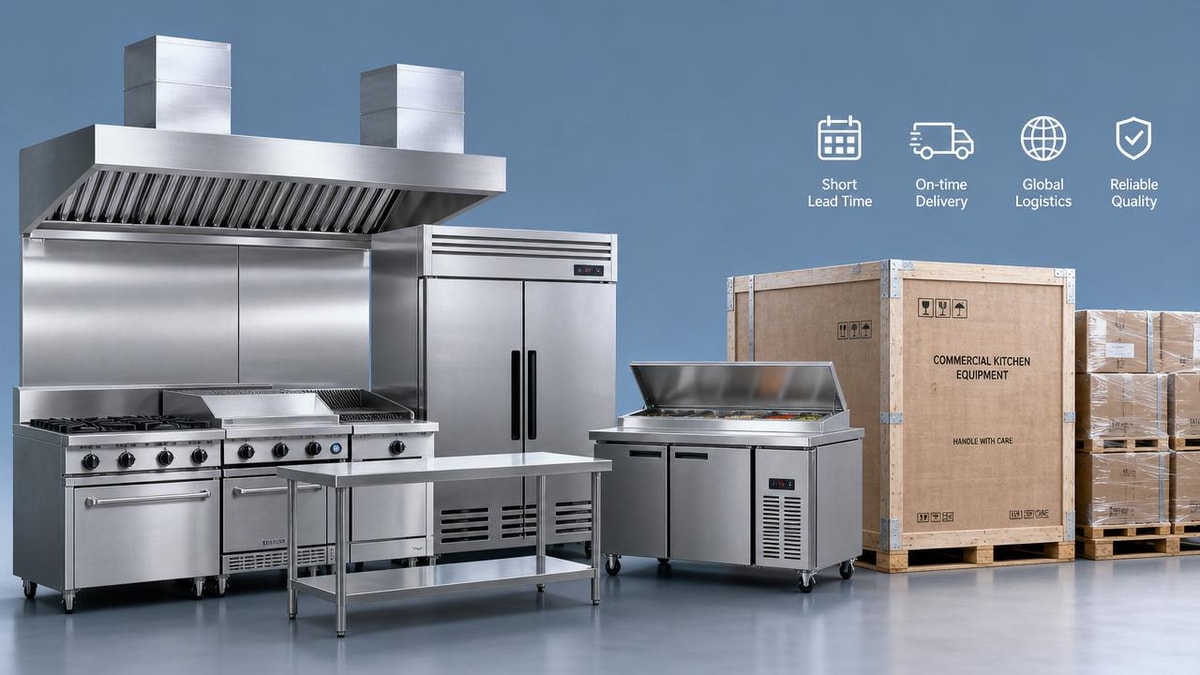
This does not mean abandoning established manufacturing hubs. It means evaluating them through a broader lens. Companies are asking whether critical product lines need a second source, whether regional assembly can shorten delivery cycles, and whether component localization can reduce exposure to cross-border delays. In many cases, the best answer is not full relocation but a layered sourcing model that combines core suppliers with backup manufacturing options.
For kitchen manufacturing buyers serving restaurant chains, construction projects, or public sector contracts, a diversified supply plan can create commercial flexibility. It may improve tender response, reduce stockout risk, and support more stable pricing. The key is to balance resilience with operational simplicity rather than chasing diversification for its own sake.
Who is feeling the impact most across the value chain
The changes in kitchen manufacturing do not affect every participant in the same way. Some face rising technical demands, while others face higher planning complexity or stronger pressure on service performance. Understanding where the impact is concentrated helps leaders set better priorities.
For enterprise decision-makers, this means procurement can no longer operate in isolation. Sourcing, engineering, operations, finance, and after-sales planning all need closer coordination when selecting kitchen manufacturing partners. The more advanced the equipment category, the more important cross-functional evaluation becomes.
What business leaders should evaluate now before supply pressure grows
The strongest response to manufacturing shifts is not reactive purchasing. It is better planning based on visible signals. Companies that depend on kitchen manufacturing should review supplier portfolios with more discipline and more forward-looking criteria.
First, assess production flexibility. Can suppliers handle both standardized and customized orders without major delay? Second, examine technical depth. If products include digital or energy-efficient features, can the supplier support testing, documentation, and troubleshooting? Third, review sourcing concentration. Are too many critical items dependent on one facility, one country, or one component pathway?
It is also wise to track early warning indicators, such as longer quoting cycles, unstable material substitution, inconsistent packaging quality, or vague answers about component origin. These can signal stress inside a kitchen manufacturing network before visible delivery failure occurs. Leaders who monitor these signals can adjust forecasts, negotiate alternatives, or qualify backup sources earlier.
How to build a more resilient kitchen manufacturing supply plan
A resilient supply plan does not require extreme complexity, but it does require better structure. Companies should segment kitchen manufacturing categories by risk and business value. High-volume core items may need dual sourcing or regional stocking. Technically complex equipment may require deeper supplier collaboration and service-level review. Project-based customized items may need longer planning windows and earlier design freeze points.
Another useful step is aligning contracts with today’s manufacturing reality. Instead of focusing only on price validity, businesses should clarify lead time commitments, substitute approval processes, quality escalation procedures, and spare parts support. These details can protect operations when market conditions tighten.
Finally, companies should revisit how they define supplier value. In modern kitchen manufacturing, the best partner is not always the one with the lowest invoice cost. It is often the one with stronger process control, clearer communication, faster adaptation, and a realistic path toward smarter and more energy-efficient production.
Key questions for the next decision cycle
As kitchen manufacturing continues to evolve, the most effective response is to ask sharper questions before pressure becomes urgent. Which product lines are most exposed to technical change? Which suppliers are advancing in automation and digital support, and which are falling behind? Where could energy efficiency demands alter purchasing standards within the next planning cycle? How much concentration risk is embedded in current sourcing?
For companies that want to judge the impact of these trends on their own business, the priority is to confirm where manufacturing change intersects with operational risk, customer expectations, and growth plans. That is where the next generation of supply advantage in kitchen manufacturing will be built.
Popular Tags
Kitchen Industry Research Team
Dedicated to analyzing emerging trends and technological shifts in the global hospitality and foodservice infrastructure sector.
Industry Insights
Join 15,000+ industry professionals. Get the latest market trends and tech news delivered weekly.
No spam. Unsubscribe anytime.
Contact With us
Contact:
Anne Yin (Ceramics Dinnerware/Glassware)
Lucky Zhai(Flatware)