
How to Compare Glass Sauce Jar Suppliers
Choosing the right glass sauce jar supplier requires more than comparing prices. Buyers also need to assess product quality, customization options, food-safe standards, and export reliability, especially when sourcing alongside items like glass meal prep jar, glass salad jar, or glass latte mug collections. This guide explains the key factors that help procurement teams and decision-makers identify dependable partners and build a more competitive kitchenware supply chain.
What should buyers compare first when evaluating glass sauce jar suppliers?
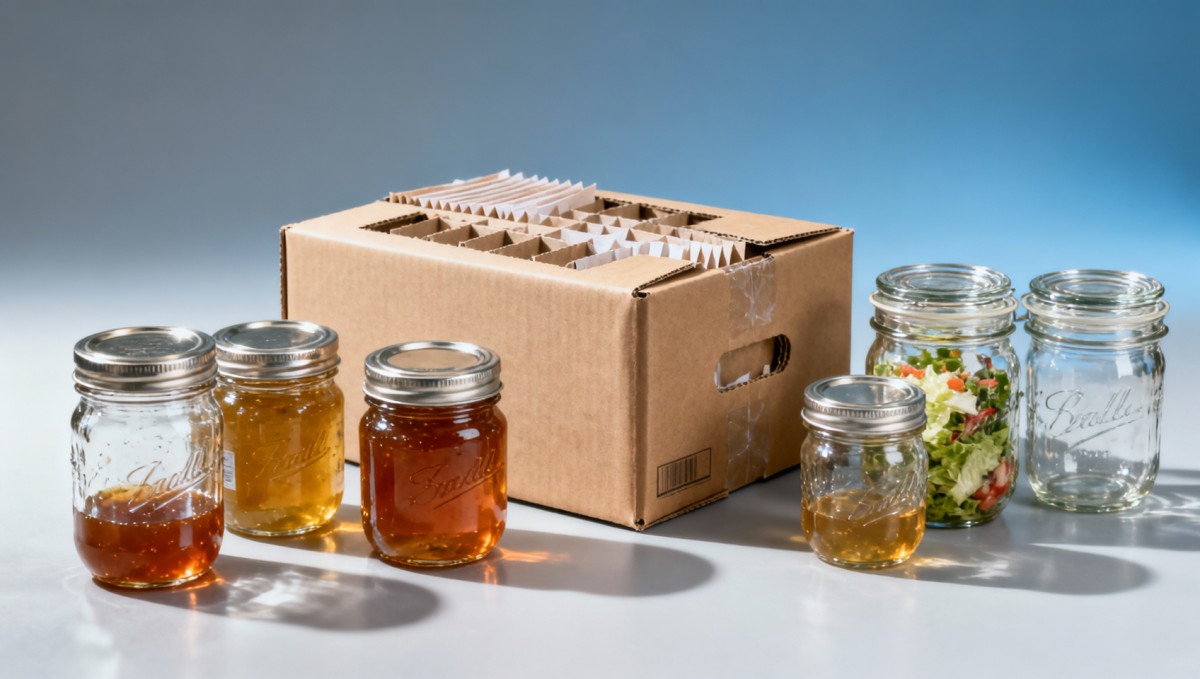
A practical comparison starts with 4 core dimensions: product consistency, food-contact safety, supply capability, and communication efficiency. In the kitchen equipment industry, glass packaging is not an isolated purchase. It often connects with broader sourcing plans for restaurant service ware, food prep containers, beverage cups, and storage systems. That is why a supplier’s stability matters as much as unit price.
For procurement teams, the first filter is usually whether the supplier can support small trial orders, medium-volume repeat orders, and larger export shipments without changing quality. Typical sample preparation may take 7–15 days, while mass production for standard glass jars often falls within 3–6 weeks depending on decoration, lid type, and packaging method. Suppliers who cannot explain these timelines clearly often create downstream risk.
Operators and end users focus on different issues. They want jars that pour cleanly, seal reliably, and survive daily handling in kitchens, cafés, salad bars, and food prep lines. Decision-makers look one step further. They compare whether the supplier can support branding, reduce breakage claims, and coordinate mixed orders across related kitchenware categories. A good supplier should address all 3 perspectives, not only the purchasing team’s immediate quote request.
Another early check is whether the supplier works like a trader, a factory, or a hybrid export operator. None of these models is automatically better, but buyers need to know who controls molds, who manages quality inspection, and who takes responsibility if shipment issues appear after loading. This affects lead time, customization range, and problem-solving speed.
A fast screening checklist for supplier comparison
- Can the supplier provide clear specifications for capacity, neck finish, lid compatibility, and packaging structure within 24–72 hours?
- Do they understand foodservice use cases such as sauces, dressings, meal prep, beverage service, and refrigerated display?
- Can they support decoration options such as silk screen, labeling areas, embossing, or private packaging for B2B channels?
- Do they have a documented inspection process covering appearance, dimensional tolerance, sealing fit, and carton drop resistance?
If a supplier cannot answer these basic questions in a structured way, comparison becomes difficult because the quote is disconnected from real operating requirements. A lower price on paper can quickly become a higher total cost after rework, delays, or customer complaints.
How to compare quality, specifications, and packaging in a meaningful way
Many buyers compare glass sauce jar suppliers by capacity alone, but that misses several critical details. Two jars may both be listed at 250 ml, yet differ in wall thickness, base stability, mouth diameter, cap fit, filling efficiency, and breakage risk during transport. In foodservice and kitchen equipment distribution, these details influence user experience and replacement cost more than a small difference in unit pricing.
For technical comparison, start with 5 measurable items: capacity range, dimensional tolerance, weight consistency, closure compatibility, and packaging protection. Industry buyers commonly review standard capacities such as 100–300 ml for dipping sauces, 300–500 ml for dressings and syrups, and larger formats for back-of-house ingredient storage. Matching the jar to usage volume helps reduce waste and improve handling speed.
Packaging also deserves close review. A visually good jar can still fail if dividers, inner trays, or outer cartons are not designed for export stacking. For sea freight and mixed container loading, buyers should ask about carton configuration, pallet option, and whether the supplier uses partition packaging or bulk packing. These decisions affect damage rates, warehouse efficiency, and landed cost.
The table below helps procurement teams compare suppliers using practical selection criteria rather than general claims. It is especially useful when sourcing glass sauce jars together with glass salad jar or glass meal prep jar ranges.
This type of comparison makes supplier evaluation more objective. Instead of relying on broad promises, buyers can score responses against real operating needs. It also helps align technical teams, procurement, and management around the same decision criteria.
Where specification mismatches usually happen
The most common mismatch is assuming that all sauce jars with similar images are interchangeable. In reality, neck finish differences, cap thread variations, and decoration placement can disrupt filling lines or retail labeling. A supplier that provides drawings, sample measurements, and closure matching advice early in the process reduces this risk significantly.
Another issue is underestimating packaging format. Bulk-packed jars may look cheaper at first, but partition cartons can lower breakage and simplify receiving for distributors. For international shipments moving over 2–6 weeks, packaging design often matters as much as glass quality.
Which compliance and food-safety points should procurement teams verify?
In the kitchen equipment and foodservice supply chain, compliance is not only a legal issue but also a brand protection issue. Glass sauce jar suppliers should be able to discuss food-contact suitability, material traceability, and packaging cleanliness in practical terms. Buyers do not always need every possible document, but they do need the right documents for the target market and product application.
A useful approach is to divide compliance into 3 layers: glass material safety, closure and sealing component safety, and export packaging suitability. For example, a jar body may be suitable for food contact, but the lid liner or printing ink may require additional verification depending on destination market requirements. This is especially relevant when jars are used for acidic sauces, oil-based dressings, or refrigerated prepared foods.
Procurement teams should also ask how the supplier manages batch consistency and visual inspection. Common control points include mouth finish, body defects, bubble visibility, sharp edge screening, and sealing match. Even when formal lab testing is handled separately, a supplier should have routine inspection standards for every production batch or shipment lot.
The following table shows a practical compliance review framework for comparing glass sauce jar suppliers in international B2B trade.
This framework keeps the conversation practical. Buyers are not looking for theoretical compliance language. They want to know whether the supplier can support a smooth import process, stable kitchen use, and lower post-delivery claims.
Questions that reveal real compliance maturity
- Can you explain which parts of the product directly contact food and how those parts are controlled?
- How do you verify closure fit across repeated production batches or supplier changes?
- What is your standard process before shipment: internal inspection only, third-party inspection support, or both?
- If the destination market changes, how do you help buyers confirm the required documentation within 3–5 working days?
Suppliers that answer these points clearly are usually easier to work with in long-term programs. They reduce uncertainty for purchasing managers and provide more confidence to business decision-makers planning multi-item kitchenware imports.
How do lead time, MOQ, and customization affect total purchasing cost?
Price comparison only becomes meaningful after buyers understand the full cost structure. For glass sauce jar sourcing, the total cost usually includes mold or customization charges when applicable, unit price, lids, decoration, packaging upgrades, inspection, inland transport, and freight-related breakage exposure. A supplier with a lower ex-works price can still produce a higher landed cost if quality variation or weak packaging increases claims.
MOQ is another major factor. Standard clear jars may support more flexible ordering, while customized printing, color coating, or special lids often require higher quantity thresholds. In many B2B programs, buyers evaluate 3 levels: sample order for validation, pilot order for market testing, and repeat order for scale purchasing. This staged approach reduces risk when entering a new category or replacing an existing supplier.
Lead time affects both inventory cost and sales responsiveness. If a supplier needs 45–60 days for every repeat order, the buyer may need larger safety stock. If the supplier can hold common caps, standard cartons, or semi-finished stock, replenishment can be more flexible. For fast-moving kitchenware distributors, this can improve cash flow and reduce warehouse pressure across multiple SKUs.
The cost logic becomes clearer when buyers compare not just price, but the sourcing model behind the quote.
A practical decision model for procurement teams
- Use sample approval to verify appearance, lid fit, and packing method before discussing annual volume.
- Request at least 2 quotation versions: standard packaging and reinforced export packaging.
- Compare standard lead time, rush-order feasibility, and reorder conditions for recurring SKUs.
- Evaluate whether one supplier can combine glass sauce jars with related items such as glass meal prep jars or glass latte mugs to reduce coordination cost.
Common cost trade-offs buyers should not ignore
A heavier jar may feel more premium, but it can increase freight cost and reduce loading efficiency. A low-cost lid may save money at purchase, but create leakage or corrosion complaints later. A very low MOQ may sound attractive, yet often comes with limited customization or less favorable packaging protection. Smart supplier comparison balances these trade-offs instead of optimizing only one number.
In the kitchen equipment sector, buyers increasingly prefer suppliers who can align with broader product planning. If one partner can support 3–5 related glassware lines with consistent packaging standards and clearer delivery windows, the operational savings may outweigh a small difference in unit price.
What mistakes do buyers make when selecting a glass sauce jar supplier?
The first mistake is choosing based on quotation speed alone. Quick replies are helpful, but they do not guarantee technical accuracy. Some suppliers respond within a few hours yet provide incomplete specifications, unclear closure details, or generic packaging promises. This creates confusion later when samples, labels, or cartons do not match the actual purchasing requirement.
The second mistake is not clarifying the intended use scenario. A sauce jar for retail shelf display, a salad dressing jar for takeaway, and a prep jar for back-of-house kitchen use may require different shapes, cap structures, and packaging methods. Without clear application input, suppliers can only quote a general product, not the best-fit product.
The third mistake is overlooking service reliability after order confirmation. Buyers should ask who handles artwork approval, pre-production sample confirmation, shipment photos, and claim management. In international trade, service discipline over the 4–8 week order cycle often matters more than the first sales conversation.
Finally, many companies fail to compare suppliers at the portfolio level. If the same business also buys food containers, drinkware, or other kitchen accessories, a supplier able to coordinate mixed sourcing can simplify vendor management and support future expansion.
FAQ for information researchers and buyers
How many suppliers should I compare before making a decision?
For most B2B purchases, comparing 3 suppliers is a workable minimum and 5 suppliers is often enough for a structured review. Fewer options may limit benchmarking, while too many can slow decision-making. The key is to compare using the same specification sheet, packaging request, and compliance questions.
What is the usual lead time for glass sauce jars?
For standard items, samples may be ready in 7–15 days and production in roughly 3–6 weeks. Customized lids, printing, or special packaging can extend the schedule. Buyers should always separate sample lead time, production lead time, and shipping lead time when evaluating supplier reliability.
Should I choose the lowest price if the jars look similar?
Usually no. Similar appearance does not guarantee the same wall consistency, lid fit, decoration quality, or export packaging strength. It is better to compare total purchasing cost, including damage exposure, inspection workload, and reorder stability.
Can one supplier support multiple glassware categories?
Many buyers prefer this model. If a supplier can support glass sauce jars together with glass salad jars, glass meal prep jars, or glass latte mugs, procurement becomes more efficient. It can also improve packaging consistency, consolidate communication, and reduce the number of separate vendor approvals required.
Why work with a supplier that understands kitchenware sourcing as a system?
In today’s kitchen equipment market, buyers are not only purchasing containers. They are building product lines that must support food safety, operational efficiency, visual presentation, and repeat supply. A capable glass sauce jar supplier should understand how jar selection interacts with foodservice workflows, storage needs, retail branding, and cross-border delivery demands.
This is where a system-oriented sourcing partner adds value. Instead of offering a single jar model in isolation, the right supplier helps confirm product parameters, compares suitable size ranges, explains closure options, and advises on packaging based on shipping mode and usage scenario. That approach is especially useful for distributors, restaurant supply companies, importers, and brand owners managing more than one kitchenware category.
If you are comparing glass sauce jar suppliers, you can contact us to discuss 6 practical topics: size and capacity confirmation, lid and seal matching, decoration and private label options, export packaging structure, sample support, and production lead time planning. We can also help review combined sourcing needs for related items such as glass meal prep jars, glass salad jars, and glass latte mugs.
Share your target market, required volume range, packaging preference, and any compliance concerns. With that information, we can help you narrow suitable options faster, reduce trial-and-error in procurement, and build a more reliable kitchenware supply chain.
Popular Tags
Kitchen Industry Research Team
Dedicated to analyzing emerging trends and technological shifts in the global hospitality and foodservice infrastructure sector.
Industry Insights
Join 15,000+ industry professionals. Get the latest market trends and tech news delivered weekly.
No spam. Unsubscribe anytime.
Contact With us
Contact:
Anne Yin (Ceramics Dinnerware/Glassware)
Lucky Zhai(Flatware)