
Ceramic Serving Platter Price Gaps Explained
Why does one ceramic serving platter cost far more than another that looks similar? For buyers comparing a stoneware soup bowl, ceramic rice plate, or porcelain baking dish, the answer goes beyond appearance. Material grade, firing process, design complexity, durability, and supply chain factors all shape pricing. This guide helps researchers, operators, and procurement teams understand what truly drives value in today’s kitchen equipment market.
In commercial kitchens, hospitality operations, foodservice chains, and retail housewares purchasing, ceramic tableware is not a decorative afterthought. It affects food presentation, handling efficiency, replacement cost, storage planning, and customer perception. A platter that costs 20% to 60% more at purchase may still lower annual operating cost if breakage rates, heat retention, and reordering stability are better.
That is why price gaps between ceramic serving platters deserve a closer look. For procurement teams, the real question is not simply “Which option is cheaper?” but “Which option delivers reliable performance, acceptable risk, and supply continuity across 6 months, 12 months, or longer?”
Material Grade Is the First Source of Price Difference
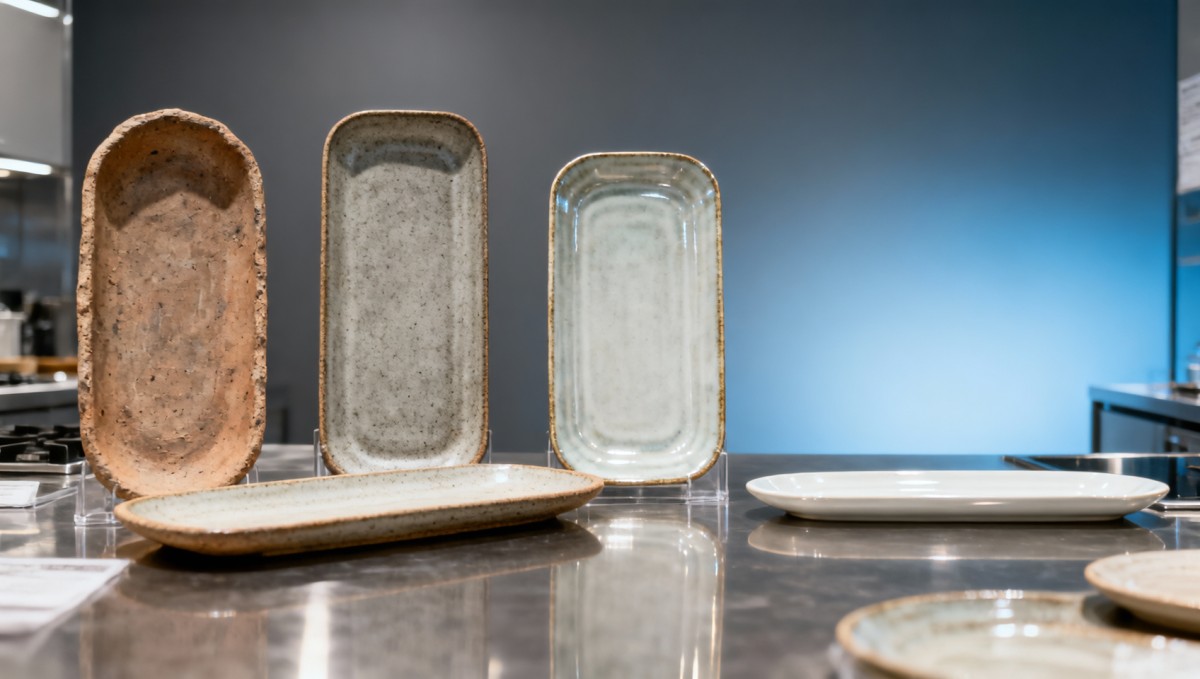
The term “ceramic” covers a broad range of products, and that is where many pricing misunderstandings begin. A serving platter may be made from earthenware, stoneware, porcelain, or vitrified ceramic blends. These materials differ in density, water absorption, impact resistance, and surface hardness, which directly affects both factory cost and service life.
For example, low-cost earthenware can look attractive on a product page but often has higher water absorption, sometimes above 5%. By contrast, stronger stoneware and porcelain options may be below 3% or even below 0.5% depending on the formulation and firing result. Lower absorption usually means better stain resistance, better hygiene performance, and less risk of cracking from repeated washing and reheating cycles.
In restaurant and hotel settings, material grade also affects weight and handling. A thicker, lower-grade platter may feel solid, but it can increase operator fatigue during high-volume service. A better-formulated porcelain platter can be 10% to 25% lighter while maintaining comparable rigidity, which matters in banquet operations moving 100 to 300 pieces per shift.
Raw material screening adds another layer of cost. Cleaner clay, more consistent feldspar content, and controlled glaze chemistry reduce visible defects such as pinholes, warping, uneven color, or glaze crawling. Manufacturers that sort raw materials more carefully usually have higher production costs but lower defect rates and more stable batch quality.
Typical material categories buyers compare
- Earthenware: lower firing temperature, decorative appeal, usually lower cost, but often less suitable for heavy-duty commercial use.
- Stoneware: common balance of durability, thermal stability, and moderate price for restaurants and household kitchens.
- Porcelain: denser body, refined appearance, lower absorption, often chosen for premium hospitality and long-term procurement programs.
- Reinforced or vitrified blends: designed for better chip resistance and repeated wash cycles in institutional foodservice.
The table below shows how material choice can influence both pricing logic and operating value in kitchen equipment procurement.
The key takeaway is simple: similar appearance does not mean similar body composition. In kitchen equipment sourcing, the lower-priced platter may be using a material system that looks acceptable on day 1 but performs poorly after 90 to 180 days of real service.
Firing Process, Glaze Quality, and Manufacturing Control Add Hidden Cost
A major price gap often comes from how the platter is made, not just what it is made from. Firing temperature, kiln cycle duration, glaze application accuracy, and post-firing inspection all change cost. A ceramic serving platter fired at a more controlled high-temperature range may have better vitrification, stronger edge stability, and more consistent color from batch to batch.
In practical terms, a manufacturer using tighter kiln controls may reject more pieces before shipment. That sounds expensive, because it is. But those rejections reduce the chance that buyers receive warped platters, unstable bases, micro-cracks, or inconsistent glaze surfaces. For importers and wholesalers, that can mean fewer customer complaints and lower return handling costs.
Glaze performance also matters for foodservice safety and appearance retention. Better glaze systems are usually more resistant to scratching from cutlery, acidic sauces, and dishwashing chemicals. In high-turnover operations, a low-grade glaze can start showing dullness or metal marks after 200 to 500 wash cycles, while a stronger glaze may remain acceptable much longer.
Edge finishing is another overlooked cost factor. Platters with polished foot rings, more even rims, and reduced sharp points are safer to stack, wash, and carry. This kind of finishing adds labor time and inspection steps, but it reduces chipping during back-of-house handling.
Why process control changes buying value
- Higher rejection standards improve shipment consistency.
- Stable firing reduces dimensional variation, important for rack storage and stackability.
- Better glaze adhesion supports cleaning performance and long-term appearance.
- Stronger edge and base finishing lowers damage risk during transport and operation.
For buyers evaluating quotations, it helps to compare manufacturing-related factors side by side rather than focusing only on piece price.
This is why two platters with nearly identical dimensions can differ significantly in price. One may simply have more process discipline behind it, and in commercial kitchen equipment purchasing, disciplined production often pays for itself.
Design Complexity, Size, and Application Scenario Influence Cost
Price gaps are also driven by design details. A basic round ceramic rice plate with a standard glaze is cheaper to produce than an oval serving platter with reactive finish, embossed texture, hand-applied rim color, or custom branding. Every added process step increases labor, slows throughput, and can reduce yield.
Size is another clear factor. A 10-inch platter and a 14-inch platter may not scale in cost proportionally. Larger pieces require more raw material, more kiln space, greater care in drying, and stricter warpage control. In many factories, oversize platters also increase packaging cost and shipping volume, especially for export cartons and pallet planning.
Application scenario should guide value assessment. A casual dining restaurant serving 80 to 150 covers per day may prioritize durability and replacement convenience. A boutique hotel or premium catering company may assign more value to plate presentation, color depth, and brand image. In those cases, a higher-cost serving platter can support menu positioning and guest experience.
Custom development further widens the gap. New mold fees, color sampling, logo decal testing, and approval rounds often add lead time of 2 to 6 weeks before mass production begins. Buyers who need exclusive designs should expect not only a higher unit price but also setup cost, minimum order quantity, and longer planning cycles.
Common cost drivers in design-led tableware sourcing
- Shape complexity: oval, irregular, or raised-edge forms need more precise molding and finishing.
- Surface decoration: matte glaze, speckled glaze, hand-painted details, and reactive effects increase labor and variation control.
- Branding: logo decals, relief marks, or custom packaging add setup and inspection cost.
- Dimension tolerance: tighter flatness and stacking requirements can increase rejection rates.
Scenario-based buying logic
For fast service kitchens, standardized SKUs often offer the best balance between price and replenishment speed. For banquet and hospitality presentation, consistency across 50 to 200 matching pieces can be more important than lowest unit cost. For retail or gifting channels, visual uniqueness may justify premium pricing if perceived value supports sell-through.
In other words, design cost is not waste by default. It becomes waste only when the design level exceeds the operational or commercial need of the buyer.
Supply Chain, Order Volume, and Quality Assurance Can Shift Final Price Dramatically
Even when the same material and design are used, supply chain conditions can create large pricing gaps. Factory location, fuel cost, labor structure, packaging method, export route, and inventory strategy all affect the final landed price. Buyers comparing quotations should separate ex-factory price from total procurement cost, because freight damage and delayed replenishment can erase an apparent discount very quickly.
Order volume is especially important. A low MOQ trial order of 300 to 500 pieces often carries a higher unit price than a 3,000-piece replenishment order. This is normal because setup, kiln scheduling, carton design, and quality checks are spread across fewer units. For chain operators and distributors, annual volume planning often unlocks better pricing than isolated spot purchases.
Packaging quality is another hidden cost center. Ceramic serving platters are vulnerable in transit, especially on long export routes involving sea freight, warehouse transfer, and last-mile distribution. Stronger inner partitions, foam protection, and drop-tested outer cartons raise packaging cost, but they may reduce breakage losses from 5% to below 2% in many practical shipping environments.
Quality assurance services also matter. Batch photos, sample confirmation, in-line inspection, and pre-shipment checks take time and resources. However, for procurement teams handling multiple SKUs across regions, these steps can prevent expensive mismatches in color tone, logo placement, or packing count.
What procurement teams should compare beyond unit price
The following checklist is useful when evaluating ceramic serving platter suppliers for restaurant equipment, hotel procurement, or kitchenware distribution.
When teams compare landed cost, breakage risk, and replenishment certainty together, a seemingly expensive platter often proves more economical across 2 to 4 purchasing cycles.
How to Evaluate Real Value Instead of Chasing the Lowest Price
The smartest buyers do not judge ceramic serving platter price in isolation. They look at total cost of ownership, expected use frequency, presentation requirements, and replacement risk. A low-cost platter that chips quickly, arrives inconsistently, or cannot be reordered in the same color may cost more over 12 months than a mid-range alternative.
Start with usage intensity. For household use, occasional service may justify a decorative product with moderate durability. For restaurants, hotels, and catering businesses, platters may be handled dozens of times per week, washed repeatedly, and stacked under pressure. That environment requires stronger chip resistance, glaze stability, and batch consistency.
Then evaluate functional fit. Consider whether the platter must support oven use, heat retention, dishwasher cycles, stackability, or coordinated appearance with bowls and plates. If a product supports 3 or 4 operational needs at once, its higher price may represent efficiency rather than luxury.
Finally, request physical samples whenever possible. Visual photos rarely show flatness, edge finishing, foot balance, or true glaze texture. A 1-piece or 3-piece sample review can reveal quality differences that specifications alone do not capture.
A practical 5-step evaluation method
- Define the use case: banquet, à la carte, buffet, retail, or household kitchen.
- Set minimum requirements for size, weight, glaze type, and handling durability.
- Compare 2 to 4 suppliers on sample quality, lead time, MOQ, and packaging.
- Estimate replacement rate over 6 to 12 months, not just initial purchase spend.
- Choose the supplier that delivers the best balance of consistency, service, and cost control.
Common buying mistakes
Frequent mistakes include selecting only by image, overlooking carton protection, ignoring dimensional variation, and failing to confirm repeat-order color consistency. Another common issue is buying a premium-looking platter without checking whether it fits dishwashers, storage racks, or operating speed in a real kitchen workflow.
A disciplined sourcing process reduces these risks. For B2B buyers, the goal is not to avoid higher prices completely. It is to understand when a higher price reflects measurable value and when it is simply decorative markup.
Frequently Asked Questions for Buyers and Kitchen Operators
Because ceramic serving platters are used across restaurants, hotels, catering programs, and household kitchens, buyers often ask similar questions before committing to a supplier or specification. The answers below can help narrow options faster.
How much price difference is normal between similar-looking platters?
A gap of 15% to 50% is common, and in some premium or custom cases the difference can be even larger. The gap usually comes from body material, firing control, glaze grade, design labor, packaging, and order volume rather than appearance alone.
Is porcelain always better than stoneware?
Not always. Porcelain often offers a more refined body and lower absorption, but well-made stoneware can deliver excellent durability and value for everyday foodservice use. The better choice depends on presentation needs, budget range, and expected handling intensity.
What lead time should buyers expect?
For stocked standard designs, lead time may be around 7 to 15 days. For regular production orders, 20 to 45 days is common. Custom molds, special glazes, or branded packaging can extend timelines by another 2 to 6 weeks depending on sampling and approval steps.
Which checks matter most before placing a bulk order?
At minimum, confirm 6 points: body material, glaze finish, dimensional consistency, flatness, packaging standard, and repeat-order color stability. For commercial kitchen equipment buyers, it is also wise to verify stackability, dishwasher suitability, and replacement availability for the next procurement cycle.
Ceramic serving platter price gaps make sense once buyers evaluate the full picture: material grade, kiln and glaze control, design complexity, packaging protection, and supply chain reliability. In the kitchen equipment market, the most cost-effective option is often the one that balances presentation, durability, and repeat-order stability rather than the one with the lowest quote on day one.
If you are comparing platters, bowls, plates, or other ceramic tabletop products for foodservice, hospitality, retail, or distribution, a structured review of samples, specifications, and supply terms will lead to better purchasing decisions. Contact us to discuss product details, request a tailored sourcing plan, or explore more kitchen equipment solutions for your operation.
Popular Tags
Kitchen Industry Research Team
Dedicated to analyzing emerging trends and technological shifts in the global hospitality and foodservice infrastructure sector.
Industry Insights
Join 15,000+ industry professionals. Get the latest market trends and tech news delivered weekly.
No spam. Unsubscribe anytime.
Contact With us
Contact:
Anne Yin (Ceramics Dinnerware/Glassware)
Lucky Zhai(Flatware)