
How Restaurant Kitchen Equipment Manufacturers Differ on Lead Time
Lead time can make or break inventory planning, project delivery, and customer satisfaction for distributors, agents, and wholesalers. When comparing restaurant kitchen equipment manufacturers, differences in production capacity, customization, sourcing, and logistics often have a direct impact on how fast orders are fulfilled. Understanding these factors helps buyers choose more reliable partners and reduce delays in a highly competitive foodservice market.
What Lead Time Means in the Kitchen Equipment Industry
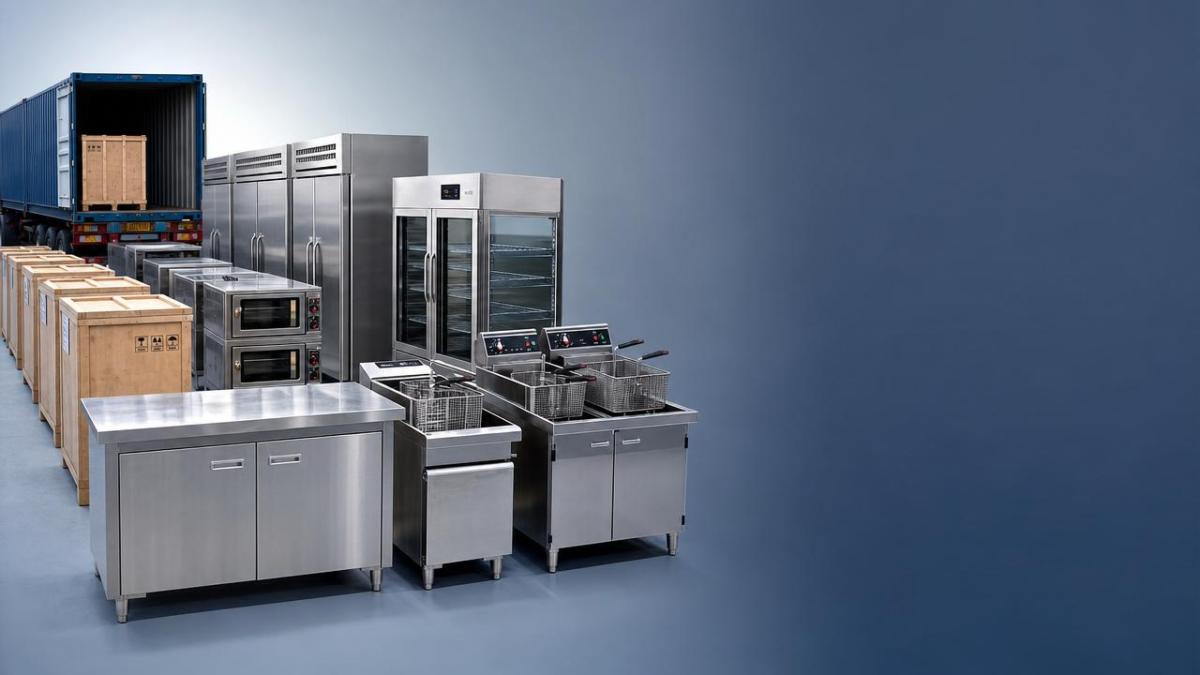
In the commercial foodservice sector, lead time refers to the total time between order confirmation and final delivery. For distributors and agents working with restaurant kitchen equipment manufacturers, this timeline includes engineering review, raw material purchasing, production scheduling, assembly, quality inspection, packing, export handling, and transportation. It is not a single factory metric. Instead, it is a chain of connected activities that can move quickly or slow down depending on how a manufacturer is organized.
This topic matters because restaurant projects rarely run on flexible schedules. New restaurants, hotel kitchens, central kitchens, food processing sites, and refurbishment projects often coordinate equipment delivery with ventilation, gas lines, electrical systems, interior fit-out, and opening dates. If a fryer, refrigerator, oven, or preparation line arrives late, the installer, contractor, and end user all feel the impact. That is why experienced buyers do not only compare price and product specifications; they also compare how restaurant kitchen equipment manufacturers perform under time pressure.
Why Lead Time Has Become a Key Industry Concern
The kitchen equipment industry has evolved from basic fabrication into a more advanced manufacturing ecosystem shaped by automation, energy efficiency, food safety standards, and digital controls. Modern equipment may include stainless steel fabrication, compressors, burners, sensors, programmable controllers, insulation materials, and smart management components. As products become more integrated, production planning becomes more complex. A delay in one component can affect the entire build schedule.
Global sourcing also plays a major role. Many restaurant kitchen equipment manufacturers source parts from multiple countries or regions, especially for electronic controls, motors, refrigeration systems, and specialty fittings. While this global network increases product choice and cost competitiveness, it can also create longer or less predictable replenishment cycles. At the same time, foodservice expansion in emerging markets, seasonal demand spikes, and ongoing investments in central kitchens are putting additional pressure on factory capacity.
For distributors, these shifts mean lead time is no longer a secondary operational detail. It has become a commercial differentiator. The supplier that can communicate realistic production windows, maintain stable output, and ship with fewer disruptions often becomes the preferred long-term partner.
How Restaurant Kitchen Equipment Manufacturers Typically Differ
Not all restaurant kitchen equipment manufacturers work in the same way. Some focus on standard product lines with repeatable output, while others are built around project customization. Some own most processes in-house, while others rely heavily on external component suppliers or subcontractors. These structural differences directly affect lead time performance.
This comparison shows why two suppliers can offer similar products but very different delivery promises. In practice, the best choice depends on whether the buyer values speed, flexibility, mixed product sourcing, or project engineering support.
Core Factors That Influence Lead Time
Production Capacity and Scheduling
One of the biggest differences among restaurant kitchen equipment manufacturers is how they manage capacity. A factory with organized workflows, balanced workstations, and clear production planning can process orders more efficiently than one that reacts case by case. Peak seasons matter as well. Before holidays, trade show periods, or expansion cycles in hospitality markets, popular equipment categories may face longer queues.
Degree of Customization
Customized fabrication often extends lead time because dimensions, power supply, ventilation direction, material thickness, and control layout may need confirmation before production starts. For example, a standard stainless steel worktable may ship quickly, while a custom cooking suite with integrated refrigeration and utility connections can require design approval, prototyping, and additional testing.
Supply Chain Depth
Manufacturers with stable long-term supplier networks usually handle procurement risk better. Those that buy key parts only after receiving customer deposits may offer lower pricing, but their lead time can expand when compressors, controllers, glass components, or burners are not immediately available. In export-oriented business, even packaging materials and certification labels can become constraints if planning is weak.
Testing, Compliance, and Documentation
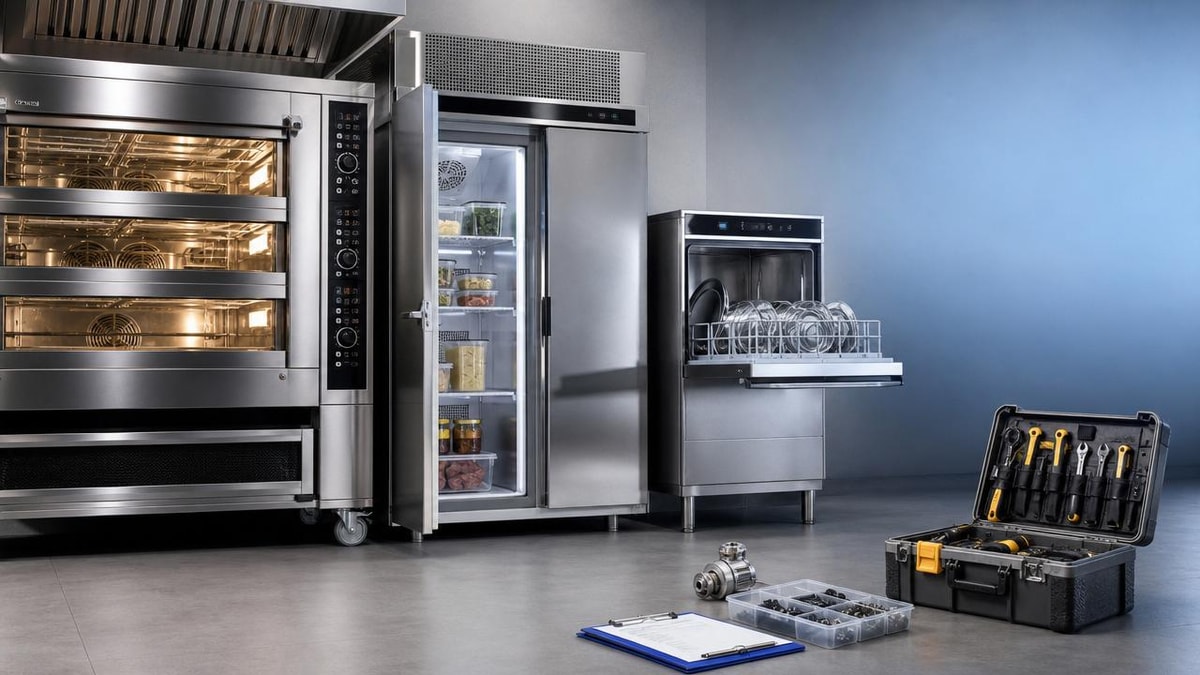
International distribution often requires technical documents, voltage adaptation, product labeling, and certifications aligned with destination markets. Restaurant kitchen equipment manufacturers that routinely serve overseas distributors usually prepare these steps more smoothly. Manufacturers with less export experience may need additional time for inspections, paperwork, and packing adjustments.
Logistics and Shipment Consolidation
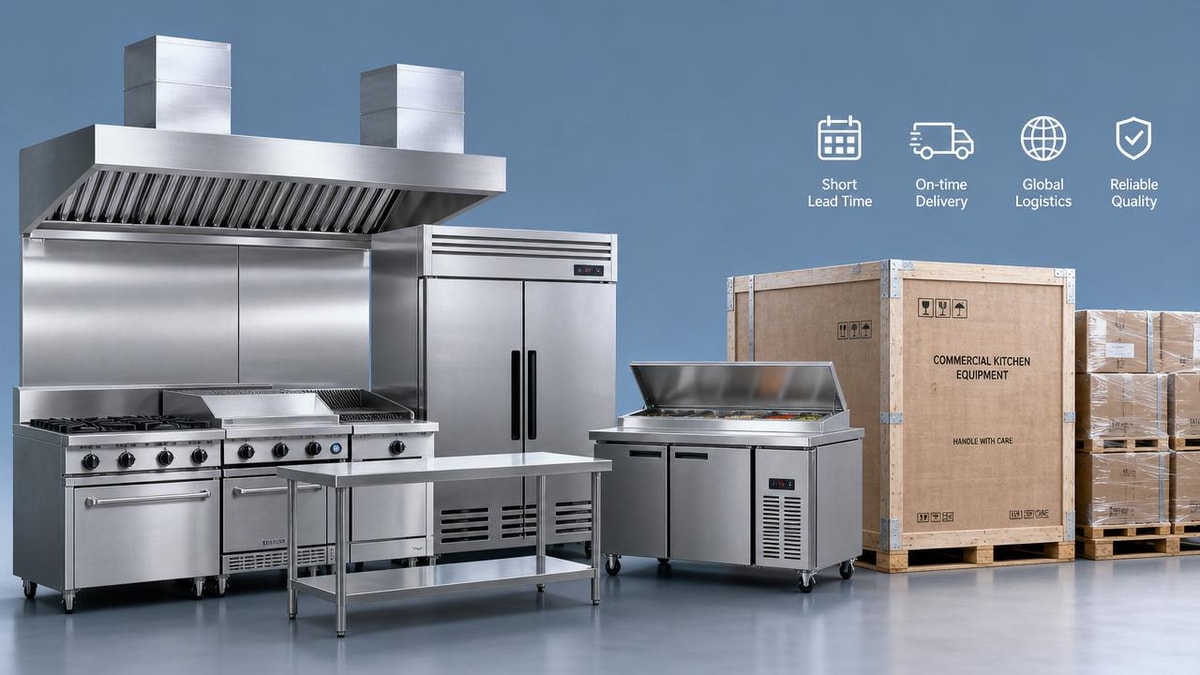
Lead time does not end at the factory gate. Export booking, container consolidation, customs processing, inland transport, and destination handling all shape the final delivery window. A supplier may finish production on time but still miss a project deadline if cargo is not booked efficiently or if multiple items from different workshops are waiting to be combined.
Business Value for Distributors, Agents, and Wholesalers
For channel partners, understanding lead time differences is not only about operations. It also affects sales strategy, inventory cost, and brand credibility. A distributor working with dependable restaurant kitchen equipment manufacturers can quote customers with more confidence, reduce emergency freight expenses, and improve project coordination with installers and consultants.
Reliable lead time also supports healthier stock planning. Standard fast-moving items such as prep tables, sinks, shelving, fryers, and undercounter refrigeration may be ordered in cycles when the supplier’s delivery rhythm is consistent. On the other hand, when lead time is unclear, distributors often compensate by carrying extra inventory or by making conservative promises to customers, both of which reduce competitiveness.
In multi-country distribution, lead time predictability becomes even more valuable because each delay can trigger additional storage fees, installation conflicts, or sales disputes. Manufacturers that communicate early and accurately help their channel partners protect margins and relationships.
Typical Order Scenarios and Their Lead Time Expectations
Different commercial situations require different expectations from restaurant kitchen equipment manufacturers. A realistic understanding of these scenarios helps buyers align project schedules more effectively.
Practical Ways to Evaluate Manufacturers Beyond the Quoted Lead Time
A quoted delivery window is useful, but channel buyers should examine how that number is built. Strong restaurant kitchen equipment manufacturers can explain their timeline by stage and identify the key dependencies. This gives buyers a better basis for decision-making than a simple promise.
- Ask whether lead time starts from deposit, drawing approval, or full technical confirmation.
- Check which components are stocked and which are purchased per order.
- Review past performance on similar product categories and order sizes.
- Confirm whether the factory handles fabrication, assembly, and testing internally.
- Evaluate how often progress updates are shared and whether delays are flagged early.
- Discuss export packing, documentation, and shipment booking before production finishes.
These points help distributors avoid a common mistake: choosing a supplier based on the shortest stated lead time rather than the most controllable one. In many cases, a slightly longer but transparent schedule produces better overall project results.
How Industry Trends Are Reshaping Lead Time Expectations
Automation, digital production management, and smart kitchen technologies are changing how restaurant kitchen equipment manufacturers respond to delivery demands. Factories that use better planning software, standardized modules, and data-driven production control can often shorten lead times without sacrificing quality. Energy-efficient product development is also encouraging modular design, which may improve availability of common parts across several models.
At the same time, buyers should not assume technology solves every delay. Smart controls and advanced refrigeration systems can still depend on specialized suppliers. As equipment becomes more intelligent, the supply chain may become more sensitive in some categories. The real advantage lies in manufacturers that combine innovation with disciplined planning, supplier management, and realistic communication.
Frequently Asked Questions
Do shorter lead times always mean better manufacturers?
Not necessarily. Some restaurant kitchen equipment manufacturers quote aggressively to win orders, but actual execution may vary. Buyers should focus on reliability, process transparency, and historical performance.
Why do similar products have very different delivery times?
Differences may come from stock levels, component sourcing, factory workload, customization requirements, testing standards, or export documentation. Similar appearance does not always mean the same production path.
How can distributors reduce lead time risk?
Work with manufacturers that provide stage-based schedules, maintain frequent communication, and support forecast planning for repeat items. For project orders, confirm technical details early and build time buffers for shipping and installation.
A Practical View for Choosing the Right Partner
Lead time differences among restaurant kitchen equipment manufacturers are rooted in real operational factors: capacity, product structure, sourcing strategy, compliance capability, and logistics execution. For distributors, wholesalers, and agents, understanding these factors creates a stronger basis for supplier selection than price comparison alone. In a market shaped by food safety, automation, and expanding international demand, dependable timing is part of product value.
When evaluating potential partners, look for manufacturers that explain their process clearly, align delivery schedules with actual production conditions, and support your business with stable communication. That approach helps you reduce delays, serve customers more confidently, and build a supply network that can grow with future foodservice opportunities.
Popular Tags
Kitchen Industry Research Team
Dedicated to analyzing emerging trends and technological shifts in the global hospitality and foodservice infrastructure sector.
Industry Insights
Join 15,000+ industry professionals. Get the latest market trends and tech news delivered weekly.
No spam. Unsubscribe anytime.

Contact With us
Contact:
Anne Yin (Ceramics Dinnerware/Glassware)
Lucky Zhai(Flatware)