
How Durable Glass Drinkware Changes Replacement Costs
For procurement and business evaluation teams, durable glass drinkware is more than a tableware choice—it is a cost-control factor that directly affects replacement frequency, operating budgets, and service consistency. In commercial kitchens, hotels, and foodservice settings, understanding how material strength influences breakage rates can help decision-makers reduce long-term expenses while maintaining quality, safety, and brand presentation.
Why durability has become a stronger procurement signal
A visible shift is taking place across the kitchen equipment and foodservice supply chain: buyers are moving away from judging drinkware mainly by unit price and are evaluating total cost over the product lifecycle. This change is especially relevant for glass drinkware, where the cheapest option often creates the highest replacement burden. In restaurants, hotels, banquet operations, and high-volume catering environments, breakage is no longer seen as an unavoidable background cost. It is increasingly treated as a measurable operating issue.
Several industry signals explain this shift. Labor pressure has made busy service teams more prone to handling errors. Higher guest expectations have increased the need for consistent presentation. At the same time, operators are under pressure to control spending without weakening service quality. As a result, durable glass drinkware is being evaluated not just as a front-of-house item, but as part of a wider efficiency, risk, and brand-management decision.
For business evaluators, this trend matters because replacement costs do not sit in one line item. They spread across purchasing, stock management, warewashing, staff time, service disruption, and even customer perception. A stronger glass may appear more expensive at order placement, but a lower breakage rate can improve overall operating economics.
What is changing in commercial demand for glass drinkware
The market is not simply asking for more drinkware; it is asking for more resilient and operationally reliable drinkware. Demand patterns suggest that buyers increasingly want products that can tolerate repeated washing cycles, fast table turnover, storage stacking, and accidental knocks during service. This is particularly true in mixed-use environments where the same glass drinkware may move between dining areas, bars, dishwashing stations, and transport racks many times per day.
Another change is the growing link between procurement decisions and sustainability targets. Frequent replacement means more packaging, more transport, and more waste handling. Durable glass drinkware therefore supports not only cost reduction, but also a lower material turnover rate. For organizations reporting on environmental performance, this creates an additional reason to prefer longer-lasting products.
This shift is especially important in the broader kitchen equipment industry, where purchasing teams are already evaluating automation, energy efficiency, and workflow productivity. In that environment, glass drinkware is no longer a minor accessory purchase. It becomes part of the same logic: reduce avoidable loss, improve system stability, and support reliable daily operations.
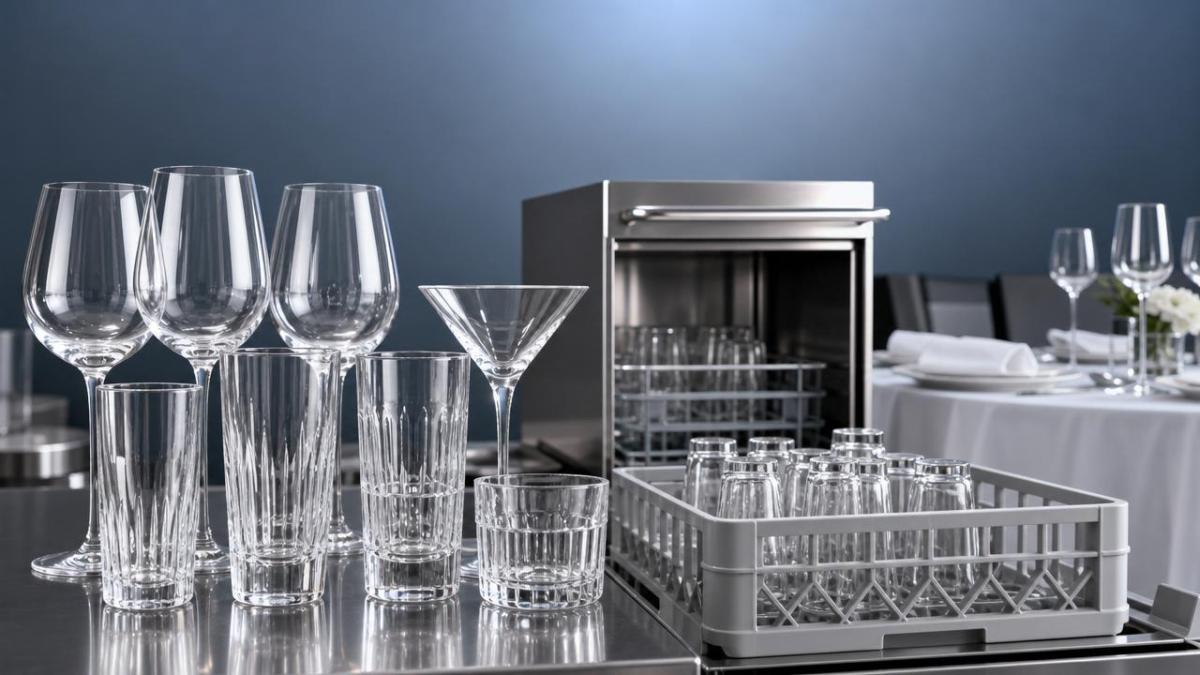
The main forces driving the durability conversation
One major driver is operating intensity. Commercial kitchens and hospitality venues are running under tighter turnaround expectations, with less room for disruptions. If drinkware breaks during service, the impact extends beyond replacement purchase costs. Staff must clear hazards, rewash nearby items, locate spare stock, and restore table readiness. In high-volume operations, these interruptions compound quickly.
A second driver is standardization. Multi-site restaurant groups and hotel chains increasingly want uniform product performance across locations. Durable glass drinkware supports that goal by reducing uneven stock conditions between sites. When some outlets suffer higher breakage and emergency replenishment, purchasing becomes fragmented and inventory planning weakens.
A third driver is quality assurance. Buyers are more alert to edge strength, thermal resistance, and durability under commercial dishwashing conditions. Even when a glass does not fully break, scratches, chips, and clouding can create replacement needs. That means the useful life of glass drinkware depends on more than impact resistance alone; it depends on how well the product performs through real operating cycles.
The final driver is budget predictability. Finance teams generally prefer stable, forecastable replenishment patterns over repeated surprise purchases. Durable drinkware helps smooth spending and reduces the frequency of urgent procurement requests, which often come with weaker price control and limited supplier choice.
How replacement costs actually change over time
The core business question is not whether durable glass drinkware costs more upfront. It often does. The more useful question is how that upfront premium compares with the total cost of repeated replacement. In many commercial settings, replacement cost is made up of five layers: repurchase expense, emergency stock purchases, labor disruption, warewashing losses, and presentation inconsistency.
Consider the lifecycle difference between low-durability and high-durability drinkware. A lower-cost glass may fit an initial budget, but if it breaks more frequently, procurement teams may need to reorder smaller quantities more often. This creates transaction cost, rush shipping exposure, and stock mismatch risk. By contrast, durable glass drinkware tends to support more planned replenishment cycles and stronger inventory visibility.
This pattern is one reason purchasing discussions are becoming more data-oriented. Evaluators increasingly ask for breakage history by outlet type, by service style, and by use case. A wine bar, banquet hall, employee cafeteria, and hotel breakfast operation may all use glass drinkware, but their handling intensity and replacement patterns differ significantly. Better decisions come from matching durability level to actual operating conditions rather than applying one universal specification.
Who feels the impact most clearly
The effect of durable glass drinkware is not limited to procurement teams. It reaches multiple business roles and functions, which is why the topic deserves cross-functional review.
This broad impact aligns with wider kitchen equipment trends. As operators invest in smarter, more efficient systems, they are also reviewing smaller product categories through the same lens: uptime, durability, safety, and total operating effect. In that context, durable glass drinkware becomes part of a larger modernization mindset rather than an isolated tabletop choice.
Signals evaluators should watch before making a decision
The first signal is where breakage happens. If most losses occur during warewashing or stacking, the issue may relate to rim strength, base design, or product compatibility with racks and handling routines. If breakage mainly occurs in service areas, weight balance and grip design may matter more. Understanding the failure point helps buyers compare glass drinkware options more intelligently.
The second signal is replenishment behavior. Frequent small reorders usually indicate hidden cost leakage. They often show that nominally cheaper glass is reducing purchasing efficiency. The third signal is visual aging. If drinkware loses clarity or develops chips before it actually breaks, replacement costs may be understated in formal reports because pieces are removed for appearance reasons rather than recorded as breakage.
The fourth signal is outlet variation. If one business unit reports much higher loss than another while using the same specification, it may indicate a mismatch between product durability and operational reality. Business evaluation teams should avoid assuming that a single glass drinkware model is optimal for all use cases.
Practical response strategies for the next purchasing cycle
A useful response is to shift from price-only comparison to segmented lifecycle evaluation. This means reviewing drinkware by application: banquet service, premium dining, bar use, buffet service, and back-of-house beverage stations may each justify different durability priorities. A second strategy is to ask suppliers for commercial-use performance evidence, especially around wash-cycle resistance and edge durability.
A third strategy is to link replacement data with operating conditions. Teams should compare breakage by shift intensity, wash process, and storage method before finalizing a specification. A fourth strategy is to set a review window after implementation. Durable glass drinkware should be assessed not only on delivery and appearance, but also on three- to six-month replacement behavior.
Finally, businesses should consider the role of standardization. Where brand consistency matters, slightly higher upfront investment may protect downstream costs by preserving a stable, uniform look across locations. This is particularly relevant for hotels, chain restaurants, and institutional foodservice groups managing multiple outlets under one purchasing framework.
What the trend suggests for future evaluations
The direction is clear: purchasing decisions in the kitchen equipment sector are becoming more operationally connected, more data-led, and more sensitive to hidden replacement costs. For glass drinkware, that means durability will likely remain a stronger evaluation criterion, especially as businesses pursue efficiency, waste reduction, and consistent service standards.
For organizations reviewing future sourcing plans, the most useful questions are practical. Which operating environments produce the highest loss? Are replacement purchases planned or reactive? Does current drinkware support the expected brand standard through its usable life? Are breakage costs tracked in a way that reveals the true economics of the category? These questions help turn a simple product choice into a better-informed business decision.
If a company wants to judge how this trend affects its own operations, it should begin by measuring replacement frequency, identifying where failures occur, and comparing upfront price against full lifecycle performance. In many cases, the value of durable glass drinkware becomes clearer once replacement costs are viewed as a long-term operational pattern rather than a series of isolated purchases.
Popular Tags
Kitchen Industry Research Team
Dedicated to analyzing emerging trends and technological shifts in the global hospitality and foodservice infrastructure sector.
Industry Insights
Join 15,000+ industry professionals. Get the latest market trends and tech news delivered weekly.
No spam. Unsubscribe anytime.
Contact With us
Contact:
Anne Yin (Ceramics Dinnerware/Glassware)
Lucky Zhai(Flatware)