
Restaurant kitchen ideas that improve flow in small spaces
Smart restaurant kitchen ideas can transform even the smallest back-of-house area into a faster, safer, and more productive workspace. For project managers and engineering leads, improving flow in compact kitchens means balancing layout efficiency, equipment selection, energy use, and operational demands. This guide explores practical strategies to optimize small restaurant kitchens while supporting long-term performance, compliance, and cost control.
In small-format restaurants, every square meter affects throughput, staff safety, and service speed. A poorly planned 20–40 square meter kitchen can create repeated cross-traffic, excess heat, slower prep cycles, and avoidable utility costs. The most effective restaurant kitchen ideas are not decorative. They are operational decisions that reduce movement, improve line visibility, and align equipment capacity with menu volume.
For project leaders overseeing fit-outs, renovations, or multi-site rollouts, the priority is usually clear: make a limited footprint support consistent output during peak periods, while still meeting ventilation, hygiene, drainage, fire safety, and maintenance requirements. That requires integrated planning across layout, equipment, workflow, and long-term service access.
Designing flow first in a small restaurant kitchen
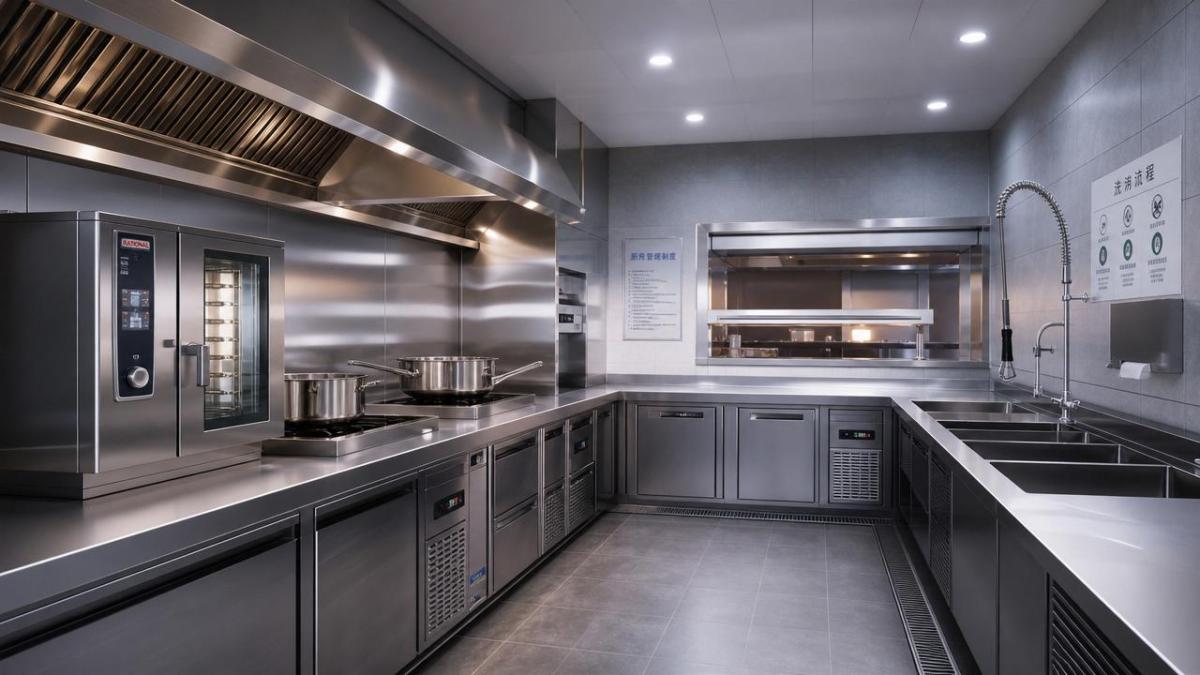
Among the most practical restaurant kitchen ideas, flow-first planning has the highest impact. Before selecting cooking equipment, map the movement of food, staff, clean wares, waste, and deliveries. In many compact kitchens, improving flow can cut unnecessary steps by 15%–30% during a normal shift, especially when prep, cook, pass, and dish return paths are separated.
Define the 5 core zones clearly
A small kitchen still needs distinct operational zones. In most commercial projects, the minimum functional sequence includes receiving, cold or dry storage, prep, cooking, and service or pass. If dishwashing is in the same room, it should be isolated as much as possible from plating and final assembly to reduce contamination risk and staff congestion.
- Receiving and storage: place near entry to shorten unloading distance.
- Prep zone: keep within 1–2 steps of refrigeration and handwashing.
- Cooking line: align by menu sequence, not by equipment size alone.
- Pass or dispatch: maintain direct visual link to the service team.
- Washing and waste: prevent reverse traffic across clean-food routes.
Use linear or L-shaped layouts for compact footprints
For kitchens below roughly 35 square meters, a straight-line or L-shaped layout is often easier to operate than a broken island arrangement. A line setup keeps utility runs shorter, reduces blind corners, and leaves better service access behind equipment. Where two cooks need to work side by side, a corridor width of about 900–1200 mm is often more manageable than a tighter path that slows turning, tray handling, and cleaning.
Avoid hidden bottlenecks
The most common bottlenecks appear at refrigerator doors, fryer baskets, combi oven openings, and plate-up stations. If one open door blocks the aisle, output drops immediately during peaks. One of the smarter restaurant kitchen ideas is to review door swing, operator stance, tray landing space, and access for waste bins at the design stage instead of after installation.
The table below compares layout models often used in small restaurant projects and shows where each one performs best.
For most operators, the right answer is not the layout with the most equipment. It is the layout that supports a predictable production path from storage to service. That is why strong restaurant kitchen ideas begin with sequence mapping and only then move into engineering coordination and appliance selection.
Choosing equipment that improves throughput without crowding the line
In compact kitchens, oversized equipment often reduces performance rather than improving it. Equipment should match menu mix, hourly cover volume, utility availability, and service access. For example, a kitchen serving 60–100 covers in a lunch peak may perform better with one combi oven, one induction range, and one undercounter refrigeration bank than with multiple standalone units that generate extra heat and block movement.
Prioritize multifunction equipment
Multifunction equipment is one of the most effective restaurant kitchen ideas for small spaces. A combi oven can support roasting, steaming, regeneration, and controlled finishing in one footprint. Induction units reduce ambient heat and may simplify cleaning. Refrigerated prep counters combine ingredient access and workstation surface, which is valuable when every 600–800 mm matters.
Check service clearance before purchase
Project teams often focus on installed dimensions but overlook service clearance. A unit that fits physically may still be impractical if filters, hinges, compressors, or drain traps cannot be reached easily. In a small restaurant, allowing at least 50–150 mm of practical service space around critical maintenance points can reduce future downtime and labor disruption.
Balance power load, extraction, and output
Another reason many restaurant kitchen ideas fail in execution is that cooking capacity is planned without enough attention to ventilation and electrical load. A compact all-electric line may improve control and energy efficiency, but only if the site can support the connected load. Likewise, adding high-output fryers without reviewing extraction volume can create heat buildup, grease management issues, and poor working conditions.
The table below outlines common equipment choices for small kitchens and the situations where they add the most value.
These options do not eliminate the need for menu-specific planning, but they show how equipment can support better flow instead of simply filling available space. For engineering teams, the key is to compare throughput per square meter, not just equipment count.
Storage, prep, and sanitation strategies that protect flow
Many small kitchens lose efficiency not on the hot line, but in storage and prep. If ingredients are stacked inconsistently, if utensils have no fixed home, or if handwash stations interrupt prep circulation, staff will compensate with extra movement. Strong restaurant kitchen ideas address the support system behind the cook line, not just the visible appliances.
Build vertical storage without creating retrieval delays
Vertical shelving, wall-mounted racks, and overhead pot rails are useful, but only when high-frequency items remain within easy reach. A practical rule is to keep the top 20% of daily-use items between waist and shoulder height, while bulk reserve stock can go above or below. This reduces repetitive bending and keeps prep speed consistent across shifts.
Separate clean and dirty flows
In a compact environment, dish return can quickly interfere with food production. If a dedicated wash room is not possible, use directional zoning. Dirty ware should enter from one side, pass through scraping, washing, and drying, and then leave toward clean storage without crossing final plating. Even a 2-step directional rule can make a visible difference in hygiene control.
Small details that improve prep speed
- Use refrigerated prep tables near assembly points for top-selling ingredients.
- Assign color-coded containers for proteins, vegetables, allergens, and sauces.
- Place handwash points within 5–7 seconds of the prep zone.
- Standardize pan sizes and storage bins to reduce shelf waste.
- Install mobile worktables only if parking positions are marked clearly.
These measures are simple, but they affect labor productivity every day. For project managers evaluating restaurant kitchen ideas across multiple locations, standardization also improves training, replenishment planning, and replacement part compatibility.
Managing project delivery, utilities, and long-term operating cost
A small kitchen project succeeds when design intent survives procurement, installation, commissioning, and daily use. That means the best restaurant kitchen ideas must also be practical from a project delivery perspective. Utility coordination, lead times, and maintenance planning should be reviewed at the same time as layout drawings, not after equipment arrives on site.
Use a staged implementation plan
For refurbishments or new openings, a 4-stage sequence is usually effective: concept and menu alignment, technical layout and utility checks, equipment procurement and installation, then commissioning and staff handover. Depending on sourcing and customization, commercial kitchen equipment lead times often range from 2–8 weeks, while installation and testing may require another 3–10 days on site.
Evaluate total operating cost, not just capex
When comparing suppliers, buyers should look beyond initial price. Energy use, water consumption, cleaning time, spare part access, and service response can materially affect total cost over 3–5 years. A lower-priced unit that needs more frequent maintenance or causes one extra hour of weekly cleaning can become more expensive in practice.
The following table can help project teams compare suppliers and solutions in a structured way during procurement.
This comparison framework is especially useful when several vendors offer similar footprints or capacities. It keeps the discussion tied to operational value instead of headline pricing alone.
Plan for compliance and future adjustment
Small kitchens change quickly as menus evolve. Leave reasonable flexibility for one future equipment swap, one storage expansion, or one utility upgrade. That may include blanked service points, modular stainless worktops, or a pass station that can be reconfigured in less than one day. These are practical restaurant kitchen ideas because they reduce future disruption without requiring major overbuilding.
Common mistakes project teams should avoid
Even well-funded kitchen projects can underperform when planning decisions are made in isolation. Most avoidable issues fall into a few recurring categories, and they are highly relevant for decision-makers managing schedule, budget, and operating risk.
Mistake 1: designing for equipment count instead of menu flow
A crowded line with 8 pieces of equipment is not automatically stronger than a leaner line with 4 multifunction units. If 70% of menu items rely on the same two finishing steps, the layout should optimize those steps first. Restaurant kitchen ideas work best when driven by actual production sequence and peak demand patterns.
Mistake 2: underestimating heat, noise, and cleaning load
Small spaces amplify environmental stress. Excess radiant heat, poor extraction balance, and limited cleaning access can increase staff fatigue and slow turnaround. A kitchen that saves 1 square meter at installation but adds 20–30 minutes of cleaning per day may not be efficient overall.
Mistake 3: leaving operators out of technical review
Chefs, supervisors, and maintenance staff often identify practical issues that drawings do not show clearly. A short review workshop before final sign-off can catch tray conflicts, prep height problems, and storage mismatches early. For compact kitchens, those small corrections often have outsized value.
Mistake 4: buying without standardization criteria
For chains and multi-site operators, inconsistent equipment dimensions and utility requirements create avoidable complexity. Standardizing 3–5 core equipment categories across sites can simplify training, spare inventory, and maintenance scheduling while keeping restaurant kitchen ideas scalable for future rollouts.
Practical next steps for project managers and engineering leads
The most valuable restaurant kitchen ideas are the ones that can be translated into drawings, procurement criteria, installation checks, and operator routines. Start with a menu and volume forecast, map movement paths, define critical clearances, and compare equipment by throughput per square meter. Then align utilities, maintenance access, and sanitation flow before locking the final specification.
When small kitchens are planned as integrated systems, they can deliver faster service, safer operations, and better long-term cost control without expanding the footprint. If you are evaluating a renovation, a new restaurant build, or a multi-site kitchen standardization project, now is the right time to review your layout and equipment strategy in detail.
Contact us today to discuss your compact kitchen requirements, request a tailored equipment and layout plan, or learn more about efficient, smart, and scalable commercial kitchen solutions.
Popular Tags
Kitchen Industry Research Team
Dedicated to analyzing emerging trends and technological shifts in the global hospitality and foodservice infrastructure sector.
Industry Insights
Join 15,000+ industry professionals. Get the latest market trends and tech news delivered weekly.
No spam. Unsubscribe anytime.
Contact With us
Contact:
Anne Yin (Ceramics Dinnerware/Glassware)
Lucky Zhai(Flatware)