
How to vet a restaurant kitchen equipment distributor
Choosing the right restaurant kitchen equipment distributor can directly affect your procurement costs, product quality, delivery reliability, and long-term kitchen performance. For buyers facing a crowded global market, careful vetting is essential to reduce risk and secure efficient, compliant, and durable equipment. This guide outlines the key factors to evaluate before selecting a distributor for your restaurant or foodservice operation.
For procurement teams, the challenge is rarely limited to price. A distributor may offer attractive quotations but fail on documentation, spare parts support, installation coordination, or after-sales response within 24 to 72 hours. In commercial kitchens, even a short equipment delay can affect opening schedules, food safety compliance, labor efficiency, and service capacity.
That is why vetting a restaurant kitchen equipment distributor should follow a structured process. Buyers need to assess product range, sourcing capability, technical knowledge, lead times, compliance support, and service reliability across the full equipment lifecycle. A strong distributor is not only a seller of ovens, refrigeration units, and prep equipment, but also a supply partner that helps reduce operational risk.
What a Qualified Distributor Should Actually Provide
A reliable restaurant kitchen equipment distributor should provide more than catalog access. At minimum, buyers should expect 4 core capabilities: product sourcing, technical consultation, delivery coordination, and after-sales support. If one of these areas is weak, the overall procurement outcome can suffer even when the equipment itself appears acceptable.
Core service scope beyond simple resale
In restaurant, hotel, and central kitchen projects, equipment procurement often involves 10 to 50 line items across cooking, refrigeration, washing, ventilation, stainless fabrication, and smallwares. A distributor should be able to consolidate these categories, coordinate different manufacturers, and reduce the buyer’s administrative workload. This becomes especially important when projects have a 2 to 8 week installation window.
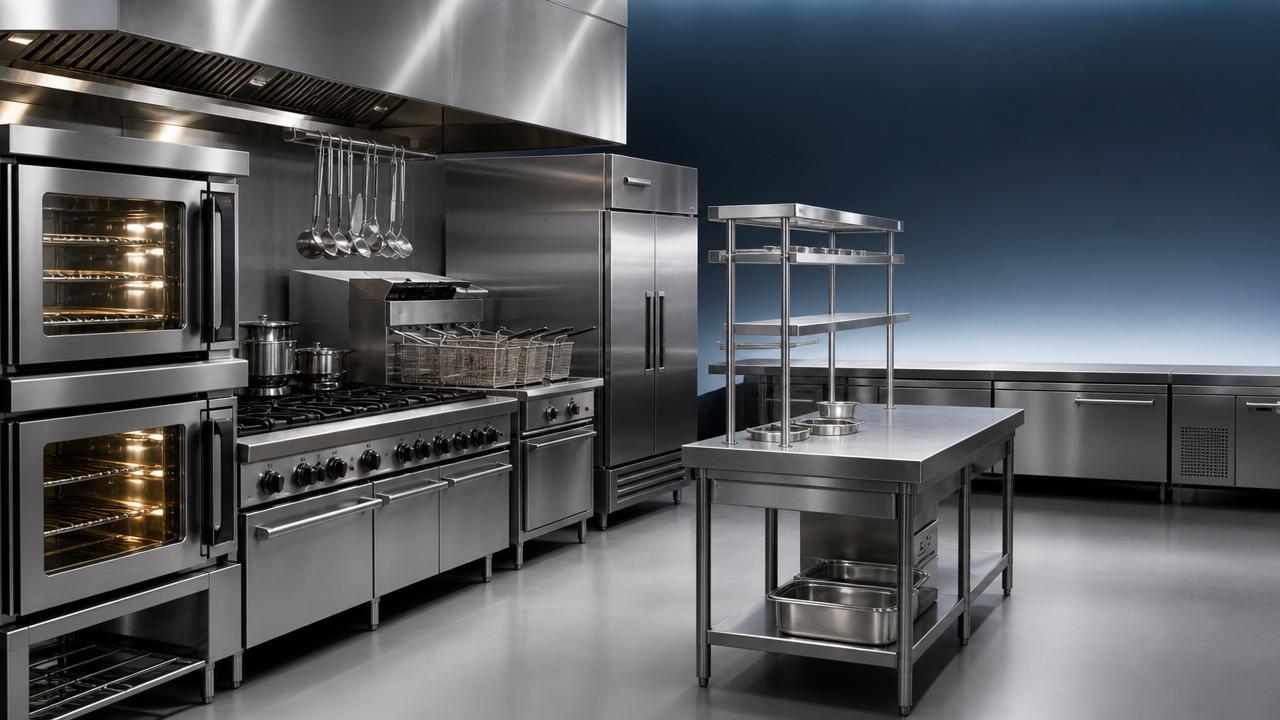
- Commercial cooking equipment such as ranges, fryers, ovens, griddles, and steamers
- Refrigeration systems including upright fridges, freezers, undercounter units, and cold rooms
- Food preparation equipment like mixers, slicers, cutters, and prep tables
- Dishwashing, sanitation, and stainless steel fabrication support
- Logistics, installation coordination, commissioning, and spare parts planning
Why this matters for procurement
When a distributor lacks category depth, buyers often end up splitting orders among 3 to 6 suppliers. That can create inconsistent specifications, duplicated freight costs, and mismatched warranty terms. A distributor with integrated supply capability usually gives better visibility on lead times, substitutions, and system compatibility, especially for gas, electrical, and ventilation-dependent equipment.
The table below helps buyers compare the minimum capabilities that separate a true supply partner from a basic trading intermediary.
If a supplier cannot clearly explain these 4 areas, buyers should treat that as an early warning sign. A restaurant kitchen equipment distributor that performs well operationally usually has documented workflows, named contacts, and realistic delivery commitments rather than vague promises.
How to Evaluate Product Quality, Compliance, and Documentation
For commercial kitchens, equipment quality is tied to safety, uptime, and operating cost. Procurement teams should verify not only materials and construction, but also whether the distributor can provide complete documentation for the target market. This is especially critical when importing from major manufacturing bases such as China, Germany, Italy, or Japan.
Inspect build quality and specification transparency
Ask for technical sheets covering dimensions, voltage, frequency, power rating, gas type, temperature range, production capacity, and material grade. For example, a refrigeration unit may need a 2℃ to 8℃ working range, while a fryer may require 9kW to 18kW depending on capacity. A distributor that cannot provide specification consistency across quotation, drawing, and manual may create installation problems later.
Documentation buyers should request
- Detailed product datasheets and dimensional drawings
- User manuals and maintenance instructions
- Packing list and serial number traceability where applicable
- Warranty terms with excluded conditions clearly stated
- Electrical, gas, or food-contact compliance documents required by the destination market
Check whether compliance support fits your market
A competent restaurant kitchen equipment distributor should understand destination requirements, whether the project is for a restaurant chain, a hotel kitchen, or a food processing support facility. Even standard products can fail acceptance if plug types, voltage ratings, gas injectors, labeling, or food-contact material documentation do not match local regulations. Buyers should verify these points before deposit payment, not after shipment booking.
The following checklist can help procurement teams review product and compliance readiness before confirming an order.
The practical lesson is simple: do not evaluate equipment quality by appearance alone. A professional distributor should be able to prove suitability through specifications, drawings, and compliance-related paperwork that aligns with your kitchen design and local operating requirements.
Assess Supply Chain Strength, Lead Time Control, and Pricing Logic
One of the most important signs of a dependable restaurant kitchen equipment distributor is supply chain control. Buyers should understand whether the distributor stocks common items, works directly with factories, or sources through multiple intermediaries. Each model affects lead time, pricing stability, and replacement part availability.
Lead times should be broken down by stage
Instead of accepting a single delivery promise, ask for milestone timing. A realistic timeline may include 3 to 7 days for quotation and confirmation, 7 to 25 days for production or consolidation, and 5 to 20 days for domestic or international transit depending on destination. Custom stainless items, exhaust systems, or non-standard voltage versions usually add another 7 to 15 days.
Questions buyers should ask about supply reliability
- Are the main product lines stocked or made to order?
- How many factories or production sources support the quoted items?
- What is the typical spare parts availability period after delivery: 12 months, 24 months, or longer?
- Can the distributor support partial shipment if the opening date cannot move?
- What is the escalation process if a critical item is delayed by more than 5 business days?
Low prices are not always lower total cost
Buyers should compare total procurement cost, not only unit price. A cheaper quotation may exclude freight, import packing, commissioning support, spare parts kits, or installation drawings. In some projects, an initial 8% price saving can be offset by 15% to 20% in downstream costs caused by missing accessories, site delays, or faster wear under heavy kitchen use.
A strong restaurant kitchen equipment distributor should explain price drivers clearly: material grade, insulation thickness, compressor brand tier, burner output, control system type, and packaging standard. Transparent pricing usually indicates stronger operational discipline than a quote built around broad descriptions and unexplained discounts.
Review After-Sales Service, Spare Parts, and Long-Term Support
Commercial kitchens operate under daily pressure, often 10 to 16 hours per day. Equipment failure is not merely an inconvenience; it affects menu execution, food holding temperatures, sanitation, and staff productivity. That is why after-sales support should be reviewed before purchase, not only after a problem appears.
Service expectations should be measurable
Ask the distributor to define service response expectations in writing. For example, remote troubleshooting within 24 hours, parts identification within 48 hours, and shipment of common spare parts within 3 to 7 business days are more useful than a general promise of support. If the distributor serves overseas markets, buyers should also ask whether manuals, wiring diagrams, and parts lists are available in English.
Support areas that reduce downtime
- Startup and commissioning guidance for key equipment
- Preventive maintenance recommendations by quarter or every 500 to 1,000 operating hours
- Suggested spare parts package for wear items and critical controls
- Photo or video-based troubleshooting process for international projects
- Clear warranty start date and exclusions for misuse, improper installation, or voltage instability
Buyers should also check whether the distributor understands the specific operational profile of the project. A hotel banquet kitchen, quick-service restaurant, bakery, and central kitchen do not place the same load on combi ovens, freezers, mixers, or dishwashers. Service recommendations should match equipment intensity, ambient conditions, and service frequency.
A Practical Vetting Process for Procurement Teams
The best way to evaluate a restaurant kitchen equipment distributor is to use a repeatable procurement process. This helps buyers compare suppliers on equal terms and avoid decisions driven by only one factor such as price, location, or urgency. Even a simple 5-step process can significantly reduce selection risk.
Step-by-step screening framework
- Prepare a detailed equipment list with quantities, utility requirements, and project deadlines.
- Request quotations from at least 3 distributors using the same specification sheet.
- Review technical documents, compliance readiness, and lead time breakdown item by item.
- Interview the distributor on after-sales process, spare parts policy, and installation coordination.
- Run a small test order or sample evaluation for high-risk or high-value categories when possible.
Common mistakes to avoid
Many buyers focus heavily on front-end quotation speed but spend too little time checking technical consistency. Another common mistake is accepting generic brochures instead of item-specific documents. Procurement teams should also avoid assuming that one strong product category means the distributor is equally strong in refrigeration, fabrication, or project delivery.
If your project includes smart kitchen equipment, automated preparation systems, or energy-efficient appliances, request additional details on software compatibility, control interfaces, and maintenance needs. Newer equipment categories can improve labor efficiency and energy management, but they also require stronger technical support than basic standalone units.
When a distributor is the right fit
A suitable distributor usually shows 5 signs: fast but accurate quoting, complete documentation, realistic lead times, proactive communication, and credible after-sales planning. These qualities matter across global sourcing markets and are especially valuable when procurement teams are managing restaurant openings, renovations, or multi-site expansion under tight deadlines.
Selecting the right restaurant kitchen equipment distributor requires disciplined evaluation across product quality, compliance, logistics, and long-term service. Buyers who verify specifications, compare total cost, and test support responsiveness are far more likely to secure equipment that performs reliably in real kitchen conditions. If you are sourcing for a restaurant, hotel, central kitchen, or foodservice project, now is the time to review your supplier list, request technical documentation, and move forward with a distributor that can support both purchase efficiency and operational continuity. Contact us today to discuss your equipment list, get a tailored sourcing plan, or learn more about practical kitchen equipment solutions for your next project.
Popular Tags
Kitchen Industry Research Team
Dedicated to analyzing emerging trends and technological shifts in the global hospitality and foodservice infrastructure sector.
Industry Insights
Join 15,000+ industry professionals. Get the latest market trends and tech news delivered weekly.
No spam. Unsubscribe anytime.
Contact With us
Contact:
Anne Yin (Ceramics Dinnerware/Glassware)
Lucky Zhai(Flatware)