
Food warmer equipment that holds temperature more evenly
For technical evaluators comparing kitchen holding solutions, food warmer equipment is no longer judged only by heating power, but by how evenly it maintains temperature, protects food quality, and supports energy efficiency. As commercial kitchens move toward smarter and more reliable operations, understanding the design factors behind stable heat distribution is essential for selecting equipment that improves safety, consistency, and long-term performance.
Why does temperature uniformity matter more than peak heat output?
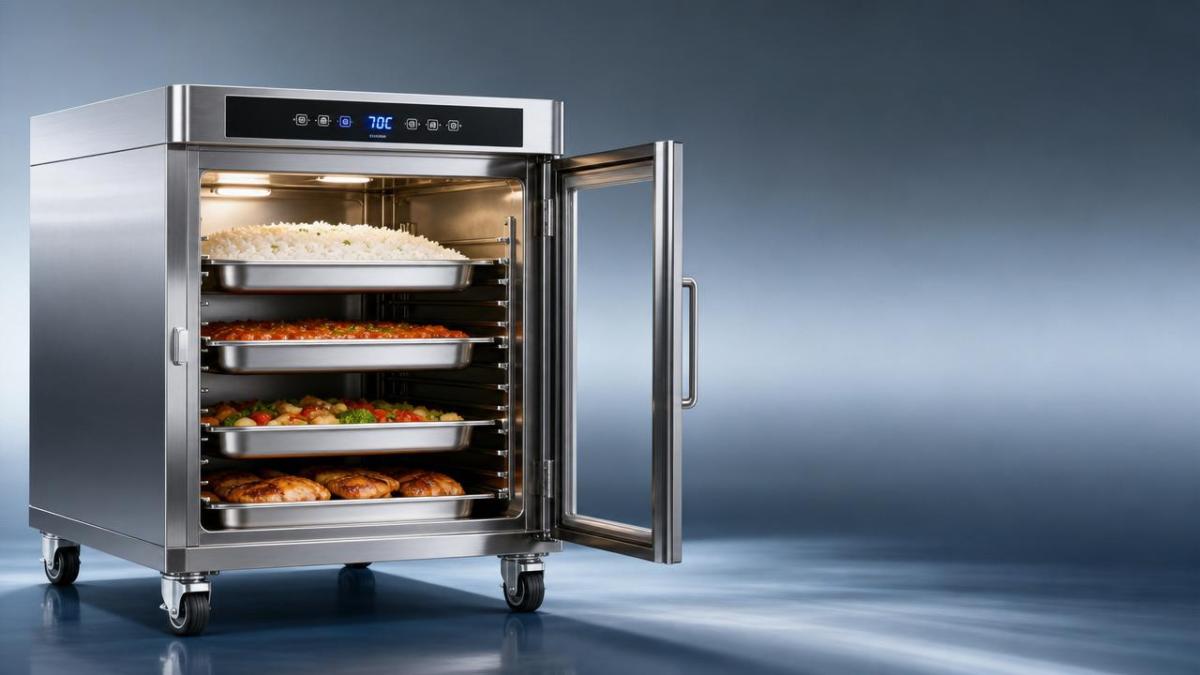
In restaurants, hotels, central kitchens, and food processing support areas, the real task of food warmer equipment is not simply to heat food. It is to hold prepared items within a safe serving range while preserving texture, moisture, appearance, and timing. A unit that reaches a high temperature quickly but creates hot and cold spots can still fail in actual service.
For technical evaluators, uneven holding temperature creates several operational risks. Food at the edge of the pan may dry out, while food in a lower-flow zone may drop below target temperature. This affects HACCP-oriented food safety management, serving consistency, customer satisfaction, and labor efficiency because staff must rotate trays, stir more often, or replace product earlier than planned.
- Uniform holding reduces the probability of local overheating that damages sauces, proteins, rice, vegetables, and fried products.
- Stable temperature control supports safer hot-holding practices in buffet lines, pass-through service, and batch-prepared meal distribution.
- Even heat distribution lowers product waste, especially where menu margins are sensitive and replenishment windows are short.
- Better thermal consistency often improves energy performance because the system does not need frequent temperature overshoot to compensate for cold areas.
This is why food warmer equipment should be evaluated as part of an integrated kitchen workflow rather than as an isolated appliance. In a modern equipment environment shaped by automation, digital control, and energy-saving requirements, the holding stage has become a measurable technical function.
Which design factors make food warmer equipment hold temperature more evenly?
Temperature uniformity depends on more than the thermostat setting. It is the combined result of heat source design, airflow or heat transfer path, cavity construction, sensor placement, insulation, moisture management, and load pattern. Technical evaluators should review these factors together instead of relying on a single catalog specification.
Core engineering elements to inspect
- Heating method: dry heat, water bath, infrared, conductive plate heating, or fan-assisted circulation each creates different holding behavior.
- Sensor logic: single-point sensing may not reflect actual pan-level temperature variation across the full chamber.
- Insulation quality: poor insulation increases heat loss near doors, lids, and outer walls, making compensation less stable.
- Cabinet geometry: deep corners, uneven shelf spacing, and restricted air channels can create repeatable cold zones.
- Pan and container compatibility: shallow pans, perforated inserts, and different fill depths change heat transfer behavior significantly.
In the broader kitchen equipment industry, this is especially relevant because commercial kitchens now demand equipment that fits digital management systems and standardized operating procedures. A holding solution that behaves predictably under different loads is easier to validate, document, and scale across multiple sites.
The following table helps technical evaluators compare the main variables that influence whether food warmer equipment can maintain even temperature in practical service conditions.
A useful purchasing insight is that temperature evenness is usually the result of system balance, not one premium component. A sophisticated control panel cannot correct weak insulation or poor internal heat path design. Technical review should therefore include both specification sheets and realistic load testing criteria.
What types of food warmer equipment fit different commercial applications?
The best choice depends on food type, service duration, turnover rate, and workflow integration. Equipment used in a hotel buffet may not perform well in a hospital tray line or a quick-service pass. Evaluators should begin with the use case rather than the product category alone.
Common application scenarios
- Buffet and banquet service: requires attractive presentation, stable top-surface conditions, and minimal product drying over extended holding time.
- Quick-service and pickup counters: needs fast recovery after frequent opening, compact footprint, and easy operator control.
- Central kitchen staging: focuses on batch consistency, multi-pan capacity, and compatibility with transport carts or holding cabinets.
- Food processing support: often requires predictable dwell times, sanitation-friendly construction, and repeatable thermal behavior for semi-finished products.
Because food warmer equipment can serve multiple environments, a scenario-based comparison is often more useful than a brand-level comparison. The table below highlights how different solution types align with operational needs.
This comparison shows that selecting food warmer equipment is not only about temperature range. It is also about access pattern, product sensitivity, and the operational rhythm of the site. A technically sound match can reduce labor intervention and make temperature records more reliable.
How should technical evaluators compare performance beyond the datasheet?
Many purchase decisions go wrong because equipment is approved on nominal specifications alone. Rated temperature, voltage, and capacity are necessary, but they do not show how evenly food warmer equipment performs when loaded with real pans, opened repeatedly, or used with mixed menu items.
Practical evaluation checklist
- Measure temperature at multiple points rather than one center location. Top, bottom, front, and rear readings reveal actual holding behavior.
- Test with representative food loads. Water pans alone may mask uneven performance that appears with starches, proteins, or sauces.
- Observe door-opening recovery. Busy service environments often create more temperature fluctuation than static lab-style tests.
- Review cleaning access and maintenance points. Sensor buildup, blocked vents, and scale accumulation can gradually reduce uniformity.
- Check control clarity for operators. A technically advanced unit still fails if staff cannot set or verify the correct hold condition quickly.
Where procurement teams manage multi-site rollouts, consistent performance documentation becomes even more important. Equipment that is easy to validate, train, and maintain across chains or institutional kitchens generally delivers better life-cycle value than equipment that appears cheaper at first purchase but creates frequent adjustment needs.
What procurement criteria help balance performance, cost, and long-term risk?
In the kitchen equipment industry, technical evaluators often work under conflicting demands: limited budget, short delivery window, strict compliance expectations, and diverse menu requirements. A structured procurement framework makes it easier to justify a decision internally and reduce post-installation surprises.
Recommended decision criteria
- Thermal consistency under expected load, not empty-cabinet performance alone.
- Energy use pattern, especially for sites with long daily hold cycles.
- Cleaning and sanitation design, including removable parts and accessible interior corners.
- Material durability for humid, greasy, or high-turnover environments.
- Compatibility with kitchen layout, power supply, pan format, and workflow sequence.
- Supplier support for technical documents, parts availability, and application guidance.
Evaluators should also consider the hidden cost of poor temperature evenness. Product loss, rework, operator intervention, and reduced menu holding time can easily outweigh small savings in unit price. This is especially true in emerging markets and high-growth foodservice operations, where standardization and uptime are central to expansion.
What standards, compliance points, and documentation should be reviewed?
Food warmer equipment is part of a regulated operating environment, even when local requirements vary. Technical buyers usually need to confirm electrical safety, food-contact suitability, sanitation-oriented design, and documented operating parameters. The exact certification path depends on destination market and application type, but the review process should remain disciplined.
Typical compliance checkpoints
- Electrical conformity for the target market, including voltage, frequency, plug or hardwire requirements, and relevant safety approvals.
- Food-contact material suitability and cleanability for trays, wells, shelves, liners, and interior surfaces.
- Operating temperature documentation for safe hot holding procedures aligned with local food safety practice.
- Technical manuals covering installation spacing, maintenance routines, and user operating limits.
If the project involves export supply or chain deployment across multiple regions, documentation quality becomes a competitive advantage. Clear manuals, parts lists, and testing records support smoother commissioning and reduce approval delays.
Common misconceptions about food warmer equipment
“Higher wattage always means better holding.”
Not necessarily. Higher wattage can improve heat-up speed, but it does not automatically create more even temperature. Distribution, control, and insulation matter just as much. An imbalanced high-output design may increase overshoot and product drying.
“Any warmer can hold any menu item.”
Different foods react differently to dry heat, humidity, pan depth, and hold time. Fried foods, rice, sauces, carved meats, and plated meals each require different thermal behavior. Application matching is essential.
“If the display shows the target temperature, food is safe and consistent.”
A display reflects the control point, not necessarily the full food mass or every zone in the chamber. Practical validation with multiple readings remains necessary, especially in high-volume service.
FAQ for technical evaluators
How do I choose food warmer equipment for mixed menus?
Start with the most temperature-sensitive products in the menu mix. Then check whether the equipment offers zoned control, humidity adjustment, or compartment separation. Mixed menus usually benefit from flexible holding architecture rather than a single uniform chamber.
What should I prioritize when delivery time is tight?
Focus on application fit, utility compatibility, documentation completeness, and replacement part access. Fast delivery is valuable only if installation, operator use, and maintenance can proceed without delay. Confirm lead time for accessories and not only the main unit.
Is humidity control necessary in food warmer equipment?
It depends on the food category and hold duration. Products prone to drying, such as carved meats, rice, and some prepared entrees, often benefit from controlled moisture. Crisp products may require a different balance or dry holding approach.
How can I compare suppliers without overrelying on marketing claims?
Request thermal test methods, operating manuals, material details, service support scope, and recommended application boundaries. A credible supplier should be able to discuss load conditions, maintenance intervals, and scenario-specific selection logic in practical terms.
Why choose us for food warmer equipment evaluation and sourcing support?
We support technical evaluators with a practical, application-led approach to food warmer equipment selection. Instead of limiting the discussion to catalog temperature ranges, we focus on holding consistency, operating environment, food type, service intensity, and long-term maintainability within real kitchen systems.
You can contact us to discuss specific decision points, including parameter confirmation, product selection for buffet or central kitchen use, utility matching, expected delivery schedule, custom configuration needs, destination market compliance, sample support, and quotation communication. If you are comparing multiple holding solutions, we can also help structure an evaluation checklist around temperature uniformity, food quality retention, and operational cost.
For projects involving export, chain rollout, or complex kitchen integration, early technical discussion reduces procurement risk. Share your menu type, holding duration, pan format, required capacity, and installation conditions, and the selection process becomes faster, more accurate, and easier to defend internally.
Popular Tags
Kitchen Industry Research Team
Dedicated to analyzing emerging trends and technological shifts in the global hospitality and foodservice infrastructure sector.
Industry Insights
Join 15,000+ industry professionals. Get the latest market trends and tech news delivered weekly.
No spam. Unsubscribe anytime.
Contact With us
Contact:
Anne Yin (Ceramics Dinnerware/Glassware)
Lucky Zhai(Flatware)