
How to Choose a Kitchen Knife for Speed and Safety
Choosing the right Kitchen Knife is essential for faster prep, safer handling, and better results in any kitchen. Whether you manage catering kitchen equipment, source restaurant kitchen supplies, or compare kitchen tools and utensils for daily use, the right blade can improve efficiency and reduce risk. This guide explains how to select a knife that matches your tasks, skill level, and kitchen environment.
In commercial kitchens, central food preparation units, hotels, and even high-use household settings, knife selection affects more than convenience. It influences prep speed, operator fatigue, yield consistency, sanitation control, and replacement cost over 6- to 24-month purchasing cycles. For buyers and kitchen managers, choosing the right knife is a practical decision tied to workflow, safety training, and equipment standardization.
A knife that works well for a trained chef may not suit a new operator handling repetitive vegetable prep for 4 to 6 hours per shift. Likewise, a low-cost blade may reduce purchase price in the short term but increase sharpening frequency, injury exposure, and downtime. The best choice depends on cutting tasks, handle stability, steel characteristics, maintenance capability, and the operating environment.
Understand the Main Knife Types and Their Best Uses
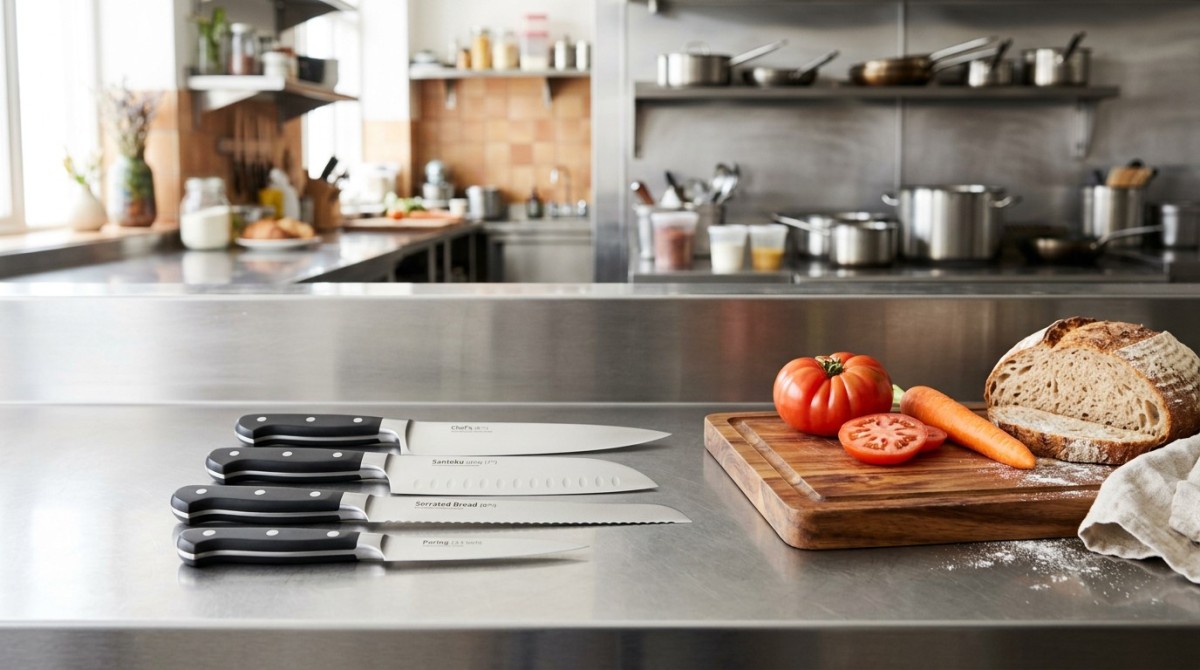
Before comparing materials or brands, identify the knife category that fits your actual workload. In most kitchens, 3 to 5 knife types cover more than 80% of daily cutting tasks: chef’s knife, utility knife, paring knife, slicing knife, and serrated bread knife. Operations that process meat, fish, or high volumes of produce may also require boning or fillet knives for better precision.
A chef’s knife in the 8-inch to 10-inch range is often the core tool for mixed prep. It handles chopping, slicing, dicing, and portioning. For smaller ingredients or detail work, a 3.5-inch to 5-inch paring or utility knife offers more control. Serrated blades are useful when cutting crusty bread, tomatoes, or items with tough skins and soft interiors, where a straight edge may slip.
For foodservice buyers, the mistake is often overbuying specialized knives when a standardized set could cover most production needs. A restaurant with moderate menu complexity may work efficiently with 4 core blade types, while a food processing line may require task-specific knives to reduce waste and improve cut uniformity within a tolerance range.
Knife type selection by task
The table below helps match common kitchen tasks with suitable knife formats. This is especially useful for procurement teams comparing kitchen tools and utensils across restaurant chains, catering kitchens, and training environments.
The key takeaway is simple: knife speed comes from fit, not just sharpness. When the blade profile matches the product and motion pattern, operators waste fewer movements per cut and maintain more stable hand positioning over long shifts.
Common selection mistake
One frequent error is choosing a longer knife under the assumption that it will always work faster. In practice, an oversized blade can slow inexperienced users, especially in compact prep stations with limited board space. For many line kitchens, an 8-inch chef’s knife provides a better balance of reach, control, and safety than a 10-inch model.
Choose Blade Material, Edge Style, and Weight for Speed and Control
Blade material has a direct impact on edge retention, corrosion resistance, sharpening effort, and cost of ownership. Stainless steel is the most common choice in commercial environments because it offers a practical balance of durability and rust resistance. High-carbon steel can hold a sharp edge well, but it generally needs more careful drying and maintenance to avoid discoloration or corrosion in humid kitchens.
For busy foodservice operations, edge retention matters because a dull knife requires more force and increases slipping risk. However, extremely hard steel is not always ideal. It may keep a sharper edge longer, but it can also be harder to resharpen on site. For buyers equipping multiple stations, moderate-hardness stainless options are often easier to manage over a 12-month replacement and maintenance cycle.
Weight is another overlooked factor. A heavier blade can support strong downward cuts on dense vegetables or proteins, but it may contribute to fatigue after 2 to 3 continuous hours of prep. Lighter knives improve agility, especially for repetitive slicing, but they must still feel stable in hand. The right balance point should sit close to the handle-blade junction rather than pulling strongly forward or backward.
Material and performance comparison
The comparison below can help kitchen managers and purchasing teams evaluate common blade options based on maintenance capacity and use intensity.
In most B2B purchasing scenarios, stainless steel remains the most practical option because it performs reliably across different operators and sanitation routines. A premium material only adds value when the kitchen has matching sharpening tools, training, and care discipline.
What to check in a product trial
- Test at least 3 products: soft produce, dense root vegetables, and protein items.
- Run a 20- to 30-minute prep session to assess grip stability and wrist fatigue.
- Check how easily the blade restores sharpness after repeated use.
- Review whether the knife performs equally well for left- and right-handed users if shared across stations.
These practical checks often reveal more than catalog specifications alone. Speed and safety come from real workflow compatibility, not from a single technical feature.
Handle Design and Ergonomics Matter More Than Many Buyers Expect
A sharp blade is only part of a safe kitchen knife. Handle shape, grip texture, and overall ergonomics strongly affect control under fast-paced conditions. In commercial kitchens, operators often work with wet hands, gloves, oil residue, or frequent wash cycles. A slippery or poorly balanced handle can increase the risk of twisting, overgripping, and hand fatigue during repetitive tasks.
For operators using knives for 2, 4, or even 8 hours per day, comfort is a productivity issue. If the handle is too narrow, users tend to grip harder, which leads to forearm strain. If it is too bulky, precision can suffer. Textured synthetic handles are common in foodservice because they provide better grip consistency and are less sensitive to moisture than polished wood.
The safest handle is not necessarily the softest one. Instead, buyers should look for a secure shape with a clear finger position, stable transition from blade to handle, and enough clearance to protect the knuckles above the cutting board. For shared workstations, neutral ergonomic designs usually work better than highly specialized shapes.
Ergonomic checkpoints for purchase evaluation
- Grip security: The handle should remain stable during wet use and not rotate under moderate force.
- Balance point: The knife should feel centered near the bolster or front handle area.
- Handle-to-hand fit: Test with at least 2 to 3 users of different hand sizes.
- Cleaning compatibility: Surfaces should withstand repeated washing without cracks or looseness.
- Fatigue impact: Observe comfort after 30 minutes of continuous slicing or chopping.
In chain restaurants or institutional kitchens, ergonomic standardization can also support training. When operators use similar handle geometry across stations, technique transfer is faster and the learning curve is shorter for new staff within the first 1 to 2 weeks of onboarding.
When to prioritize safety over maximum cutting speed
If your team includes beginners, seasonal workers, or high-turnover staff, prioritize control and predictability over aggressive thin-edge performance. A knife that is slightly less fast on paper but significantly easier to hold safely may deliver better real-world output by reducing errors, product damage, and interruptions.
This is especially relevant in catering and central kitchen settings, where high batch volumes can tempt managers to focus only on throughput. In reality, consistent handling and low accident exposure often create better long-term efficiency than selecting the sharpest or lightest blade available.
Match the Knife to the Kitchen Environment, Training Level, and Procurement Plan
Knife selection should fit the operating context, not just the product specification. A hotel banquet kitchen, a quick-service restaurant, a butcher station, and a household cooking setup all have different prep rhythms, sanitation routines, and operator skill levels. The right choice depends on who uses the knife, how often it is used, and what support systems are in place.
For example, high-volume restaurant kitchens may benefit from standardized knives in 2 or 3 common sizes to simplify training, storage, and replacement. By contrast, specialty preparation areas may need narrower task-focused blades to improve yield and precision. Procurement teams should also consider whether spare units, sharpening service, and cut-resistant gloves are part of the purchasing package.
From a budget standpoint, total ownership cost is more useful than unit price. A knife used 5 days per week may need sharpening every 2 to 6 weeks depending on steel, cutting surface, and product type. If a cheaper knife dulls faster and requires earlier replacement, the apparent savings may disappear within one operating quarter.
Procurement comparison by kitchen scenario
The table below shows how knife priorities change across common industry settings. This can help decision-makers build a more practical buying list instead of using the same specification everywhere.
This comparison shows why kitchen knife buying should be integrated with broader kitchen equipment planning. Storage systems, sanitizing routines, sharpening access, and staff skill all influence whether a knife performs well over time.
A practical 4-step buying process
- Map your top 5 cutting tasks by frequency and product type.
- Shortlist 2 to 4 knife options per task based on blade length and material.
- Run user trials with both experienced and less experienced operators.
- Confirm maintenance plan, replacement timing, and safe storage method before final order.
This process reduces trial-and-error purchasing and helps decision-makers align daily use with procurement control.
Maintenance, Safety Practices, and Common Buying Mistakes
Even the best kitchen knife becomes a risk if maintenance is inconsistent. Dull edges require more pressure, which can lead to slips and uneven cuts. In most kitchens, regular honing can support daily performance, while sharpening intervals may range from every 2 weeks to every 3 months depending on use intensity and cutting surface. Plastic and wood boards are generally easier on edges than stone or glass surfaces.
Safe handling also depends on storage and workflow discipline. Knives should not be left loose in drawers or soaking in sinks. Magnetic racks, blade guards, and dedicated storage slots reduce accidental contact and edge damage. For shared workstations, visual rules and brief safety refreshers can reduce preventable incidents, especially during busy service windows.
Another common mistake is focusing only on the knife itself without considering related tools. Sharpeners, cutting boards, glove policies, and cleaning agents all affect performance. A sound knife program is part of a larger kitchen tools and utensils management system, especially in commercial operations where multiple staff members use the same equipment every day.
Frequent mistakes to avoid
- Buying one blade type for all tasks, which slows prep and reduces control.
- Selecting premium hard steel without sharpening capability on site.
- Ignoring handle grip performance in wet or greasy conditions.
- Using damaged boards or poor storage that shortens blade life.
- Skipping operator trials and relying only on catalog descriptions.
FAQ: What buyers and users ask most often
Below are several practical questions that often come up during specification review and daily use.
How many knives does a standard prep station usually need?
For many restaurant and hotel prep stations, 2 to 3 knives cover most work: one chef’s knife, one paring or utility knife, and one serrated knife if bread or delicate-skin produce is common. Additional specialty knives are useful only when the menu or production volume clearly justifies them.
Is a sharper knife always safer?
A properly sharpened knife is usually safer than a dull one because it needs less force. However, safety still depends on grip, technique, cutting surface, and operator training. A very sharp knife in untrained hands can still create risk, so product choice and skill level must be matched carefully.
How often should commercial kitchens replace knives?
There is no single schedule. In heavy-use kitchens, performance review every 3 to 6 months is practical. Replacement depends on edge loss, handle wear, blade damage, and sharpening limits. Well-maintained knives can stay in service much longer, but damaged or unstable units should be removed immediately.
Choosing a kitchen knife for speed and safety means balancing blade type, steel performance, handle ergonomics, training level, and maintenance capacity. For information researchers, operators, buyers, and business decision-makers, the most effective choice is not the most expensive knife but the one that fits the kitchen’s actual tasks, people, and workflow standards.
If you are reviewing kitchen equipment, restaurant kitchen supplies, or complete kitchen tools and utensils for commercial or high-use environments, a structured knife selection process can improve prep efficiency, reduce injury exposure, and support better long-term procurement results. Contact us to discuss product details, compare suitable configurations, or get a tailored solution for your kitchen operation.
Popular Tags
Kitchen Industry Research Team
Dedicated to analyzing emerging trends and technological shifts in the global hospitality and foodservice infrastructure sector.
Industry Insights
Join 15,000+ industry professionals. Get the latest market trends and tech news delivered weekly.
No spam. Unsubscribe anytime.


Contact With us
Contact:
Anne Yin (Ceramics Dinnerware/Glassware)
Lucky Zhai(Flatware)