
Dish Sterilizer Selection Guide for High-Turnover Kitchens
Choosing the right Dish Sterilizer is critical for high-turnover kitchens where hygiene, speed, and workflow efficiency directly affect service quality. For buyers comparing kitchen equipment wholesale options, this guide explains how Dish Sterilizer performance, stainless steel kitchen equipment durability, and compatibility with catering kitchen equipment and restaurant kitchen supplies can support safer, smarter, and more productive operations.
In restaurants, hotels, central kitchens, and food processing support areas, sterilization equipment is no longer a secondary purchase. It directly influences cleaning throughput, labor planning, inspection readiness, and the overall reliability of kitchen hygiene management. A poorly matched unit can create bottlenecks during peak service, while a properly sized system can reduce handling delays and improve dish turnaround across multiple workstations.
For operators, the practical questions are simple: How fast can the machine process loads, how stable is the sterilization cycle, and how easy is it to maintain during a 10- to 16-hour operating day? For procurement teams and decision-makers, the questions expand to total cost, installation conditions, supplier support, energy use, and compatibility with broader commercial kitchen equipment planning.
This selection guide focuses on real buying criteria for high-turnover kitchens. It covers application scenarios, key technical parameters, layout and workflow fit, operating risks, maintenance expectations, and procurement checkpoints that matter in B2B kitchen equipment projects.
Why Dish Sterilizer Capacity and Throughput Matter in High-Turnover Kitchens
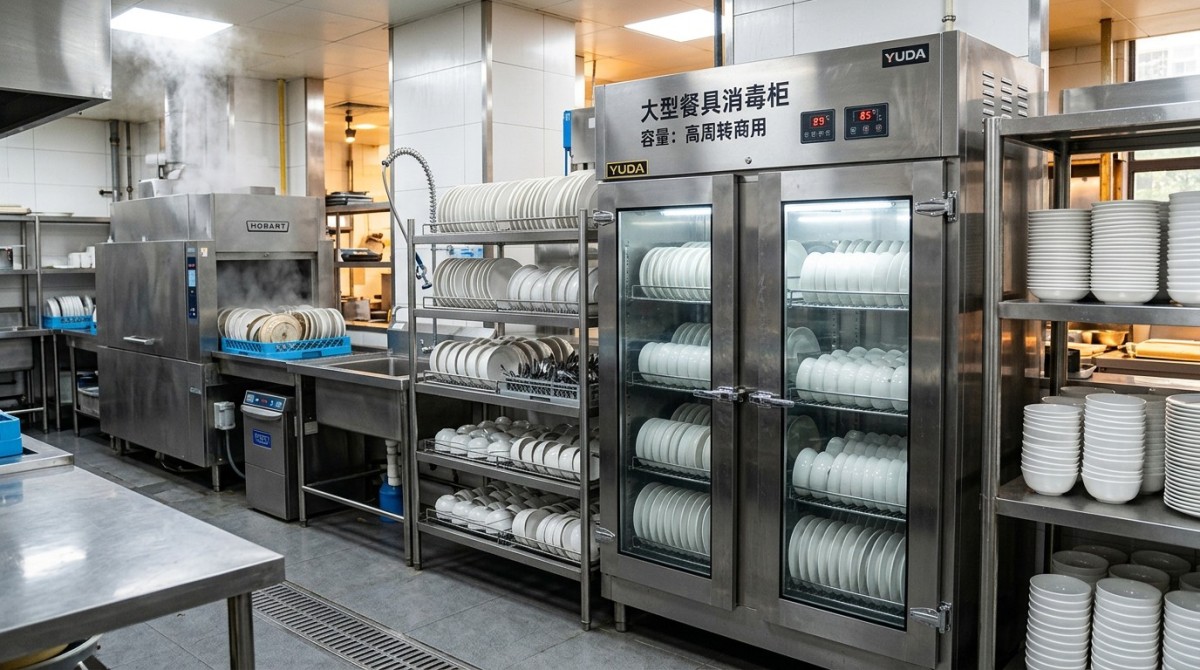
A dish sterilizer must be selected according to actual meal volume, not just kitchen floor space. A café serving 200 covers per day has very different requirements from a hotel banquet kitchen processing 1,200 to 3,000 pieces of tableware in concentrated periods. In high-turnover environments, undersized sterilization capacity creates backlogs that affect plating, table reset speed, and sanitation consistency.
Buyers should look at hourly processing capacity, rack or chamber size, cycle duration, and peak-period demand. For example, a compact cabinet unit may suit low- to mid-volume kitchens with 50 to 120 racks per shift, while conveyor-style or higher-capacity batch systems are more suitable when dish return volumes spike within 30- to 90-minute service windows.
Another key factor is workflow synchronization. A sterilizer that runs a 5- to 8-minute cycle may seem fast, but if loading, unloading, drainage, and temporary storage are poorly designed, the real throughput can drop by 20% to 35%. Procurement teams should therefore evaluate the entire sanitation line rather than the machine in isolation.
In many commercial kitchen equipment projects, the most effective approach is to match the sterilizer to dishwashing output, not to theoretical maximum capacity. If the washing section clears 80 racks per hour but sterilization can only complete 45 racks per hour, the sterilizer becomes the operational bottleneck. This mismatch is common in rushed retrofit projects.
Typical demand by kitchen type
The following comparison helps buyers translate kitchen type into a practical sizing baseline. These are common planning ranges rather than fixed standards, and they should be adjusted based on menu complexity, tableware mix, and number of service peaks per day.
The key conclusion is that capacity should be linked to peak concentration, not only daily totals. A kitchen with two short rush periods may require a larger sterilizer than another site with the same daily volume but more even demand distribution.
Core throughput checks before purchase
- Measure actual tableware return volume during the busiest 60 minutes, not just average daily usage.
- Confirm cycle time from loading to ready-to-store status, including cooling or drying where applicable.
- Check whether the sterilizer supports trays, bowls, plates, cups, and utensils without frequent rack changes.
- Allow a 15% to 25% future growth margin for menu expansion, larger dining areas, or central kitchen supply increases.
Key Technical Specifications Buyers Should Compare
Not all dish sterilizers operate with the same heating and sanitation logic. Depending on the model, sterilization may rely on high-temperature drying, thermal circulation, ozone-assisted treatment, UV support, or hybrid methods. In commercial use, the best option is usually the one that delivers stable repeatability, straightforward maintenance, and compliance with local hygiene practices rather than the most complex specification sheet.
For stainless steel kitchen equipment buyers, material selection is equally important. Foodservice kitchens generally prefer corrosion-resistant stainless steel structures because they tolerate humidity, detergents, and repeated cleaning better than lower-grade materials. In high-frequency use, cabinet thickness, hinge durability, door sealing, and internal rack strength all influence service life.
Electrical load and utility compatibility should be reviewed early in the project. Common commercial models may operate within 2kW to 12kW, but larger integrated units can exceed that range depending on chamber size and drying configuration. If the site power supply, ventilation, or drainage layout is limited, even a technically suitable unit may become expensive to install.
Noise level, insulation performance, and control interface also matter in practical operation. A touchscreen panel may look attractive, but a simpler interface with clear temperature, cycle, and fault indicators is often more reliable for teams with staff turnover or multilingual operators.
Technical comparison checklist
The table below summarizes the technical items that procurement managers and operations teams should compare side by side when evaluating kitchen equipment wholesale offers.
When comparing bids, buyers should avoid judging value by price alone. A lower-cost unit with weak door seals, inconsistent heat distribution, or limited rack flexibility can cause more downtime and replacement expense within 12 to 24 months than a better-built alternative purchased at a slightly higher initial cost.
Minimum specification questions to ask suppliers
- What is the tested cycle time under full load rather than empty-chamber conditions?
- Which dish formats can be processed in one cycle without custom accessories?
- What daily cleaning routine and weekly maintenance tasks are required?
- What spare parts are considered wear items in the first 12 months?
How to Match a Dish Sterilizer to Kitchen Layout, Workflow, and Equipment Integration
A dish sterilizer performs best when it fits naturally into the movement of staff, racks, and clean ware storage. In high-turnover kitchens, every extra step adds labor pressure. If employees need to cross hot cooking zones, pass narrow corridors, or stack sanitized dishes in temporary areas, the sanitation line becomes slower and less safe.
This is why compatibility with catering kitchen equipment and restaurant kitchen supplies is a major purchasing consideration. The sterilizer should align with dishwashing stations, drain points, stainless steel worktables, storage cabinets, trolley movement, and clean/dirty zoning. A unit that technically fits the room may still fail operationally if loading doors open into crowded pathways or if unloading happens far from storage.
Procurement teams should conduct a simple process mapping exercise before ordering. Measure incoming dirty dish flow, washing output, sterilization queue space, and clean dish dispatch points. In many projects, a 3-step layout review can identify whether a left-to-right workflow, pass-through orientation, or separated loading and unloading sides will improve efficiency by reducing handling time.
Ventilation and ambient heat also deserve attention. In compact kitchens, adding a high-temperature unit without confirming heat discharge can raise the local working temperature and affect operator comfort during long service periods. This is especially relevant in kitchens already running combi ovens, fryers, and hot holding equipment for 8 to 14 hours daily.
Layout planning priorities
- Keep dirty-to-clean flow unidirectional to reduce cross-contact risk.
- Reserve enough clearance for door opening, rack handling, and maintenance access on at least 2 sides where possible.
- Position the unit close to post-wash staging to prevent queue congestion during peak returns.
- Plan clean storage within a short transfer distance, ideally under 3 to 5 meters in compact operations.
Example integration decision matrix
The matrix below helps decision-makers compare installation suitability across common project conditions.
The practical takeaway is that equipment integration often delivers more efficiency than simply choosing a larger machine. In many foodservice projects, a well-placed medium-capacity sterilizer outperforms an oversized unit installed in a poor position.
Procurement Risk Control, Maintenance Planning, and Total Cost Evaluation
A good purchasing decision balances acquisition cost with reliability, labor efficiency, maintenance needs, and service continuity. For procurement teams, the real question is not just how much the dish sterilizer costs on the quotation date, but how it performs over 12, 24, and 36 months of daily use.
Common procurement mistakes include buying only by chamber size, overlooking local power conditions, ignoring spare parts access, and failing to define acceptance criteria before delivery. In kitchen equipment wholesale sourcing, these gaps can delay installation by 7 to 21 days or create unexpected retrofit costs for cabling, ventilation, or drainage adjustments.
Maintenance planning should begin before the purchase order is signed. Operators need to know which components require daily cleaning, weekly inspection, and periodic replacement. In heavy-use kitchens, door gaskets, racks, filters, handles, and heating-related components may require closer inspection after the first 6 to 12 months depending on use intensity and cleaning practice.
Service support is especially important for chain restaurants, hotels, and central kitchens that cannot tolerate prolonged downtime. Procurement managers should clarify response time, remote troubleshooting support, spare part availability, and installation guidance. Even a strong stainless steel kitchen equipment build does not eliminate the need for dependable after-sales coordination.
Risk points to review before order confirmation
- Confirm site voltage, phase configuration, and installation load capacity before final model selection.
- Request a consumables and spare-parts list covering at least the first 12 months.
- Define acceptance checks such as cycle stability, control response, sealing performance, and operating temperature consistency.
- Verify lead time for standard orders and whether custom rack formats extend delivery by 2 to 4 weeks.
What total cost should include
A realistic total-cost review should include five layers rather than unit price alone:
- Equipment price and required accessories such as racks, trays, or trolleys.
- Installation adjustments for utilities, drainage, exhaust, and floor layout.
- Operating cost, including electricity and labor time per cycle or per shift.
- Maintenance cost, including planned replacements and service visits.
- Downtime risk, especially during weekends, banquets, or seasonal demand peaks.
For enterprise decision-makers, this broader view helps prevent low-entry-cost purchases that become expensive in practice. Stable output, easier maintenance, and smoother kitchen workflow often create stronger long-term value than the cheapest initial quotation.
Implementation Steps, Common Mistakes, and FAQ for Buyers
Once the model is selected, implementation quality determines whether the equipment delivers its expected value. A disciplined rollout should cover site preparation, installation verification, operator training, trial cycles, and a formal handover checklist. In most commercial kitchen projects, this process can be completed within 3 to 10 working days after equipment arrival, depending on utility readiness and project complexity.
Training is often underestimated. Even an advanced dish sterilizer can underperform if staff overload chambers, mix incompatible items, skip cleaning procedures, or interrupt cycles prematurely. For kitchens with rotating teams, simple operating instructions and a 3-point daily check routine are usually more useful than overly technical manuals.
Another common mistake is assuming that all restaurant kitchen supplies can be sterilized under the same settings. Buyers should verify compatibility for plastic containers, coated utensils, specialty trays, and mixed-material service items. Not every item used in catering kitchen equipment environments tolerates the same heat exposure or cycle design.
The final step is performance review after the first 2 to 4 weeks of use. This period is ideal for checking cycle consistency, queue time, operator feedback, and whether clean ware availability has improved during peak service. Early review helps teams correct workflow issues before they become routine inefficiencies.
Recommended implementation sequence
- Confirm utilities, floor placement, and handling clearance before delivery.
- Install and test empty and loaded cycles under real operating conditions.
- Train operators on loading rules, cycle selection, and daily cleaning tasks.
- Run a monitored trial during one peak service period.
- Record issues and finalize handover standards for regular operation.
How do I know if a dish sterilizer is too small?
If washed dishes wait in queue for more than 10 to 15 minutes during peak periods, or if staff must delay dish return to dining service because sanitized stock is insufficient, the unit may be undersized. Repeated overload cycles and frequent temporary storage of unsterilized clean ware are also warning signs.
Which kitchens benefit most from a higher-capacity model?
Hotels, banquet kitchens, school or factory canteens, chain restaurants with lunch and dinner rushes, and central kitchens generally gain the most. These operations often have concentrated dish return volumes and benefit from faster cycle turnover, stronger workflow continuity, and reduced manual handling pressure.
What should procurement compare beyond price?
Compare cycle time, chamber usability, material quality, utility requirements, service response, spare parts lead time, maintenance frequency, and installation fit. In many B2B projects, these factors influence ownership value more than the initial purchase price.
How often should commercial units be maintained?
Daily cleaning is standard in heavy-use kitchens. Weekly checks for seals, racks, drainage, and controls are recommended, with deeper inspection intervals often scheduled monthly or quarterly depending on operating hours, water conditions, and load intensity.
Selecting the right dish sterilizer for a high-turnover kitchen requires more than comparing dimensions and quoted prices. Buyers need to align capacity, cycle speed, material durability, site conditions, and workflow integration with the realities of commercial foodservice operations. A well-chosen unit supports hygiene control, faster dish turnaround, smoother labor deployment, and more reliable kitchen performance.
If you are evaluating kitchen equipment wholesale options for restaurants, hotels, central kitchens, or foodservice projects, a structured comparison of throughput, installation fit, maintenance expectations, and support capability will lead to a safer and more practical investment. Contact us to get a tailored dish sterilizer recommendation, discuss product details, or explore broader commercial kitchen equipment solutions for your operation.
Popular Tags
Kitchen Industry Research Team
Dedicated to analyzing emerging trends and technological shifts in the global hospitality and foodservice infrastructure sector.
Industry Insights
Join 15,000+ industry professionals. Get the latest market trends and tech news delivered weekly.
No spam. Unsubscribe anytime.
Contact With us
Contact:
Anne Yin (Ceramics Dinnerware/Glassware)
Lucky Zhai(Flatware)