
Restaurant Kitchen Supplies Sourcing: China or Local?
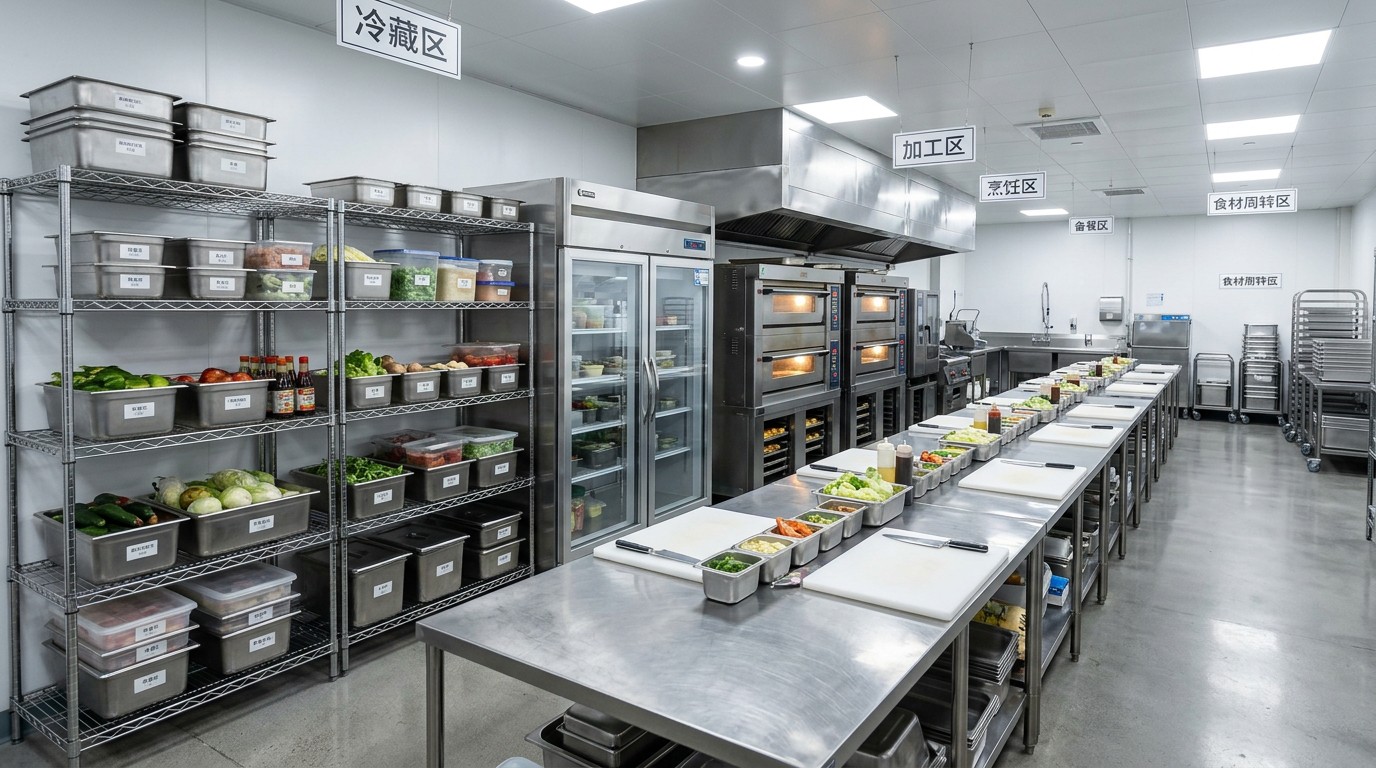
When sourcing restaurant kitchen supplies, the best choice is not simply “China” or “local.” It depends on what you are buying, how fast you need it, how much customization you require, and how much supply risk your business can absorb. For many buyers, China offers stronger pricing and wider product variety for kitchen equipment wholesale, while local sourcing can win on speed, communication, after-sales support, and easier compliance. If you are comparing stainless steel kitchen equipment, kitchen tools and utensils, a Commercial Refrigerator, a commercial convection oven, or a Kitchen Shelf, the smartest approach is to match the sourcing model to the product category and your operational priorities.
For restaurant owners, purchasing teams, dealers, and project managers, the real question is not which market is universally better. The real question is which option delivers the best total value after considering unit cost, freight, lead time, quality consistency, spare parts, service response, and long-term operating efficiency.
What do buyers really need to compare before choosing China or local?
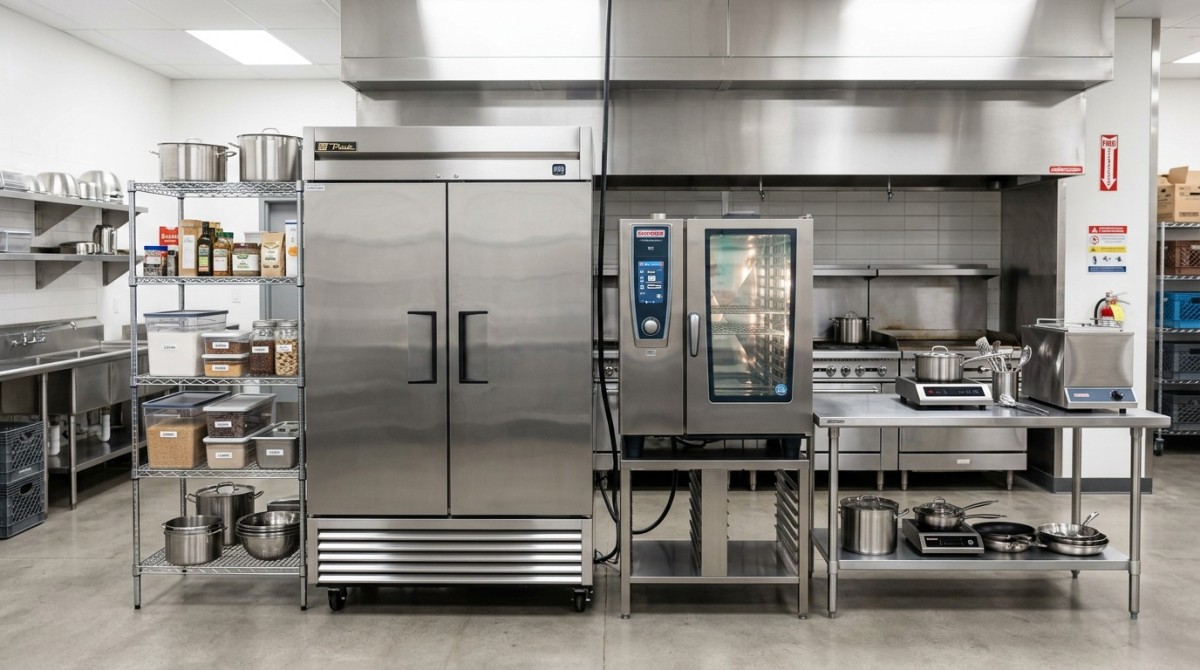
Most buyers searching this topic are trying to solve a practical purchasing problem: how to balance cost, quality, delivery, and risk. That is especially important in restaurant projects, chain expansion, kitchen upgrades, and replacement purchasing.
In real-world procurement, the comparison usually comes down to these factors:
- Total landed cost, not just factory or showroom price
- Lead time and stock availability for project schedules or urgent replacement
- Quality stability across batches and product lines
- Customization capability for layout, size, voltage, or branding
- Compliance requirements in your target market
- After-sales support, spare parts, warranty, and technical service
- Supplier communication and reliability
If you only compare purchase price, China often looks like the obvious winner. But if downtime, failed inspections, or missing parts can disrupt your business, local supply may create more value even at a higher price.
When does sourcing restaurant kitchen supplies from China make the most sense?
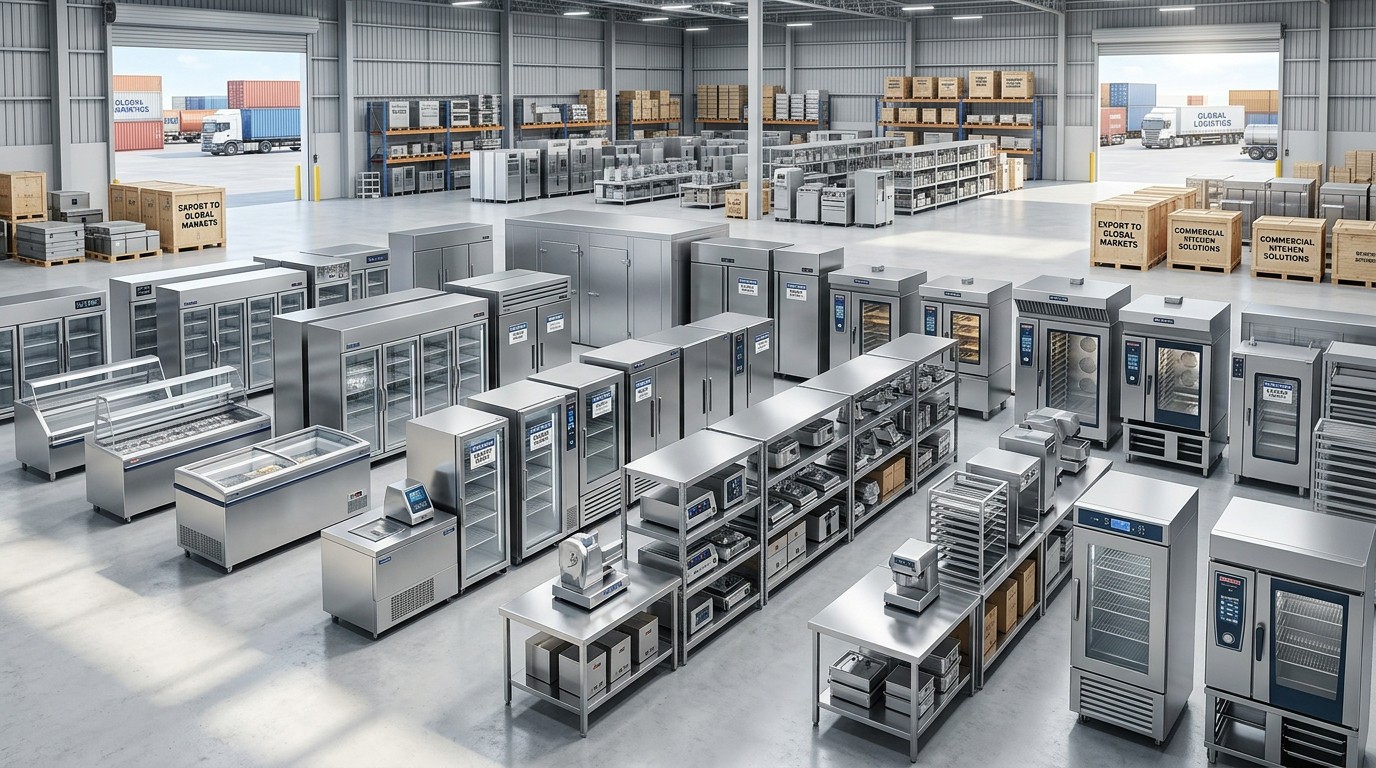
China is often the strongest option when your priority is cost efficiency, broad selection, and scalable production. It is especially competitive in kitchen equipment wholesale and high-volume purchasing.
Chinese suppliers are often a good fit when you need:
- Large-volume orders for restaurant chains, distributors, or hospitality projects
- Better pricing on stainless steel kitchen equipment, prep tables, sinks, storage systems, and kitchen tools and utensils
- Product customization such as dimensions, logo labeling, packaging, and technical configuration
- Integrated purchasing from one source across multiple categories
- OEM or private label manufacturing
For example, products like a Kitchen Shelf, worktables, trolleys, GN pans, and many stainless steel fabrication items are often cost-effective to source from China because manufacturing capacity is mature and production costs are competitive. The same can apply to selected categories of cooking equipment and refrigeration if you work with capable suppliers who understand export standards.
China sourcing is also valuable when your purchasing cycle is planned in advance. If you can forecast demand, consolidate shipments, and allow time for production plus ocean freight, the savings can be significant.
When is buying local the smarter decision?
Local sourcing becomes more attractive when speed, service, and operational certainty matter more than the lowest unit price. For many restaurants and foodservice operators, this is critical.
Buying local may be the better choice when:
- You need equipment quickly to open, replace failed units, or avoid kitchen downtime
- You require local installation and service for complex products
- You must meet strict local certification rules
- You want simpler communication and easier issue resolution
- You are purchasing low-volume items where import freight erodes cost savings
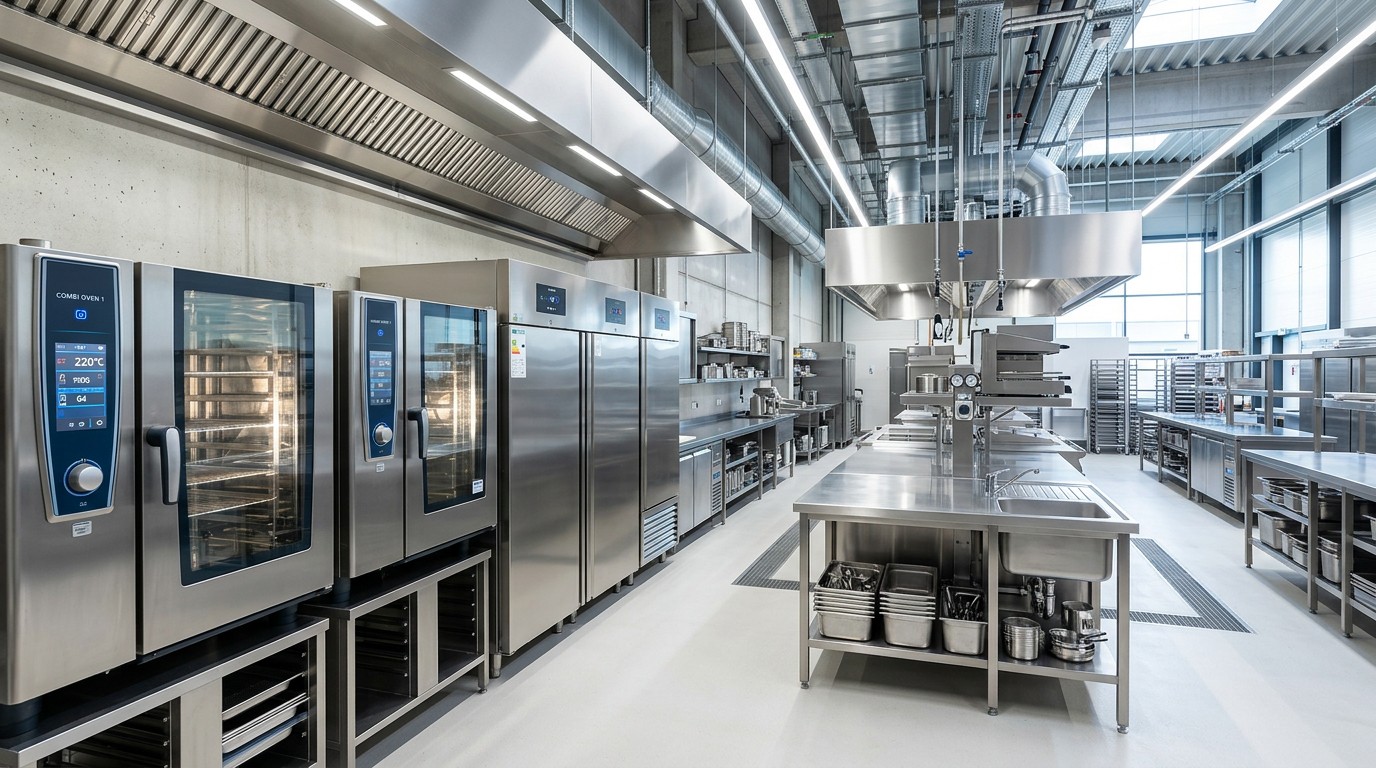
This is especially relevant for critical appliances such as a Commercial Refrigerator or commercial convection oven. These products affect food safety, energy performance, and daily operations. If the equipment fails, local technical support and fast spare-part access may matter more than a lower purchase price.
Local suppliers can also reduce hidden procurement burdens. There is often less complexity around customs, documentation, payment terms, inspection, and returns. For smaller operators without an experienced import team, that simplicity has real business value.
China vs local: the real cost comparison is bigger than price
One of the biggest mistakes buyers make is comparing ex-factory China pricing with local distributor pricing without calculating the full sourcing cost.
To make a fair comparison, include:
- Product price
- Tooling or customization charges
- Inspection costs
- Export packaging
- Ocean or air freight
- Import duty and customs clearance
- Warehousing and inland delivery
- Installation and commissioning
- Spare parts inventory
- Warranty handling and service costs
- Potential delay or defect risk
For standard, high-volume products, China may still offer a better total landed cost. But for small orders, urgent purchases, or technical equipment requiring service support, local procurement can be more economical over the equipment lifecycle.
Decision-makers should also look at total cost of ownership. A cheaper unit that uses more energy, breaks down more often, or has poor parts availability may cost more over time than a slightly higher-priced local option.
How quality and compliance should influence your sourcing choice
Quality is not determined only by country. Both China and local markets have premium suppliers, mid-range suppliers, and low-end suppliers. The real issue is supplier selection and quality control.
When evaluating kitchen equipment suppliers, ask:
- What materials are used, especially stainless steel grade and thickness?
- Are welding, finishing, and structural details consistent?
- Can the supplier provide testing records or certifications?
- Do they have export experience in your market?
- Can they provide references, case studies, or sample evaluation?
- How do they manage quality inspections before shipment?
For electrical and gas equipment, compliance is particularly important. A Commercial Refrigerator or commercial convection oven may need to meet country-specific safety, energy, sanitation, or electrical standards. If a supplier cannot support the right compliance documents, any price advantage can disappear quickly.
For buyers sourcing from China, third-party inspection before shipment is often a wise step. For local buying, request clear warranty terms and service response commitments rather than assuming support will automatically be good.
Which product categories are better for China, and which are better local?
A category-based sourcing strategy is often the most practical approach.
Often well suited to sourcing from China:
- Stainless steel kitchen equipment
- Kitchen Shelf and storage systems
- Worktables, sinks, cabinets, and fabrication items
- Kitchen tools and utensils
- Bulk smallwares
- Standardized food preparation equipment in larger volumes
Often better suited to local sourcing:
- Urgent replacement equipment
- High-service items needing installation support
- Products with strict local technical certification
- Equipment where downtime creates high operating losses
- Low-volume purchases with weak freight efficiency
Can go either way depending on supplier capability:
- Commercial Refrigerator
- Commercial convection oven
- Dishwashing systems
- Food processing machinery
- Smart kitchen equipment
For these middle-ground categories, the decision should be based on service network, parts support, compliance, and project scale rather than country alone.
How buyers can reduce risk when sourcing from China
If you choose China, the goal is not just to find a low price. It is to build a controlled sourcing process.
Practical risk-reduction steps include:
- Define technical specifications clearly, including material grade, dimensions, voltage, plug type, finish, and packaging.
- Verify supplier capability through factory audits, certifications, export records, and references.
- Request samples or trial orders for key categories.
- Use pre-shipment inspections to catch quality issues before dispatch.
- Confirm spare parts availability and after-sales procedures in writing.
- Plan realistic lead times, including production, shipping, customs, and final delivery.
- Consolidate purchases to improve freight efficiency across multiple kitchen equipment wholesale items.
For procurement teams and business leaders, it is also helpful to classify items into critical and non-critical categories. High-risk operational equipment may need stricter supplier control or local sourcing, while standardized stainless steel kitchen equipment can be sourced internationally with lower risk.
A practical decision framework for restaurants, distributors, and project buyers
If you need a simple way to decide, use this framework:
- Choose China if your order volume is meaningful, your timeline is planned, customization matters, and you have the ability to manage import processes.
- Choose local if speed, service, warranty response, and low operational risk are your top priorities.
- Use a hybrid model if you want to optimize both cost and reliability.
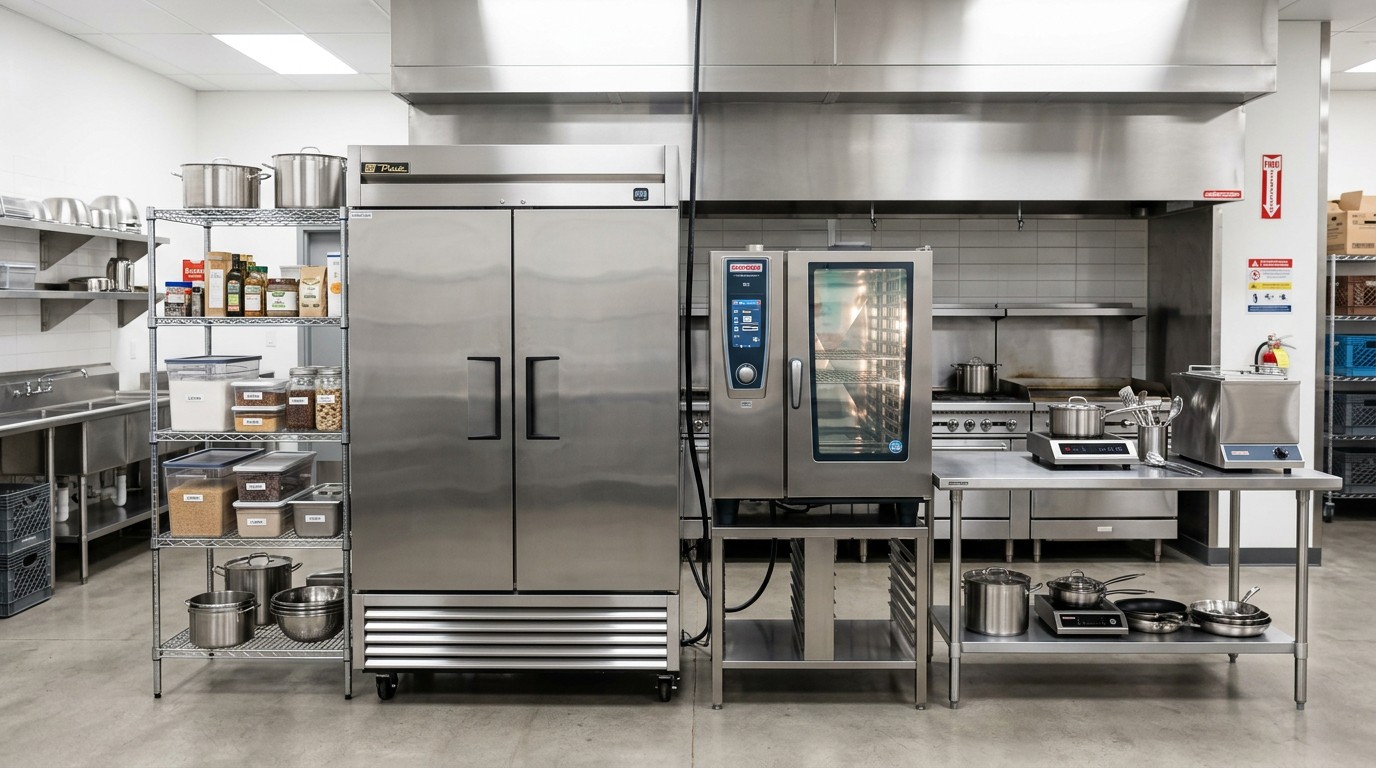
In many cases, the hybrid model is the most effective. For example, a buyer may source stainless steel kitchen equipment, Kitchen Shelf systems, and kitchen tools and utensils from China, while buying a Commercial Refrigerator and commercial convection oven locally for easier installation and service support.
This kind of category-based procurement often delivers the strongest balance of budget control, project efficiency, and operational security.
Conclusion: China or local is not a yes-or-no question
For restaurant kitchen supplies sourcing, there is no universal winner. China can offer major advantages in pricing, product range, and customization, especially for kitchen equipment wholesale and standardized stainless steel products. Local sourcing can provide faster delivery, simpler communication, and stronger after-sales support, which is often essential for critical equipment.
The best sourcing decision comes from evaluating total landed cost, service needs, compliance requirements, lead time, and operational risk by product category. Buyers who take this more practical approach usually make better purchasing decisions than those who focus only on initial price.
If your goal is long-term value, not just short-term savings, compare China and local suppliers based on the real demands of your kitchen operation. That is how you turn sourcing into a competitive advantage rather than a procurement headache.
- smart kitchen
- cooking equipment
- stainless steel kitchen
- kitchen tools
- restaurant kitchen
- Commercial Refrigerator
- Kitchen Shelf
- kitchen equipment
- kitchen equipment suppliers
- stainless steel kitchen equipment
- kitchen tools and utensils
- restaurant kitchen supplies
- kitchen equipment wholesale
- commercial convection oven
- smart kitchen equipment
Popular Tags
Kitchen Industry Research Team
Dedicated to analyzing emerging trends and technological shifts in the global hospitality and foodservice infrastructure sector.
Industry Insights
Join 15,000+ industry professionals. Get the latest market trends and tech news delivered weekly.
No spam. Unsubscribe anytime.
Contact With us
Contact:
Anne Yin (Ceramics Dinnerware/Glassware)
Lucky Zhai(Flatware)