
Catering Kitchen Equipment Case Study: Scaling Without Waste
Scaling a foodservice operation doesn’t have to mean higher waste or rising inefficiency. This case study explores how catering kitchen equipment, from stainless steel kitchen equipment and kitchen shelving system solutions to Commercial Refrigerator and commercial kitchen oven upgrades, helped a growing business improve workflow, control costs, and support smarter purchasing decisions without sacrificing performance.
Why scaling foodservice often creates waste before it creates growth
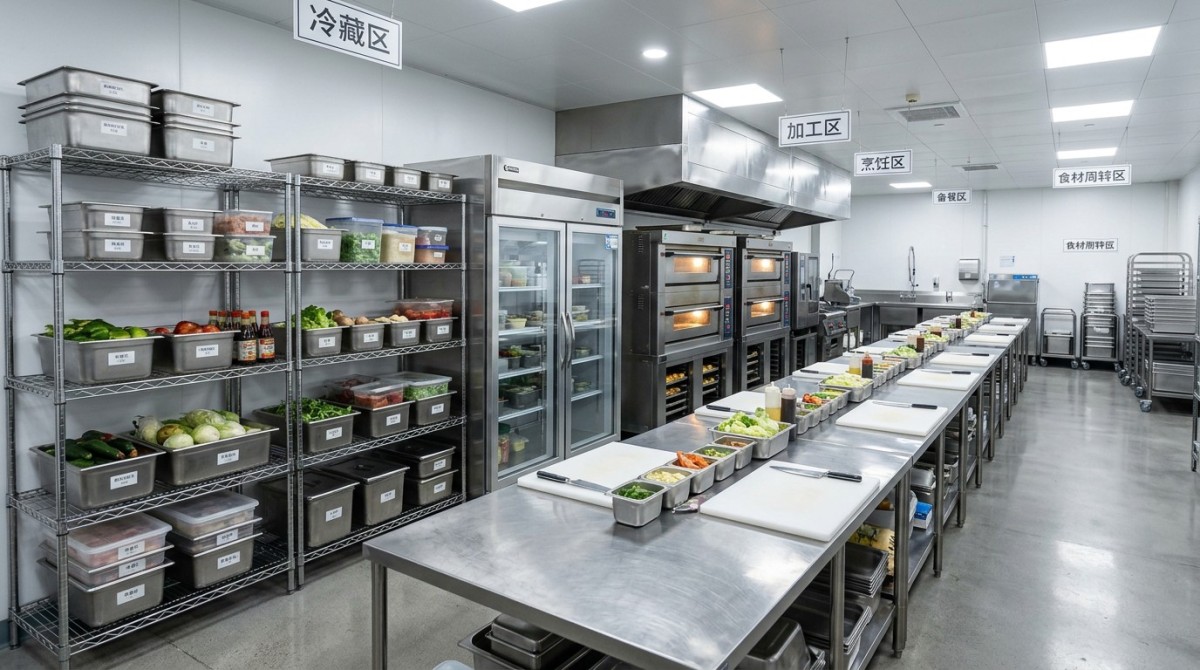
For many restaurants, hotel kitchens, central kitchens, and catering businesses, expansion begins with rising order volume but quickly runs into operational friction. The most common pattern is not a lack of demand. It is a mismatch between production flow, storage capacity, cold chain stability, and equipment layout. In practical terms, a kitchen may move from serving 150 meals per shift to 300–500 meals per shift within 6–12 months, while still relying on equipment selected for a much smaller output level.
That mismatch drives hidden waste. Staff walk farther between prep, cooking, holding, and cleaning zones. Refrigeration doors open too often because ingredients are poorly grouped. Shelving lacks clear load planning. Ovens are oversized for some batches and undersized for peak windows. These issues increase labor minutes, utility consumption, temperature fluctuation, and avoidable food loss. In commercial kitchen planning, waste is often a process issue before it becomes a purchasing issue.
In the kitchen equipment industry, this is why the market is moving toward automation, digital monitoring, and energy-efficient kitchen solutions. Buyers are no longer comparing only product price. They are comparing workflow value over 3–5 years, maintenance predictability, sanitation control, and whether the equipment can support phased growth. For procurement teams and decision-makers, the goal is not simply to add more catering kitchen equipment. It is to add the right capacity at the right point in the process.
The case discussed here reflects a broader B2B reality. A growing foodservice operator needed more output, but also needed to keep waste under control, maintain food safety, and avoid a full kitchen rebuild. The solution combined stainless steel kitchen equipment, a revised kitchen shelving system, a better-matched Commercial Refrigerator configuration, and commercial kitchen oven upgrades implemented in stages rather than all at once.
- Phase 1 focused on storage and workflow, completed within 2–4 weeks to reduce congestion and handling time.
- Phase 2 addressed cooking and cold storage bottlenecks, where temperature control and batch timing had the largest impact.
- Phase 3 introduced purchasing rules for future expansion, so the next equipment upgrade would align with demand rather than guesswork.
Case study: how a growing catering operation scaled with less waste
Starting point: a kitchen that was busy, but not balanced
The operation in this case was serving mixed demand across corporate catering, event meals, and recurring bulk orders. Daily output varied sharply, with moderate production on normal weekdays and heavy spikes 2–3 times per week. The kitchen had adequate staff experience, but the existing layout forced overlap between receiving, prep, storage, and hot-line finishing. As order volume increased, the business began experiencing delayed dispatch, overproduction of selected items, and inconsistent cold storage organization.
The initial review identified four practical bottlenecks. First, the old kitchen shelving system used available space vertically, but not logically, so high-turn ingredients and low-turn dry goods were mixed. Second, the Commercial Refrigerator setup lacked zoning by product type and access frequency. Third, some stainless steel kitchen equipment tables were durable but positioned incorrectly for process flow. Fourth, the commercial kitchen oven mix did not match actual batch sizes, creating idle time between prep completion and final cooking.
Instead of replacing everything, the operator chose a staged improvement plan. That decision matters for buyers with budget limits. A full equipment replacement can look attractive on paper, but in real operations it often increases installation risk, training pressure, and cash flow strain. A targeted upgrade strategy can preserve useful assets while correcting the highest-cost inefficiencies first.
What changed in the equipment plan
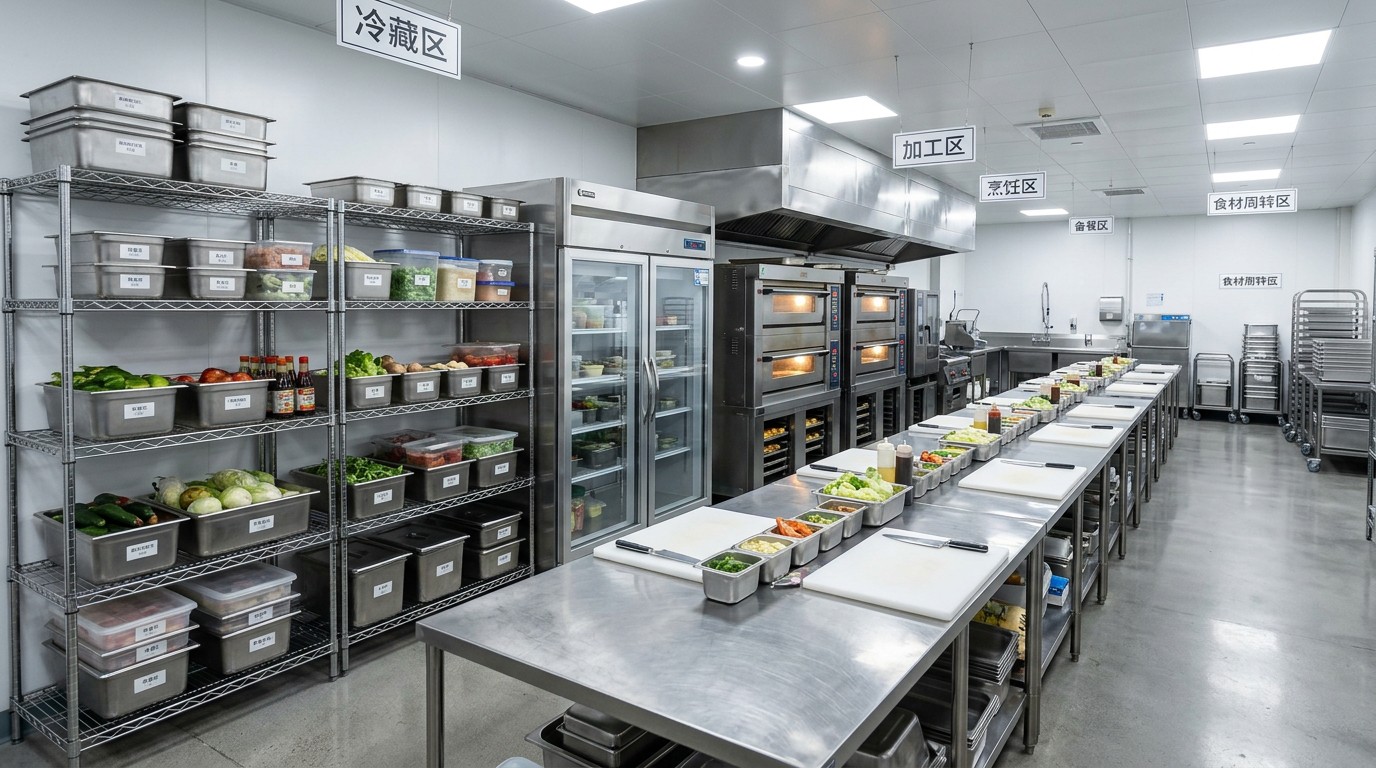
The revised equipment plan focused on three linked goals: smoother movement, clearer storage logic, and tighter thermal control. Stainless steel kitchen equipment was reorganized to support a cleaner work triangle between prep, cook, and holding. The kitchen shelving system was adjusted by SKU turnover and weight category, with heavier items stored lower and fast-moving packaged ingredients placed within easier reach. This reduced unnecessary movement during peak production windows of 60–90 minutes.
Cold storage was addressed through a better-matched Commercial Refrigerator arrangement. Rather than relying on one overloaded unit, the operator moved to separated storage logic for dairy, prepared ingredients, and high-turn proteins. That reduced door-open time, improved stock visibility, and supported safer rotation practices. In many catering environments, this kind of zoning matters as much as raw refrigeration capacity because accessibility affects temperature stability every hour of the day.
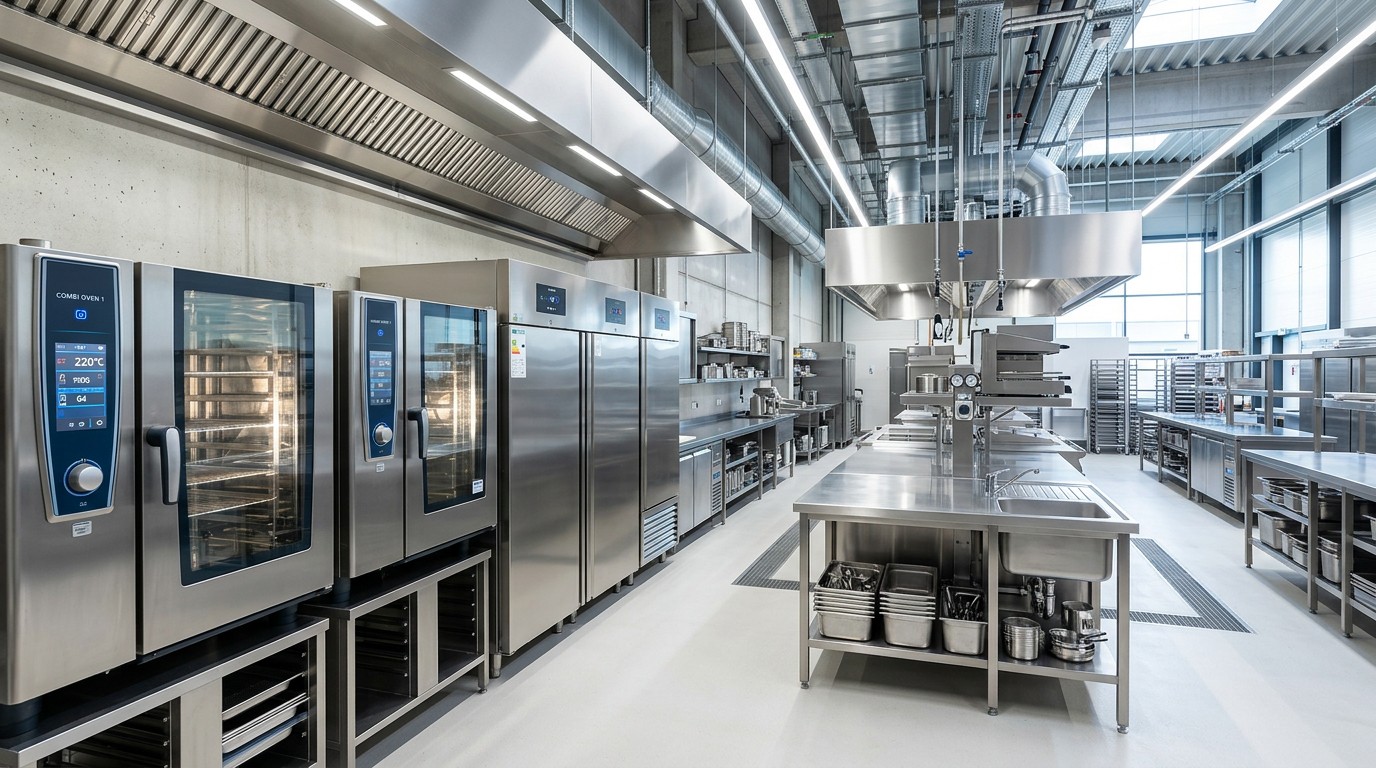
The commercial kitchen oven upgrade was not about buying the largest possible model. It was about matching chamber size, loading pattern, and recovery speed to actual production batches. Smaller and mid-range batch planning reduced underloaded cycles and improved scheduling across morning prep and final service windows. For operators, this is a useful reminder: throughput depends on fit, not only on rated power or theoretical capacity.
Key operational effects observed after the upgrade
- Fewer cross-movements between storage and prep during high-volume periods, which helped reduce handling errors and operator fatigue.
- More consistent ingredient access within the first 30 minutes of each production wave, especially for chilled and frequently used items.
- Better use of commercial kitchen oven cycles, allowing batch planning by product type instead of by equipment limitation.
- Lower risk of spoilage from repeated refrigerator opening and poor internal organization, a common issue in fast-growing catering kitchens.
Which catering kitchen equipment made the biggest difference?
Not every upgrade contributes equally. In this project, the highest operational value came from equipment that directly affected motion efficiency, storage discipline, and repeatability. Buyers often focus first on visible cooking equipment, but in many foodservice environments, stainless steel kitchen equipment and shelving have a stronger impact on daily consistency than expected. These assets shape how people work every hour, not just during final cooking.
The following comparison summarizes how different categories of catering kitchen equipment influenced performance, waste control, and purchasing priority. It is especially useful for procurement personnel deciding whether to upgrade by area, by process stage, or by budget cycle.
The main lesson is straightforward. If a kitchen is losing time through movement and storage, buying only a bigger oven will not solve the real problem. If refrigeration is unstable, adding labor will not fix cold chain risk. Smart purchasing starts with identifying which equipment category is constraining the process most often during a normal week, not only during the busiest event.
For information researchers and decision-makers, this type of category-based comparison is often more useful than a single product brochure. It helps prioritize investment across the kitchen as a system, which is increasingly important as the kitchen equipment industry shifts toward integrated and energy-efficient solutions.
How should buyers evaluate equipment for scaling without overspending?
A practical procurement framework for operators and purchasing teams
When a catering business grows, the biggest procurement mistake is buying for the peak case only. That often leads to oversized equipment, underused capacity, and higher cleaning and utility costs. A more reliable method is to evaluate equipment using 3 core dimensions: normal daily load, peak service window, and projected growth period over the next 12–24 months. This framework supports decisions that are operationally realistic and financially disciplined.
Buyers should also separate fixed requirements from adjustable preferences. Fixed requirements include food contact suitability, cleanability, available installation space, power supply conditions, and workflow compatibility. Adjustable preferences may include door format, shelf configuration, digital control level, or modular expansion options. This distinction prevents teams from rejecting suitable solutions over secondary features while missing real operational risks.
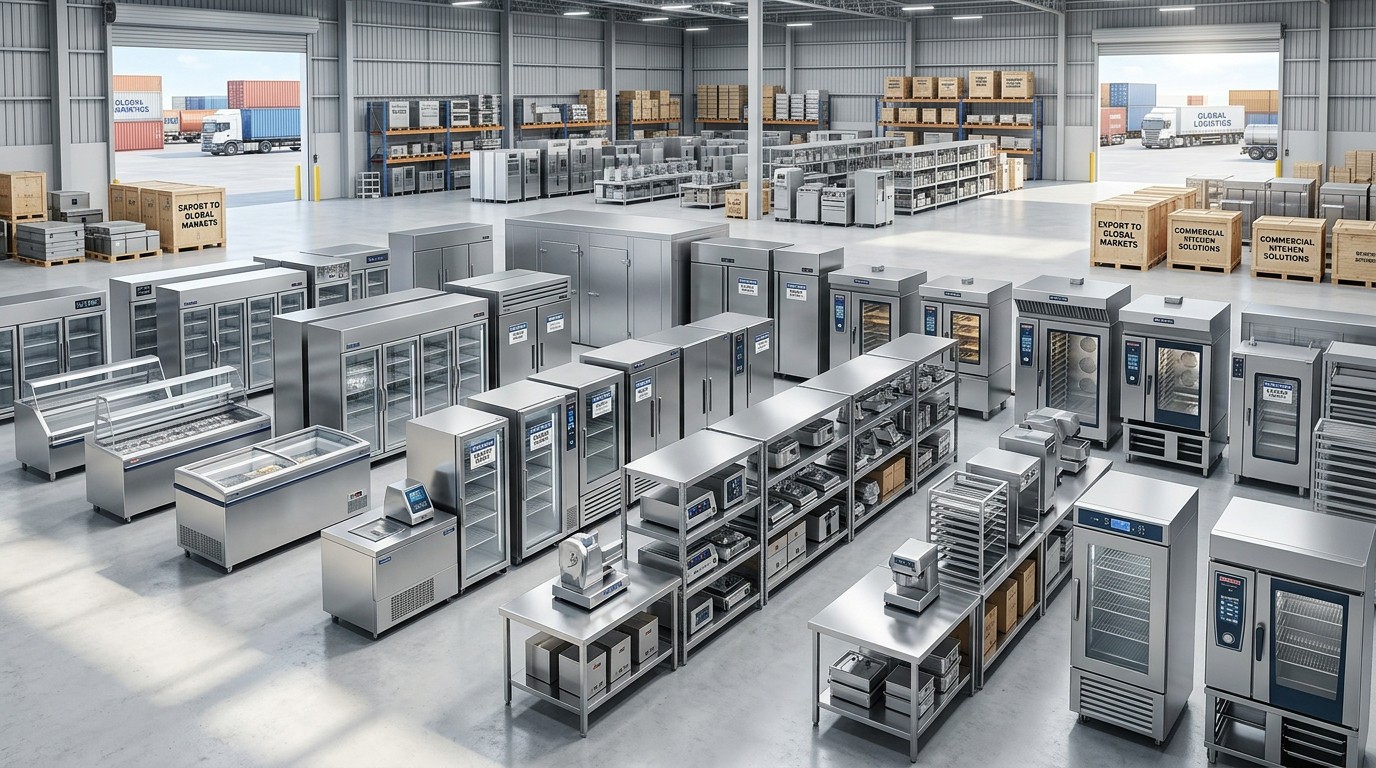
For global sourcing and cross-border purchasing, another critical point is lead time planning. In the kitchen equipment industry, standard delivery windows often range from 2–8 weeks depending on configuration complexity, material availability, and whether the order includes customized stainless steel kitchen equipment or standard catalog units. Procurement teams that wait until the kitchen is already overloaded usually end up choosing from limited stock rather than the best-fit solution.
Five checks before placing an order
- Confirm actual use frequency: daily continuous use, intermittent use, or peak-event use only. This affects durability and capacity priorities.
- Measure route efficiency: count the number of steps between storage, prep, cooking, and dispatch. Even a reduction of 3–5 repeated movements per cycle matters.
- Verify sanitation workflow: identify whether surfaces, shelving, and refrigeration interiors can be cleaned on a daily or weekly schedule without production disruption.
- Review utility compatibility: check electrical load, ventilation, drainage, and heat output before selecting a commercial kitchen oven or refrigeration unit.
- Plan for maintenance access: allow enough clearance and service logic so repairs do not shut down adjacent work zones.
The table below can help procurement teams compare equipment options using operational criteria rather than list price alone. This is especially useful for central kitchens, catering companies, and hotel foodservice teams managing multiple stakeholders.
Using this method, buyers can compare alternatives more objectively. It also helps internal communication. Operators care about ease of use, procurement cares about specification clarity, and decision-makers care about total operational value. A structured evaluation table gives all three groups a shared language for approving the right catering kitchen equipment.
What technical and compliance details should not be overlooked?
As kitchens become more automated and internationally sourced, technical fit and compliance review become more important. Even for general industry applications, foodservice buyers should verify food-contact suitability, temperature performance claims, cleanability, and electrical compatibility. If equipment is sourced across regions, standards may differ, so documentation review should happen before shipment, not after arrival.
For a Commercial Refrigerator, buyers should review usable internal organization, temperature control range appropriate to the stored product category, and how often the door will be opened in real operations. For a commercial kitchen oven, key points include chamber use pattern, heat recovery expectations, cleaning routine, and whether ventilation and power conditions are already available on site. For stainless steel kitchen equipment and shelving, load planning and sanitation access are just as important as appearance.
In many facilities, the most valuable technical question is not “What is the top specification?” but “Will this specification remain practical after 6 months of daily use?” Equipment that performs well in a showroom can become inefficient if cleaning takes too long, shelf spacing does not match containers, or spare parts support is unclear. This is especially relevant in high-frequency foodservice settings where downtime of even 1–2 service periods can disrupt customer commitments.
Common compliance and review checkpoints may include material suitability for food environments, electrical safety conformity, installation conditions, and sanitation process compatibility. Specific certification needs vary by market, so buyers should align them with destination requirements rather than assume one document covers every region. This careful approach is increasingly necessary as kitchen equipment trade expands across China, Germany, Italy, Japan, and other manufacturing and export hubs.
- Ask for technical drawings or dimensional confirmation before finalizing space-sensitive installations.
- Confirm whether cleaning procedures require daily, weekly, or monthly shutdown time for each equipment type.
- Check service-part access and replacement cycle expectations for components exposed to heat, moisture, or repeated loading.
- For exports or multi-site deployment, verify packaging, documentation, and destination-specific compliance requirements early.
FAQ: common questions from researchers, operators, and buyers
How do I know whether to upgrade shelving or refrigeration first?
Start with the area causing the most frequent daily disruption. If staff lose time locating stock, overloading shelves, or rotating inventory, upgrade the kitchen shelving system first. If product quality risk is tied to temperature fluctuation, repeated door opening, or poor chilled zoning, prioritize the Commercial Refrigerator setup. In practice, reviewing 2–3 weeks of operating patterns is often enough to identify which issue appears more often and costs more.
Is stainless steel kitchen equipment always the best choice for commercial use?
For many commercial food environments, stainless steel kitchen equipment remains a preferred option because it supports hygiene, durability, and routine cleaning. However, “best” depends on the application. Buyers should consider contact with moisture, chemical cleaning routines, load demand, and the type of food handling involved. The real decision is not just material type, but whether the design supports sanitation, operator movement, and long-term maintenance.
What is a reasonable implementation timeline for a staged kitchen upgrade?
A staged upgrade can often be organized within 3 phases over 2–8 weeks, depending on equipment availability and site readiness. Storage and worktable changes may move faster, while refrigeration and oven upgrades usually require more installation planning. If the project includes layout changes, utility checks, and staff training, building in extra time is sensible. A rushed installation can create more disruption than the original bottleneck.
What are the most common procurement mistakes in catering kitchen equipment?
The most common mistakes are buying by headline capacity, ignoring operator workflow, overlooking cleaning access, and delaying specification review until after pricing discussions. Another common issue is treating all growth as permanent growth. If demand is seasonal or event-driven, modular planning may be better than fully replacing the entire line. The strongest purchasing decisions combine process review, equipment fit, and realistic expansion timing.
Why choose us when planning catering kitchen equipment upgrades?
A useful supplier should do more than send a catalog. In kitchen equipment projects, value comes from helping buyers define the right configuration, not pushing unnecessary volume. That means discussing workflow, storage logic, cleaning requirements, installation limits, and future expansion before final quotation. For operators and procurement teams, this shortens decision time and reduces the risk of buying equipment that looks suitable but performs poorly in real service conditions.
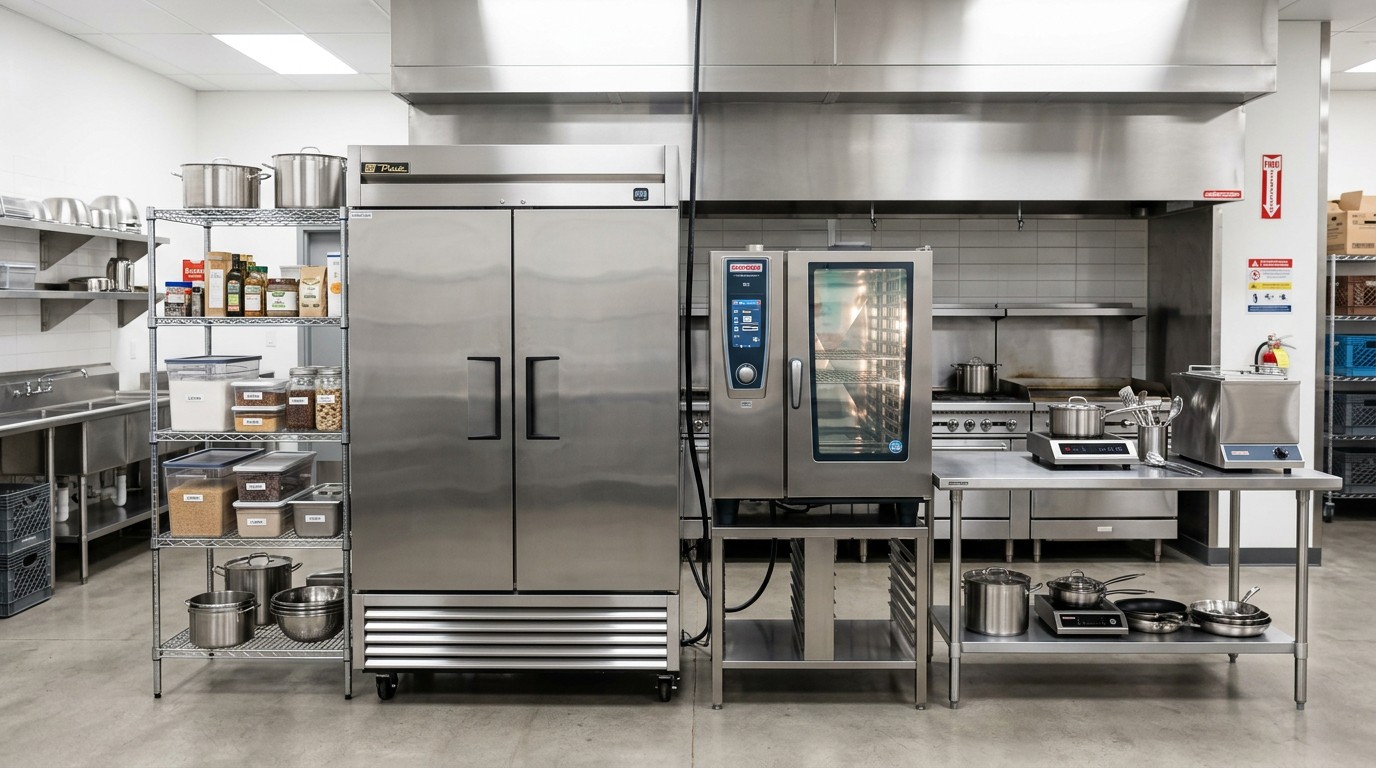
We support practical discussions around stainless steel kitchen equipment, kitchen shelving system planning, Commercial Refrigerator configuration, and commercial kitchen oven selection based on actual use scenarios. Whether you are scaling a restaurant group, a hotel kitchen, a catering business, or a central kitchen, the conversation can be structured around capacity fit, layout improvement, lead time, and compliance considerations relevant to your market.
You can contact us for parameter confirmation, product selection support, delivery schedule review, customized solution discussion, certification requirement checks, sample or material details, and quotation communication. If your project is still in the research stage, we can also help compare phased upgrade paths so you can decide what to change now, what to keep, and what to plan for the next 12–24 months.
If your goal is to scale without waste, the first step is not buying more equipment. It is clarifying which equipment will remove the biggest operational constraint. Once that is clear, purchasing becomes easier, implementation becomes safer, and growth becomes more controllable.
Popular Tags
Kitchen Industry Research Team
Dedicated to analyzing emerging trends and technological shifts in the global hospitality and foodservice infrastructure sector.
Industry Insights
Join 15,000+ industry professionals. Get the latest market trends and tech news delivered weekly.
No spam. Unsubscribe anytime.
Contact With us
Contact:
Anne Yin (Ceramics Dinnerware/Glassware)
Lucky Zhai(Flatware)