
Commercial Kitchen Design for Workflow: What Actually Improves Speed
In commercial kitchen design, speed is not just about working harder—it comes from smarter workflow. From restaurant kitchen planning to the placement of commercial refrigeration equipment, commercial deep fryer, commercial griddle, and commercial kitchen hood systems, every detail affects output, safety, and labor efficiency. This article explores what actually improves movement, coordination, and service pace in professional kitchen equipment layouts.
For operators, the issue is simple: too many steps, too much crossing, and too much waiting slow service down. For technical evaluators and decision-makers, the bigger concern is whether a kitchen layout can support peak-hour output, food safety, energy use, and future menu changes without frequent retrofits.
A faster kitchen is rarely the result of one premium appliance. It usually comes from how zones connect, how equipment capacity matches ticket volume, and how tasks move from receiving to storage, prep, cooking, plating, and cleaning. In B2B purchasing, this means design decisions should be based on workflow data, not only equipment lists.
Start with Workflow Mapping, Not Equipment Placement
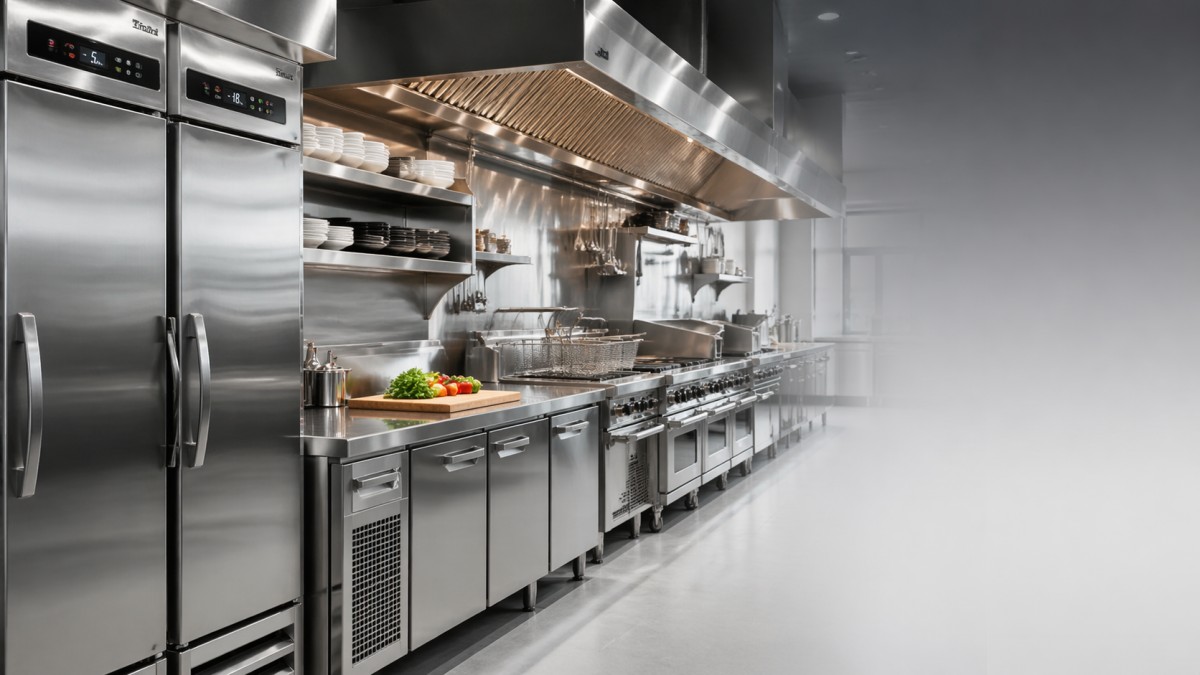
Many commercial kitchens are designed backward: equipment is selected first, then staff are forced to work around it. In practice, the faster approach is to map product flow and labor flow before fixing any line. A typical restaurant kitchen has 5 core stages: receiving, cold storage, prep, cook line, and pass or dispatch. If any stage creates backtracking, speed drops immediately.
A useful planning rule is to reduce unnecessary operator travel to under 8–12 meters per repetitive task cycle where possible. In high-volume service, saving even 3–5 seconds per plate across 150 orders per hour becomes operationally meaningful. That is why workflow design has direct impact on labor efficiency and not just convenience.
For technical assessment, teams should measure three things early: expected meal periods, menu complexity, and station interaction. A kitchen serving 80 covers in 90 minutes needs a very different line than a central kitchen processing 600 meal portions in batches. The same square footage can perform very differently depending on movement logic.
What to Map Before Finalizing a Layout
Before specifying commercial refrigeration equipment, cooking appliances, or ventilation, define the real operational sequence. This helps avoid overbuying in one area while creating bottlenecks in another.
- Average and peak order volume by 15-minute interval
- Number of menu items sharing the same prep and cooking stations
- Cold, hot, and neutral holding time requirements
- Staff count per shift, usually 3–12 in small to mid-size kitchens
- Cleaning routes, waste removal, and dish return paths
The table below shows how workflow-led planning differs from equipment-led planning in practical commercial kitchen design.
The key takeaway is clear: speed improves when the kitchen is designed around product movement and decision points. Equipment should support the route, not define it. This principle matters equally in restaurants, hotels, food processing support kitchens, and centralized production environments.
Build Stations That Reduce Crossing and Waiting
The biggest hidden delay in restaurant kitchen planning is not always cooking time. It is often crossing between stations, waiting for access to shared surfaces, or reaching around poorly placed refrigeration and holding units. A line can have enough capacity on paper yet still move slowly because two or three operators are competing for the same 1.2–1.8 meter work zone.
A productive station should support one task family with minimal interruption. For example, a grill station works faster when undercounter refrigeration, seasoning, landing space, and plating access sit within one pivot range. The same concept applies to fry, sauté, assembly, bakery, and prep stations. When staff must turn, walk, and queue repeatedly, ticket time expands.
In many projects, the best gains come from adjacency rather than new machinery. Placing ingredient refrigeration within 1 step of the cooking appliance, keeping clean utensil storage within arm’s reach, and separating dirty return paths from service output can improve consistency during the busiest 60–120 minutes of the day.
Station Design Priorities
The following priorities are useful for commercial kitchen equipment planning where throughput, safety, and labor optimization all matter.
- Keep high-frequency tools within a 60–90 cm reach zone.
- Reserve at least one landing surface near each primary heat source.
- Separate raw and ready-to-serve paths to reduce contamination risk.
- Match staff count to station width and access points during peak shifts.
- Avoid shared refrigeration for stations with different service rhythms.
Common Bottlenecks to Remove
Some design mistakes appear minor during installation but create daily delays: one sink serving two prep zones, a pass located behind the fry station, or dry storage that forces staff through the dish area. These issues usually cost more in labor time over 12 months than the initial savings from a simplified layout.
The most efficient kitchens usually divide movement into clear forward flows. Products move from intake to storage to prep to production to service. Waste and dirty ware move in a separate direction. Once those routes are protected, operators can sustain faster service with lower collision risk and less fatigue.
Choose Equipment Capacity by Throughput, Not by Catalog Appeal
Commercial deep fryer, commercial griddle, combi equipment, holding cabinets, and refrigeration units should be selected according to batch size, recovery time, and menu overlap. A common procurement mistake is buying larger equipment than needed in one category while under-sizing support equipment such as cold storage, prep tables, or ventilation capture.
For example, a fryer with strong hourly capacity can still slow service if the breading station is too small, the dump area is poorly placed, or frozen storage is 6 meters away. Similarly, a commercial griddle may have enough cooking surface, but if two menu categories require different temperature windows and one operator manages both, output stalls. Speed depends on the entire chain.
Decision-makers should compare expected order volume with equipment cycle time. If a station needs to produce 120 portions in 1 hour, planners should calculate the number of cycles, reload time, recovery time, and holding tolerance. This is more useful than choosing solely by nominal power rating or appliance footprint.
Typical Capacity Matching Considerations
The table below summarizes practical considerations when sizing key commercial kitchen equipment for workflow efficiency.
The most effective procurement teams evaluate equipment as part of a station system. That includes utility access, maintenance space, safe clearance, and daily cleaning time. In many kitchens, reducing one extra movement per order can be more valuable than increasing appliance size by 20%.
A Practical Sizing Rule
When demand is volatile, build for typical peak demand plus a controlled buffer rather than for the absolute highest theoretical surge. For many foodservice operations, a 10%–20% capacity buffer is more economical than buying oversized equipment that increases energy draw, ventilation load, and unused floor occupation.
Ventilation, Refrigeration, and Utilities Directly Affect Speed
Workflow is not only about table positions and cook lines. Commercial kitchen hood design, make-up air balance, drainage, gas or electric supply points, and refrigeration heat rejection all influence real working speed. If the environment becomes too hot, crowded, or noisy, operators slow down, errors increase, and maintenance interruptions become more frequent.
A poorly matched commercial kitchen hood system can create heat build-up near griddles and fryers, affecting staff endurance during 2–3 hour service peaks. At the same time, refrigeration units placed too close to major heat sources work harder, cycle more often, and may suffer from unstable internal temperatures. That does not just affect energy use; it affects product readiness and replenishment speed.
Technical evaluators should review utility planning as part of the workflow discussion. Good layouts keep service access clear for maintenance and preserve safe operating clearances. If a technician needs to dismantle adjacent workstations just to service one refrigeration compressor or hood component, downtime costs rise over the equipment life cycle.
Utility and Environmental Checks
Before final approval, review these checks with kitchen designers, installers, and operations teams.
- Confirm that high-heat appliances are grouped logically under the hood and not scattered across separate lines.
- Keep refrigeration away from major radiant heat where possible, especially near fryers and open griddles.
- Allow enough service clearance so routine maintenance can be completed within normal access windows.
- Verify drainage, floor slope, and wash-down conditions in wet processing areas.
- Check whether future expansion of 1–2 stations is possible without full ducting replacement.
Why This Matters Financially
An efficient kitchen is not only faster at lunch and dinner. It is easier to maintain over 3–7 years. Better ventilation and utility planning can reduce reactive service calls, protect appliance life, and lower unnecessary energy waste. For enterprise buyers, these factors influence total cost of ownership as much as initial equipment price.
In practice, speed improves when environmental conditions support consistent work pace. Comfortable temperatures, logical hood coverage, and reliable refrigeration access reduce pauses, rework, and emergency task switching. Those are measurable workflow gains even when they are not immediately visible in a floor plan drawing.
Implementation, Testing, and Common Mistakes Before Go-Live
Even well-designed commercial kitchens can underperform if commissioning is rushed. A realistic implementation process usually includes 4 phases: planning review, installation coordination, live simulation, and post-opening adjustment. Depending on project size, this can take 2–8 weeks after major equipment arrives. Skipping simulation often means discovering workflow failures during live service.
The most useful pre-opening test is a mock production run. Teams should simulate ingredient intake, prep movement, cooking cycles, pass timing, dish return, and cleaning routines. A 60–90 minute live test can reveal bottlenecks that are invisible on CAD drawings, such as door conflicts, poor reach distances, or under-sized landing zones.
Decision-makers should also distinguish between design errors and training errors. If a station remains slow after 3–5 shifts of structured training, the problem is often physical layout, not staff discipline. This distinction matters because layout issues create recurring labor loss and frustration.
Typical Go-Live Review Checklist
A structured review helps teams decide whether the kitchen is truly ready for full service volume.
The final lesson is that speed improvements are usually cumulative. Better station design, better capacity matching, and better utility planning together create stronger service performance than any single equipment upgrade. For buyers and operators, the smartest investment is a kitchen that keeps motion simple, repeatable, and scalable.
FAQ: Practical Questions from Buyers and Operators
How much space should be reserved between stations?
The right spacing depends on staff volume, equipment doors, and whether two operators work back-to-back. In many commercial settings, planning around safe movement lanes and service access is more useful than applying one fixed number. The goal is to prevent collisions while keeping the station compact enough for fast reaching.
Is a larger cook line always faster?
No. Larger lines often increase walking and communication delays. A compact line with strong station logic can outperform a wider line if ingredients, cooking, holding, and plating are properly aligned. Faster service usually comes from reduced motion, not more floor area.
When should a kitchen be redesigned rather than retrained?
If the same delays continue after several shifts of organized training, and staff still face crossing, waiting, or unsafe reach patterns, the layout should be reviewed. Training can improve discipline, but it cannot solve fundamental routing conflicts created by poor kitchen design.
Commercial kitchen design for workflow is ultimately about removing friction from every repeated movement. Kitchens that improve speed are the ones that align product flow, station design, equipment capacity, refrigeration access, and ventilation into one practical operating system. This approach supports restaurants, hotels, central kitchens, and food production environments that need both performance and control.
If you are evaluating a new project or upgrading an existing facility, a workflow-led review can reveal where layout, commercial kitchen equipment selection, and utility planning should change first. Contact us to discuss your kitchen requirements, get a tailored equipment layout proposal, or learn more about efficient commercial kitchen solutions for your operation.
- commercial kitchen equipment
- refrigeration equipment
- central kitchen
- kitchen design
- restaurant kitchen
- kitchen solutions
- Griddle
- Deep Fryer
- kitchen equipment
- professional kitchen equipment
- commercial refrigeration equipment
- commercial deep fryer
- commercial griddle
- commercial kitchen design
- restaurant kitchen planning
- commercial kitchen hood
Popular Tags
Kitchen Industry Research Team
Dedicated to analyzing emerging trends and technological shifts in the global hospitality and foodservice infrastructure sector.
Industry Insights
Join 15,000+ industry professionals. Get the latest market trends and tech news delivered weekly.
No spam. Unsubscribe anytime.
Contact With us
Contact:
Anne Yin (Ceramics Dinnerware/Glassware)
Lucky Zhai(Flatware)