
Commercial Kitchen Hood: What Matters Most in Ventilation Design
In commercial kitchen design, the commercial kitchen hood is more than an exhaust fixture—it is the core of safe, efficient ventilation. From restaurant kitchen planning to selecting professional kitchen equipment such as a commercial deep fryer, commercial griddle, or commercial charbroiler, hood design directly affects air quality, energy use, fire safety, and daily workflow. Understanding what matters most helps operators, engineers, and decision-makers build kitchens that perform better.
For most buyers and planners, the key question is not simply “which hood should we install?” but “how do we design a ventilation system that is safe, compliant, practical, and cost-effective for the way this kitchen actually operates?” That is the real search intent behind this topic. Operators want fewer heat and smoke problems, technical evaluators want reliable performance and code alignment, and business decision-makers want to avoid expensive redesigns, downtime, and energy waste. The most important principle is straightforward: the best commercial kitchen hood design is the one that matches the cooking line, captures contaminants consistently, supports workflow, and controls long-term operating costs.
What matters most in commercial kitchen hood design?
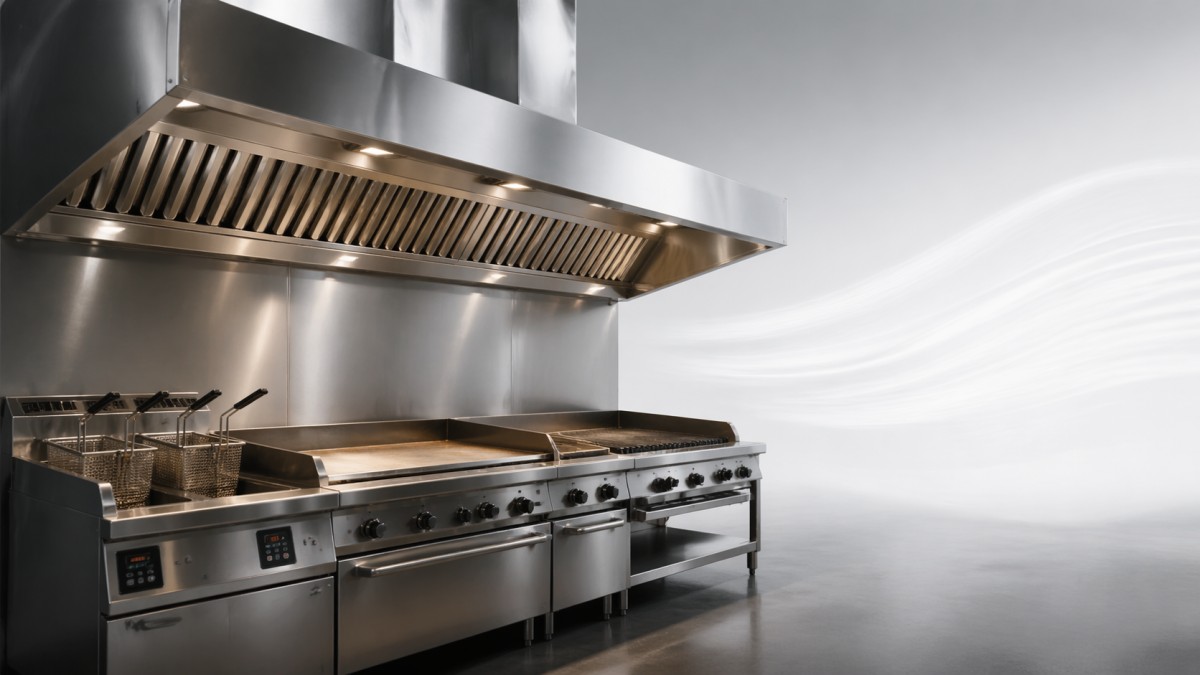
The biggest design priority is capture and containment. A commercial kitchen hood must do more than move air—it must effectively collect grease, smoke, steam, heat, and combustion byproducts at the source before they spread into the kitchen. If this basic function is weak, other design features matter far less.
In practice, several factors determine whether ventilation design works well:
- Cooking equipment type: A line with a commercial charbroiler, wok range, or heavy-duty fryer produces very different effluent than a light-duty oven or warming station.
- Appliance arrangement: Equipment placed too far forward, too close together, or in a poor sequence can reduce hood effectiveness.
- Hood size and overhang: The hood must fully cover the cooking equipment with appropriate overhang to improve capture.
- Exhaust airflow: Air volume must be sufficient for the cooking load, without becoming excessive and wasteful.
- Make-up air strategy: Removing air without replacing it properly creates pressure imbalance, discomfort, and performance issues.
- Duct and discharge design: Even a good hood can underperform if the duct layout adds resistance or creates maintenance problems.
For decision-makers, this means hood selection should never be treated as an isolated equipment purchase. It is a system decision tied to menu, throughput, kitchen layout, staff comfort, energy use, and compliance risk.
Why capture and containment matter more than raw exhaust volume
Many projects make the mistake of focusing only on airflow rate. Higher exhaust volume does not automatically mean better ventilation. If the hood style, mounting height, appliance placement, and air balance are wrong, the kitchen may still experience smoke spill, grease escape, and hot working conditions.
Capture and containment are more valuable because they reflect real operating performance. A well-designed system controls the thermal plume rising from cooking equipment and keeps contaminants inside the hood envelope. This is especially important in kitchens using high-heat appliances such as:
- Commercial deep fryers
- Commercial griddles
- Commercial charbroilers
- Open-burner ranges
- Wok stations
These appliances generate grease-laden vapor, intense heat, or smoke that can easily escape if the hood is undersized or mismatched. In contrast, oversizing airflow without system balance can increase utility costs, create drafts, and even interfere with appliance performance.
A better evaluation method is to ask:
- Can the hood contain smoke and heat during peak production?
- Does it perform under real menu conditions, not just on paper?
- Does the air pattern support staff comfort and stable kitchen pressure?
- Will grease accumulation and maintenance remain manageable over time?
How equipment type changes the hood you need
Not all commercial kitchen equipment creates the same ventilation demand. This is one of the most important points for buyers who are comparing systems or planning a new kitchen.
Light-duty cooking equipment such as ovens, steamers, or kettles may require a different hood approach than medium- or heavy-duty equipment that produces grease and smoke. For example:
- Commercial fryers release heat, grease vapor, and combustion products.
- Commercial griddles create grease-laden effluent and rising heat.
- Commercial charbroilers often require more demanding ventilation due to smoke and flare-related output.
If a kitchen includes mixed-duty equipment under one hood, the design has to account for the most demanding load, while still preserving operational efficiency. This is why a standard hood recommendation without reviewing the actual cooking line is often unreliable.
Technical evaluators should also consider future changes. If the menu may expand into higher-heat cooking later, the ventilation design should allow for growth. Otherwise, the business may face expensive retrofits after opening.
What business decision-makers should evaluate before approving a system
For owners, project managers, and procurement teams, the right question is not just initial price. The smarter question is total operating impact. A cheaper hood system can become more expensive if it causes compliance issues, staff discomfort, cleaning burden, or energy inefficiency.
Before approving a commercial kitchen hood design, evaluate these points:
- Compliance risk: Will the system meet local fire, mechanical, and health requirements?
- Kitchen productivity: Will excess heat or smoke reduce employee comfort and slow service?
- Maintenance load: Are filters, ducts, and access points designed for practical cleaning?
- Energy performance: How much conditioned air is being exhausted, and how is make-up air handled?
- Layout efficiency: Does the hood support the intended workflow and equipment spacing?
- Scalability: Can the design support changes in menu or production volume?
A useful investment mindset is to compare ventilation cost against the cost of problems it prevents. Poor ventilation can lead to rework, inspection delays, employee complaints, customer discomfort, grease accumulation, and fire exposure. In high-output kitchens, these risks quickly outweigh modest savings made at the buying stage.
How make-up air affects comfort, performance, and energy use
One of the most overlooked parts of ventilation design is make-up air. Every cubic foot of air exhausted from the kitchen must be replaced. If replacement air is poorly planned, the kitchen can become negatively pressurized, making doors hard to open, pulling in unconditioned air, and reducing hood performance.
This directly affects several operational outcomes:
- Employee comfort: Poor make-up air can create drafts, hot spots, or unstable temperatures.
- Hood effectiveness: Unbalanced air movement can push smoke outside the capture zone.
- Energy efficiency: Conditioning replacement air increases HVAC load if not designed properly.
- Building balance: Pressure issues can affect adjacent dining or prep areas.
In a restaurant kitchen planning project, make-up air should be coordinated from the start, not treated as an afterthought. This is especially important in facilities with long operating hours or high-output cooking lines, where ventilation costs influence long-term profitability.
Common mistakes that lead to poor kitchen ventilation
Many ventilation failures come from design assumptions made too early. The most common mistakes include:
- Choosing a hood before confirming the full cooking equipment list
- Ignoring the actual menu and peak production pattern
- Placing appliances outside the effective capture area
- Undervaluing make-up air design
- Designing for minimum first cost rather than operating performance
- Failing to plan access for filter and duct cleaning
- Not accounting for future expansion or equipment upgrades
Another frequent issue is treating all suppliers as equal. In reality, the best results come from manufacturers and project partners who understand integrated kitchen systems, not just individual products. A hood must work with the cooking suite, airflow design, fire protection measures, and site constraints.
How to make a better commercial kitchen hood decision
If you are selecting a system for a new project or renovation, use a practical decision framework:
- Define the cooking line clearly. List every appliance, including fryer, griddle, broiler, range, oven, and any future additions.
- Classify the cooking duty. Identify which appliances generate grease, smoke, or high heat.
- Review kitchen layout and workflow. Confirm how hood location affects staff movement, prep zones, and service speed.
- Evaluate real ventilation performance. Ask how the system handles capture, containment, and pressure balance.
- Check maintenance practicality. Ensure filters and duct paths are accessible for cleaning.
- Compare lifecycle cost, not just purchase price. Include energy, cleaning, downtime risk, and retrofit exposure.
- Confirm compliance path. Align with local code requirements early in the project.
This approach helps all stakeholder groups. Information researchers gain clarity, operators get a more workable kitchen, technical teams reduce performance risk, and business leaders make a more defensible investment decision.
Conclusion: the best hood design supports safety, workflow, and long-term value
A commercial kitchen hood is one of the most important performance systems in any professional kitchen. What matters most is not a single specification, but how well the ventilation design matches the real cooking load, layout, and business goals. Strong capture and containment, proper make-up air, equipment-specific planning, and maintainable system design are the factors that make the difference.
For restaurants, hotels, food processing operations, and central kitchens, a well-designed hood system improves air quality, supports fire safety, protects staff comfort, and reduces avoidable operating costs. The most effective decision is to treat the commercial kitchen hood as part of an integrated kitchen strategy—one that connects professional kitchen equipment, compliance, efficiency, and daily usability into a system that truly works.
- commercial kitchen equipment
- cooking equipment
- central kitchen
- kitchen design
- restaurant kitchen
- Griddle
- Deep Fryer
- Wok Range
- Charbroiler
- kitchen equipment
- professional kitchen equipment
- commercial deep fryer
- commercial griddle
- commercial charbroiler
- commercial kitchen design
- restaurant kitchen planning
- commercial kitchen hood
Popular Tags
Kitchen Industry Research Team
Dedicated to analyzing emerging trends and technological shifts in the global hospitality and foodservice infrastructure sector.
Industry Insights
Join 15,000+ industry professionals. Get the latest market trends and tech news delivered weekly.
No spam. Unsubscribe anytime.
Contact With us
Contact:
Anne Yin (Ceramics Dinnerware/Glassware)
Lucky Zhai(Flatware)