
Vegetable Washer: Does It Really Improve Prep Efficiency
In busy foodservice environments, every minute matters, and a Vegetable Washer can play a bigger role than many operators expect. From improving prep speed to supporting hygiene standards, it fits naturally into today’s professional kitchen equipment strategy alongside tools like a commercial food processor and Glass Washer. But does it truly deliver better efficiency, lower labor pressure, and more consistent results for modern kitchens?
For restaurant operators, central kitchens, hotel chefs, food processing managers, and procurement teams, the answer depends on workflow design, product mix, and equipment sizing. A Vegetable Washer is not just a cleaning machine. In many cases, it becomes a control point for hygiene, labor planning, and prep-line consistency, especially when handling 30 kg to 500 kg of produce per hour.
This article looks at where a Vegetable Washer creates measurable value, where expectations should stay realistic, and how decision-makers can compare configurations. The goal is practical: help users determine whether the equipment improves prep efficiency in a real kitchen or food processing operation, not only on paper.
What a Vegetable Washer Actually Changes in the Prep Line
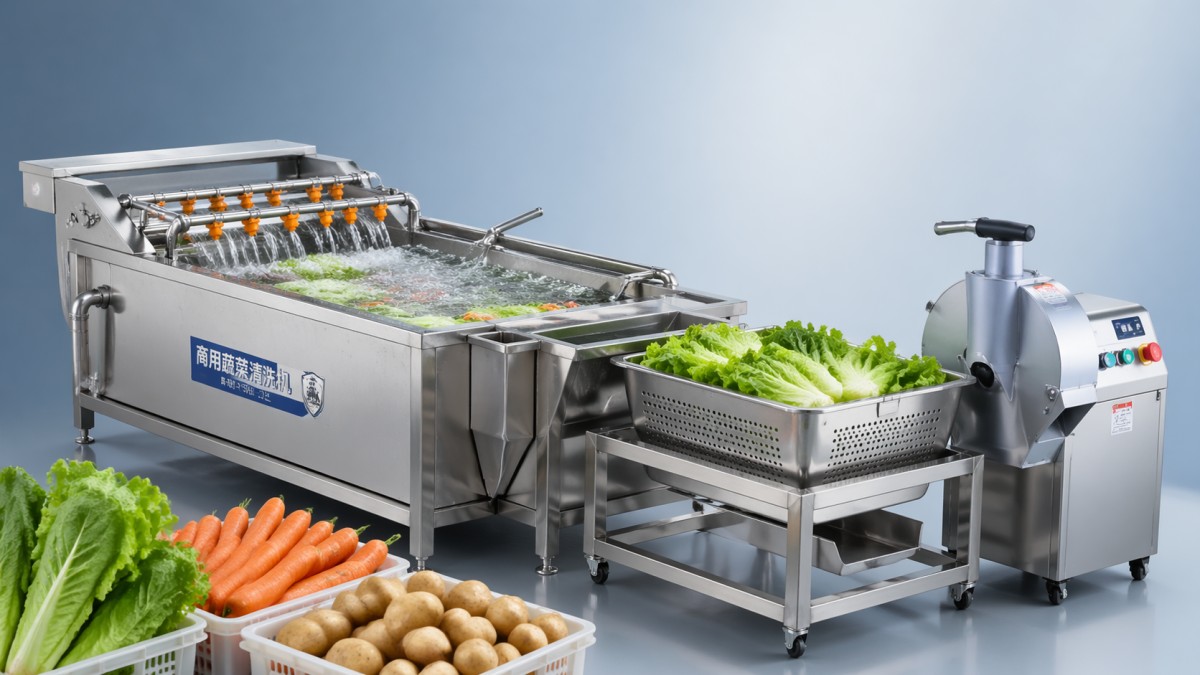
A Vegetable Washer changes prep efficiency by reducing manual washing steps, stabilizing throughput, and lowering the variability that comes from sink-based cleaning. In a small kitchen, hand washing may still work for 10 kg to 20 kg batches. In a busier operation, however, repeated rinsing, soaking, draining, and re-washing can consume 1 to 3 labor hours per shift.
The biggest gain often comes from flow control rather than pure washing speed. When vegetables move through a dedicated washer before cutting, spinning, or packaging, the prep team can separate tasks into defined stations. That improves coordination between the washing area, the commercial food processor, and downstream cold storage or cooking stations.
For technical evaluators, the key point is that efficiency should be measured across the whole process. If one operator can load, monitor, and unload while another handles trimming and cutting, the kitchen can reduce idle time. In many mid-volume sites, that means turning 4 fragmented prep steps into 2 organized stages.
The equipment can also support more consistent hygiene routines. Manual washing quality often depends on staff habits, water changes, and time pressure during peak periods. A vegetable washing machine with controlled agitation, timed cycles, and rinse stages can make sanitation routines easier to standardize over 6 to 12 operating hours.
Typical efficiency improvements by operation type
Not every kitchen sees the same return. A café washing herbs and salad greens in small batches may gain mostly in hygiene consistency. A central kitchen preparing 150 to 400 meals per service period may gain in labor savings and more predictable production timing. A food processing site may prioritize contamination control and throughput stability.
The table below shows how a Vegetable Washer typically affects prep work in different settings. These ranges are operational references rather than universal guarantees, because produce type, staff training, and water quality all affect performance.
The main takeaway is clear: the larger and more repetitive the prep volume, the more visible the benefit. In low-volume kitchens, the value may be operational cleanliness and time consistency. In medium to high-volume environments, the value more often appears in labor allocation, process stability, and reduced bottlenecks.
Where expectations should stay realistic
- It does not eliminate trimming, sorting, or quality inspection. Damaged leaves and root debris still need manual review.
- It does not replace sanitation procedures. Water management, cleaning schedules, and equipment hygiene still require daily control.
- It does not solve an unbalanced prep line. If cutting or drying capacity is too small, washing speed alone will not improve total output.
When a Vegetable Washer Delivers the Strongest ROI
Return on investment is strongest when vegetable prep is repetitive, labor-intensive, and linked to service deadlines. In commercial kitchens, labor cost is not the only factor. Delays in washing affect slicing, cooking, plating, and even cold-room scheduling. A 15-minute delay in prep can create a chain reaction across a 3-hour production window.
A Vegetable Washer becomes more attractive when produce includes leafy greens, cut vegetables, root crops, or mixed salad materials handled in frequent batches. If staff are spending significant time at sinks during breakfast, lunch, and dinner prep, the equipment may reduce repetitive labor pressure and improve shift planning.
Decision-makers should also consider hidden costs. Manual washing uses floor space, creates splash zones, increases fatigue, and often leads to inconsistent water replacement. In a kitchen operating 300 days per year, even a modest reduction of 45 to 60 minutes per day can become operationally significant over time.
Another important factor is product consistency. In hotels and chain restaurants, standardized prep quality matters as much as speed. A controlled washing cycle helps reduce the difference between shifts, which supports menu consistency and makes training easier for new operators within 1 to 2 weeks.
Practical indicators that justify investment
Before purchasing, teams should review actual production patterns instead of relying on broad assumptions. The following indicators often signal that a Vegetable Washer can deliver value in a professional kitchen equipment plan.
- Daily vegetable volume regularly exceeds 50 kg, especially across multiple service periods.
- At least 2 operators spend more than 1 hour per shift on washing and rinsing tasks.
- Sink areas become bottlenecks during peak prep periods of 60 to 120 minutes.
- Cross-station coordination with a commercial food processor, dryer, or packaging unit is weak.
- Hygiene audits require more traceable and repeatable washing routines.
The table below helps compare the business case across common operating conditions. It is designed for technical assessment and procurement planning, not for marketing claims.
If most conditions fall into the higher-need column, the machine is usually worth deeper evaluation. If most fall into the lower-need column, a buyer may still benefit from smaller semi-automatic equipment, but should compare that option against optimized manual workflow first.
Common ROI mistakes
One common mistake is sizing equipment only by peak volume without checking average batch size. Another is ignoring drainage, water pressure, and floor layout. A third is assuming the machine alone will cut labor without redesigning task allocation. In practice, the best results come when washing, cutting, and transfer steps are planned together within a 3-step or 4-step prep flow.
How to Choose the Right Vegetable Washer for Commercial Use
Choosing a Vegetable Washer starts with the produce profile. Leafy greens, spinach, lettuce, herbs, carrots, potatoes, and cut vegetables do not behave the same way in water. Some require gentle agitation to avoid bruising, while others can tolerate stronger circulation. Matching the machine to product type is more important than simply choosing the largest output number.
Capacity should be evaluated in two ways: hourly throughput and batch rhythm. A machine rated at 300 kg/hour may still underperform if your kitchen works in 15-minute rush cycles and needs rapid loading and unloading. Procurement teams should map actual demand across breakfast, lunch, banquet prep, or factory shift windows before selecting the specification.
Technical evaluators should also review water use, drain design, contact surfaces, and cleaning access. Stainless steel construction, smooth welds, and removable sections simplify daily sanitation. In foodservice settings, easy cleaning is not a minor feature. A machine that takes 40 minutes to clean may lose the efficiency it created during washing.
For decision-makers, the best choice is rarely based on price alone. It should fit the kitchen’s staffing model, available footprint, and relationship with other equipment such as dryers, conveyors, prep tables, and a Glass Washer in shared wash zones. A strong purchase decision balances performance, maintainability, and workflow compatibility.
Key selection criteria
- Throughput range: common commercial options start around 50–100 kg/hour and move upward to 300 kg/hour or more.
- Produce compatibility: confirm whether the machine is designed for leafy vegetables, root vegetables, or mixed-use processing.
- Cycle control: adjustable wash times such as 2–5 minutes or 5–10 minutes improve flexibility.
- Cleaning access: inspect removable screens, drain points, and openable covers for daily maintenance.
- Utility requirements: verify power supply, water inlet pressure, drainage slope, and wastewater handling.
- Footprint and operator access: ensure enough working clearance for loading bins and unloading washed produce.
Sample comparison for buyers
The following comparison framework is useful when screening suppliers or equipment options during early procurement discussions.
This comparison highlights a critical point: the best Vegetable Washer is the one that preserves produce quality while fitting the site’s production rhythm. Overbuying creates wasted space and higher utility costs. Underbuying forces staff back to manual washing during peak periods, which weakens the original business case.
Questions to ask suppliers
- What is the rated throughput for leafy greens versus denser root vegetables?
- How long does full daily cleaning typically take under normal use?
- Which components require routine replacement after 6 months or 12 months?
- Can the unit integrate with a commercial food processor or downstream drying table?
Implementation, Maintenance, and Workflow Risks
A Vegetable Washer improves prep efficiency only when installation and daily use are handled correctly. Poor placement can add unnecessary transport steps. Insufficient drainage can create floor hazards. Weak staff training can lead to underloading, overloading, or improper cycle choice. These problems do not mean the equipment fails; they mean the process around it needs adjustment.
Implementation should begin with a simple layout review. Measure incoming produce flow, waste disposal points, clean container storage, and the distance to cutting or packing stations. In many kitchens, moving the washer just 2 to 3 meters closer to the next station can save repeated handling throughout the day. Small layout choices create compound gains over hundreds of batches.
Training is equally important. Operators should know batch limits, cycle settings, water replacement frequency, and end-of-shift sanitation procedures. A short 3-step instruction card near the machine often improves consistency more than a long manual stored elsewhere. For multi-shift operations, retraining every 3 to 6 months helps maintain standards.
Maintenance should be planned as preventive work, not emergency repair. Daily checks, weekly cleaning of critical components, and periodic inspection of seals, spray points, or motors can reduce downtime. For commercial buyers, service support and spare parts lead time should be reviewed before purchase, especially if the kitchen runs 6 or 7 days per week.
Recommended implementation steps
- Review daily produce volume and identify the top 3 product categories by washing time.
- Confirm utility readiness, including power, drainage, and water supply stability.
- Test loading and unloading flow with real bins, baskets, or prep containers.
- Set cleaning schedules for each shift, each day, and each week.
- Define acceptance checks for wash quality, operating noise, and cycle repeatability.
Common risks and control measures
The table below outlines practical risks that buyers and operators should address early. These issues are common across commercial kitchen equipment projects and become especially relevant when automation is introduced into previously manual prep workflows.
The practical conclusion is that implementation quality directly affects prep efficiency. Buyers evaluating a Vegetable Washer should therefore compare not only machine features, but also supplier guidance on layout, training, and post-installation support. These elements often determine whether the equipment becomes a real productivity tool or just another isolated machine.
FAQ for buyers and operators
How do I know if manual washing is still enough?
If daily volume stays below roughly 20 kg to 30 kg, labor is stable, and sink congestion is not affecting downstream prep, manual washing may remain practical. Once washing tasks regularly consume more than 1 hour per shift or delay cutting and cooking, equipment evaluation becomes more justified.
Is a Vegetable Washer only for large food factories?
No. Many restaurant groups, hotels, school kitchens, and central kitchens benefit from compact or mid-capacity systems. The right threshold is not factory size alone, but batch repetition, service pressure, and the need for cleaner workflow organization.
What should be checked during acceptance?
At minimum, confirm 4 points: stable operation under load, clear drainage, acceptable wash results on actual produce, and manageable cleaning time after use. If possible, run at least 2 to 3 real test batches before final acceptance.
A Vegetable Washer can absolutely improve prep efficiency, but the real benefit comes from how well it matches volume, product type, labor structure, and kitchen layout. For many commercial kitchens and food processing operations, it reduces repetitive manual work, supports more consistent hygiene, and creates a smoother link between washing, cutting, and cooking stages.
The most successful buyers evaluate the machine as part of a broader kitchen equipment strategy rather than as a standalone purchase. If you are comparing solutions for restaurants, hotels, central kitchens, or processing facilities, now is the right time to review your prep workflow, define realistic capacity needs, and identify the configuration that fits your operation.
Contact us today to discuss your production scenario, request a tailored equipment recommendation, or learn more about integrated kitchen solutions that combine washing, cutting, and cleaning efficiency in one practical workflow.
Popular Tags
Kitchen Industry Research Team
Dedicated to analyzing emerging trends and technological shifts in the global hospitality and foodservice infrastructure sector.
Industry Insights
Join 15,000+ industry professionals. Get the latest market trends and tech news delivered weekly.
No spam. Unsubscribe anytime.
Contact With us
Contact:
Anne Yin (Ceramics Dinnerware/Glassware)
Lucky Zhai(Flatware)