
How Global Sourcing Is Changing Commercial Kitchen Equipment in 2026
In 2026, global sourcing is no longer just a purchasing tactic for commercial kitchens. It has become a strategic decision that affects cost, equipment quality, lead times, compliance, service support, and long-term operational efficiency. For buyers comparing commercial food processor systems, commercial deep fryer models, commercial refrigeration equipment, and other professional kitchen equipment, the key question is not whether to source globally, but how to do it without increasing risk.
For restaurants, hotel groups, central kitchens, food processors, and project teams involved in restaurant kitchen planning or commercial kitchen design, global sourcing now offers wider product choice, faster access to innovation, and better price-performance. At the same time, it raises new concerns around certification, spare parts, supplier reliability, logistics volatility, and after-sales support. The companies that benefit most in 2026 are those that evaluate sourcing by total value, not unit price alone.
What Is Actually Changing in Commercial Kitchen Equipment Sourcing in 2026?
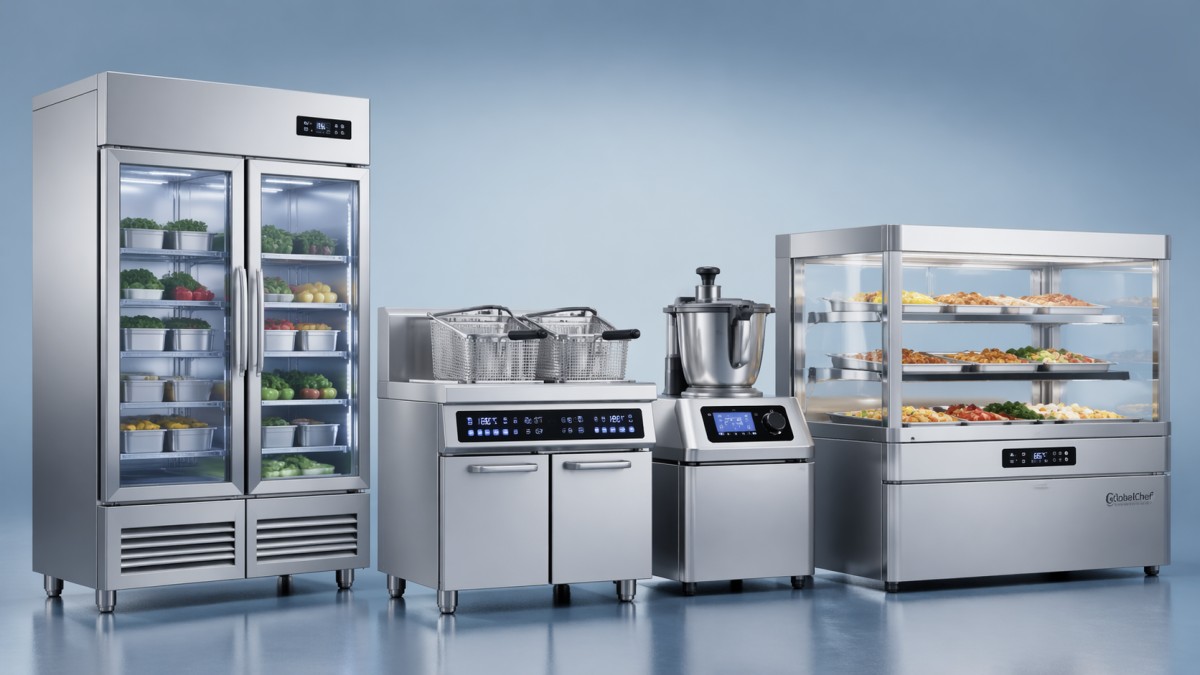
The biggest change is that global sourcing has shifted from simple low-cost procurement to multi-factor sourcing optimization. Buyers are now selecting suppliers based on a combination of manufacturing capability, compliance standards, energy performance, smart features, customization options, shipping resilience, and technical support.
Several forces are driving this change:
- Supply chains are becoming more diversified. Buyers no longer rely on a single country or one supplier for key kitchen categories.
- Energy efficiency matters more. Operators want equipment that reduces utility costs and supports sustainability goals.
- Smart functionality is spreading. More equipment includes digital controls, monitoring, and automation features.
- Project timelines are tighter. Faster sourcing, modular production, and better logistics coordination are now important decision factors.
- Compliance expectations are rising. Importers and end users need confidence in food safety, electrical safety, refrigeration standards, and local certifications.
In practice, this means buyers are comparing not only equipment features, but also supplier maturity. A commercial refrigeration equipment supplier with better documentation, stable lead times, and stronger service support may create more value than a cheaper supplier with uncertain reliability.
Why Are Buyers Turning to Global Sourcing Instead of Local-Only Purchasing?
The answer is simple: access to better options. In 2026, local-only procurement often limits buyers in price range, technology choices, and available specifications. Global sourcing opens access to broader manufacturing ecosystems, especially in major production hubs such as China, Germany, Italy, and Japan.
For business decision-makers, the value usually comes from five areas:
- Cost control: Better factory pricing and more competition between suppliers
- Product variety: More choices across sizes, capacities, and technical configurations
- Innovation access: Earlier access to smart kitchen systems, automated functions, and energy-saving designs
- Customization: More flexibility in branding, dimensions, materials, or workflow-specific adaptations
- Scalability: Easier sourcing for multi-site restaurant groups, hotels, distributors, and food processing operations
For example, a buyer planning a new restaurant kitchen design may need a coordinated mix of commercial deep fryer units, refrigeration lines, preparation systems, stainless workstations, Glass Washer systems, and Heated Display Cabinet units. Global sourcing makes it easier to compare integrated solutions instead of buying each category from unrelated local vendors.
Which Equipment Categories Are Most Affected by Global Sourcing?
Not every category changes in the same way. Some products benefit more from global sourcing because they are highly standardized, rapidly evolving, or cost-sensitive.
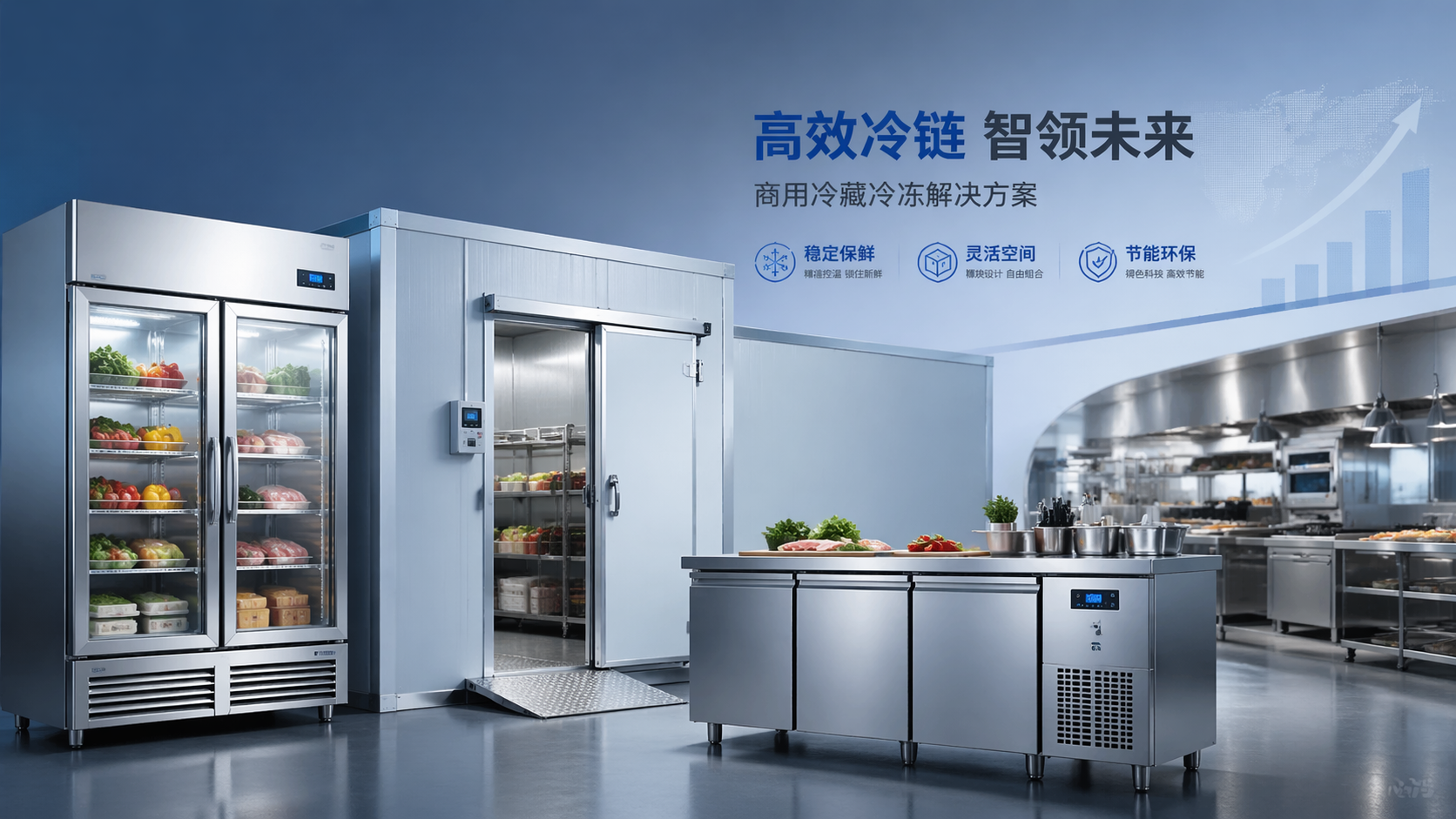
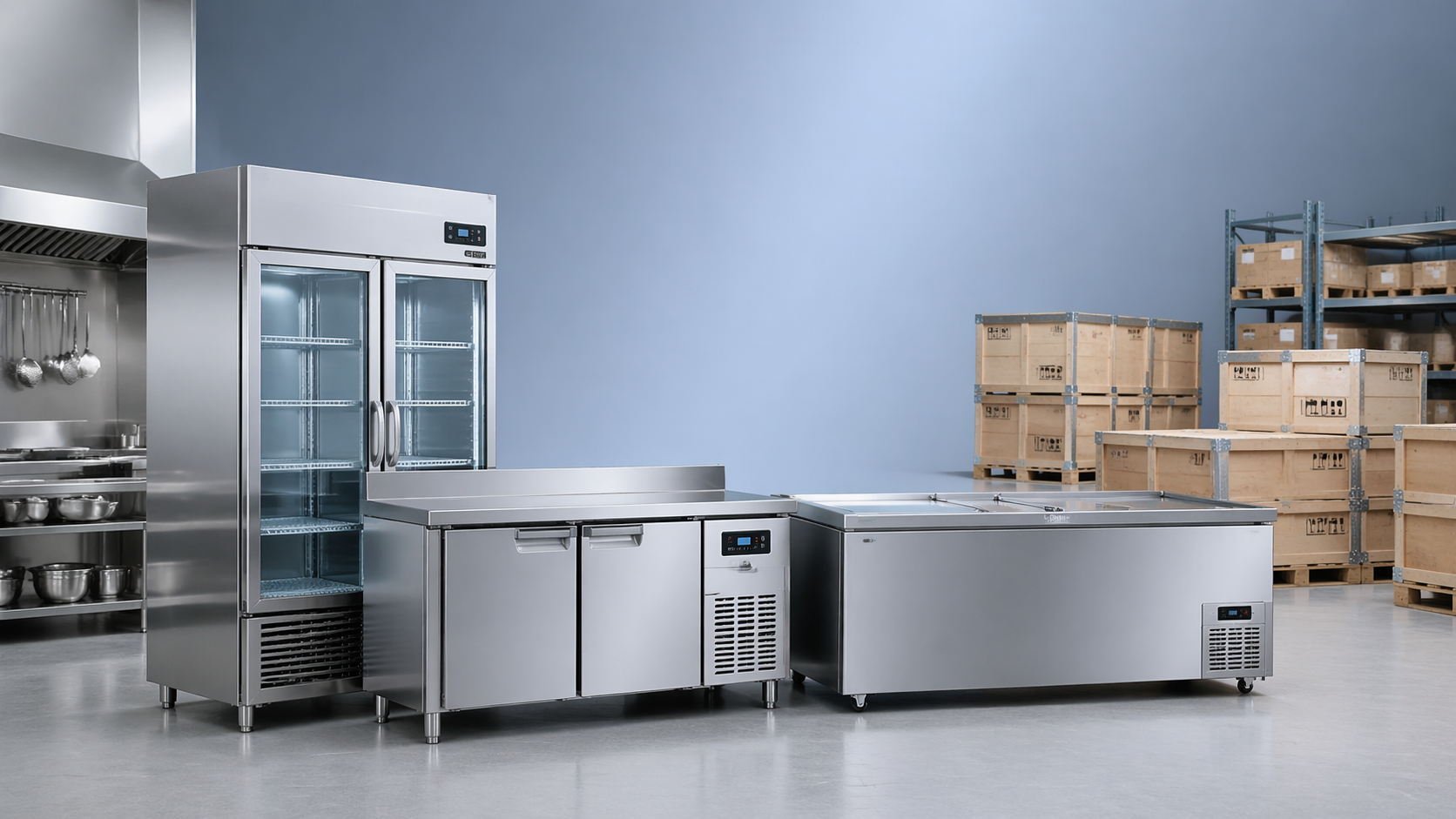
Commercial refrigeration equipment is one of the most affected categories. Buyers are paying closer attention to compressor quality, refrigerant compliance, insulation performance, digital temperature control, and energy consumption. Global suppliers often provide wider model ranges and more advanced efficiency options.
Commercial food processor systems are also seeing strong sourcing shifts. Food processing and central kitchen operators want durable, high-capacity machines with strong hygiene design, easy maintenance, and stable output. Overseas manufacturers often compete aggressively on both automation and value.
Commercial deep fryer equipment remains a major sourcing category because operators care about oil efficiency, recovery speed, temperature consistency, filtration features, and safety controls. Buyers increasingly compare not only initial cost, but also long-term operating expense.
Professional kitchen equipment such as ovens, prep tables, holding cabinets, dishwashing systems, and serving equipment is also changing. As integrated kitchen systems become more common, sourcing decisions are increasingly made around workflow compatibility rather than standalone product price.
In retail foodservice and display-focused environments, products like Heated Display Cabinet systems are becoming more important because they combine product presentation, food safety holding, and energy use concerns in one category. Likewise, Glass Washer equipment is receiving more attention in bar, café, and hospitality projects where hygiene speed and space efficiency matter.
What Do Decision-Makers Need to Evaluate Beyond Purchase Price?
This is where many sourcing mistakes happen. A lower factory quote can look attractive, but the real financial impact depends on total cost of ownership. In 2026, experienced buyers evaluate commercial kitchen equipment through a broader business lens.
Key evaluation factors include:
- Energy consumption: Lower operating costs can offset a higher purchase price
- Durability: Better materials and construction reduce downtime and replacement frequency
- Spare parts availability: Fast access to common replacement parts is essential
- Serviceability: Equipment should be easy for technicians to inspect, repair, and maintain
- Certification and compliance: Products must meet destination market requirements
- Lead time reliability: Delays can disrupt construction schedules and opening dates
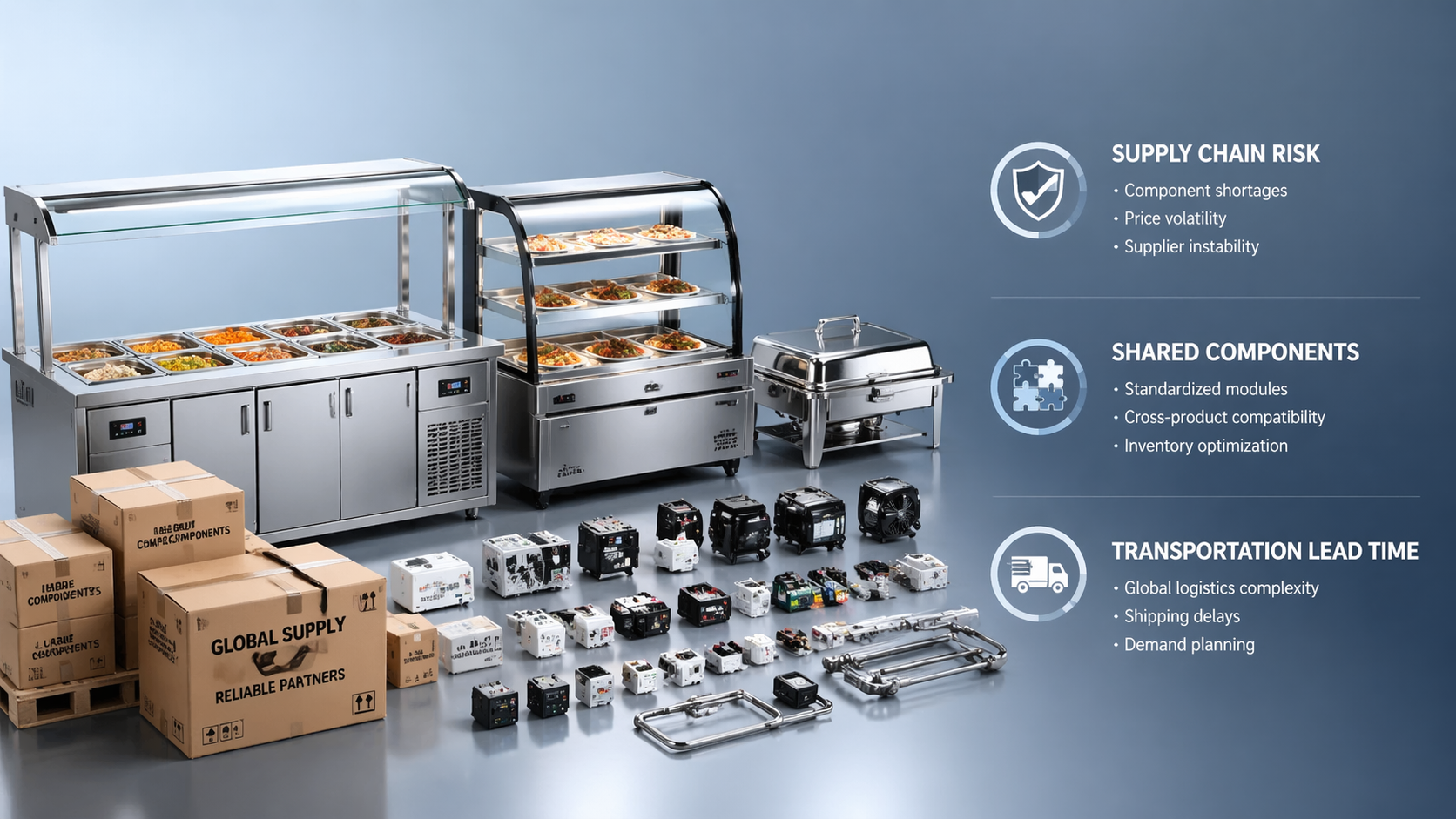
- Packaging and shipping protection: Damage risk affects true landed cost
- Supplier communication quality: Clear documentation saves time and prevents errors
For enterprise buyers, the best sourcing decision often comes from balancing capital cost, operating efficiency, and risk exposure. A buyer sourcing commercial refrigeration equipment for ten locations should evaluate not only the unit price, but also installation consistency, warranty handling, and expected service burden across all sites.
How Is Global Sourcing Influencing Restaurant Kitchen Planning and Commercial Kitchen Design?
Global sourcing is changing the planning stage, not just the buying stage. In 2026, kitchen consultants, project managers, chefs, and procurement teams are involving suppliers earlier in restaurant kitchen planning because equipment availability, dimensions, energy requirements, and installation conditions directly affect design decisions.
This creates several practical changes:
- Designs are becoming more equipment-led. Teams check real supplier specifications earlier to avoid redesign later.
- Workflow integration is more important. Buyers want prep, cooking, holding, cleaning, and storage equipment to work as one system.
- Space optimization is receiving more attention. Compact imported models can improve output in smaller kitchen footprints.
- Utility planning is more precise. Electrical load, ventilation, drainage, and refrigeration requirements must match sourced equipment exactly.
- Multi-brand sourcing is more common. Buyers may source the best product in each category from different regions while maintaining design compatibility.
For technical evaluators, this means the sourcing process should start with workflow needs: volume, menu type, staff skill level, cleaning routine, utility constraints, and food safety requirements. The best commercial kitchen design is not built around catalog browsing. It is built around operational reality.
What Risks Should Buyers Watch When Sourcing Commercial Kitchen Equipment Globally?
Global sourcing creates opportunity, but it also introduces avoidable risks if supplier selection is too price-driven.
The most common concerns include:
- Inconsistent quality between batches
- Unclear certification or non-compliant components
- Long spare-parts lead times
- Weak after-sales support in the destination market
- Shipping delays, customs issues, or freight cost swings
- Misalignment between product specs and real site conditions
These risks can be reduced through a more disciplined sourcing process. Buyers should request technical drawings, test reports, certification documents, reference projects, packaging details, and warranty terms before confirming orders. For larger purchases, sample inspection, factory audits, or third-party quality checks are often worthwhile.
Operators should also think practically. If a Glass Washer or commercial deep fryer stops working during peak business hours, response time matters more than a small saving on the original purchase. Risk management is part of value assessment.
What Makes a Global Supplier Worth Shortlisting in 2026?
A good supplier in 2026 is not just a manufacturer with export experience. The stronger suppliers act as technical and operational partners.
When shortlisting suppliers, buyers should look for:
- Clear product documentation including dimensions, utility requirements, and maintenance guidance
- Stable production capability with consistent quality control procedures
- Relevant market experience in foodservice, hospitality, or food processing applications
- Responsiveness during quotation, technical clarification, and order follow-up
- Support for customization when projects require non-standard solutions
- After-sales planning including parts support and service coordination
- Proof of compliance for the target market
For decision-makers, the best question is not “Who is cheapest?” but “Who can reliably support our kitchen operation, project schedule, and performance goals?” That question usually leads to better outcomes.
How Should Buyers Build a Smarter Global Sourcing Strategy for 2026?
The most effective sourcing strategies are structured, not reactive. Whether you are sourcing for one site or a regional rollout, the process should connect business goals, technical evaluation, and operational needs.
A practical approach includes:
- Define the use case clearly. Identify output needs, menu requirements, staffing realities, and utility conditions.
- Prioritize categories by business impact. Focus first on equipment that drives energy cost, food quality, labor efficiency, or downtime risk.
- Compare total value, not just quotation price. Include freight, duties, installation, maintenance, and operating costs.
- Prequalify suppliers carefully. Check technical capability, communication quality, and compliance readiness.
- Test before scaling. Pilot key equipment categories before large multi-location rollouts.
- Align sourcing with kitchen planning. Avoid separating procurement from restaurant kitchen planning and commercial kitchen design decisions.
- Plan after-sales support early. Confirm spare parts, training, service response, and warranty handling before purchase.
This matters even more when sourcing integrated systems across categories such as commercial food processor units, commercial refrigeration equipment, display equipment, washing systems, and cooking lines. In 2026, sourcing success is defined by operational fit as much as product price.
Conclusion: Global Sourcing Is Expanding Opportunity, but Better Evaluation Matters More Than Ever
Global sourcing is changing commercial kitchen equipment in 2026 by giving buyers broader access to innovation, competitive pricing, smarter systems, and specialized manufacturing expertise. It is influencing everything from commercial deep fryer selection and commercial refrigeration equipment upgrades to restaurant kitchen planning, commercial kitchen design, and the adoption of support products such as Glass Washer and Heated Display Cabinet solutions.
But the biggest shift is strategic: buyers can no longer treat equipment sourcing as a simple purchasing task. The real advantage comes from choosing suppliers and products that improve efficiency, compliance, reliability, and long-term operating performance.
For researchers, operators, technical evaluators, and business leaders, the smartest next step is to assess global sourcing through a practical lens: operational needs, total cost, service support, and project fit. In 2026, that is what separates low-cost buying from high-value procurement.
- commercial kitchen equipment
- smart kitchen
- refrigeration equipment
- central kitchen
- kitchen design
- restaurant kitchen
- Deep Fryer
- Food Processor
- Heated Display
- Heated Display Cabinet
- Glass Washer
- kitchen equipment
- professional kitchen equipment
- commercial refrigeration equipment
- commercial deep fryer
- commercial food processor
- restaurant kitchen design
- commercial kitchen design
- restaurant kitchen planning
Popular Tags
Kitchen Industry Research Team
Dedicated to analyzing emerging trends and technological shifts in the global hospitality and foodservice infrastructure sector.
Industry Insights
Join 15,000+ industry professionals. Get the latest market trends and tech news delivered weekly.
No spam. Unsubscribe anytime.
Contact With us
Contact:
Anne Yin (Ceramics Dinnerware/Glassware)
Lucky Zhai(Flatware)