
Import Data Signals for Commercial Refrigeration Equipment Buyers
For buyers evaluating commercial refrigeration equipment, import data offers practical signals on supplier strength, market demand, and sourcing trends. Whether you also compare a commercial deep fryer, glass washer machine, or other professional kitchen equipment, trade insights can support smarter purchasing decisions. This article highlights how import patterns help researchers, operators, technical evaluators, and business leaders identify reliable products, competitive markets, and growth opportunities.
In commercial kitchens, refrigeration is rarely purchased in isolation. Buyers often assess complete operating lines that may include prep tables, blast chillers, freezers, dishwashing equipment, and cooking units. Because of that, import data becomes more than a shipping record. It helps B2B buyers understand which suppliers are active across multiple product categories, which markets are expanding, and which sourcing routes may carry pricing, lead time, or compliance advantages.
For information researchers, the value lies in pattern recognition. For operators, it supports practical decisions around uptime, spare parts, and installation timing. For technical evaluators, it can confirm whether a supplier consistently exports comparable specifications. For business leaders, it provides an external signal when balancing cost, risk, and growth plans in foodservice, hospitality, and food processing projects.
Why Import Data Matters in Commercial Refrigeration Sourcing
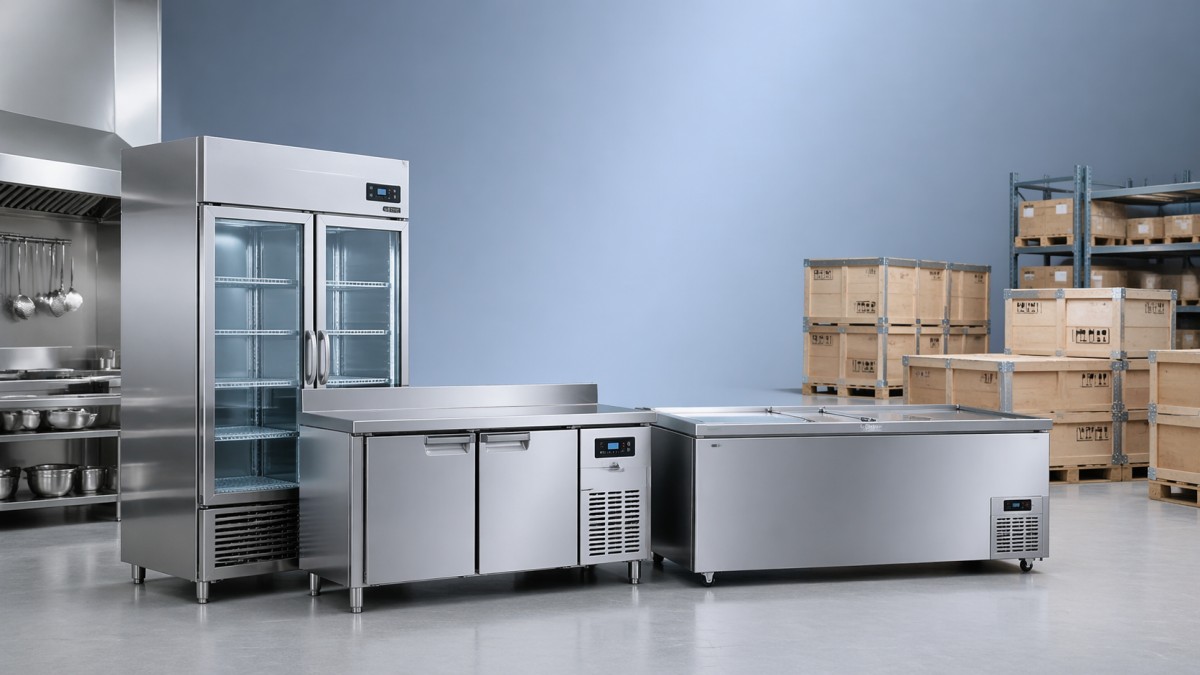
Commercial refrigeration equipment buyers often face three core questions: Is the supplier stable, is the product aligned with the target application, and is the supply chain dependable over the next 6–12 months? Import data does not answer every technical question, but it offers observable market behavior. Frequent shipments, repeat buyers, and stable destination markets can indicate that a supplier is active and commercially viable.
In the kitchen equipment industry, refrigeration demand is tied closely to restaurant openings, hotel renovations, central kitchen expansion, and food processing upgrades. When imports of upright refrigerators, undercounter units, cold rooms, and display chillers rise in a region over 2–4 quarters, that often signals stronger downstream investment. Buyers can use this pattern to time sourcing, negotiate volume, or compare suppliers before demand peaks.
Import records also help identify product concentration. If one exporter ships mostly display refrigeration to retail and bakery channels, while another ships heavy-duty freezer systems to food factories, their strengths are different even if both sell “commercial refrigeration equipment.” This distinction matters when operating temperatures, compressor duty cycles, door-opening frequency, and kitchen humidity conditions vary significantly by use case.
For technical teams, import data can complement specification review. It cannot replace checking refrigerant type, insulation thickness, temperature recovery time, or electrical compatibility, but it can reveal whether a supplier has a realistic export footprint. A factory shipping 20–50 regular consignments a year may offer a different service profile from one appearing only once or twice in fragmented records.
What Buyers Can Learn from Trade Patterns
- Shipment frequency: recurring exports may suggest operational continuity and more predictable production planning.
- Destination diversity: suppliers shipping to 3–5 markets may be more adaptable to different compliance and packaging needs.
- Product mix: records can show whether the supplier focuses on refrigerators, freezers, prep counters, or broader kitchen equipment lines.
- Seasonality: spikes before summer or holiday foodservice periods can affect lead times by 2–8 weeks.
The table below summarizes how different import signals can support a commercial refrigeration equipment buying process across research, technical review, and management planning.
The practical lesson is simple: import data should be used as an early filter, not as the final approval tool. It helps buyers narrow a long list into a manageable shortlist, usually 3–5 candidates, before moving into specification review, factory communication, and commercial negotiation.
How to Interpret Import Signals for Supplier Strength and Product Fit
Not every high-volume exporter is the right fit for every buyer. A supplier shipping large quantities of standard refrigerators into price-sensitive markets may not be ideal for a hotel chain that requires low-noise operation, stainless steel grade consistency, and custom dimensions. Import data becomes more useful when read together with application requirements such as storage temperature, kitchen workflow, and service access.
For example, restaurants with frequent door openings may need refrigeration systems that recover temperature quickly after repeated use. Food processing operations may prioritize larger capacities, stronger evaporator performance, and easier sanitation design. Operators in tropical or high-humidity environments may also look for equipment that performs reliably at ambient temperatures of 32–43°C rather than under mild showroom conditions.
Technical evaluators should compare import activity with product documentation. If records suggest a supplier exports mainly plug-in cabinets, but the quotation is for remote condensing systems or cold room assemblies, the buyer should ask how much of that project type is truly within the supplier’s routine production range. A mismatch between shipment history and proposed solution does not automatically disqualify the supplier, but it raises the need for deeper validation.
Business decision-makers can also use import data to assess concentration risk. If a supplier depends heavily on one destination country or one distributor, future disruptions may affect pricing or lead time. In B2B kitchen equipment purchasing, risk is often not about one machine failing on day one. It is about delayed delivery, missing parts, inconsistent batches, or weak service support over the first 12–24 months.
Four Layers of Interpretation
- Volume layer: look at shipment count and continuity over at least 6 months.
- Market layer: identify whether target destinations match your business environment and regulatory expectations.
- Product layer: compare declared product categories with the refrigeration type you actually need.
- Risk layer: watch for abrupt declines, unstable routes, or overconcentration in a single buyer base.
Common Misreadings to Avoid
One common mistake is treating shipment frequency as proof of high quality. Frequent exports may reflect strong pricing or broad market access, but they do not confirm insulation performance, compressor reliability, or weld quality. Another mistake is assuming that a supplier active in broader kitchen equipment categories automatically provides strong refrigeration expertise. In reality, refrigeration has different technical risks from equipment such as a commercial deep fryer or a glass washer machine.
A practical review should therefore combine trade data with at least 6 checks: temperature range, refrigerant type, internal volume, energy use, cleaning access, and parts support period. For higher-value projects, buyers may expand this list to 10–12 items including noise level, controller type, gasket replacement, and compressor brand preference when disclosed in a compliant way.
Key Procurement Metrics for Commercial Refrigeration Equipment Buyers
Once import data helps narrow the supplier field, buyers need a procurement framework that translates trade signals into technical and commercial decisions. In commercial refrigeration equipment, the most useful metrics usually sit across five dimensions: capacity, temperature performance, energy use, serviceability, and delivery reliability. These should be reviewed together rather than as isolated checklist items.
Capacity matters because nominal volume can differ from usable storage space. A cabinet listed at 500–700 liters may offer lower practical loading if shelf spacing, evaporator placement, or air circulation zones reduce available area. For operators, this affects workflow and stock rotation. For business planners, it affects how many units are needed per kitchen line, outlet, or processing station.
Temperature performance should be considered in real operating conditions. A refrigerated prep table may target 2–8°C, while a freezer may run at -18°C or below. Buyers should ask how quickly the unit recovers after door openings and whether performance data reflects an ambient environment closer to 25°C or 38°C. This difference can be critical in heavy-duty commercial kitchens with long operating hours.
Lead time is another major metric where import data is useful. If historical shipping patterns suggest regular dispatch intervals, the buyer can build a more realistic receiving schedule. Typical lead times for standard models may range from 15–45 days, while custom stainless steel fabrication, voltage changes, or multi-unit project packaging may extend that to 6–10 weeks.
Procurement Comparison Table
The following table helps teams compare commercial refrigeration equipment not only by initial quotation, but by operational fit and sourcing risk.
The best procurement decision is usually not the lowest unit price. It is the option that balances cooling performance, usable capacity, maintenance access, and delivery stability. For restaurants, hotels, and central kitchens, a slightly higher purchase cost can be justified if it reduces food loss, service delays, or emergency repair frequency over the first year.
Recommended Checklist Before Final Approval
- Confirm voltage, frequency, and plug or hardwire requirements for the destination market.
- Review internal dimensions, not only gross capacity, especially for GN pan or tray compatibility.
- Ask for expected cleaning and maintenance intervals, such as condenser cleaning every 30–90 days depending on kitchen conditions.
- Check packaging method and unloading needs for units above 150–300 kg.
Using Import Trends to Compare Markets, Pricing Pressure, and Delivery Risk
Import data becomes especially valuable when buyers compare sourcing markets rather than just individual factories. In the kitchen equipment sector, countries such as China, Germany, Italy, and Japan are often associated with different manufacturing strengths, price levels, and product positioning. The goal is not to generalize quality by country, but to identify where supply density, logistics routes, and category specialization may support the buyer’s priorities.
For example, a market with high export activity in standard upright refrigerators and worktop chillers may offer stronger price competition and broader model availability. Another market may focus on premium engineering, modular systems, or specialized food processing refrigeration. Import records can reveal whether a source country is shipping large volumes of standard kitchen equipment or smaller volumes of technically differentiated units.
Delivery risk also changes by route and season. Ocean freight congestion, port handling delays, and customs processing can add 7–21 days beyond factory completion. If import patterns show irregular arrivals or concentrated peak-season shipping, buyers should plan wider receiving windows. This is particularly relevant for project-based buyers opening restaurants, hotels, supermarkets, or commissary kitchens on fixed dates.
Pricing pressure can be interpreted through market competition and category density. If many suppliers are active in a similar refrigeration segment, buyers may gain stronger leverage on payment terms, accessory inclusion, or spare parts kits. Where supply is more specialized, the negotiation may shift away from headline price toward warranty scope, technical support, and installation readiness.
Market Comparison Factors
The table below provides a practical framework for comparing sourcing markets for commercial refrigeration equipment and related kitchen equipment projects.
A useful purchasing strategy is to compare at least 2–3 sourcing markets and 3–5 qualified suppliers before making a final decision. This does not always reduce cost, but it often improves negotiation quality and lowers the risk of single-source dependence, especially in multi-site kitchen equipment rollouts.
From Research to Purchase: A Practical Workflow for Teams
Import data creates value only when it feeds into a structured buying workflow. In many B2B kitchen equipment projects, purchasing decisions involve at least four roles: the researcher who identifies options, the operator who understands daily usage, the technical evaluator who checks performance and installation requirements, and the business decision-maker who approves budget and risk tolerance. Aligning these perspectives early can shorten buying cycles and reduce rework.
A practical workflow starts with market screening. Here, the team reviews import records, supplier activity, target categories, and route consistency. The second stage is technical matching, where refrigeration type, dimensions, energy profile, and kitchen layout compatibility are checked. The third stage is commercial validation, including lead time, payment structure, spare parts support, and project delivery sequence.
For projects involving multiple equipment lines, the workflow should also assess whether one supplier can coordinate with adjacent product categories such as a commercial deep fryer, glass washer machine, preparation tables, or stainless steel fabrication. Combined sourcing can reduce communication complexity, but it should not compromise refrigeration quality if that category requires deeper specialization.
Most teams benefit from setting 5–7 approval criteria before requesting final quotations. This keeps decisions comparable and prevents price-only evaluations. In many cases, a formal review matrix improves internal alignment and reduces the chance of selecting equipment that looks suitable on paper but performs poorly in the real kitchen environment.
Five-Step Buying Workflow
- Screen suppliers using 6–12 months of import activity, product category focus, and destination consistency.
- Match refrigeration type to use case: restaurant line, hotel back-of-house, bakery display, or food processing zone.
- Verify technical details including temperature range, internal dimensions, ambient rating, and cleaning access.
- Confirm commercial terms such as lead time, packaging, replacement parts plan, and after-sales response process.
- Run final comparison across total operational value, not only unit price.
FAQ: Common Buyer Questions
How much import history is enough to review? A 6-month snapshot can be useful for early screening, but 12 months is usually better because it reveals seasonality, continuity, and any significant export gaps.
Can import data replace factory audits or technical checks? No. It should support, not replace, engineering review, sample assessment when feasible, and documentation checks related to performance, electrical compatibility, and serviceability.
What lead time buffer should buyers allow? For standard commercial refrigeration equipment, many buyers plan a 1–3 week logistics buffer beyond the quoted production time. For customized projects, a wider buffer is often safer.
Is a broad kitchen equipment exporter better than a specialist? It depends on project needs. Broad exporters may simplify sourcing for mixed equipment packages, while refrigeration specialists may be stronger for demanding temperature control or high-duty applications.
Import data gives commercial refrigeration equipment buyers a practical way to read the market before committing time and budget. It helps identify supplier activity, compare sourcing markets, understand delivery patterns, and build a shortlist grounded in observable trade behavior rather than assumptions alone. When combined with technical review and operational requirements, these signals support better decisions across restaurants, hotels, central kitchens, and food processing environments.
If you are comparing refrigeration units alongside other professional kitchen equipment, a structured sourcing approach can reduce risk and improve long-term value. Contact us to discuss your project, get a tailored product recommendation, or explore more solutions for commercial kitchen and foodservice equipment procurement.
Popular Tags
Kitchen Industry Research Team
Dedicated to analyzing emerging trends and technological shifts in the global hospitality and foodservice infrastructure sector.
Industry Insights
Join 15,000+ industry professionals. Get the latest market trends and tech news delivered weekly.
No spam. Unsubscribe anytime.

Contact With us
Contact:
Anne Yin (Ceramics Dinnerware/Glassware)
Lucky Zhai(Flatware)