
Commercial Charbroiler Features That Matter in Daily Use
In a busy kitchen, the right commercial charbroiler can make daily cooking faster, cleaner, and more consistent. For operators, the features that matter most are not just power and size, but also heat control, ease of cleaning, durability, and safety. Understanding these practical details helps teams improve workflow, reduce downtime, and deliver better grilling results every day.
What a Commercial Charbroiler Is and Why Daily Features Matter
A commercial charbroiler is a high-heat grilling appliance designed for professional kitchens that need speed, repeatability, and strong searing performance. It is commonly used in restaurants, hotels, catering kitchens, and foodservice operations where grilled meat, seafood, vegetables, and sandwiches are part of the menu. Unlike a simple backyard grill, a commercial charbroiler must perform under long operating hours, heavier production pressure, and stricter cleaning and safety standards.
In the broader kitchen equipment industry, this kind of equipment reflects several major trends: better heat efficiency, easier maintenance, stronger materials, and safer operation. As commercial kitchens move toward smarter workflow and more consistent output, operators are paying closer attention to the practical features that affect daily use. A powerful unit may look impressive on paper, but if it creates hot spots, takes too long to clean, or causes grease buildup, it can slow service and raise operating risk.
That is why the best commercial charbroiler is not always the largest or most expensive model. The most useful one is the unit that matches volume, menu style, labor conditions, and cleaning routines. For line cooks and kitchen staff, daily performance is measured by how quickly the machine heats up, how predictably it cooks, how easy it is to adjust during rush periods, and how reliably it operates over time.
Why the Industry Pays Attention to These Details
The foodservice industry has changed. Operators are expected to deliver consistent flavor, maintain food safety, control labor costs, and reduce downtime, often all in the same shift. In this environment, every piece of kitchen equipment must support practical efficiency. A commercial charbroiler is especially important because grilling is highly visible in the final product: customers notice color, marks, texture, and juiciness immediately.
At the same time, kitchen equipment manufacturers are responding to market demand for stronger energy performance, easier sanitation, and longer service life. These expectations are now central across the commercial kitchen equipment sector. Whether the buyer is a hotel group, an independent restaurant, or a central kitchen serving multiple outlets, the goal is similar: stable output with lower daily friction. For operators, that means the value of a commercial charbroiler is found in routine use, not just in technical specifications.
Core Features That Affect Daily Operation
Heat control and cooking consistency
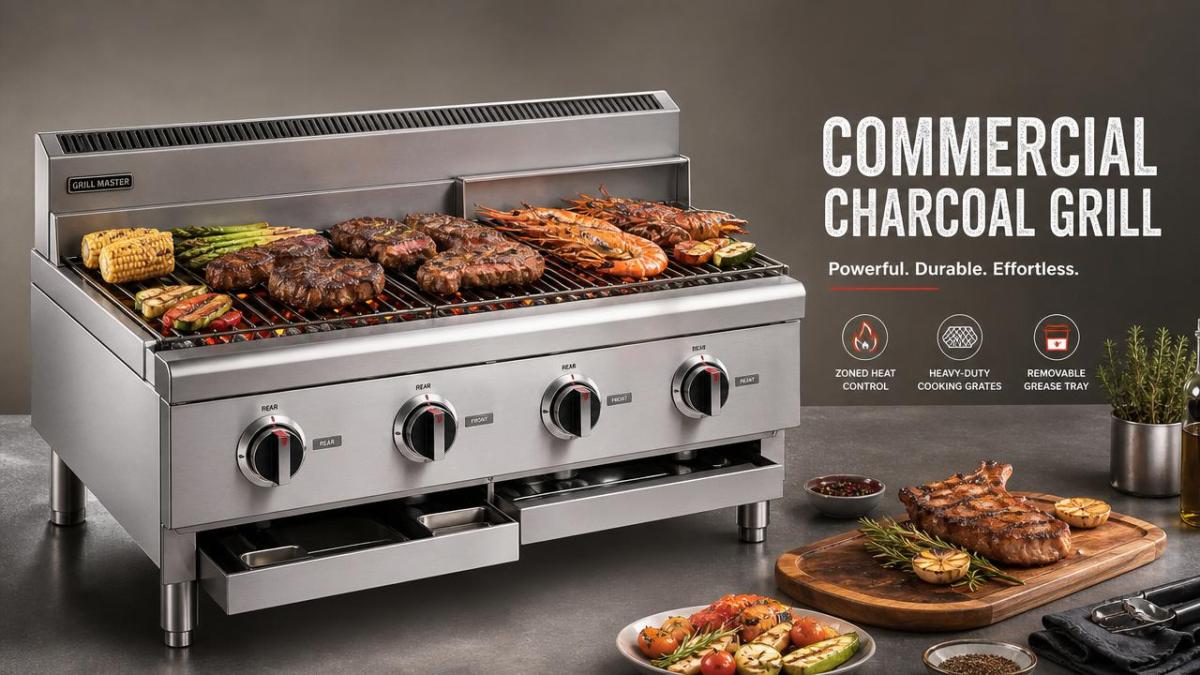
Precise heat control is one of the most important features in a commercial charbroiler. Operators need to move between high-heat searing and more controlled finishing without losing rhythm during service. Separate heat zones are especially useful because they allow one side of the broiler to run hotter for steaks or burgers while another side holds chicken, fish, or vegetables at a steadier temperature. This flexibility reduces overcooking and helps teams manage mixed orders more efficiently.
Consistent burner performance also matters. Uneven heating creates hot spots and cold zones that lead to inconsistent grill marks and variable doneness. In a high-volume kitchen, that inconsistency affects quality control, timing, and plate appearance. Operators benefit from a design that distributes heat evenly across the cooking surface and maintains recovery speed after repeated loading.
Grate design and product handling
Grates do more than hold food. Their shape, thickness, spacing, and material affect heat transfer, branding marks, and cleaning time. Heavy-duty cast iron grates retain heat well and produce attractive sear marks, while other designs may emphasize faster cleanup or lighter handling. Some operators prefer reversible grates because they support different menu items and let the kitchen adjust surface contact as needed.
A good grate design also improves workflow. Food should be easy to turn, reposition, and remove without tearing delicate items. When a commercial charbroiler is used continuously, small handling advantages make a major difference in speed and consistency over a full service period.
Ease of cleaning and grease management
A commercial charbroiler that is difficult to clean becomes a daily burden. Operators should look for removable grates, accessible burners, well-designed crumb trays, and grease collection systems that can be emptied without excessive mess. Good grease management improves sanitation and lowers fire risk. It also helps preserve heating performance by reducing carbon buildup on key components.
Smooth cleaning access is especially valuable in kitchens with tight closing routines or limited labor. If end-of-day maintenance takes too long, staff may rush the process, which leads to hygiene issues and shorter equipment life. Practical cleaning design is not a minor convenience; it is part of long-term operating efficiency.
Durability under heavy kitchen use
Professional kitchens need equipment that can handle repeated thermal stress, constant loading, and exposure to grease, salt, and cleaning chemicals. A durable commercial charbroiler should have strong stainless steel construction, sturdy welds, dependable control knobs, and components that can maintain performance during extended service. Durable materials lower repair frequency and reduce the chance of interruptions during peak hours.
Operators often notice durability first in the details. Do the grates warp? Do the burners ignite reliably? Are the legs stable? Does the front panel remain easy to wipe down after months of use? These real-world questions matter more than appearance alone because they directly affect comfort, safety, and trust in the equipment.
Safety and operator confidence
Safety features should always be considered part of usability. Heat shields, stable controls, flame reliability, proper grease flow, and cool-touch zones where possible all contribute to a safer work environment. In high-pressure service periods, operators need equipment that behaves predictably. A commercial charbroiler that is easy to monitor and simple to adjust reduces stress and helps prevent avoidable incidents.
Safety also includes visibility. Operators benefit from a layout that makes it easy to judge cooking progress and manage multiple portions without crowding. Clear access and stable working surfaces support faster, more accurate production while reducing unnecessary movement around open heat.
Industry Overview of Daily-Use Priorities
Across the kitchen equipment industry, operators tend to evaluate a commercial charbroiler through the lens of daily workload rather than isolated specifications. The table below summarizes the most common priorities and their operational value.
Where These Features Create the Most Value
The importance of each commercial charbroiler feature can vary by kitchen type, but the overall goal stays the same: dependable grilling with less disruption. In quick-service restaurants, recovery speed and ease of cleaning are critical because volume is high and turnover is fast. In hotels and full-service restaurants, cooking flexibility and presentation quality may carry more weight because menus are broader and guest expectations are more varied.
Catering and banquet operations often need a commercial charbroiler that can handle batch cooking while maintaining product consistency. In central kitchens or semi-processed food operations, durability and repeatability are essential because output standards must be maintained across shifts or locations. In each case, daily-use features influence labor productivity, menu execution, and operating cost control.
Practical Evaluation Points for Operators
When evaluating a commercial charbroiler for real kitchen use, operators should focus on practical questions. How quickly does the unit recover after a full load of cold product? Are the controls easy to understand during a rush? Can one team member clean key parts without excessive lifting or disassembly? Does the grate pattern match the menu? Can the broiler support both peak demand and quieter periods without wasting energy or producing uneven results?
It is also wise to consider the surrounding kitchen system. Ventilation, line placement, access to cleaning space, and workflow with neighboring equipment all affect daily performance. Even a well-built commercial charbroiler may underperform if it is installed in a cramped layout that slows movement or complicates grease handling. In modern kitchen design, integrated thinking matters just as much as individual machine quality.
Maintenance Habits That Support Better Results
Good maintenance habits help operators get the full value from a commercial charbroiler. Daily brushing of grates, routine emptying of grease trays, periodic inspection of burners, and proper shutdown procedures all support stable heat and safer operation. Staff training is equally important. Teams should know how to preheat correctly, avoid overcrowding, rotate product across heat zones, and identify early signs of performance decline.
These habits align with larger trends in the kitchen equipment industry, where efficiency and reliability are becoming as important as cooking power. A machine that is easy to maintain encourages better compliance. Over time, this reduces repair costs, supports food quality, and helps maintain a smoother kitchen routine.
Choosing Features That Match Real Service Needs
For operators, the most important lesson is simple: choose a commercial charbroiler based on the demands of actual service, not only on headline specifications. Heat control, grate design, cleaning access, durability, and safety all shape the day-to-day experience of using the unit. In a professional kitchen, small practical advantages add up quickly. They improve consistency, reduce strain on staff, and make it easier to keep quality high through every shift.
As the global kitchen equipment sector continues moving toward smarter, more efficient, and more durable solutions, understanding these daily-use features becomes even more valuable. If your team is reviewing options for a commercial charbroiler, start with real workflow needs, menu demands, and maintenance capacity. That approach leads to better long-term performance and a more dependable grilling station every day.
Popular Tags
Kitchen Industry Research Team
Dedicated to analyzing emerging trends and technological shifts in the global hospitality and foodservice infrastructure sector.
Industry Insights
Join 15,000+ industry professionals. Get the latest market trends and tech news delivered weekly.
No spam. Unsubscribe anytime.


Contact With us
Contact:
Anne Yin (Ceramics Dinnerware/Glassware)
Lucky Zhai(Flatware)