
What to Know Before Investing in a Commercial Pizza Oven
Investing in a commercial pizza oven can directly impact food quality, kitchen efficiency, and long-term operating costs. Whether you manage a pizzeria, central kitchen, or catering business, understanding how a commercial kitchen oven fits into your workflow, space, and energy goals is essential. This guide highlights the key factors buyers should evaluate before choosing from today’s commercial pizza oven options.
If you are researching a commercial pizza oven, your real question is usually not just “Which oven is best?” but “Which oven makes operational and financial sense for my business?” The right choice depends on output volume, menu style, recovery speed, installation conditions, labor skill level, and total cost of ownership. A high-capacity oven that does not match your product mix or utility setup can become an expensive bottleneck instead of a growth asset.
For buyers, operators, and decision-makers, the most practical approach is to evaluate ovens through four lenses: production needs, product quality, operating cost, and long-term reliability. Once these are clear, comparing deck ovens, conveyor ovens, and other commercial pizza oven options becomes much easier and more objective.
Start With the Real Buying Question: What Does Your Operation Need the Oven to Do?
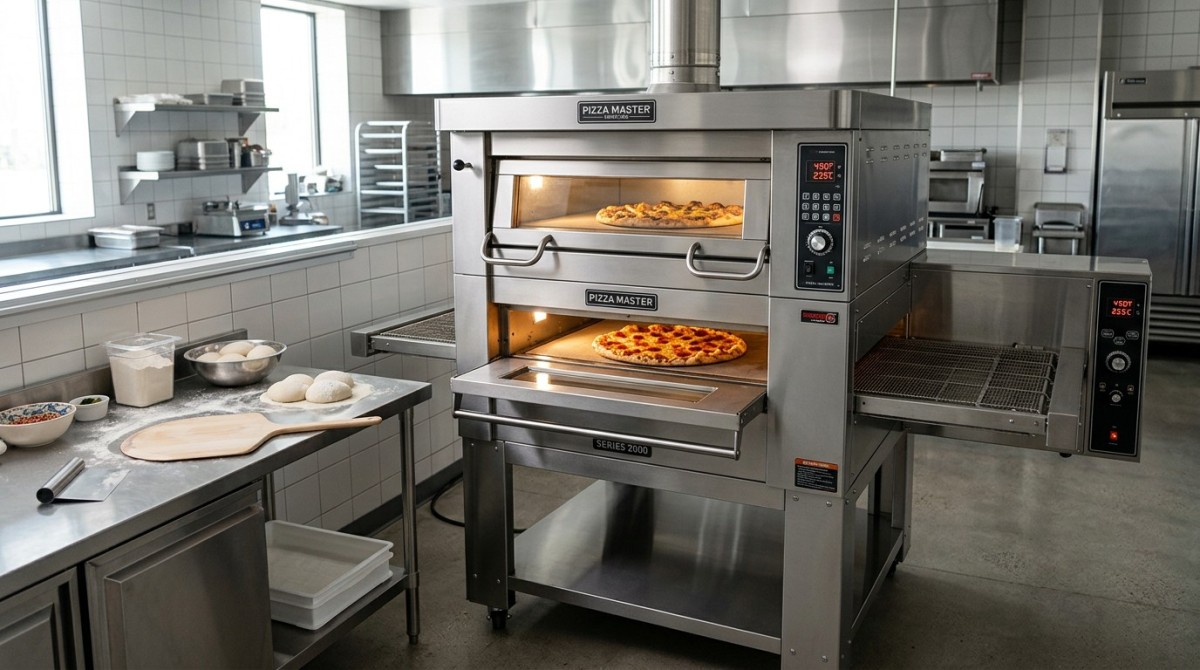
Before comparing brands or heating technologies, define the job the oven must perform every day. This is the step many buyers skip, and it often leads to overbuying or selecting a unit that fits the brochure better than the kitchen.
Ask these practical questions first:
- How many pizzas do you need to produce per hour during peak periods?
- What pizza style do you serve—Neapolitan, New York, pan, thin crust, frozen, or mixed menu items?
- Do you need consistency from less-experienced staff, or do you have trained pizza specialists?
- Will the oven be dedicated to pizza, or also used for baking, reheating, or other menu items?
- How much floor space, ventilation capacity, and utility access do you have?
An independent pizzeria focused on artisan quality may prioritize baking characteristics and crust texture. A chain store or high-volume operation may value throughput, speed, and repeatability more. A central kitchen may focus on batch consistency and energy efficiency. In other words, the best commercial kitchen oven is the one that fits your business model, not the one with the most features.
Which Type of Commercial Pizza Oven Fits Your Menu and Volume?
Different oven types solve different operational problems. Understanding the strengths and trade-offs of each is one of the most important parts of the buying process.
Deck ovens
Deck ovens are widely chosen for quality-focused pizza production. They offer strong control over bake characteristics and can produce desirable crust texture, color, and bottom heat. They are often preferred for artisan, traditional, and premium pizza programs.
Best for: quality-focused pizzerias, specialty menus, operators who want hands-on control.
Things to consider: they may require more operator skill and can be slower than conveyor systems in very high-volume environments.
Conveyor ovens
Conveyor ovens are popular in chain operations and high-throughput kitchens because they offer speed, consistency, and ease of use. Staff training is usually simpler, and output is more predictable during busy periods.
Best for: delivery brands, high-volume stores, standardized operations, kitchens with frequent staff turnover.
Things to consider: while highly efficient, they may offer less manual baking flexibility for certain artisan styles.
Convection ovens
Some businesses consider convection ovens for pizza when menu flexibility matters. These may work for lighter pizza programs or multi-purpose kitchens, though they are not always ideal for operations where pizza is the core revenue driver.
Best for: mixed-menu operations, small foodservice businesses, secondary pizza offerings.
Things to consider: they may not deliver the same pizza-specific results as dedicated commercial pizza oven systems.
Wood-fired or specialty ovens
These ovens can create a distinct flavor profile and visual appeal, which may support premium positioning. However, they often involve more training, maintenance, and installation complexity.
Best for: concept-driven restaurants, premium dine-in experiences, brand differentiation.
Things to consider: fuel handling, local regulations, staffing skill, and consistency under volume pressure.
How Much Capacity Do You Really Need?
Capacity should be measured against peak demand, not average traffic. If your oven cannot keep up during your busiest hour, service slows down, ticket times increase, and customer experience suffers. On the other hand, oversized equipment can waste energy and capital.
When estimating required capacity, evaluate:
- Average and peak pizzas per hour
- Bake time per pizza
- Recovery time between loads
- Number and size of pizzas baked simultaneously
- Whether your menu includes items with different temperature requirements
For procurement teams and business owners, this is where growth planning matters. If you expect delivery expansion, additional locations, or catering volume, buying only for current traffic can lead to an early equipment replacement. The smarter decision is often to buy for realistic near-term growth, not distant theoretical demand.
What Installation Conditions Can Limit Your Options?
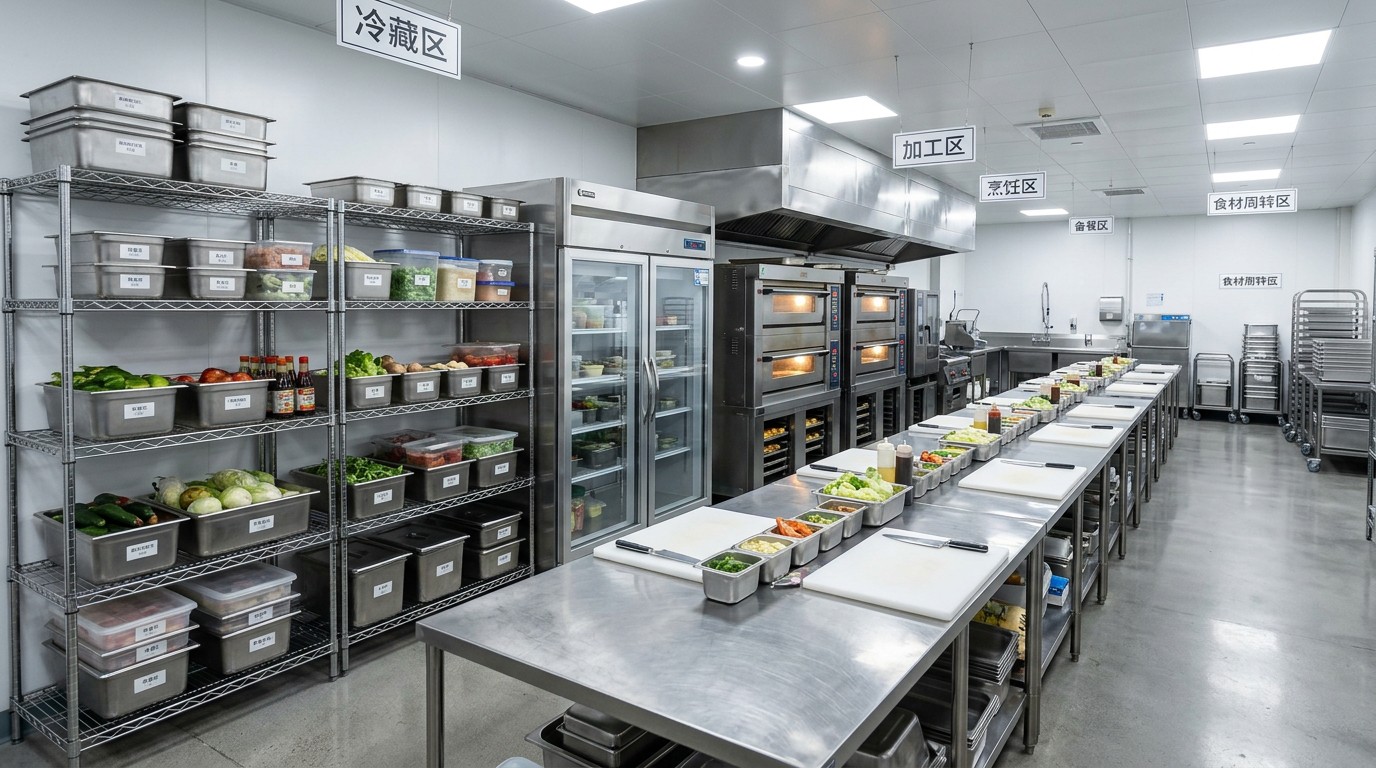
Many commercial oven decisions fail at the installation stage rather than the product stage. A commercial pizza oven may look ideal on paper but become impractical because of ventilation, gas supply, electrical load, clearance requirements, or floor layout.
Important installation factors include:
- Available kitchen footprint and workflow space
- Door width and access path for delivery and setup
- Electrical or gas utility compatibility
- Ventilation and exhaust requirements
- Fire safety and local code compliance
- Heat output and impact on kitchen environment
For restaurants, hotels, and central kitchens, installation costs can significantly affect the total investment. In some cases, a lower-priced oven becomes more expensive overall because of infrastructure upgrades. That is why buyers should assess site readiness before shortlisting equipment.
How Do Energy Use and Operating Costs Affect ROI?
Purchase price is only one part of the investment. Over time, energy consumption, maintenance, labor efficiency, downtime, and product waste often matter more than the initial quote.
To understand true ROI, consider these cost drivers:
- Energy efficiency: How much gas or electricity does the oven consume during peak and idle periods?
- Labor efficiency: Does the oven reduce dependence on highly skilled operators?
- Consistency: Will it lower remake rates and product waste?
- Maintenance: How often does it need service, cleaning, or parts replacement?
- Downtime risk: What happens to revenue if the oven fails during service?
For enterprise buyers and decision-makers, a slightly higher upfront investment may be justified if the oven improves throughput, lowers utility costs, and supports standardized output across shifts or locations. In fast-paced foodservice operations, consistency and uptime are often major drivers of long-term value.
What Should Operators Look For in Daily Use?
For users and kitchen staff, the best commercial pizza oven is one that performs reliably under real service conditions. A unit may look technically advanced, but if it is difficult to operate, clean, or adjust during busy periods, it can create more friction than value.
Operators should pay close attention to:
- Ease of temperature control and adjustment
- Preheat time and recovery performance
- Loading and unloading convenience
- Cleaning access and daily sanitation needs
- Interface simplicity for staff training
- Consistency across different shifts and operators
In multi-shift kitchens or businesses with staff turnover, user-friendly controls and repeatable performance can be just as important as baking power. Equipment that reduces human error can improve both productivity and product quality.
How Important Are Reliability, Service Support, and Parts Availability?
Commercial kitchen equipment is not just a product purchase; it is an operational dependency. If your pizza oven goes down during business hours, the cost can include lost sales, customer dissatisfaction, and scheduling disruption.
That is why after-sales support deserves serious attention. Buyers should review:
- Warranty coverage and what it actually includes
- Availability of local or regional service technicians
- Lead times for common replacement parts
- Brand reputation for durability in commercial use
- Technical support response times
For purchasing teams, this is especially important when sourcing internationally or comparing lower-cost suppliers. A lower acquisition cost may be attractive, but if service and parts support are weak, long-term risk increases. In professional foodservice, equipment reliability is part of business continuity.
What Questions Should You Ask Before Making a Final Decision?
Before selecting from commercial pizza oven options, use a simple decision checklist to avoid costly mistakes:
- Does the oven match our actual pizza style and output requirements?
- Can our kitchen support the installation without major unexpected upgrades?
- What is the estimated total cost of ownership over three to five years?
- How easy is it for staff to use consistently?
- What level of maintenance and cleaning will it require?
- Is service support available where we operate?
- Will this oven still fit our needs if sales volume grows?
If possible, request a product demonstration, test bake, or reference site. Seeing how a commercial kitchen oven performs in conditions similar to your own operation often reveals more than specifications alone.
Final Takeaway
Choosing a commercial pizza oven is ultimately a business decision as much as a kitchen decision. The right model should support your menu, fit your workflow, control operating costs, and deliver reliable results at peak demand. For operators, that means easier daily performance. For procurement teams, it means better lifecycle value. For decision-makers, it means lower risk and stronger return on investment.
Instead of asking which oven is the most advanced, ask which one best matches your production goals, labor reality, installation conditions, and growth plans. That is the clearest path to a smarter investment and a more efficient, profitable pizza operation.
Popular Tags
Kitchen Industry Research Team
Dedicated to analyzing emerging trends and technological shifts in the global hospitality and foodservice infrastructure sector.
Industry Insights
Join 15,000+ industry professionals. Get the latest market trends and tech news delivered weekly.
No spam. Unsubscribe anytime.
Contact With us
Contact:
Anne Yin (Ceramics Dinnerware/Glassware)
Lucky Zhai(Flatware)