
Catering Kitchen Equipment Checklist for New Projects
Starting a new foodservice project requires more than buying a few appliances. The real challenge is choosing a catering kitchen equipment setup that matches your menu, service volume, food safety requirements, available space, and long-term operating goals. For purchasers, operators, and business decision-makers, the best checklist is not simply a list of items—it is a planning tool that helps reduce waste, avoid costly redesigns, improve workflow, and build a kitchen that can scale.
In most new projects, the core search intent behind “Catering Kitchen Equipment Checklist for New Projects” is practical decision support. Readers usually want to know what equipment is essential, how to prioritize purchases, what standards matter, and how to avoid buying the wrong commercial kitchen equipment. They are not looking for generic theory. They need a structured, usable checklist that connects equipment selection with kitchen efficiency, compliance, and return on investment.
This guide is designed to help information researchers, kitchen operators, purchasing teams, and business leaders make clearer decisions. It covers the key equipment categories, planning factors, and buying criteria that matter most when setting up a new catering, restaurant, hotel, or central kitchen project.
What should be on a catering kitchen equipment checklist for a new project?
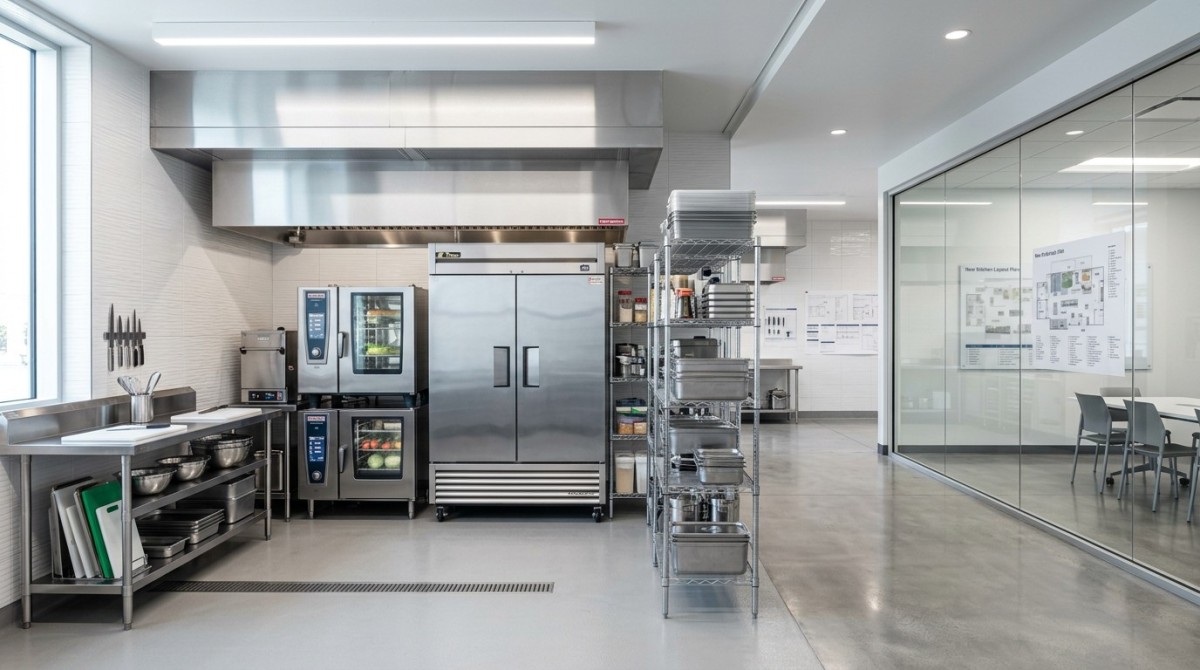
A practical checklist should be built around kitchen workflow, not just product categories. Before comparing brands or requesting quotations, decision-makers should confirm five essentials:
- Menu type: What food will be prepared, cooked, held, and served?
- Production volume: How many meals per hour or per day will the kitchen handle?
- Kitchen layout: How much space is available for prep, cooking, washing, storage, and movement?
- Utility conditions: What are the gas, power, water, drainage, and ventilation capacities?
- Compliance needs: Which hygiene, safety, and local commercial kitchen regulations apply?
Once these basics are clear, a new project can usually organize its restaurant kitchen supplies checklist into the following core areas:
- Food preparation equipment
- Cooking equipment
- Refrigeration and cold storage
- Storage and kitchen shelving system solutions
- Washing and sanitation equipment
- Ventilation and exhaust systems
- Serving, holding, and transport equipment
- Safety accessories and utility support items
This approach helps buyers avoid two common mistakes: overbuying equipment that is rarely used, and underinvesting in the items that directly affect speed, consistency, and food safety.
How do you choose equipment based on kitchen workflow instead of guesswork?
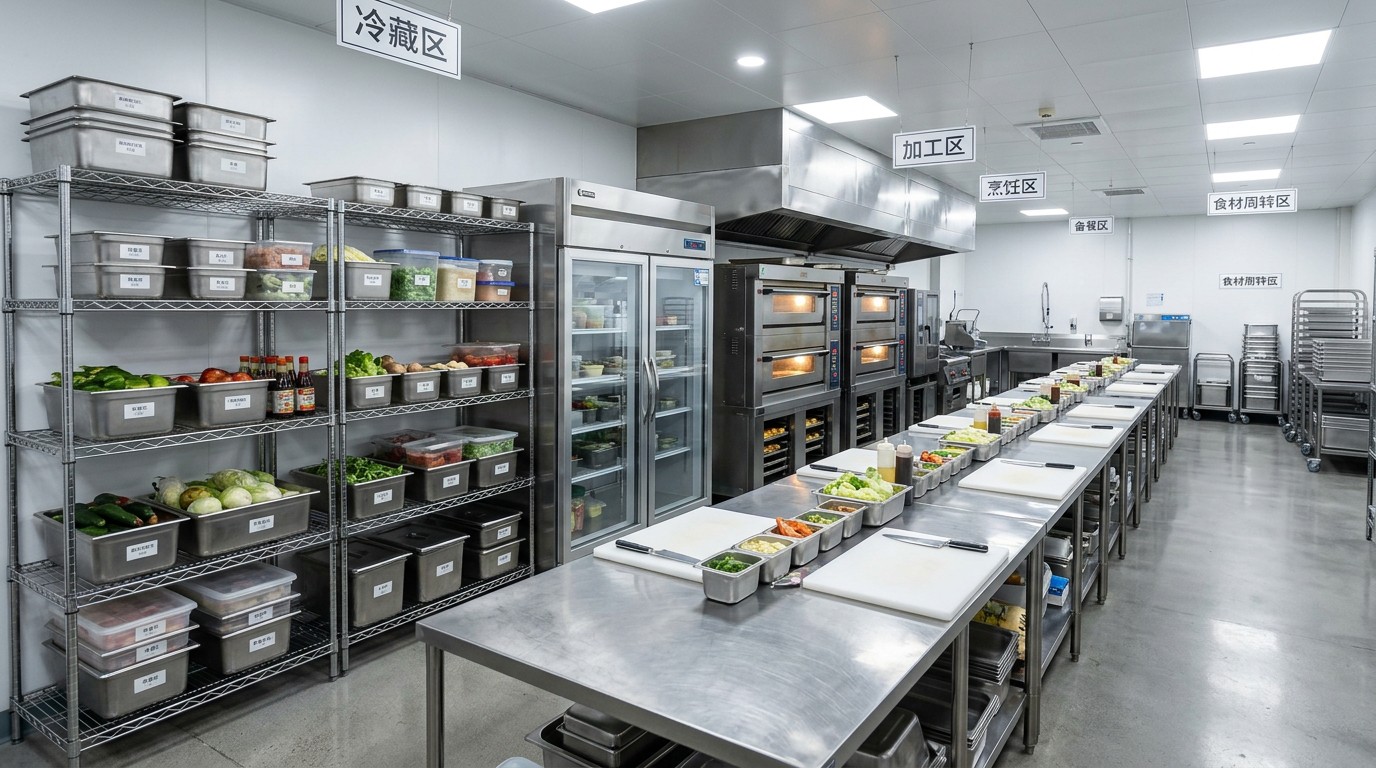
For new projects, workflow should drive equipment selection. A kitchen that looks complete on paper can still fail in operation if the process sequence is inefficient. The ideal flow usually moves through these stages:
- Receiving
- Dry and cold storage
- Washing and initial prep
- Cutting, mixing, portioning, and processing
- Cooking or baking
- Hot holding or cold holding
- Plating, packing, or dispatch
- Cleaning and waste handling
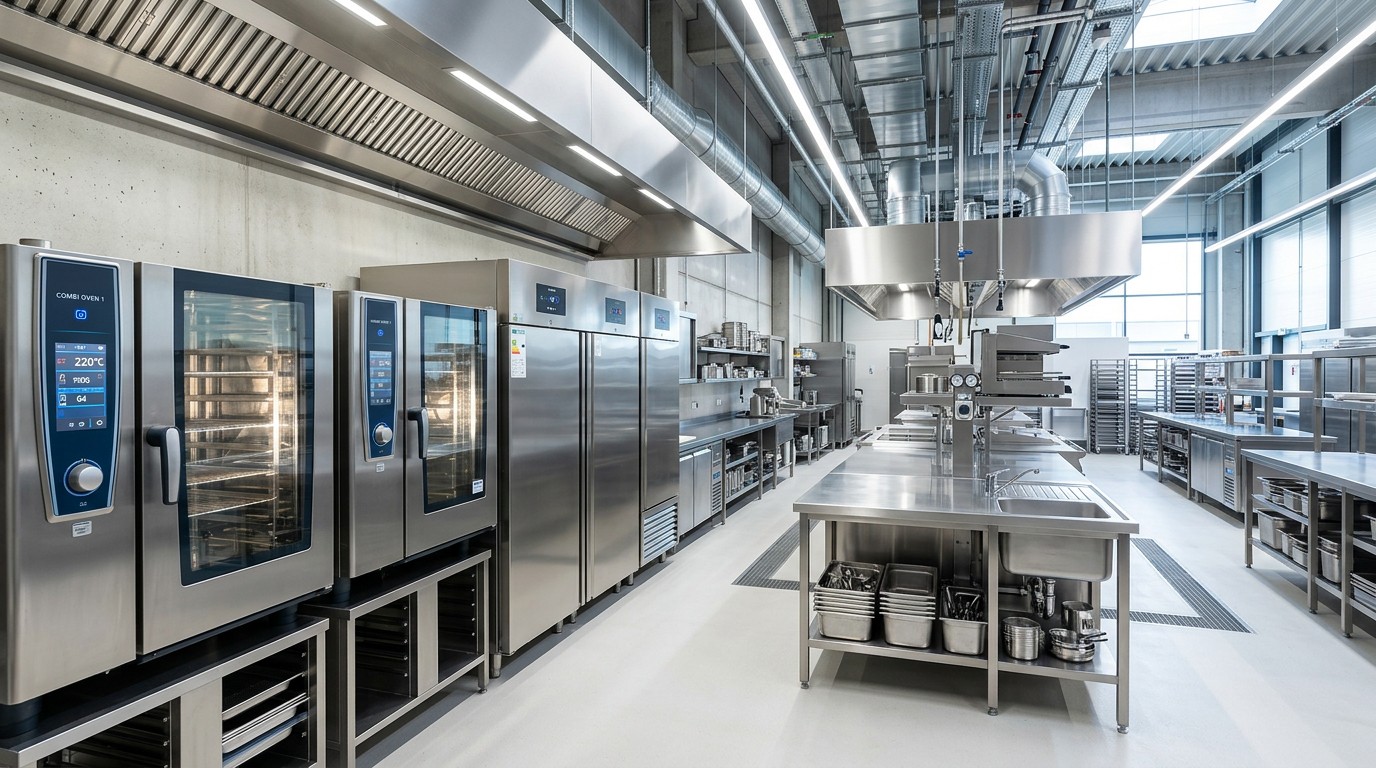
Each stage requires matching equipment. For example, if a central kitchen handles high-volume meal preparation, it may need stainless steel kitchen equipment such as prep tables, sinks, racks, trolleys, and heavy-duty food processors. If the project is a bakery-café, the investment focus may shift more toward dough mixers, proofers, and a commercial kitchen oven.
Operators and managers should ask:
- Does the equipment support a smooth one-way process?
- Will staff cross paths too often during peak hours?
- Are raw and cooked food zones clearly separated?
- Can ingredients move quickly from storage to prep to cooking?
- Is cleaning access adequate around each machine?
These workflow questions often matter more than choosing the “highest specification” machine.
Which food preparation equipment is essential for new catering kitchens?
Preparation equipment depends heavily on menu complexity, but most professional kitchens require a reliable base setup. Common essentials include:
- Stainless steel prep tables: Durable, hygienic, and easy to clean
- Commercial sinks: For food washing, hand washing, and utility cleaning
- Vegetable cutters and slicers: Useful for high-volume prep
- Food processors and mixers: Important for sauces, fillings, batters, and bulk prep
- Work counters with undershelves: Improve organization and access
- Ingredient bins and containers: Support safe and efficient storage
- Trolleys and mobile racks: Help reduce manual handling time
For buyers, stainless steel kitchen equipment is often the preferred standard because it supports sanitation, durability, and long-term use. However, the right grade, thickness, and fabrication quality should be checked carefully. Poorly made prep tables and sinks may corrode, deform, or become difficult to sanitize over time.
If the kitchen serves multiple menu formats, modular prep equipment can provide flexibility without overcommitting budget to specialized machinery too early.
What cooking equipment should be prioritized first?
Cooking equipment is usually the largest and most strategic investment in a new project. The correct selection should reflect production style, peak demand, energy availability, and menu structure.
Typical cooking equipment categories include:
- Commercial kitchen oven: Convection, deck, combi, or baking oven depending on use
- Ranges and cooktops: Gas or electric, with suitable burner count
- Fryers: For fast-service and high-volume fried menu items
- Griddles and grills: For meat, breakfast items, sandwiches, and live cooking
- Steamers: Useful in healthy meal production, hotels, and institutional catering
- Tilting pans or bratt pans: Effective for batch cooking
- Boiling kettles: Suitable for soups, sauces, and large-scale liquid cooking
For many projects, the key question is not “Which machine is most advanced?” but “Which machine can maintain output quality during peak load?” A combi oven, for example, may offer excellent flexibility and consistency, but its value depends on staff skill level, menu fit, and actual production needs.
Business decision-makers should compare cooking equipment using these criteria:
- Output capacity per hour
- Energy consumption
- Recovery time and speed
- Ease of cleaning
- Programmability and consistency
- Maintenance needs and spare parts access
- Compatibility with future menu expansion
Why are refrigeration and storage systems critical from day one?
Cold storage is not an accessory purchase. It is central to food safety, inventory control, and operational continuity. A poor refrigeration plan can lead to spoilage, compliance risks, and unnecessary labor inefficiency.
Most new kitchens should evaluate the following:
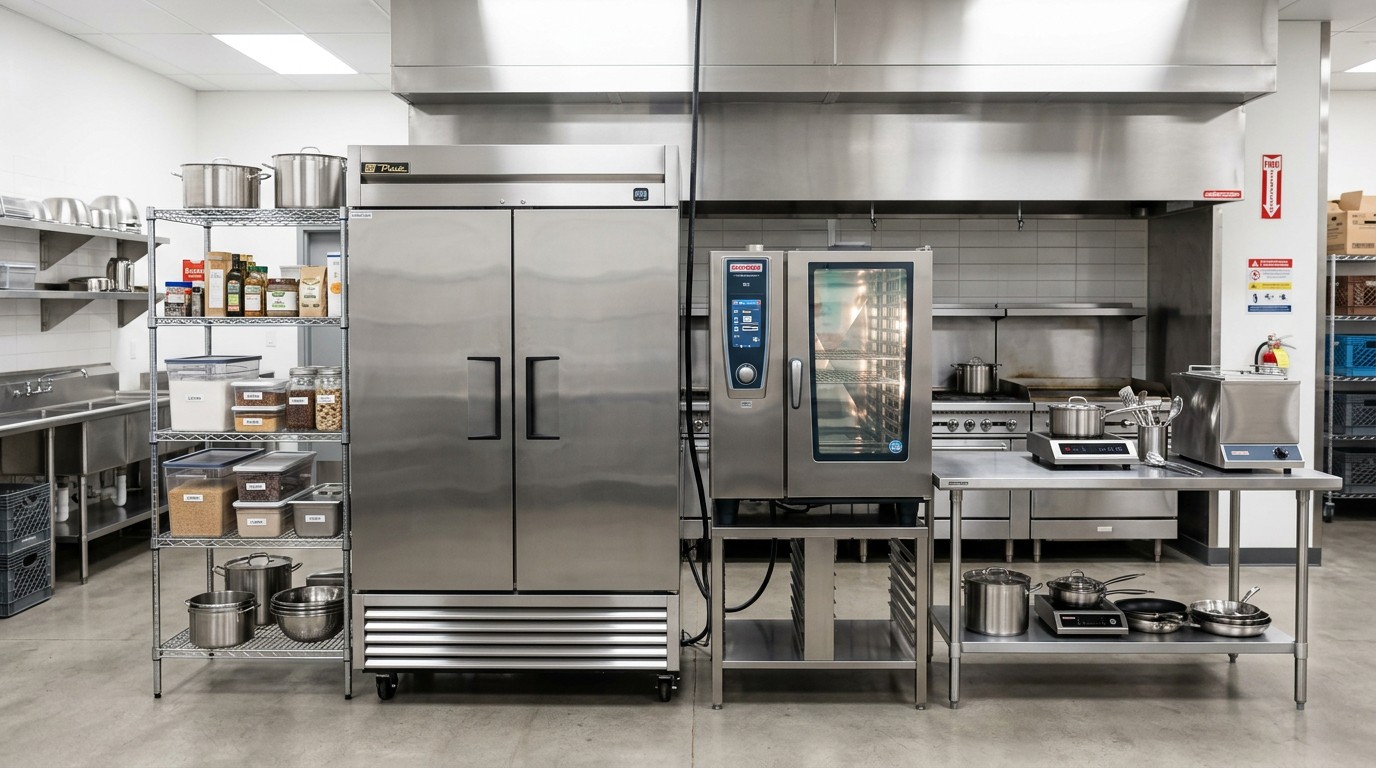
- Commercial Refrigerator units: Upright or undercounter models for daily access
- Freezers: For frozen ingredients and long-term storage
- Walk-in cold rooms: For larger catering and hotel projects
- Blast chillers: Important where food safety and batch cooling are critical
- Refrigerated prep counters: Useful for assembly-line efficiency
Dry storage also deserves attention. A well-designed kitchen shelving system improves stock rotation, visibility, cleaning access, and floor efficiency. Buyers should look for shelving that is strong, corrosion-resistant, easy to clean, and suitable for the humidity and load conditions of the site.
When evaluating refrigeration and storage, ask:
- Is storage capacity aligned with procurement frequency?
- Can raw, cooked, allergen, and ready-to-eat items be separated?
- Are temperature monitoring and access control practical?
- Will the kitchen need more cold storage as business grows?
What washing, sanitation, and safety equipment should not be overlooked?
In many new kitchen projects, cleaning and hygiene equipment is underestimated during the buying stage. This creates operational bottlenecks later. No matter how advanced the cooking line is, poor sanitation design can slow service and increase risk.
Important items include:
- Pot wash sinks and dishwashing sinks
- Commercial dishwashers or utensil washers
- Hand wash stations
- Grease traps and drainage systems
- Waste bins and waste handling stations
- Cleaning chemical storage
- Sterilizers or hygiene support equipment where required
Safety equipment should also be part of the main checklist, not treated as an afterthought:
- Fire suppression support systems
- Anti-slip floor compatibility
- Protective shelving and safe storage practices
- Proper ventilation hoods
- Emergency shutoff and utility access
For enterprise buyers and project managers, these investments protect not only staff and food quality, but also business continuity and compliance outcomes.
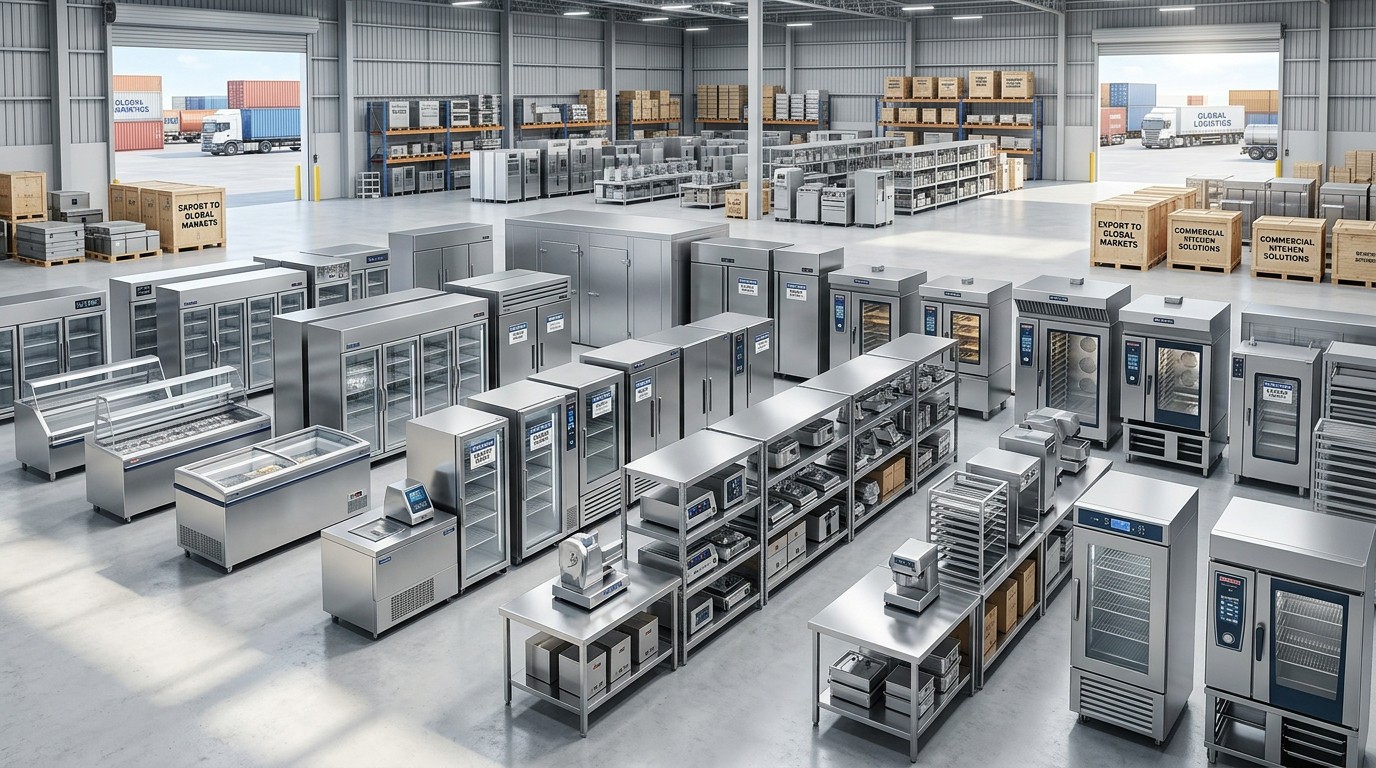
How can buyers evaluate suppliers and kitchen equipment wholesale options?
Many purchasers search for kitchen equipment wholesale solutions because they want cost efficiency, project coordination, and consistent sourcing. However, the lowest quotation is rarely the best value if lead times, warranty service, or fabrication quality are weak.
When comparing suppliers, focus on these points:
- Product range completeness: Can the supplier support a full project package?
- Customization ability: Can they adapt stainless steel kitchen equipment to your layout?
- Compliance and certification: Are materials and equipment suitable for your market?
- Manufacturing quality: Are welding, finishing, and structural details reliable?
- Delivery capacity: Can timelines support your opening schedule?
- After-sales support: Is there technical assistance, spare parts access, or warranty coverage?
- Total cost: Does the quote include installation accessories, logistics, and support?
Procurement teams should also request layout drawings, load recommendations, utility requirements, and maintenance guidance early in the process. This reduces the risk of project delays caused by site mismatch.
What common mistakes increase cost or reduce kitchen performance?
New projects often make similar mistakes, especially when deadlines are tight. The most common include:
- Buying equipment before finalizing the menu
- Ignoring workflow and staff movement
- Underestimating refrigeration needs
- Choosing household-grade products for commercial use
- Failing to check power, gas, drainage, or ventilation requirements
- Overpaying for advanced features that staff will not use
- Not planning enough storage and shelving
- Overlooking cleaning access and maintenance space
- Selecting suppliers only by unit price
Each of these mistakes can create hidden costs through downtime, food waste, retraining, repairs, slower output, or future redesign work.
How do you build a smarter long-term equipment investment plan?
A strong checklist should support both immediate opening needs and future growth. For many new kitchens, the best strategy is to divide purchases into three levels:
- Must-have equipment: Essential to open and operate safely
- Efficiency equipment: Improves labor productivity and consistency
- Growth equipment: Added later when volume or menu expands
This staged method helps control capital expenditure while preserving flexibility. It is especially useful for restaurants, cloud kitchens, hotel projects, institutional catering, and food processing startups that expect business development over time.
Decision-makers should also consider industry trends such as intelligent controls, automated food processing systems, and energy-efficient kitchen solutions. Not every new project needs full smart integration immediately, but selecting equipment that can support future digital kitchen management may create long-term value.
In simple terms, the best catering kitchen equipment checklist is one that balances operational practicality, hygiene, durability, and business scalability.
To summarize, a successful new kitchen project starts with workflow and business goals, then translates those needs into the right mix of preparation tools, cooking equipment, Commercial Refrigerator capacity, kitchen shelving system design, sanitation support, and reliable sourcing. Whether you are evaluating restaurant kitchen supplies for a single site or planning a larger kitchen equipment wholesale purchase, the right checklist helps you avoid costly mistakes and invest with confidence. If equipment decisions are made based on real production needs rather than assumptions, the result is a safer, more efficient, and more profitable kitchen.
- commercial kitchen equipment
- cooking equipment
- stainless steel kitchen
- central kitchen
- restaurant kitchen
- kitchen solutions
- Griddle
- Commercial Refrigerator
- Freezer
- Vegetable Cutter
- Slicer
- Mixer
- Dough Mixer
- Food Processor
- Proofer
- Commercial Dishwasher
- kitchen equipment
- stainless steel kitchen equipment
- restaurant kitchen supplies
- catering kitchen equipment
- kitchen equipment wholesale
- commercial kitchen oven
- kitchen shelving system
Popular Tags
Kitchen Industry Research Team
Dedicated to analyzing emerging trends and technological shifts in the global hospitality and foodservice infrastructure sector.
Industry Insights
Join 15,000+ industry professionals. Get the latest market trends and tech news delivered weekly.
No spam. Unsubscribe anytime.
Contact With us
Contact:
Anne Yin (Ceramics Dinnerware/Glassware)
Lucky Zhai(Flatware)