
How to Compare a Commercial Refrigerator Before Buying
Choosing the right commercial refrigerator is not just about finding a unit that keeps food cold. For restaurants, hotels, food processors, and institutional kitchens, the wrong choice can lead to wasted space, higher electricity bills, food safety risks, frequent breakdowns, and workflow problems. The best way to compare a commercial refrigerator before buying is to focus on what directly affects daily operations: storage needs, temperature stability, energy efficiency, build quality, kitchen layout, and long-term service support. Whether you are buying through kitchen equipment wholesale suppliers or comparing restaurant kitchen supplies for a new project, a structured evaluation will help you make a smarter investment.
Start with the questions that matter most to your kitchen
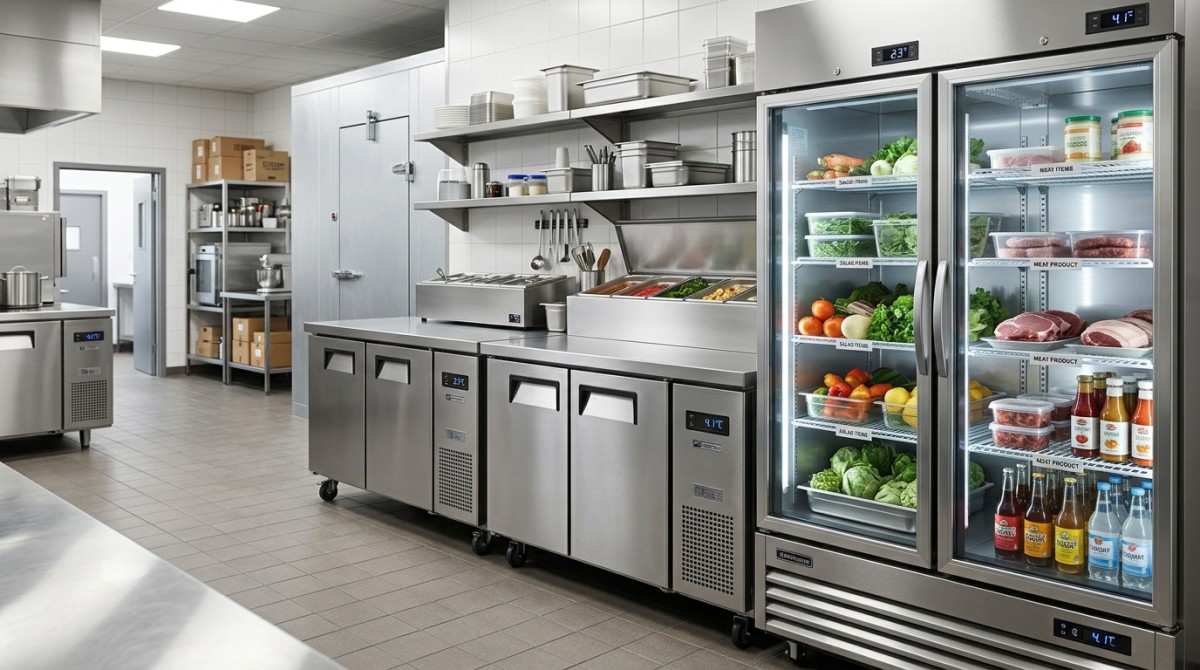
Most buyers search for commercial refrigerator comparisons because they want to avoid making an expensive mistake. In practice, the core buying question is simple: which refrigerator fits your operation best, not which one has the longest feature list?
Before comparing brands or prices, clarify these points:
- What type of food or ingredients will be stored?
- How much volume do you need during peak periods?
- How often will staff open the doors?
- Does the unit need to fit into a tight kitchen line or prep area?
- Is energy cost a major concern over the next 3 to 5 years?
- How important are easy cleaning and food safety compliance?
Operators usually care most about usability, temperature recovery, and cleaning. Procurement teams often focus on price, specifications, and supply reliability. Business decision-makers tend to care about total cost of ownership, downtime risk, and operational efficiency. A good comparison should address all three perspectives.
Compare refrigerator type first, because the wrong format creates daily problems
One of the biggest buying mistakes is comparing models that are not designed for the same use case. A reach-in refrigerator, undercounter unit, prep table refrigerator, upright display fridge, and walk-in cold room solve different problems.
Common commercial refrigerator types include:
- Reach-in refrigerators: suitable for general back-of-house storage in restaurants and hotels
- Undercounter refrigerators: ideal for compact kitchens where space efficiency matters
- Worktop or prep refrigerators: combine cold storage with food preparation surfaces
- Display refrigerators: designed for merchandising and front-of-house visibility
- Bar refrigerators: optimized for beverage service and quick access
- Walk-in refrigeration systems: better for high-volume operations, central kitchens, or food processing facilities
If your team is constantly moving between storage and prep, a prep refrigerator may improve workflow more than a standard upright model. If floor space is limited, undercounter units may be a better fit than larger stainless steel kitchen equipment with more gross volume but poor accessibility. Matching the refrigerator type to the workflow is often more valuable than choosing the cheapest unit with the biggest capacity.
Evaluate real capacity, not just the number on the specification sheet
Storage capacity is one of the first things buyers check, but usable capacity matters more than total internal volume. Shelving design, door configuration, internal airflow, and the size of stored containers all affect how much product you can actually organize safely.
When comparing capacity, ask:
- What is the gross capacity versus usable storage space?
- Are the shelves adjustable and strong enough for your load?
- Can the unit fit GN pans, food bins, trays, or bulk ingredient containers?
- Will air circulation be blocked when the cabinet is full?
- Does the layout support FIFO inventory rotation?
A model with a larger stated volume may perform worse in practice if the interior is awkward or hard to organize. For busy kitchens managing restaurant kitchen supplies, quick access and clean separation of ingredients can be more important than raw liters or cubic feet.
Check cooling performance under real operating conditions
Commercial refrigeration should be compared based on temperature stability, recovery speed, and performance in hot kitchen environments. A refrigerator that performs well in a showroom may struggle in a high-traffic kitchen with frequent door openings and elevated ambient temperatures.
Key cooling performance factors include:
- Temperature range: make sure it matches your ingredient requirements
- Temperature consistency: uneven cooling can affect food safety and product quality
- Recovery time: the unit should return to target temperature quickly after the door is opened
- Ambient rating: important in hot kitchens, bakeries, and high-output foodservice environments
- Air circulation system: helps maintain even temperature distribution
For buyers handling catering kitchen equipment, this is a critical checkpoint. Inadequate cooling performance can lead to food spoilage, compliance issues, and avoidable product loss. If possible, compare test conditions and ask suppliers how the refrigerator performs in real commercial environments, not only in controlled lab settings.
Look closely at energy efficiency and long-term operating cost
Purchase price matters, but electricity consumption can have a bigger financial impact over time. A lower-cost refrigerator may become more expensive after years of operation, especially in facilities running continuously.
To compare energy efficiency effectively, review:
- Energy consumption per day or per year
- Compressor efficiency and refrigeration system design
- Door insulation and gasket quality
- Automatic defrost design and control systems
- Lighting type, especially in display units
Decision-makers should calculate total cost of ownership rather than focusing only on upfront procurement cost. In many cases, energy-efficient kitchen solutions reduce operating expenses and improve return on investment over the equipment lifecycle. This is especially relevant when purchasing through kitchen equipment wholesale channels for multiple sites or large-scale projects.
Inspect material quality, hygiene design, and durability
Build quality directly affects lifespan, maintenance frequency, and cleaning efficiency. In commercial environments, stainless steel kitchen equipment is often preferred because it supports hygiene, corrosion resistance, and easier sanitation.
When reviewing construction quality, compare:
- Exterior and interior material grade
- Thickness and finish of stainless steel panels
- Door hinges, handles, and seals
- Shelf load capacity and coating durability
- Drainage and interior corner design for easier cleaning
- Caster quality and stability if the unit is mobile
A well-built refrigerator should withstand heavy daily use without warping doors, failing hinges, or hard-to-clean interior surfaces. This matters not only for hygiene but also for labor efficiency. If staff spend too much time cleaning around poor design details, the equipment creates hidden operating costs.
Make sure the refrigerator fits the kitchen layout and workflow
Even a high-quality unit can become a bad investment if it does not fit the available space or interrupts movement in the kitchen. Comparison should include more than external dimensions.
Check the following:
- Door swing direction and clearance requirements
- Ventilation space around the cabinet
- Distance from cooking equipment and heat sources
- Access through doors, elevators, and installation pathways
- Compatibility with prep stations and staff movement routes
This is especially important in compact commercial kitchens where every meter matters. The right layout decision can improve speed, reduce staff congestion, and support smoother cold-chain handling.
Compare maintenance needs, spare parts, and after-sales support
Many buyers underestimate the importance of service support until a refrigerator fails during business hours. Downtime can disrupt service, damage inventory, and create emergency replacement costs.
Before buying, ask suppliers:
- What is the warranty period and what does it cover?
- Are spare parts readily available locally?
- How quickly can service technicians respond?
- Are maintenance instructions clear and practical?
- Is condenser cleaning easy for staff or technicians?
For procurement teams and enterprise buyers, reliable service support is often a stronger indicator of value than a small price difference. This is particularly true for businesses operating multiple sites, central kitchens, or time-sensitive foodservice operations.
Use a practical comparison checklist before making the final decision
To make comparison easier, create a side-by-side scoring sheet for each candidate model. Rate each unit using criteria that reflect actual business needs rather than generic marketing claims.
A useful commercial refrigerator comparison checklist should include:
- Refrigerator type and intended application
- Usable storage capacity
- Temperature stability and recovery speed
- Energy consumption
- Material and construction quality
- Kitchen layout compatibility
- Cleaning convenience and hygiene design
- Noise level if relevant to the environment
- Warranty, service, and spare parts support
- Total cost of ownership
This approach helps buyers compare products more objectively and avoid being influenced only by appearance, discounts, or incomplete specifications.
Final buying advice for different types of readers
If you are an information researcher, focus on understanding which refrigerator type matches the intended use. If you are an operator, prioritize temperature performance, ease of cleaning, and practical access. If you are a procurement professional, compare lifecycle cost, supplier reliability, and support terms. If you are a business decision-maker, evaluate the refrigerator as an operational asset that affects food safety, labor efficiency, and long-term cost control.
In short, the best commercial refrigerator is the one that supports your workflow, protects food quality, lowers risk, and delivers stable performance over time. A careful comparison across capacity, cooling, durability, efficiency, and service support will lead to a better purchase than choosing based on price alone. For businesses sourcing restaurant kitchen supplies, commercial kitchen equipment, or broader catering kitchen equipment, this method provides a clearer path to a more reliable and cost-effective decision.
- commercial kitchen equipment
- cooking equipment
- stainless steel kitchen
- central kitchen
- restaurant kitchen
- kitchen solutions
- Commercial Refrigerator
- Display Refrigerator
- Food Processor
- kitchen equipment
- stainless steel kitchen equipment
- restaurant kitchen supplies
- catering kitchen equipment
- kitchen equipment wholesale
Popular Tags
Kitchen Industry Research Team
Dedicated to analyzing emerging trends and technological shifts in the global hospitality and foodservice infrastructure sector.
Industry Insights
Join 15,000+ industry professionals. Get the latest market trends and tech news delivered weekly.
No spam. Unsubscribe anytime.
Contact With us
Contact:
Anne Yin (Ceramics Dinnerware/Glassware)
Lucky Zhai(Flatware)