
What Makes a Commercial Restaurant Kitchen Efficient?
An efficient commercial restaurant kitchen is not simply a space filled with high-end equipment. It is a system where layout, workflow, equipment selection, cleaning routines, storage logic, and staff movement all work together to reduce delays, improve food safety, and control operating costs. For restaurant operators, buyers, and kitchen managers, the real question is not just what equipment to purchase, but how every element of the kitchen supports speed, consistency, safety, and long-term profitability.
In practical terms, kitchen efficiency shows up in shorter ticket times, fewer workflow bottlenecks, lower energy use, better hygiene compliance, reduced staff fatigue, and more reliable output during peak service hours. A kitchen may look modern and still perform poorly if workstations are badly arranged, cooking lines are oversized or undersized, refrigeration is in the wrong place, or cleaning is treated as an afterthought. Efficiency is built into the design decisions from the start.
This guide explains what makes a commercial restaurant kitchen efficient, with a focus on restaurant kitchen layout planning, stainless steel restaurant kitchen design, appliance selection, cleaning, storage, and workflow improvement. Whether you are opening a new site, upgrading an existing kitchen, or comparing suppliers, the goal is to help you make better operational and purchasing decisions.
Efficiency Starts With Layout, Not Equipment Alone
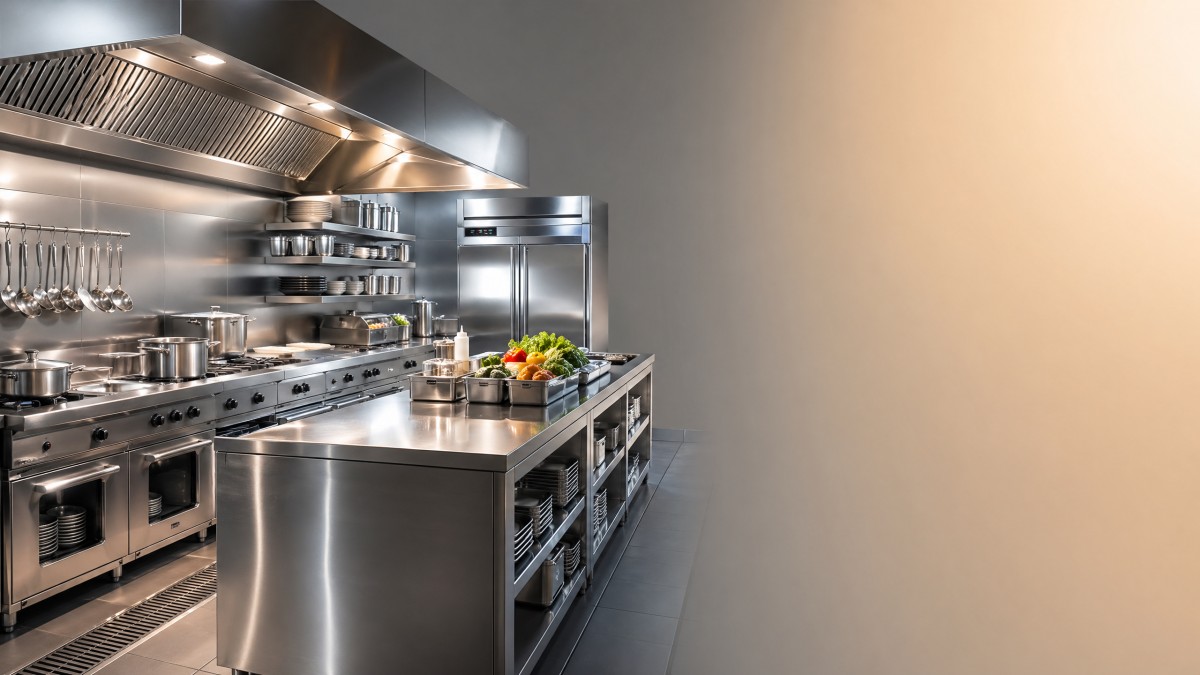
The most efficient commercial restaurant kitchens are designed around workflow. That means ingredients, staff, tools, and dishes should move through the kitchen in a logical sequence with as little backtracking as possible. If cooks cross each other constantly, if raw and cooked food paths overlap, or if prep tables are far from refrigeration, speed and safety both suffer. Even excellent restaurant kitchen appliances cannot compensate for a flawed layout.
A strong restaurant kitchen layout usually follows core production zones: receiving, storage, prep, cooking, plating, service, dishwashing, and waste handling. These zones should connect naturally based on how the menu is produced. In a quick-service environment, for example, the cooking and assembly line must be extremely tight. In a hotel or high-volume restaurant, prep capacity, cold storage, and dish return areas often need more space and clearer separation.
The best layouts also consider labor efficiency. Every unnecessary step adds time across hundreds of tasks per day. If a line cook needs to walk several meters repeatedly for pans, ingredients, or utensils, that small delay multiplies across service. Efficient kitchens reduce walking, reaching, bending, and congestion. This improves output while also reducing operator fatigue and injury risk.
For decision-makers, layout planning should be treated as an operational investment, not only a construction issue. Before selecting equipment, it is worth mapping menu flow, peak volume, staffing patterns, cleaning routes, and storage turnover. A kitchen that fits the real operating model will perform better than one that simply maximizes the number of appliances installed.
What Operational Problems Usually Make a Kitchen Inefficient?
Many commercial kitchens lose efficiency because of hidden design and process problems rather than dramatic equipment failures. One common issue is a mismatch between menu complexity and kitchen capacity. If the menu requires multiple cooking methods, holding steps, sauces, cold prep, and rapid plating, but the line is designed for a simpler concept, delays are unavoidable. Efficiency depends on aligning equipment and station design with actual production demand.
Another frequent problem is poor storage organization. When dry storage, refrigerated items, and frozen goods are not positioned according to usage frequency, staff waste time searching and transporting ingredients. This also increases the risk of spoilage, stock confusion, and poor stock rotation. In efficient restaurant kitchen storage systems, high-use items are easy to access, labeling is clear, and first-in-first-out practices are easy to maintain.
Cleaning design is also often underestimated. If surfaces are hard to sanitize, drains are poorly located, grease management is weak, or dishwashing areas interrupt production flow, sanitation becomes slower and less reliable. Restaurant kitchen cleaning should be supported by design choices such as smooth stainless steel surfaces, accessible equipment placement, proper sink configuration, and separation between dirty and clean zones.
Finally, some kitchens become inefficient because they are over-equipped. Buying too many machines can reduce flexibility, crowd work areas, increase maintenance demands, and complicate cleaning. The right commercial restaurant kitchen is not the one with the most equipment, but the one with the right equipment for the menu, service model, and expected volume.
Why Stainless Steel Still Matters in a Modern Restaurant Kitchen
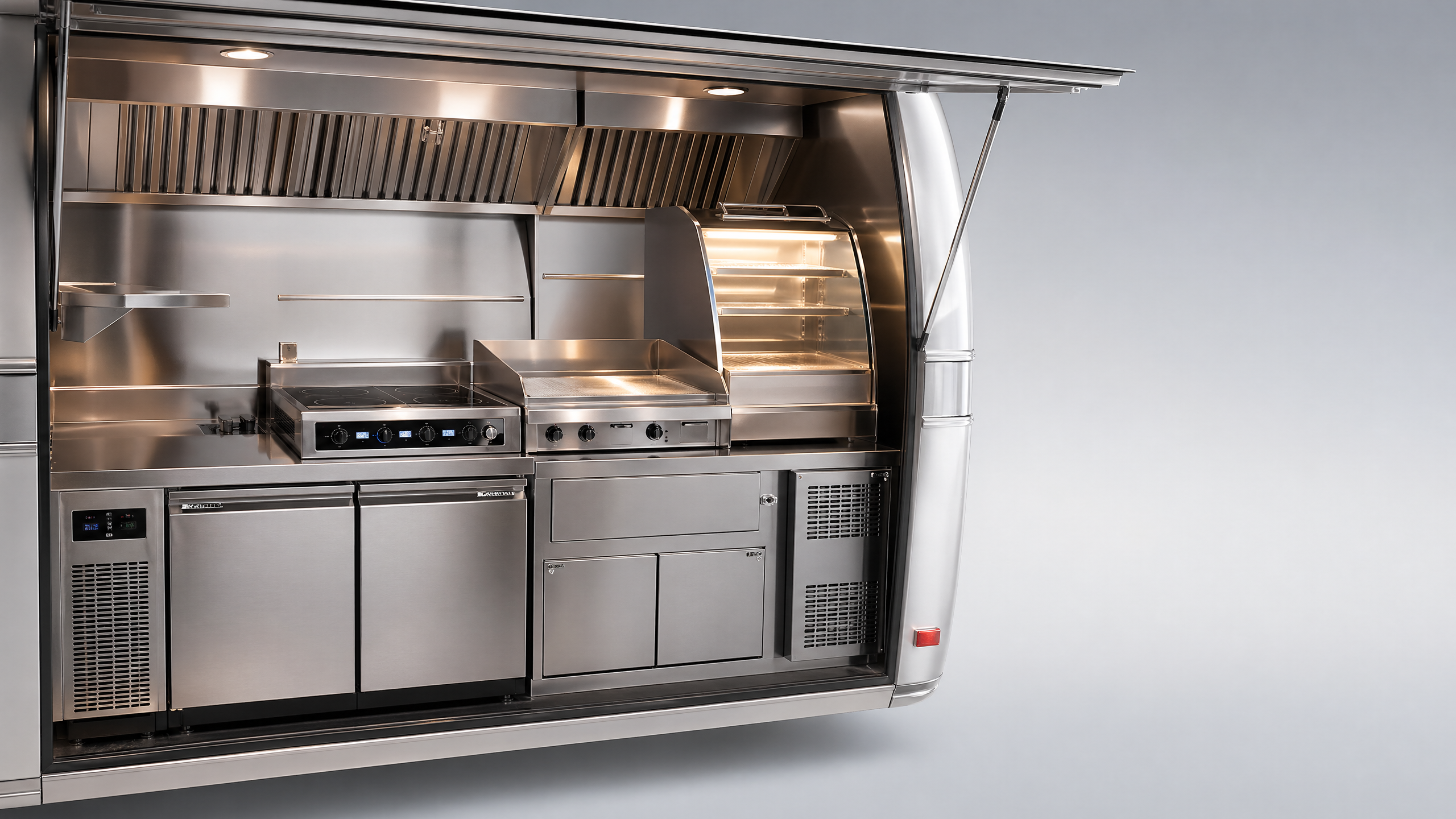
Stainless steel restaurant kitchen surfaces remain a standard for good reason. They support hygiene, durability, and easier maintenance in high-demand environments. In a commercial setting, equipment and worktables must withstand heat, moisture, chemicals, repeated cleaning, impact, and constant daily use. Materials that chip, absorb moisture, or deteriorate quickly create both sanitation risks and replacement costs.
From a food safety perspective, stainless steel is valuable because it is non-porous and relatively easy to clean when properly maintained. This helps kitchens meet hygiene standards and simplifies the removal of grease, food residue, and moisture. For operators, that means lower contamination risk and a more dependable cleaning routine. For procurement teams, it means longer service life and stronger long-term value.
Stainless steel also supports workflow. Shelving, prep tables, sinks, counters, and equipment stands built from durable materials can be integrated into a more consistent and organized station design. In busy kitchens, surfaces must function as active production tools, not just as furniture. When they are stable, easy to sanitize, and built for repeated use, they improve both speed and confidence during service.
However, material choice should still be matched to application. Different thicknesses, finishes, and fabrication quality levels affect performance. Buyers should not evaluate stainless steel products only by appearance. Weld quality, edge finishing, load capacity, corrosion resistance, and ease of cleaning all influence real operational efficiency.
How the Right Restaurant Kitchen Appliances Improve Speed and Consistency
Restaurant kitchen appliances are central to efficiency, but only when they match production needs. The best appliance mix depends on menu style, service volume, timing pressure, and labor skill level. A high-volume operation may benefit from combi ovens, rapid-cook equipment, induction ranges, or automated holding systems. A smaller specialty kitchen may need fewer machines but more flexible multipurpose equipment.
Good equipment selection improves more than cooking speed. It also affects consistency, energy use, labor dependency, and training time. For example, programmable cooking systems can reduce variation between shifts, while efficient refrigeration placement helps maintain ingredient quality with less movement. Equipment with faster recovery times, easier controls, and simpler cleaning can create measurable gains across daily operations.
One of the most important buying principles is to assess total operating value rather than just purchase price. Lower-cost appliances may appear attractive at first, but if they consume more energy, fail more often, or slow down cleaning and service, they increase long-term costs. Procurement teams and business owners should compare throughput, durability, maintenance access, spare parts availability, and utility efficiency before making a final decision.
It is also useful to think in terms of equipment systems rather than standalone units. Cooking, ventilation, refrigeration, prep, warewashing, and holding should support one another. If a powerful cooking line overwhelms ventilation capacity, or if prep output exceeds cold holding space, efficiency drops immediately. The kitchen works best when equipment choices are coordinated as part of one operating environment.
Cleaning and Sanitation Are Core Efficiency Drivers, Not Side Tasks
Many operators think of cleaning as a compliance obligation that happens after production, but in an efficient commercial restaurant kitchen, cleaning is built into the daily workflow. Poorly designed cleaning routines create labor waste, increase downtime, and raise food safety risk. In contrast, kitchens that are easy to clean can reset stations faster, maintain better standards, and avoid disruptions during peak periods.
Restaurant kitchen cleaning becomes more efficient when equipment is accessible, floors are designed for washdown and drainage, and surfaces resist buildup. Removable parts, smooth seams, easy-to-reach corners, and clear separation of prep and waste areas all matter. Even small design details, such as where handwashing sinks are located or how shelving is spaced, can affect sanitation speed and reliability.
For operators and managers, the key question is whether staff can clean thoroughly without excessive time or complexity. If a fryer area requires awkward dismantling, if grease filters are difficult to access, or if splash zones contaminate nearby stations, cleaning quality declines under time pressure. Efficient kitchens make the right action the easy action. This is especially important where staff turnover is high and training time is limited.
From a management point of view, effective sanitation design protects brand reputation as well as operations. Food safety incidents, pest issues, and failed inspections can cause direct financial loss and lasting damage. Investing in easy-clean equipment, proper zoning, and practical cleaning procedures often delivers a stronger return than managers expect.
Storage, Inventory Flow, and Access Control Have a Direct Impact on Performance
Storage is often treated as secondary to cooking equipment, but it has a direct effect on kitchen efficiency. A well-designed storage system reduces ingredient loss, improves stock visibility, shortens prep time, and supports food safety. The goal is not only to store more, but to store smarter. Dry goods, chilled products, frozen items, cleaning supplies, and utensils should each have clear locations based on frequency of use and contamination risk.
Efficient restaurant kitchen storage also supports inventory discipline. When shelves are overcrowded or labeling is inconsistent, teams over-order, misplace products, and miss expiration control. This creates waste and disrupts service when key ingredients cannot be found quickly. Clear container systems, logical shelf arrangement, and defined replenishment practices make kitchens faster and more reliable.
Cold storage deserves particular attention. Refrigerators and freezers should be positioned close enough to production zones to reduce travel time, but not in a way that causes congestion or temperature instability from constant door opening. Buyers should consider internal capacity, shelf adjustability, door configuration, energy performance, and cleaning access when evaluating commercial refrigeration for restaurant kitchens.
Security and access control can also influence efficiency, especially in larger operations, hotels, or central kitchens. If expensive ingredients, prepared items, or chemicals are not controlled properly, shrinkage and errors increase. Organized storage is not just a housekeeping issue; it is part of operational control and cost management.
How to Evaluate Kitchen Efficiency Before Buying or Redesigning
For procurement professionals and business decision-makers, the most useful approach is to evaluate efficiency through measurable operational questions. How many meals or covers must the kitchen support at peak times? How many staff will work in each shift? Which menu items create the most pressure on prep, cooking, and plating? Where do delays, queues, or sanitation risks currently occur? These questions reveal what the kitchen actually needs.
It is also important to review performance indicators such as average ticket time, labor hours per service period, utility costs, food waste, equipment downtime, and cleaning time. These metrics help distinguish between a kitchen that feels busy and one that is truly inefficient. In many cases, one layout correction or equipment upgrade can solve a bottleneck more effectively than a full renovation.
Suppliers and project planners should be asked practical questions, not just technical ones. Can this equipment be serviced locally? How easy is it to clean under and behind the unit? What is the expected throughput in real working conditions? Does the design support future menu changes or volume growth? Can replacement parts be sourced quickly? These details matter more than showroom presentation.
Whenever possible, kitchen planning should involve both management and actual operators. Executive decisions about budget and capacity are essential, but line cooks, cleaning teams, and supervisors often understand bottlenecks better than anyone else. Their input can prevent costly mistakes and lead to a commercial kitchen that works well under real conditions, not just on paper.
The Most Efficient Kitchens Balance Speed, Safety, Cost, and Flexibility
An efficient commercial restaurant kitchen is one that performs consistently under pressure without sacrificing food safety, staff usability, or cost control. It is built around a logical layout, supported by durable stainless steel restaurant kitchen surfaces, and equipped with the right restaurant kitchen appliances for the menu and service model. It also makes cleaning, storage, and maintenance easier rather than more complicated.
For users and operators, efficiency means fewer obstacles during prep and service. For buyers, it means selecting equipment and materials that deliver long-term operating value. For business leaders, it means stronger productivity, lower risk, and better scalability. In every case, efficiency is not one feature or one product. It is the result of coordinated decisions across design, equipment, workflow, and daily management.
If you are assessing a new commercial restaurant kitchen or improving an existing one, start with the flow of work. Study where time is lost, where hygiene is difficult, where staff movement is excessive, and where equipment fails to support demand. The kitchens that perform best are not always the largest or the most expensive. They are the ones designed to make every task faster, cleaner, safer, and more consistent.
- kitchen appliances
- cooking equipment
- central kitchen
- kitchen design
- restaurant kitchen
- Freezer
- restaurant kitchen design
- stainless steel restaurant kitchen
- restaurant kitchen layout planning
- commercial restaurant kitchen
- restaurant kitchen layout
- restaurant kitchen appliances
- restaurant kitchen storage
- restaurant kitchen cleaning
Popular Tags
Kitchen Industry Research Team
Dedicated to analyzing emerging trends and technological shifts in the global hospitality and foodservice infrastructure sector.
Industry Insights
Join 15,000+ industry professionals. Get the latest market trends and tech news delivered weekly.
No spam. Unsubscribe anytime.
Contact With us
Contact:
Anne Yin (Ceramics Dinnerware/Glassware)
Lucky Zhai(Flatware)