
Restaurant Kitchen Equipment Checklist for a Smooth Opening
A well-planned restaurant kitchen equipment checklist is essential for project managers and engineering leads aiming for a smooth opening. From cooking lines and refrigeration to ventilation, food safety, and energy-efficient systems, every detail affects timeline, compliance, and daily performance. This guide outlines the key equipment categories and planning priorities to help you build a reliable, efficient, and future-ready commercial kitchen.
What Project Managers Really Need From a Restaurant Kitchen Equipment Checklist
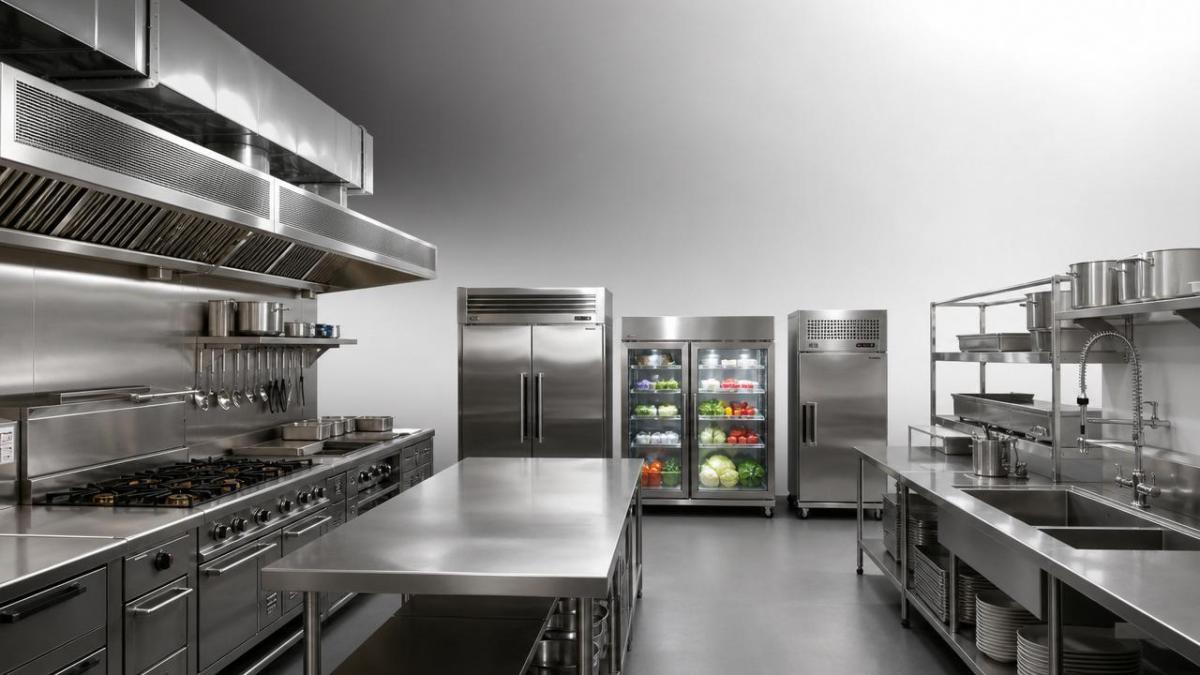
When someone searches for a restaurant kitchen equipment checklist, they usually do not want a generic list of ovens, sinks, and refrigerators. For project managers and engineering leads, the real need is a practical planning tool that reduces opening risk, prevents missed items, and supports coordination between design, procurement, installation, and operations.
The biggest concern is not simply whether the kitchen has enough equipment. It is whether the selected equipment matches the menu, production volume, workflow, utilities, code requirements, and opening schedule. A poor equipment plan can delay inspections, create bottlenecks, increase labor cost, and force expensive last-minute changes.
That is why the most useful restaurant kitchen equipment checklist should do three things at once: define what equipment is required, explain how to prioritize it, and help decision-makers evaluate performance, compliance, and total lifecycle value. For an opening project, the checklist is both a purchasing reference and a risk-control document.
Start With Operational Requirements, Not Product Catalogs
Before selecting any equipment, clarify the operating model. A fast-casual concept, full-service restaurant, cloud kitchen, hotel outlet, and fine dining venue all require very different equipment mixes. The correct checklist starts with menu complexity, expected covers, peak-hour output, holding time, food safety procedures, and labor model.
Project leaders should ask several early questions. What menu items drive the highest volume? Which stations will experience the most pressure during peak service? Will prep be done on-site or in a central kitchen? What level of automation is needed to reduce labor dependency? These answers shape the equipment list more accurately than any standard template.
It is also important to define future scalability. Many openings are planned around day-one capacity only, but if the restaurant expects growth, catering expansion, delivery service, or a broader menu, the kitchen should be prepared for that trajectory. Oversizing every appliance is wasteful, but designing with no flexibility often becomes more expensive later.
The Core Restaurant Kitchen Equipment Checklist by Functional Zone
For commercial kitchen planning, organizing the checklist by workflow zone is more effective than listing equipment randomly. This helps project teams align equipment with process flow, utility planning, hygiene controls, and staff movement.
1. Receiving and Storage Area
This zone supports inventory control, food safety, and early-stage efficiency. Essential items often include receiving tables, shelving systems, ingredient bins, pallet handling tools if needed, thermometers, and labeling supplies. Dry storage should be easy to clean, moisture-resistant, and laid out for stock rotation.
Cold storage usually includes walk-in refrigerators, walk-in freezers, reach-in refrigerators, undercounter refrigeration, and specialty chillers depending on the concept. Capacity should be calculated using delivery frequency, menu mix, and emergency buffer, not guesswork. Insufficient cold storage is a common opening mistake.
2. Food Preparation Area
The prep zone may require stainless steel worktables, cutting stations, sinks, vegetable washers, mixers, slicers, food processors, scales, vacuum packers, and ingredient holding units. The exact list depends on whether ingredients arrive raw, semi-processed, or fully portioned.
For project managers, the priority here is not just equipment count but cross-contamination control. Separate prep areas or dedicated tools may be needed for raw meat, seafood, produce, and ready-to-eat items. Sink placement, drainage, and sanitation access should be planned together with equipment selection.
3. Cooking Line Equipment
This is usually the highest-value part of the restaurant kitchen equipment checklist. Depending on the menu, key items may include commercial ranges, ovens, combi ovens, griddles, charbroilers, fryers, steamers, salamanders, induction units, rice cookers, holding cabinets, and specialty cooking equipment.
Selection should be based on throughput, recovery speed, heat load, utility availability, and consistency requirements. A project team should compare not only purchase price but also maintenance needs, cleaning complexity, training burden, and compatibility with the expected service pace.
4. Refrigerated Line Support
Line refrigerators, sandwich prep tables, pizza prep counters, refrigerated chef bases, and lowboys are often critical for speed and food safety. These are not minor accessories. If line refrigeration is poorly configured, staff movement increases, product temperatures fluctuate, and service slows down.
5. Washing and Sanitation Zone
This area typically includes pre-rinse units, compartment sinks, handwashing sinks, dishwashers, glass washers if needed, drying racks, waste bins, grease management systems, and chemical storage provisions. The warewashing area should support a one-way dirty-to-clean flow whenever possible.
Dishwashing capacity must match peak service, not average traffic. Underestimating warewashing causes service disruption, sanitation risk, and labor pressure almost immediately after opening.
6. Service, Pass, and Holding Area
Heat lamps, pass counters, hot holding cabinets, warming drawers, expo shelves, display units, and pickup staging systems can directly affect ticket times and food quality. In high-volume or delivery-heavy concepts, this area deserves much more attention than it often receives during planning.
Utilities, Ventilation, and Infrastructure Are Part of the Checklist
One of the most damaging planning errors is treating kitchen equipment as independent from infrastructure. In reality, every major piece of equipment depends on power, gas, water, drainage, ventilation, structural support, and maintenance access. The equipment checklist must therefore be linked to a utility matrix.
Project managers should verify electrical loads, voltage requirements, gas pressure, water connections, floor drains, exhaust demands, make-up air, and heat rejection conditions before procurement is finalized. Even a perfectly chosen appliance can become a project problem if site conditions are not ready.
Ventilation deserves special emphasis. Hood systems, grease filters, fire suppression, duct routing, and air balance all affect compliance, comfort, and kitchen performance. Cooking line design should never be finalized without validating hood coverage and exhaust calculations.
Space for cleaning and servicing is another practical requirement. Equipment that cannot be easily accessed for maintenance tends to create downtime, hygiene issues, and higher repair costs. A smooth opening depends on installability and serviceability, not just equipment specifications on paper.
How to Prioritize Equipment for Budget, Timeline, and Opening Risk
Not every item in a restaurant kitchen equipment checklist has the same importance. For project execution, it helps to divide equipment into three categories: critical path equipment, operational essentials, and secondary or upgrade items.
Critical path equipment includes items that affect layout completion, MEP coordination, permits, commissioning, and test runs. Cooking batteries, walk-ins, hoods, dishwashers, grease systems, and major refrigeration often fall into this group. Delays here can push the entire opening date.
Operational essentials include the equipment needed for core menu execution and safe daily function. These may not always be the most expensive items, but they are indispensable to launch. Secondary items are useful but not always necessary on day one, such as certain display units, specialty prep tools, or optional automation.
This framework helps teams protect the opening timeline when budgets tighten or lead times stretch. It also improves procurement sequencing. Long-lead items should be ordered first, while lower-risk items can be scheduled later without compromising construction progress.
Compliance, Food Safety, and Staff Efficiency Should Guide Final Decisions
For engineering leads and project managers, compliance is not a separate issue from equipment planning. Health codes, fire safety standards, sanitation requirements, and local licensing rules should be integrated into the checklist from the beginning. Waiting until inspection stage is too late.
Food safety should influence material choice, cleanability, temperature control, and equipment layout. Stainless steel construction, rounded corners, removable parts, accessible drain areas, and accurate temperature monitoring all support safer operations. These details may seem small during procurement but have major operating impact.
Staff efficiency is equally important. A commercial kitchen can have premium equipment and still perform badly if the workflow is awkward. Look at travel distance, reach zones, visibility, pass alignment, and whether one operator can safely manage adjacent tasks. Good equipment planning reduces labor friction and supports training consistency.
Where possible, choose equipment with intuitive controls, programmable settings, and diagnostic features. Smart or connected kitchen systems can be valuable when the operation needs repeatability, energy monitoring, preventive maintenance alerts, or tighter multi-site management.
Energy Efficiency and Total Cost of Ownership Matter More Than Sticker Price
Many opening teams focus too heavily on upfront purchase cost. That is understandable under budget pressure, but it can produce poor long-term decisions. Equipment should be evaluated through total cost of ownership, including energy use, water consumption, maintenance frequency, spare parts availability, cleaning labor, and expected service life.
Energy-efficient kitchen equipment can reduce utility cost while also supporting sustainability targets and compliance with modern building expectations. High-efficiency refrigeration, induction cooking, combi ovens, heat recovery features, and intelligent standby modes may justify a higher initial investment when viewed over years of operation.
Reliability is another cost factor. A lower-cost unit that fails during peak service or requires frequent repair is often more expensive than a better-built option. For project leaders, the better question is not “What is cheapest?” but “What supports stable performance with acceptable lifecycle cost?”
A Practical Pre-Opening Checklist for Equipment Readiness
Even the best equipment plan can fail if commissioning and handover are rushed. Before opening, project teams should confirm that every item has been delivered, installed, connected, tested, and documented. A formal readiness review is essential.
Your pre-opening restaurant kitchen equipment checklist should include: model verification against approved schedules, utility connection checks, startup testing, calibration, temperature verification, ventilation balancing, fire suppression sign-off, staff training, cleaning validation, spare parts availability, warranty documentation, and preventive maintenance planning.
It is also wise to run simulated service tests. A live workflow trial can reveal hidden problems such as insufficient holding capacity, awkward prep flow, slow recovery time, overheating, drainage issues, or weak coordination between cooking and warewashing. These findings are far less costly before launch than after opening.
Final Thoughts: Build a Checklist That Supports Performance, Not Just Procurement
A strong restaurant kitchen equipment checklist is more than a list of appliances. For project managers and engineering leaders, it is a decision framework that connects menu requirements, workflow, infrastructure, safety, budget, and opening readiness. The goal is not only to buy the right equipment but to create a kitchen that can perform reliably from day one.
If you prioritize operational fit, utility coordination, compliance, lifecycle value, and pre-opening verification, your project is far more likely to open smoothly and scale successfully. In practical terms, the best checklist is the one that prevents avoidable surprises and turns equipment planning into a competitive advantage.
Popular Tags
Kitchen Industry Research Team
Dedicated to analyzing emerging trends and technological shifts in the global hospitality and foodservice infrastructure sector.
Industry Insights
Join 15,000+ industry professionals. Get the latest market trends and tech news delivered weekly.
No spam. Unsubscribe anytime.


Contact With us
Contact:
Anne Yin (Ceramics Dinnerware/Glassware)
Lucky Zhai(Flatware)