
Professional Kitchen Equipment: What Should Be Bought First
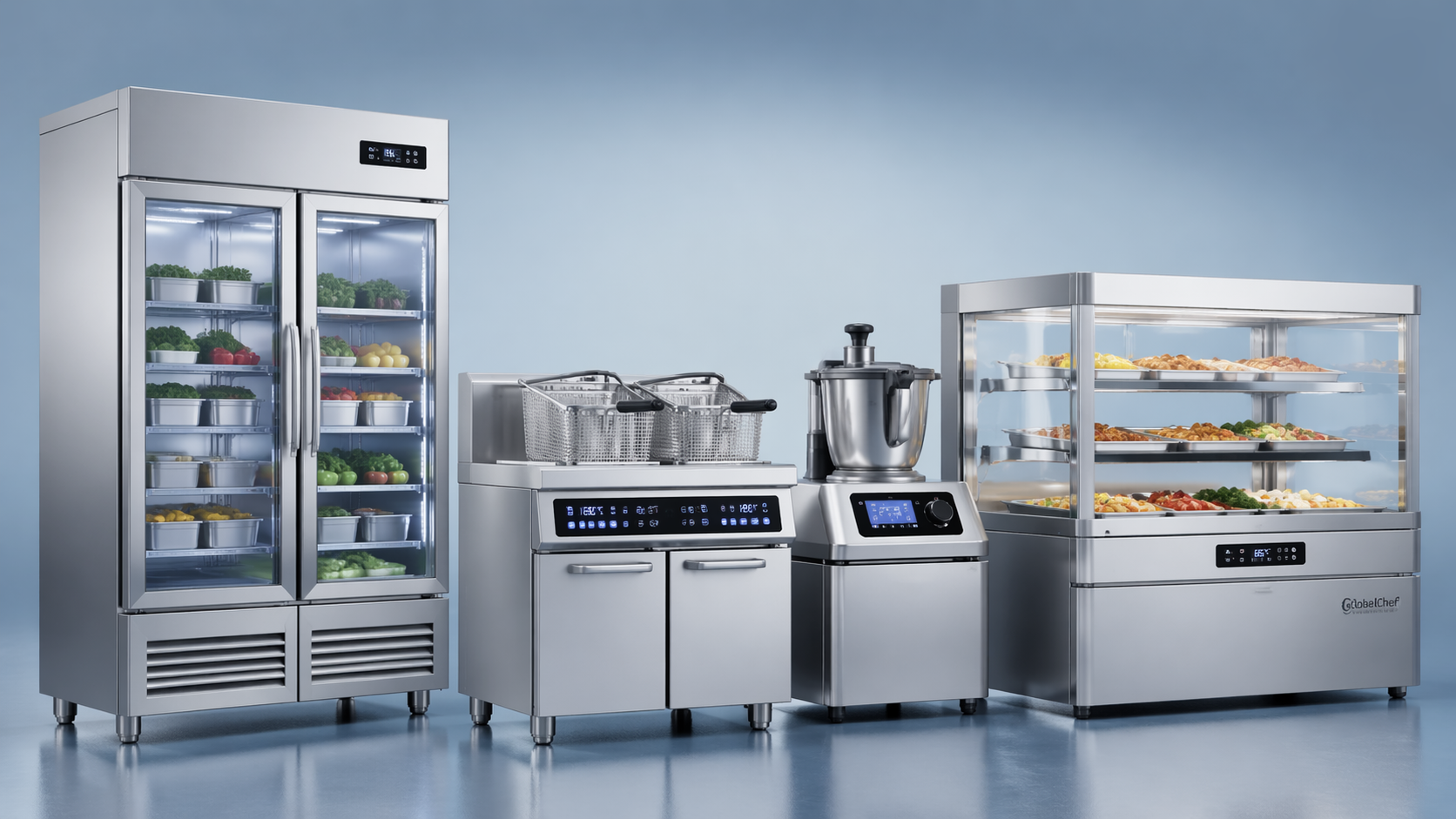
Choosing professional kitchen equipment can feel overwhelming, but the right starting point is usually not the most impressive machine. It is the equipment that protects food safety, supports your core menu, and keeps daily workflow stable. For most restaurants, hotels, and foodservice operations, the first purchases should be refrigeration, primary cooking equipment, ventilation, and prep tools that directly match menu demand. Only after these essentials are secured should operators consider secondary items such as a glass washer machine, specialty cooking units, or advanced automation.
This matters because early purchasing mistakes are expensive. Buying a commercial deep fryer before confirming oil management capacity, power supply, and menu volume can create inefficiency. Investing in a commercial food processor before understanding prep flow may leave an expensive machine underused. Good restaurant kitchen planning starts with operational priorities, not with a product catalog. In practical commercial kitchen design, the best first investments are the ones that reduce risk, improve output, and create a reliable foundation for future expansion.
What professional kitchen equipment should be bought first?
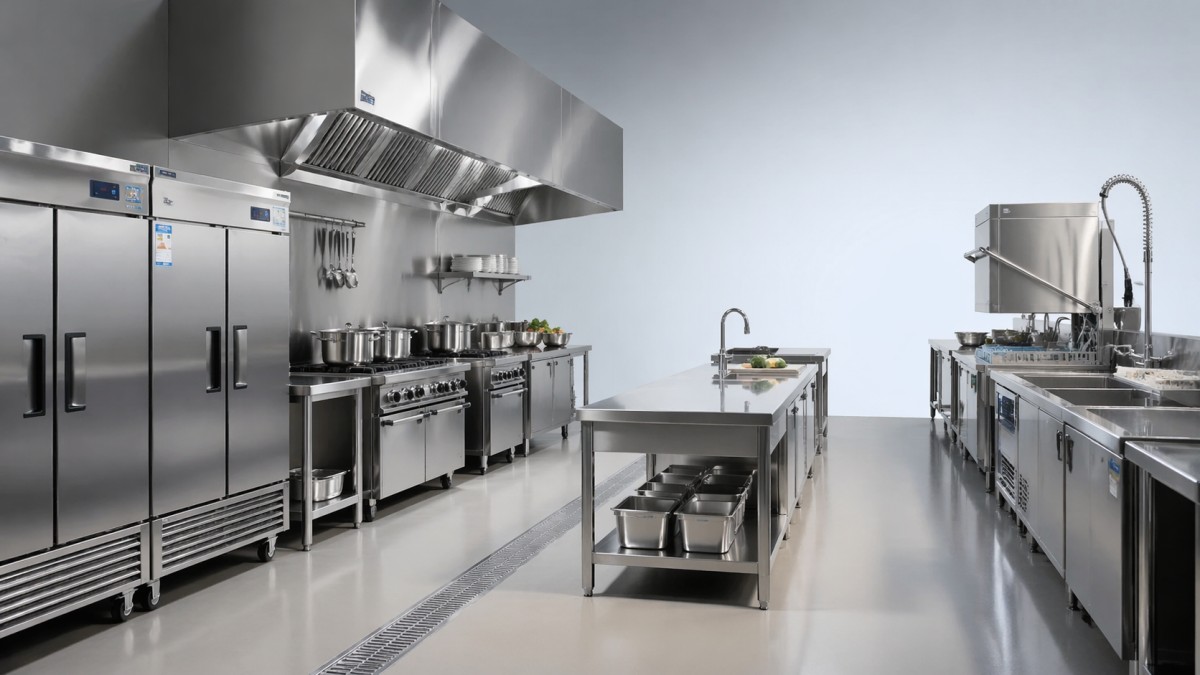
The short answer is this: buy in order of operational necessity. That usually means:
- Commercial refrigeration equipment for food safety and ingredient storage
- Primary cooking equipment based on your menu, such as ranges, ovens, grills, or a commercial deep fryer
- Ventilation and extraction systems to support safety and compliance
- Prep equipment such as worktables, sinks, and a commercial food processor if prep volume justifies it
- Cleaning and sanitation equipment to maintain hygiene and operational continuity
If the budget is limited, this order helps decision-makers avoid spending too early on equipment that looks useful but does not solve the most urgent operational needs. For technical evaluators, this approach also supports easier utility planning, layout design, and capacity matching.
Why refrigeration is often the first non-negotiable investment
For most food businesses, refrigeration comes first because it protects inventory, food quality, and compliance. Without dependable commercial refrigeration equipment, even the best cooking line cannot function properly. Refrigerators, freezers, undercounter units, and cold prep stations are not optional if your operation stores meat, dairy, produce, sauces, or prepared ingredients.
From a business perspective, refrigeration is also one of the clearest return-on-investment categories. It reduces spoilage, supports bulk purchasing, and stabilizes supply planning. From an operator perspective, it improves access to ingredients and reduces unnecessary movement during service. From a technical perspective, it requires careful evaluation of capacity, compressor performance, energy efficiency, temperature consistency, and maintenance access.
When choosing refrigeration first, buyers should ask:
- How much cold storage is needed based on delivery frequency and menu size?
- Do we need reach-in, walk-in, undercounter, or prep-station refrigeration?
- Can the unit maintain stable temperatures during peak service?
- What are the energy costs over time?
- Is after-sales service available locally?
For many new operations, underestimating refrigeration leads to workflow bottlenecks and food safety risks much faster than underinvesting in specialty cooking equipment.
Buy cooking equipment according to your menu, not according to trends
After refrigeration, the next priority is core cooking equipment. The key principle is simple: buy for your highest-volume menu items first. A steakhouse may prioritize charbroilers and holding equipment. A quick-service restaurant may need a commercial deep fryer as a top priority. A bakery will put ovens and proofing systems ahead of frying or grilling. A hotel breakfast kitchen may need griddles, combi ovens, and hot holding cabinets before anything else.
This is where many purchasing errors happen. Businesses often buy equipment based on future plans instead of current production reality. While growth matters, the first phase of investment should support the dishes that generate the most revenue and require the most consistent output.
For example, a commercial deep fryer should be purchased early only if fried products are central to the menu. In that case, it can deliver excellent value through speed, consistency, and high-volume production. But if fried items are only occasional, budget may be better spent on a convection oven, range, or prep station first.
When evaluating cooking equipment, focus on:
- Menu fit and expected production volume
- Recovery speed and consistency during peak hours
- Energy source: gas or electric
- Ease of cleaning and operator safety
- Footprint and compatibility with commercial kitchen design
Do not overlook ventilation, utilities, and compliance requirements
One of the most practical mistakes in restaurant kitchen planning is buying equipment before confirming ventilation, drainage, electrical load, or gas supply. A kitchen may purchase the right appliance and still be unable to install or operate it efficiently.
Ventilation systems, hoods, fire suppression, grease management, and make-up air are essential parts of professional kitchen equipment planning. They may not be the most visible items, but they directly affect safety, regulatory approval, staff comfort, and equipment performance. For enterprise decision-makers, these systems also influence long-term liability and operating cost.
Technical teams should evaluate:
- Total power demand and circuit requirements
- Gas pressure and connection points
- Water inlet and drainage needs
- Heat output and hood sizing
- Local foodservice compliance and fire safety codes
If these factors are addressed early, installation delays and costly redesigns can be avoided. This is especially important in integrated commercial kitchen design projects where space efficiency and regulatory approval must align from the beginning.
Which prep and support equipment should come before specialty machines?
After storage and cooking are covered, prep and support equipment usually deserve the next share of investment. These include stainless steel worktables, sinks, shelving, ingredient bins, cutting stations, and selected mechanized prep tools.
A commercial food processor becomes a smart early purchase when prep volume is high, labor costs are rising, or consistency matters across multiple shifts. It can reduce manual cutting time, improve portion uniformity, and support faster batch production. However, if the menu is simple and prep demand is limited, a food processor may not need to be at the top of the list.
The same logic applies to other support equipment. Buyers should prioritize machines that remove repetitive labor, reduce service delays, or improve hygiene. Equipment that only adds convenience, without measurable operational benefit, can wait until the kitchen has stabilized.
A useful test is to ask: does this machine solve a daily problem, a weekly problem, or just an occasional inconvenience? The more frequent the problem, the earlier the purchase should be considered.
When should a glass washer machine or other cleaning equipment be prioritized?
Cleaning equipment is often underestimated, yet in some operations it should be purchased very early. A glass washer machine is a good example. In bars, cafés, hotels, and beverage-focused restaurants, glass turnover is constant, and manual washing can quickly slow service, increase breakage, and weaken hygiene control. In these environments, a glass washer machine may be a higher priority than some secondary cooking appliances.
Likewise, warewashing equipment, sanitizing systems, and proper sink configurations are not just support tools. They affect labor efficiency, food safety, and customer experience. Slow cleaning processes can disrupt front-of-house and back-of-house coordination, especially during rush periods.
Decision-makers should assess:
- Hourly volume of dishes, trays, and glassware
- Labor cost versus machine efficiency
- Water and energy consumption
- Cleaning result consistency and sanitation standards
- Available floor space and workflow positioning
If cleaning throughput is a known bottleneck, cleaning equipment should move much higher on the purchase list.
How should businesses prioritize purchases when the budget is limited?
When capital is tight, the best approach is to divide equipment into three levels:
- Critical equipment: required for food safety, legal compliance, and core menu production
- Efficiency equipment: reduces labor, speeds output, and improves consistency
- Expansion equipment: supports future menu additions or premium service upgrades
For most operations, the first budget should go almost entirely to critical equipment, with selected efficiency items included only if they solve major workflow issues. Expansion equipment should come later unless it directly supports a high-margin offering.
This method gives enterprise buyers a practical framework for investment control. It also helps technical evaluators and operators speak the same language: what must be installed now, what improves performance next, and what can wait.
Leasing, phased procurement, and modular kitchen setups can also help businesses start with essentials while preserving flexibility. In many cases, it is better to buy fewer high-quality core units than to fill the kitchen with lower-value equipment that creates maintenance problems later.
What makes equipment a good long-term investment?
The cheapest purchase price is rarely the best decision. Good professional kitchen equipment should be evaluated by total value over time. That includes durability, serviceability, energy efficiency, operator safety, spare parts availability, and how well the equipment fits the kitchen’s actual workflow.
For decision-makers, strong long-term investments usually offer:
- Reliable daily performance with low downtime
- Lower utility and maintenance costs
- Easy training for operators
- Scalability as production grows
- Compliance with safety and hygiene standards
In today’s market, smart kitchen technologies and energy-efficient kitchen solutions are becoming more relevant, especially for chains, central kitchens, and high-volume operations. However, advanced features should only be prioritized when they solve real management or production challenges. Automation is valuable when it improves control and output, not when it simply adds complexity.
Final decision guide: what should be bought first for a professional kitchen?
If you need a clear conclusion, start with equipment that keeps food safe, supports your main menu, and prevents operational bottlenecks. In most cases, that means commercial refrigeration equipment first, then core cooking equipment, followed by ventilation, prep stations, and cleaning systems. A commercial deep fryer should be an early purchase only when frying is central to sales. A commercial food processor should come early when prep labor is high. A glass washer machine deserves priority in beverage-heavy or hospitality-focused operations where turnaround speed matters.
The smartest restaurant kitchen planning process is not about buying everything at once. It is about buying the right equipment in the right order. When commercial kitchen design is aligned with menu needs, workflow, utilities, and budget, each purchase creates real operational value. That is what turns kitchen equipment from a cost item into a strategic asset.
- smart kitchen
- cooking equipment
- refrigeration equipment
- central kitchen
- kitchen design
- restaurant kitchen
- kitchen solutions
- Griddle
- Deep Fryer
- Charbroiler
- Freezer
- Food Processor
- Glass Washer
- Stainless Steel Worktable
- kitchen equipment
- professional kitchen equipment
- commercial refrigeration equipment
- commercial deep fryer
- glass washer machine
- commercial food processor
- commercial kitchen design
- restaurant kitchen planning
Popular Tags
Kitchen Industry Research Team
Dedicated to analyzing emerging trends and technological shifts in the global hospitality and foodservice infrastructure sector.
Industry Insights
Join 15,000+ industry professionals. Get the latest market trends and tech news delivered weekly.
No spam. Unsubscribe anytime.
Contact With us
Contact:
Anne Yin (Ceramics Dinnerware/Glassware)
Lucky Zhai(Flatware)