
Kitchen Knife Buying Guide: Steel, Edge, and Daily Use
Choosing the right kitchen knife is less about brand names and more about three practical factors: steel quality, edge geometry, and how the knife holds up in real daily use. For home users, chefs, procurement teams, and technical evaluators, the best knife is the one that matches cutting volume, maintenance habits, safety requirements, and budget. A premium steel is not always the best choice if it chips easily in a fast-paced kitchen, just as a low-cost knife is not a good value if it dulls too quickly and slows down prep work. This guide explains how to evaluate kitchen knives in a way that supports better buying decisions for both household and commercial kitchen environments.
What matters most when buying a kitchen knife?
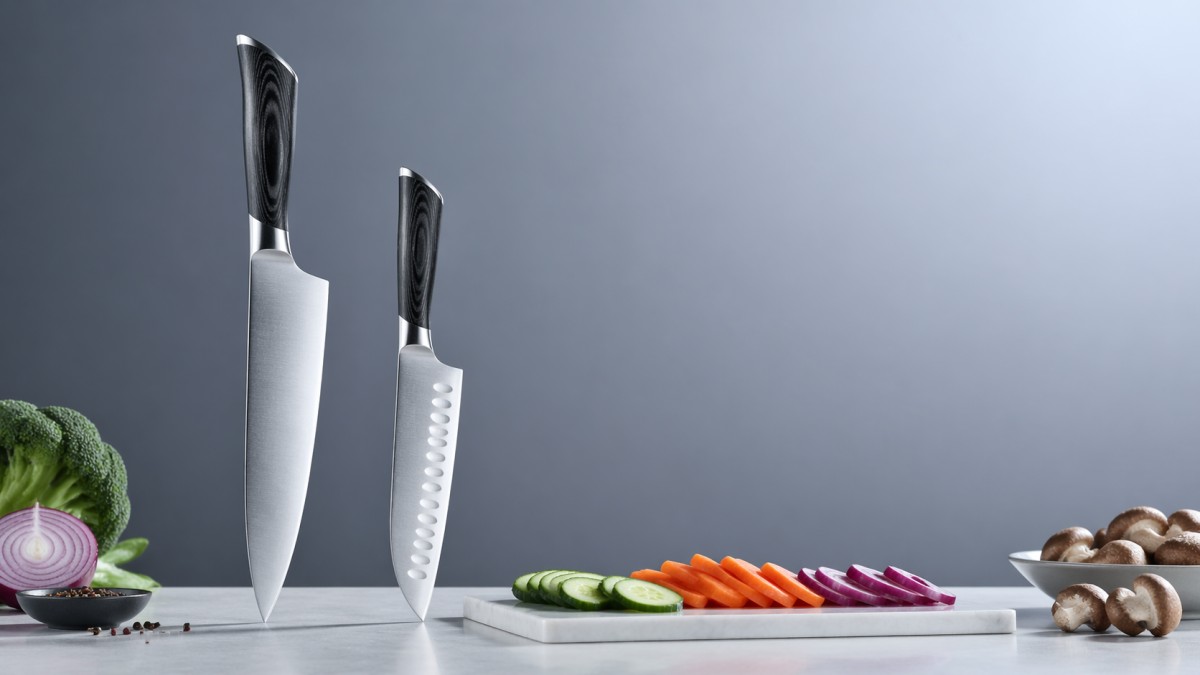
The core buying question is simple: which knife delivers the best balance of sharpness, edge retention, toughness, maintenance, safety, and long-term value for the way it will actually be used?
For most buyers, the answer depends on the working environment:
- Home kitchens often benefit from easy-maintenance stainless steel knives with a versatile edge and comfortable handle.
- Professional kitchens usually need knives that stay sharp through high prep volume while remaining durable enough for repeated daily use.
- Commercial buyers and decision-makers should evaluate not only purchase price, but also lifespan, sharpening frequency, staff handling, and replacement costs.
- Technical evaluators should compare steel composition, hardness, grind consistency, corrosion resistance, and edge stability under actual use conditions.
If there is one overall rule, it is this: buy a knife for the job, not for the marketing description.
How steel affects sharpness, durability, and maintenance
Steel is the foundation of knife performance. It influences how sharp the blade can get, how long it stays sharp, how easily it sharpens, and how resistant it is to rust, stains, and chipping.
The main categories buyers should understand are:
- Stainless steel: The most practical option for many users. It offers good corrosion resistance and lower maintenance, making it ideal for busy commercial kitchens and household use.
- High-carbon stainless steel: A strong middle ground. It combines better edge retention with corrosion resistance, making it a common choice for professional-grade kitchen knives.
- Carbon steel: Often appreciated for easy sharpening and excellent cutting feel, but it requires more care because it can rust or discolor more easily.
- Powder metallurgy steels: Advanced steels with strong wear resistance and edge retention, but often at a higher price and sometimes with more demanding sharpening needs.
Hardness is also important and is often measured on the Rockwell hardness scale (HRC). In general:
- Higher hardness can improve edge retention and allow finer edges, but may reduce toughness and increase the risk of chipping.
- Lower hardness usually improves toughness and ease of sharpening, but the edge may dull faster.
For heavy daily use, the best kitchen knife steel is not automatically the hardest one. In many restaurant settings, a slightly tougher, more forgiving steel is more practical than an ultra-hard blade that requires careful handling.
Why edge geometry matters as much as steel
Many buyers focus heavily on steel and overlook edge geometry, even though it has a major impact on cutting performance. Edge geometry includes the blade thickness, grind type, edge angle, and overall blade profile.
A knife with good steel but poor geometry may still feel thick, wedge in food, or lack precision. By contrast, a well-ground knife can feel sharp, efficient, and controlled even if the steel is not exotic.
Key geometry factors include:
- Edge angle: A narrower angle can improve slicing performance, while a wider angle may improve durability.
- Blade thickness behind the edge: Thinner blades tend to cut more easily, but overly thin edges can be less durable.
- Grind style: Flat, convex, and hollow grinds all affect cutting feel, food release, and maintenance.
- Blade profile: Some profiles are better for rocking cuts, while others suit push cutting or precision slicing.
For daily kitchen use, the ideal edge should match the actual food prep tasks. Vegetable-heavy kitchens may prioritize clean slicing and low resistance, while mixed-use environments may prefer a more durable all-purpose geometry.
What daily use really reveals about knife quality
A knife may look impressive in product specifications, but real value is proven in daily use. This is where operators and buyers should pay close attention.
Important real-world performance questions include:
- Does the knife stay sharp through a full shift or several days of household cooking?
- Is it easy to restore with routine sharpening?
- Does it resist corrosion in humid or high-cleaning environments?
- Can staff use it safely without excessive fatigue?
- Does the handle remain secure when wet or greasy?
- Does the blade chip, roll, stain, or loosen over time?
In a commercial kitchen, daily use often matters more than peak sharpness. A slightly less aggressive edge that is stable, safe, and durable may create better operational value than a razor-thin edge that needs constant attention.
This is especially relevant when kitchen knives are part of a broader kitchen workflow involving prep tables, food processing machinery, a commercial food processor, a Meat Grinder, and other commercial kitchen design essentials. In such environments, reliability and consistency are often more important than specialist features.
How to choose the right knife for home, restaurant, or procurement needs
Different buyers should use different selection criteria.
For home users:
- Choose stainless or high-carbon stainless steel for easier care.
- Prioritize comfort, balance, and versatility.
- A chef’s knife or santoku often covers most daily tasks.
- Avoid overly brittle knives if maintenance skills are limited.
For chefs and operators:
- Match the knife to prep style and volume.
- Check edge retention versus ease of sharpening.
- Evaluate handle grip, fatigue reduction, and control under fast use.
- Consider whether the knife suits your cutting board material and food types.
For technical evaluators:
- Request details on steel grade, hardness, heat treatment, and grind consistency.
- Assess corrosion resistance and edge stability through use testing.
- Inspect fit and finish, handle attachment, and quality consistency across batches.
For business decision-makers:
- Compare total cost of ownership, not just unit price.
- Factor in sharpening labor, service intervals, breakage risk, and replacement frequency.
- Choose specifications that align with staff skill level and kitchen workflow.
- Standardized knife selection can improve training, safety, and procurement efficiency.
Common buying mistakes that reduce long-term value
Several common mistakes lead to poor outcomes even when buyers choose expensive products.
- Overbuying on steel hype: Premium steel does not guarantee better performance in every kitchen.
- Ignoring maintenance reality: If users will not dry, hone, or sharpen correctly, demanding steels may become a poor investment.
- Choosing the wrong edge type: Fine, delicate edges may not survive rough board contact or improper use.
- Overlooking ergonomics: Handle comfort and grip security directly affect safety and productivity.
- Focusing only on initial price: Cheap knives can create hidden costs through downtime, frequent sharpening, and early replacement.
The best buying guide principle is to connect specification with use case. A kitchen knife should support workflow, user skill, hygiene expectations, and expected cutting load.
How to judge whether a knife is worth the investment
A kitchen knife is worth the investment when it performs efficiently, lasts reliably, and fits the real operating conditions of the kitchen. Buyers should look at value through these practical indicators:
- Cutting efficiency: Does it reduce effort and improve prep speed?
- Edge retention: How long does usable sharpness last?
- Sharpening practicality: Can the edge be maintained without excessive cost or difficulty?
- Durability: Can it withstand normal impact, cleaning, and repetitive use?
- Safety and comfort: Does it promote better grip, control, and lower fatigue?
- Lifecycle cost: Does its long-term performance justify the purchase price?
In many cases, the best-value knife is not the most expensive model. It is the one that delivers dependable performance with manageable maintenance in the intended setting.
In summary, buying the right kitchen knife comes down to understanding how steel, edge geometry, and daily use work together. Steel affects retention, corrosion resistance, and sharpening behavior. Edge geometry shapes how the knife actually cuts. Daily use reveals whether the knife is practical, safe, and worth the investment. For households, chefs, technical reviewers, and business buyers alike, the smartest choice is a knife that matches real workload, maintenance capacity, and performance expectations. That is what creates true long-term value in both residential and commercial kitchens.
Popular Tags
Kitchen Industry Research Team
Dedicated to analyzing emerging trends and technological shifts in the global hospitality and foodservice infrastructure sector.
Industry Insights
Join 15,000+ industry professionals. Get the latest market trends and tech news delivered weekly.
No spam. Unsubscribe anytime.


Contact With us
Contact:
Anne Yin (Ceramics Dinnerware/Glassware)
Lucky Zhai(Flatware)