
How to Compare Commercial Refrigeration Equipment Before Purchase
Choosing the right commercial refrigeration equipment is critical for food safety, energy efficiency, and long-term operating costs. Before you buy, compare cooling performance, storage capacity, durability, maintenance needs, and compatibility with your professional kitchen equipment, commercial kitchen design, and Cold Storage Equipment setup. This guide helps researchers, operators, technical evaluators, and business decision-makers make smarter purchasing choices.
What should you compare first when evaluating commercial refrigeration equipment?
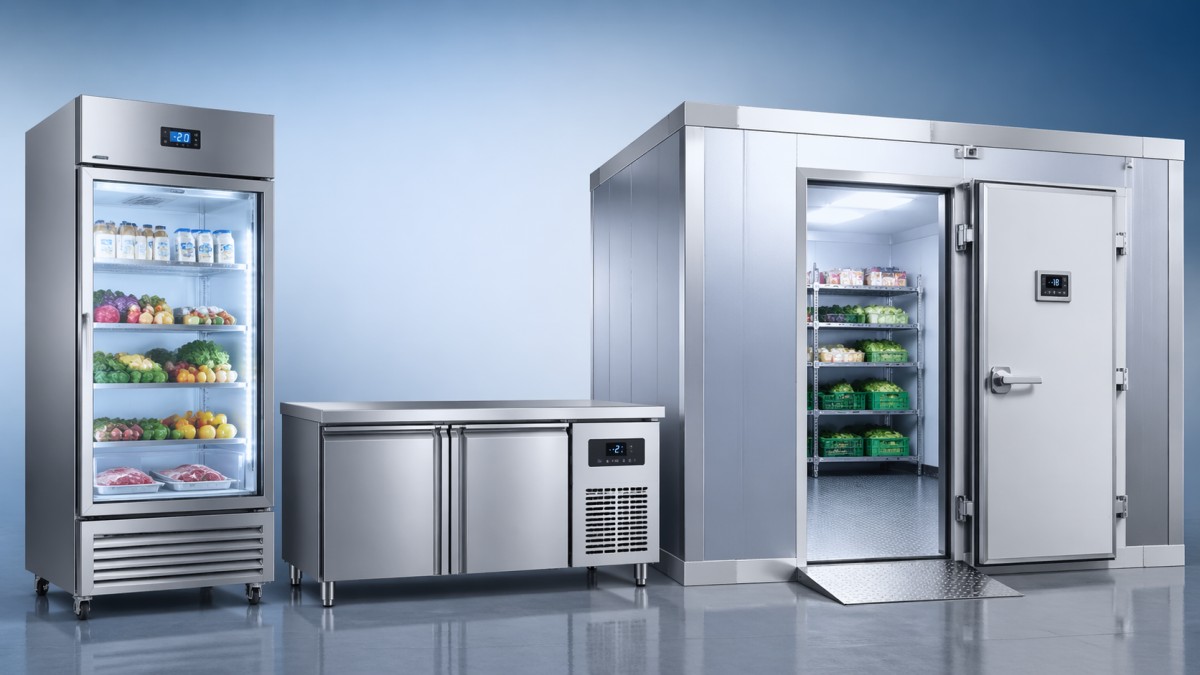
In commercial kitchens, hotels, food processing plants, and central kitchen projects, refrigeration is not a standalone purchase. It affects food safety, workflow speed, storage organization, and utility costs for the next 5–10 years. That is why the first comparison should focus on operating fit rather than only purchase price.
For information researchers, the key question is whether the equipment type matches the business model. For operators, the concern is door opening frequency, product loading patterns, and cleaning convenience during 8–16 hours of daily use. For technical evaluators, refrigerant system design, temperature recovery, and component access are usually more important than appearance.
Business decision-makers often need a simpler framework. In practice, 5 core comparison points are enough to narrow options quickly: temperature range, storage volume, energy demand, maintenance burden, and installation suitability. Once these are clear, you can compare construction quality, controls, and supplier support in a more objective way.
This matters even more in today’s kitchen equipment industry, where automation, intelligent controls, and energy-efficient systems are becoming standard expectations. Commercial refrigeration equipment now needs to work smoothly with professional kitchen equipment, digital management routines, and broader cold chain planning instead of functioning as an isolated cabinet or room.
A practical first-round screening checklist
- Confirm whether you need refrigerated storage, frozen storage, dual-temperature use, or pass-through access for high-turnover operations.
- Check the required operating range, such as chilled storage around 0°C to 5°C or frozen storage around -18°C and below, depending on the food category.
- Measure the available footprint, ventilation clearance, door swing space, and loading pathway before shortlisting any model.
- Estimate real daily load cycles, including peak door openings per hour, incoming product temperature, and refill frequency.
- Review whether the unit must integrate with existing commercial kitchen design, prep lines, cold rooms, or Cold Storage Equipment zones.
How do different equipment types compare by application and kitchen layout?
Not all commercial refrigeration equipment serves the same purpose. Upright refrigerators, undercounter units, worktop refrigerators, reach-in freezers, blast chillers, and walk-in cold rooms solve different operational problems. Comparing them correctly means linking the equipment to production volume, menu type, replenishment rhythm, and available floor space.
A restaurant with fast lunch turnover may benefit from undercounter refrigeration near the line, while a hotel banquet kitchen often needs larger reach-in or walk-in capacity for batch storage. Food processing facilities may require more stable temperature control, easier washdown access, and more formal cold storage zoning for raw and finished goods.
In integrated kitchen projects, layout compatibility can be as important as refrigeration capacity. A poorly positioned unit can slow preparation, increase staff movement, and raise internal kitchen heat load. In many projects, the right equipment type reduces unnecessary handling steps from 4 moves to 2 moves between receiving, prep, storage, and service.
The table below helps compare typical options used with professional kitchen equipment and Cold Storage Equipment planning. It is designed for early-stage procurement discussions rather than final engineering selection.
A small kitchen may prefer compact plug-in units for quicker deployment in 7–15 days, while a larger project may accept a 2–4 week installation schedule for walk-in cold rooms if that improves long-term storage efficiency. The better choice depends on throughput, not just size.
Questions that clarify the right application match
For restaurants and hotels
Ask whether staff need immediate access during service, whether raw and cooked products must be separated, and whether the kitchen operates in one shift or two. Those answers usually determine whether you need distributed refrigeration points or one main storage zone.
For food processing and central kitchens
Focus more on batch movement, pallet or tray format, cleaning routines, and temperature consistency during repeated loading cycles. In these environments, a larger cold room or modular solution may outperform several smaller cabinets.
For technical planning teams
Review airflow path, condenser ventilation, ambient temperature exposure, and service access on at least 3 sides where possible. Layout mistakes often create avoidable heat stress and maintenance issues later.
Which technical parameters matter most before purchase?
When comparing commercial refrigeration equipment, technical performance should be translated into operational outcomes. A stronger specification sheet is only valuable if it supports safer storage, faster recovery after door openings, lower energy use, or easier maintenance in real working conditions.
Start with temperature stability. It is not enough to ask for a nominal temperature range. You should also ask how the unit performs during repeated door openings, partial loading, and warm product placement. In busy kitchens, temperature recovery after frequent access can matter more than the lowest achievable setpoint.
Next, review insulation, evaporator design, defrost method, refrigerant system layout, and controller readability. If the unit operates 12–24 hours per day, poor heat exchange or difficult cleaning access can become a permanent cost issue. Stainless steel grade, gasket replacement ease, and shelf load capacity also deserve attention.
The following table summarizes technical items that procurement teams, operators, and evaluators should verify before selecting a unit for professional kitchen equipment environments.
For many buyers, 4 technical checks prevent most mismatches: correct temperature range, realistic storage capacity, suitable ambient operating conditions, and maintainable component layout. If any one of these is ignored, the equipment may still run, but it may not perform reliably in your actual kitchen workflow.
Technical warning signs during supplier comparison
- Capacity is quoted by external size only, without usable internal volume or shelf configuration details.
- No clear explanation is given for operation in high ambient kitchen conditions, especially near cooking lines.
- The unit lacks clear cleaning and service access points, which can increase downtime during monthly or quarterly maintenance.
- Control panels are difficult for operators to read quickly during busy shifts.
How should buyers compare operating cost, maintenance, and compliance?
Purchase price is only one part of the decision. Commercial refrigeration equipment usually generates cost over 3 main stages: acquisition, operation, and service. For units running continuously, energy use and maintenance scheduling can exceed the initial price difference between two similar models over several years.
Operators should ask how often condenser cleaning is required, how easily gaskets can be replaced, and whether spare parts are straightforward to source. Technical evaluators should review service accessibility, electrical requirements, and whether preventive maintenance can be completed without disrupting nearby professional kitchen equipment.
Compliance also matters, especially for foodservice groups, hotel projects, food processing facilities, and cross-border sourcing. Depending on the market, buyers may need to confirm electrical safety conformity, food-contact material suitability, refrigerant compliance, and documentation that supports import or project approval procedures.
The table below compares cost and compliance considerations that often influence final approval more than the cabinet itself.
A cheaper unit can become more expensive if it requires frequent manual defrost, difficult cleaning, or long spare-part lead times. For project buyers, it is often useful to compare a 12-month operating view, not just the invoice price on day one.
A simple 4-step total-cost review
- Estimate duty hours per day and likely door opening frequency.
- List routine cleaning, filter or condenser care, and expected gasket replacement needs.
- Confirm compliance documents required by your country, project owner, or food safety process.
- Compare the supplier’s response time, spare-parts path, and commissioning support.
What mistakes do buyers make, and how can you make a safer final decision?
One common mistake is buying by nominal liters alone. Large stated capacity means little if shelves are poorly arranged, tray formats do not fit, or circulation space inside the cabinet is restricted. Usable capacity and workflow compatibility are usually better decision tools than brochure size.
Another mistake is overlooking the relationship between refrigeration and the wider kitchen equipment system. A unit may seem suitable until it conflicts with prep tables, blocks circulation, or adds excess heat near cooking equipment. Commercial kitchen design and Cold Storage Equipment planning should always be reviewed together.
Buyers also sometimes ignore the operator’s perspective. If a refrigerator is hard to clean, hard to read, or awkward to load, staff will work around it instead of with it. Over time, those small frictions can affect food handling, internal discipline, and product quality more than a small difference in technical rating.
A safer decision usually comes from combining 3 viewpoints: end-user handling, technical suitability, and business return. When these are aligned, the purchase becomes more resilient and easier to justify internally.
FAQ for researchers, operators, and decision-makers
How do I know whether I need a cabinet unit or a walk-in cold room?
If your operation needs decentralized access at multiple prep points, cabinet or undercounter units may be more efficient. If you handle larger batch storage, central receiving, or separated product zones, a walk-in solution may be better. Review throughput, floor area, and stock rotation over at least 7 days before deciding.
What should I ask about delivery and installation?
Ask for lead time, installation conditions, power requirements, ventilation space, and commissioning steps. Small plug-in units may move faster, while cold room projects usually need more site coordination. It is also wise to confirm who handles startup checks and operator handover.
Which features matter most for busy kitchens?
In high-frequency service environments, prioritize fast access, stable recovery after door openings, durable door hardware, easy-clean interiors, and clear digital controls. These practical features often matter more than decorative finishes or oversized external dimensions.
How often should commercial refrigeration equipment be maintained?
Routine visual checks may be daily or weekly, while condenser cleaning and deeper preventive service are often monthly or quarterly depending on ambient grease, dust, and workload. The exact schedule should follow the equipment design and site conditions rather than a one-size-fits-all rule.
Why choose us for commercial refrigeration equipment selection and project support?
We support buyers across the broader kitchen equipment industry, where commercial kitchen equipment, smart kitchen planning, energy-efficient systems, and Cold Storage Equipment must work together. That means our support can extend beyond one refrigerator model to include application fit, layout coordination, and practical procurement guidance for restaurants, hotels, central kitchens, and food processing projects.
If you are still comparing options, we can help you confirm 5 key points before purchase: temperature requirement, storage format, installation space, operating intensity, and compliance expectations. This shortens internal evaluation time and helps avoid costly mismatches between refrigeration equipment and the rest of your professional kitchen equipment setup.
You can contact us for parameter confirmation, product selection advice, delivery cycle discussion, custom configuration planning, certification document review, sample or specification support, and quotation communication. If your project includes commercial kitchen design or cold room planning, we can also help align refrigeration choices with the wider system.
For faster consultation, prepare your expected temperature range, installation dimensions, application scenario, daily operating hours, and any target market compliance requirements. With those 5 inputs, the comparison process becomes clearer, more technical, and easier to convert into a realistic purchasing decision.
Popular Tags
Kitchen Industry Research Team
Dedicated to analyzing emerging trends and technological shifts in the global hospitality and foodservice infrastructure sector.
Industry Insights
Join 15,000+ industry professionals. Get the latest market trends and tech news delivered weekly.
No spam. Unsubscribe anytime.
Contact With us
Contact:
Anne Yin (Ceramics Dinnerware/Glassware)
Lucky Zhai(Flatware)