
Commercial Deep Fryer Sizing Guide for Busy Kitchen Lines
Choosing the right commercial deep fryer is critical for maintaining speed, consistency, and food quality on busy kitchen lines. Whether you are comparing professional kitchen equipment for a new project or upgrading an existing setup, the right fryer size affects workflow, oil efficiency, and output. This guide helps operators, technical evaluators, and decision-makers match fryer capacity to menu demand, kitchen layout, and commercial kitchen design goals.
How should a busy kitchen line define the right commercial deep fryer size?
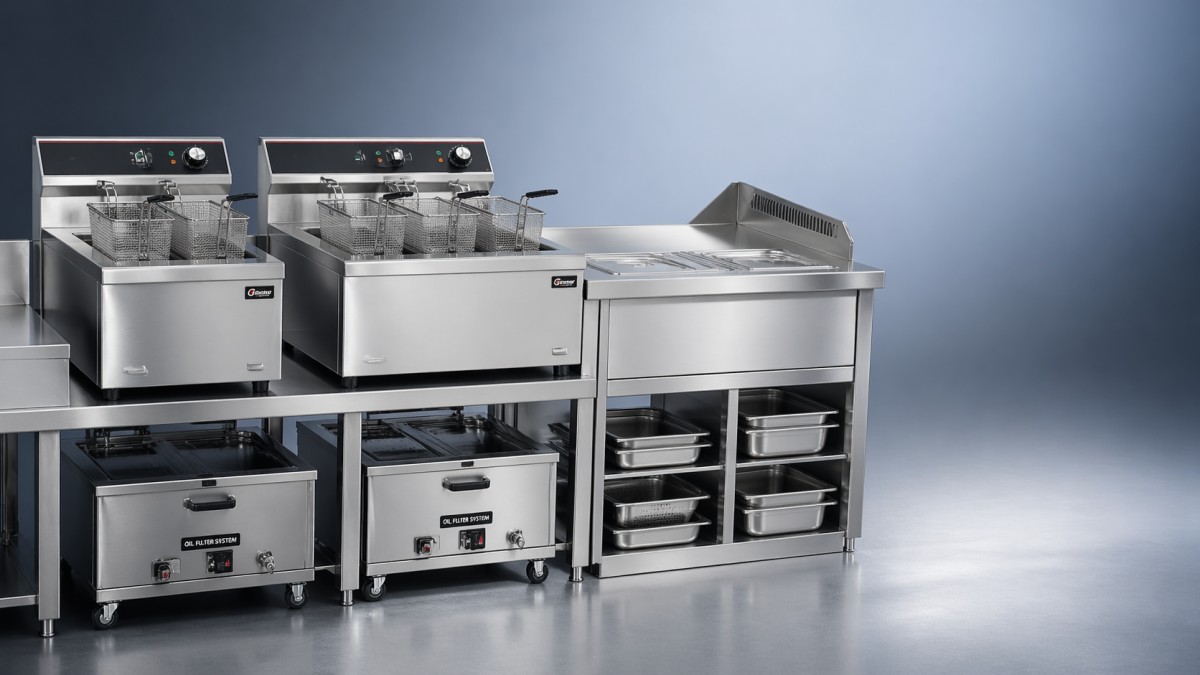
Commercial deep fryer sizing is not only about tank volume. In a real foodservice environment, sizing means aligning fryer capacity with hourly output, menu mix, recovery speed, available power or gas supply, and the physical rhythm of the hot line. A fryer that looks large on paper may still become a bottleneck if the basket load is too small or if temperature recovery slows during peak periods.
For operators, the first question is simple: how many portions must the fryer support within a 15-minute rush and across a 2- to 4-hour service window? For technical evaluators, the focus shifts to heating input, oil-zone design, filtration options, and installation constraints. For business decision-makers, the concern is broader, covering labor efficiency, consistency, utility cost, and long-term replacement planning.
In restaurants, hotels, central kitchens, and food processing support areas, deep fryer sizing also connects with modern kitchen equipment trends such as energy efficiency, automation, and digital kitchen management. A properly sized fryer can reduce unnecessary oil turnover, support food safety control, and improve line balance with other commercial kitchen equipment like ranges, holding stations, and ventilation systems.
A practical sizing approach usually starts with 3 core checks: expected batch volume, product type, and service frequency. Light snack programs, mixed fried menus, and high-throughput chicken or potato lines often require very different fryer configurations, even when total daily sales appear similar.
Three sizing factors that matter more than nominal capacity
- Production rhythm: A kitchen serving 40 orders per hour needs a different fryer setup from one serving 40 orders over 3 hours. Peak compression is often the deciding factor.
- Product load characteristics: Frozen fries, breaded chicken, seafood, and dough products introduce different moisture release and crumb loads, which affect oil stability and filtration needs.
- Operational method: Single-basket, split-pot, battery fryer lineups, and automated basket lifting systems all change throughput and staffing efficiency in measurable ways.
Typical sizing language used in procurement discussions
When teams compare commercial fryers, they often use shorthand terms such as countertop versus floor model, single tank versus split tank, or light-duty versus high-output. These categories are helpful, but they should be translated into usable decision metrics: oil capacity range, basket count, recovery time expectations, and hourly production suitability.
As a general market reference, countertop units often fit lower-volume or supplementary stations, while floor fryers are more common for continuous service. In many projects, a 1-tank fryer is chosen for a focused menu, while 2 to 4 fryer batteries are selected for multi-item menus or kitchens with separate allergen-control and product-zone needs.
Which fryer capacity range fits your menu, peak load, and kitchen layout?
The best way to size a commercial deep fryer is to connect product type with peak production. Instead of starting from equipment dimensions alone, begin with menu engineering. Ask how many fried SKUs are active during lunch and dinner, whether they can share oil, and whether demand arrives in short spikes or in a steady stream over 60 to 180 minutes.
The table below shows a practical framework that buyers and kitchen planners can use during initial selection. It does not replace a full technical review, but it helps narrow down the right fryer class before discussing utility connections, hood load, or fabrication details with a supplier.
This comparison shows why fryer size should be matched to service style rather than ordered only by physical footprint. A busy kitchen line with 2 short rushes per day may need a different configuration from a production kitchen running 6 to 8 hours of continuous frying. The real target is stable output without unnecessary oversizing.
Layout also matters. A fryer battery can increase capacity, but it also affects aisle clearance, hood coverage, oil handling routes, and staff movement between prep, fry, and pass. In tight commercial kitchen design projects, a split-pot configuration may provide better menu flexibility than one oversized single tank.
Questions to ask before locking in fryer capacity
- How many fried portions are required during the busiest 15 to 30 minutes?
- Will frozen and fresh products be cooked in the same tank, or must they be separated?
- Does the kitchen need one operator to manage frying and plating at the same time?
- Is the project aiming for low initial investment, or lower operating cost over a 3- to 5-year period?
A useful rule for mixed-menu lines
If the menu includes 3 or more high-selling fried categories, planners often gain better control by separating fast-moving items from crumb-heavy products. This reduces oil contamination and avoids frequent taste transfer, especially in kitchens that need consistent quality over back-to-back service windows.
What technical specifications should evaluators compare beyond tank size?
Technical evaluation should move past brochure language and focus on parameters that shape real line performance. For a commercial deep fryer, these usually include heating method, energy input range, oil capacity, basket size, recovery behavior, cold zone design, drainage arrangement, filtration integration, and cleanability. In gas or electric projects, the available utility infrastructure may narrow the options before any final selection is made.
For many projects, the most important operational issue is temperature stability during repeat loading. A fryer that performs well under a light test batch may struggle when operators drop multiple frozen loads in fast succession. That is why technical teams often review expected service pattern, not only nominal specification sheets.
The table below highlights specification areas that usually matter during procurement and acceptance. Values vary by model and supplier, but these categories provide a strong checklist for comparing commercial kitchen equipment on a like-for-like basis.
For technical teams, 4 checks often prevent later problems: utility compatibility, exhaust and hood coordination, maintenance access, and cleaning practicality. Even a well-sized fryer can create downtime if drain access is poor or if adjacent equipment blocks service clearances. This is especially relevant in integrated kitchen systems where line density is high.
Why recovery and oil management matter as much as capacity
A deep fryer on a busy line is judged by output per hour, but operators feel the difference through recovery and oil condition. If temperature drops significantly during consecutive loads, cook time lengthens, color becomes uneven, and service tickets stack up. If crumb handling is poor, oil breaks down faster and taste quality shifts before the end of the service block.
This is where newer kitchen equipment trends become relevant. Digital controls, programmable cycles, and integrated filtration are not only premium features. In many medium- to high-volume kitchens, they support repeatable operation, easier staff training, and lower waste across weekly production cycles.
How can buyers balance cost, efficiency, and future expansion?
A common procurement mistake is buying the least expensive fryer that can technically cook the menu. That approach may reduce initial spending, but it can increase labor pressure, oil use, and ticket delays during peak hours. The better approach is to compare total operating impact over 12 to 36 months, including oil consumption, downtime risk, maintenance access, and service productivity.
In many commercial kitchen projects, there are 3 broad purchasing paths: entry-level standard models, balanced mid-range systems, and higher-spec configurations with integrated filtration or advanced controls. Each path can be valid if it matches production goals and staffing conditions. The key is to avoid paying for unused capacity while also avoiding undersizing that triggers daily service friction.
The comparison below helps decision-makers evaluate fryer investment from a cost and operations perspective, especially when planning for restaurant chains, hotel kitchens, institutional catering, or central kitchen expansion.
For growing operations, expansion planning matters. If outlet volume may increase within 6 to 18 months, it can be more economical to choose a fryer platform that supports a second unit, a matching filtration module, or line-wide control consistency. This is especially useful for chain restaurants and international buyers standardizing kitchen equipment across multiple sites.
Four cost checkpoints before purchase approval
- Initial acquisition cost, including baskets, lids, filtration accessories, and any required installation kits.
- Utility demand and compatibility with site conditions, especially if electrical upgrades or gas line work are needed.
- Oil management labor, including filtering frequency, cleaning time per shift, and disposal handling.
- Expected service support, spare parts access, and practical lead time for maintenance items over a 1- to 3-year period.
When is a smaller fryer the smarter choice?
A smaller commercial fryer can be the better investment if the menu is narrow, the product mix changes frequently, or the kitchen needs a dedicated allergen or specialty station. In these cases, right-sizing protects oil quality and reduces idle heating, which may be more valuable than raw maximum capacity.
What compliance, implementation, and operating checks should not be overlooked?
In the kitchen equipment industry, a fryer purchase is never just a box on the floor. It sits inside a system that includes ventilation, drainage, electrical or gas infrastructure, cleaning workflow, staff training, and food safety management. Before placing an order, technical reviewers should confirm local installation rules, utility standards, and any project-specific requirements used in restaurants, hotels, food processing support kitchens, or institutional foodservice sites.
Common checks include construction materials suitable for foodservice environments, control safety functions, shutoff arrangements, installation clearances, and compatibility with hood and fire suppression planning. Exact certification requirements vary by country and project type, so buyers should verify target-market compliance at the quotation stage rather than after production begins.
Implementation planning is equally important. Many commercial kitchen projects follow a 4-step process: parameter confirmation, layout and utility review, production or order finalization, and installation plus acceptance. Depending on project complexity, lead times may range from 2 to 8 weeks for standard supply and longer for custom configurations or export orders requiring documentation alignment.
A practical pre-installation checklist
- Confirm utility type, rated connection requirements, and whether the site has enough reserve capacity for peak operation.
- Review hood capture area, service access, and aisle spacing so daily cleaning and maintenance can be completed safely.
- Check product workflow from frozen storage or prep area to fryer, holding zone, and pass to reduce cross-traffic.
- Define operator training points, including oil filtering frequency, start-up sequence, shutdown, and sanitation tasks.
These checks are especially valuable for decision-makers managing multi-site rollouts or international sourcing. As smart kitchen technologies and automated kitchen systems continue to expand, buyers increasingly need equipment that not only performs today but also fits future digital management, preventive maintenance, and energy-efficiency goals.
Common mistakes that lead to poor fryer performance
One common mistake is sizing only by total daily portions instead of peak 15-minute demand. Another is ignoring product separation needs, which can create quality issues and oil contamination. A third is selecting a fryer without reviewing operator workload, resulting in a machine that is technically capable but difficult to run consistently on a busy line with limited staff.
A final issue is overlooking after-sales practicality. For commercial kitchen equipment, reliable parts planning, consumable availability, and service response expectations often matter as much as the original specification. This is particularly true in export markets and for chain operations that cannot tolerate long equipment downtime.
FAQ: what do buyers and operators ask most often about commercial deep fryer sizing?
How do I estimate the right commercial deep fryer size for a new restaurant?
Start with projected peak orders, not average daily volume. Count how many fried portions are needed in the busiest 15 to 30 minutes, then list the top 3 to 5 fried menu items and whether they can share oil. After that, review available space, utility type, and whether one operator or multiple operators will manage the frying station. This usually narrows the choice to a compact, medium, or high-output fryer configuration.
Is a larger fryer always better for busy kitchen lines?
No. A larger fryer may increase oil volume, utility demand, and idle cost without solving actual workflow problems. If the menu needs separation by product type, a split-pot or dual-fryer arrangement may outperform one large tank. The best commercial deep fryer is the one that supports real peak throughput while maintaining manageable oil quality and staff workflow.
What should technical evaluators prioritize during comparison?
Focus on 5 points: heating input, oil capacity, recovery under repeated loading, filtration method, and installation compatibility. Also review cleaning access and control repeatability. These factors usually reveal more about real kitchen performance than exterior size or marketing labels.
How long does fryer project planning and delivery usually take?
For standard models, quotation review and technical confirmation can often be completed in several days, while supply lead times commonly fall within 2 to 8 weeks depending on model availability, utility requirements, and export documentation needs. Custom kitchen line projects may take longer because ventilation, layout, and compliance checks need to be coordinated.
Why choose us for commercial fryer selection and kitchen line planning?
We support buyers, operators, technical reviewers, and project teams with practical selection guidance built around real kitchen equipment applications. Instead of pushing a one-size-fits-all recommendation, we help evaluate fryer capacity against menu structure, service rhythm, commercial kitchen design, utility conditions, and long-term operating goals. This is especially valuable for restaurants, hotels, central kitchens, and international sourcing projects that need balanced decisions on performance, compliance, and cost.
You can contact us to discuss specific topics such as fryer capacity matching, product-line comparison, delivery timing, custom layout coordination, target-market certification needs, sample or specification review, and quotation planning. If your team is comparing gas and electric options, split-pot and full-pot layouts, or standard and filtration-integrated solutions, we can help organize the decision process in a clearer and faster way.
If you already have a draft kitchen plan or a target menu, send the expected peak output, product categories, utility conditions, and installation market. With these 4 inputs, it becomes much easier to recommend a commercial deep fryer solution that fits your workflow rather than forcing your workflow to adapt to the wrong equipment.
Popular Tags
Kitchen Industry Research Team
Dedicated to analyzing emerging trends and technological shifts in the global hospitality and foodservice infrastructure sector.
Industry Insights
Join 15,000+ industry professionals. Get the latest market trends and tech news delivered weekly.
No spam. Unsubscribe anytime.
Contact With us
Contact:
Anne Yin (Ceramics Dinnerware/Glassware)
Lucky Zhai(Flatware)